Every material choice involves tradeoffs. The decision to specify polyurethane faux beams instead of genuine timber—or instead of other alternatives—deserves thoughtful analysis that goes beyond simple price comparisons. Understanding what polyurethane beams do well, where they fall short, and how those characteristics apply to specific project requirements enables decisions that serve long-term interests rather than immediate impressions.
This evaluation addresses common questions that arise during specification processes, providing substantive analysis that helps both residential clients making personal investment decisions and commercial decision-makers allocating project resources. Rather than advocating for any particular material, the goal is clear-eyed assessment that supports choices aligned with actual project priorities.
Weight and Structural Advantages
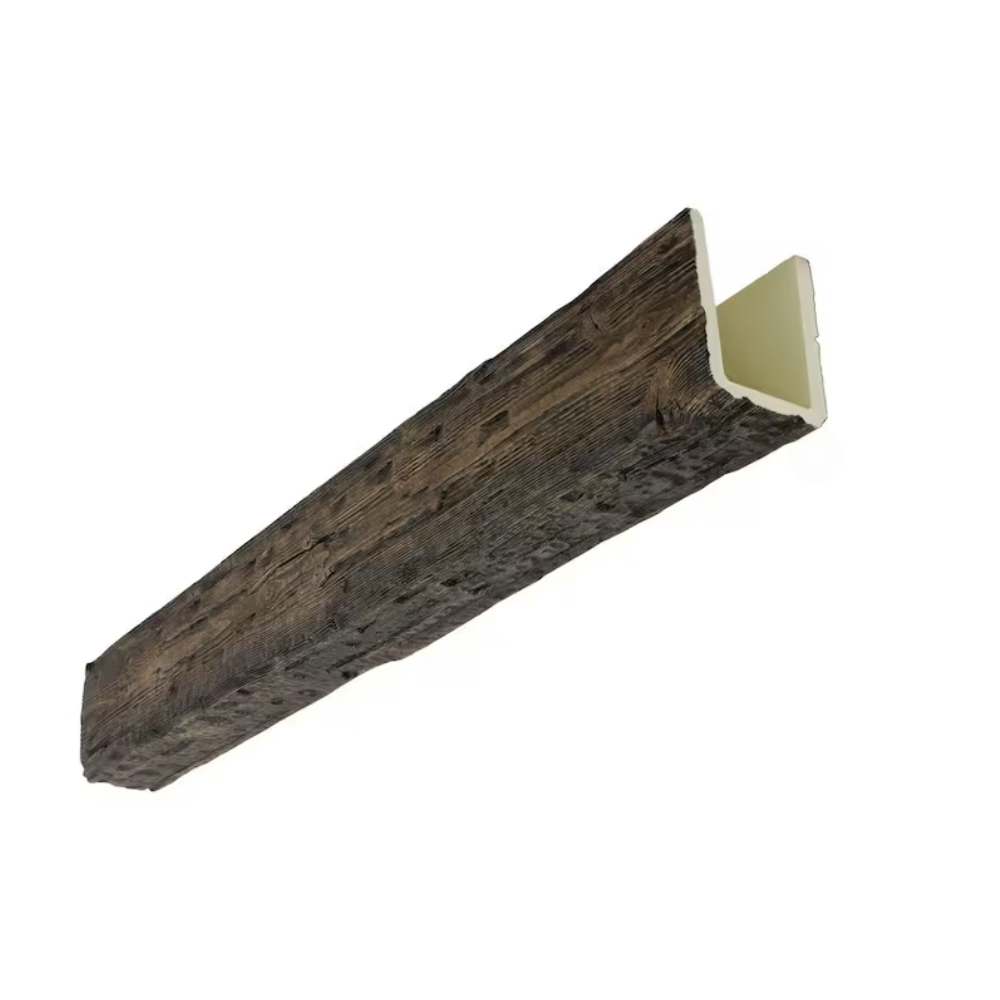
Polyurethane beams weigh substantially less than equivalent timber or stone alternatives—typically eighty to ninety percent lighter than genuine wood of the same dimensions. This weight reduction simplifies handling throughout the supply chain, from manufacturing through shipping to job site installation. Workers can maneuver beams that would require multiple handlers with genuine timber, reducing labor costs and enabling installation in structures that cannot support heavy material loads.
Lightweight construction eliminates engineering requirements that heavy beams impose on supporting structures. In older buildings where structural calculations may not accommodate substantial added loads, polyurethane beams enable aesthetic improvements without requiring structural reinforcement. This retrofit capability extends architectural possibilities into building types where timber alternatives would simply be infeasible.
The reduced weight also simplifies attachment methods, allowing mechanical fastening and adhesive bonding that heavy timber cannot reliably support. Standard construction fasteners and adhesives perform adequately with polyurethane, whereas stone or heavy timber might require specialized hardware and engineered connections. This attachment simplicity reduces both material costs and installation complexity.
Durability and Maintenance Characteristics
Polyurethane resists the biological degradation that threatens genuine timber in challenging environments. Insect damage—termites, carpenter ants, wood-boring beetles—cannot affect polyurethane the way it destroys natural wood. Moisture damage that causes timber rot, warping, and splitting does not occur with properly manufactured polyurethane. These biological resistances extend service life while reducing maintenance requirements.
Thermal expansion and contraction affect polyurethane differently than timber, with implications for installation approach and long-term appearance. Polyurethane expands and contracts less dramatically than wood, reducing joint movement that creates gaps and separations in timber installations. However, polyurethane's thermal movement requires accommodation through flexible adhesive applications and proper gap management during installation.
UV exposure presents durability considerations that affect exterior applications more than interior installations. Quality polyurethane formulations include UV stabilizers that resist degradation, but years of direct sun exposure will eventually affect surface appearance. Interior applications avoid this concern entirely, while exterior installations benefit from finish systems designed for UV resistance.
Aesthetic Qualities and Realism
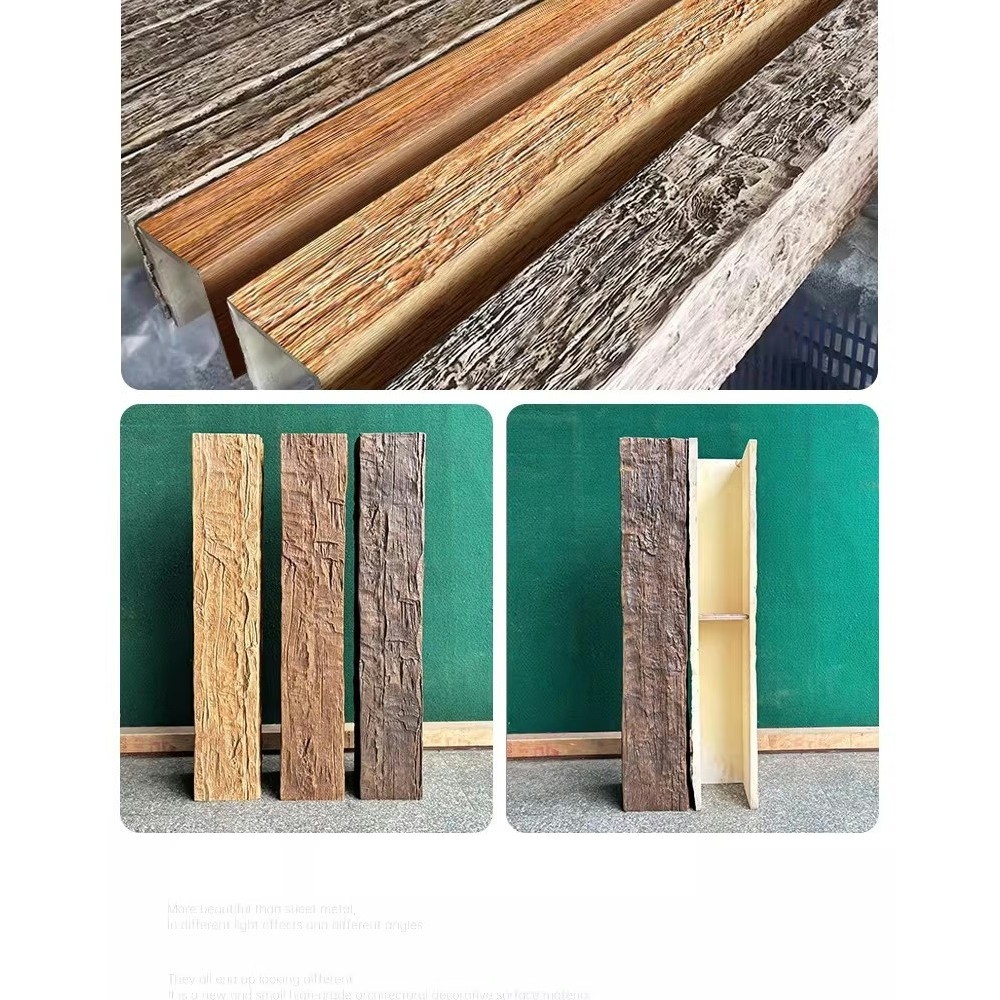
Modern polyurethane manufacturing achieves wood-grain realism that earlier generations of faux products could not approach. Advanced texturing processes create surface qualities that capture authentic wood character including knots, grain variation, and natural irregularities. Color application techniques layer tones that mimic how genuine wood absorbs stains and finishes, creating depth that flat painted surfaces cannot achieve.
However, polyurethane grain remains fundamentally different from genuine wood at close inspection distances. The repetitive quality of mold-produced texture becomes apparent when viewers examine surfaces closely, revealing the manufacturing origin that genuine wood's organic growth patterns lack. This limitation matters more for installations where close viewing occurs—residential living spaces, boutique retail—than for commercial applications where beams serve background roles.
Edge and end-grain treatment requires particular attention in polyurethane installations. The cross-section view of genuine timber reveals growth ring patterns that polyurethane cannot authentically reproduce. Installations with exposed beam ends may require design solutions—decorative end caps, strategic positioning, or architectural framing—that direct attention away from these less convincing details.
Cost Considerations Across Project Types
Material cost comparisons between polyurethane and genuine timber vary significantly based on wood species, grade, and availability. Premium reclaimed timber commands prices that polyurethane cannot approach on material unit cost alone, while common dimensional lumber might compare favorably despite polyurethane's manufacturing advantages. Project-specific analysis incorporating all cost factors—material, shipping, installation, maintenance—provides accurate comparison basis.
Installation cost advantages often exceed material cost differences, particularly for projects where timber would require specialized handling, custom fabrication, or structural reinforcement. The labor savings from polyurethane's lightweight handling and dimensional consistency can offset higher material costs, improving overall project economics. These installation advantages become more pronounced as project scale increases.
Lifecycle cost analysis reveals polyurethane advantages in applications where maintenance resources are limited or expensive. Commercial facilities, rental properties, and remote locations benefit from reduced upkeep requirements that genuine timber would demand. The absence of refinishing, repair, and replacement cycles that timber requires translates into cost savings that improve polyurethane's lifecycle economics.
Environmental Considerations
Genuine timber carries environmental credentials that polyurethane cannot directly match as a renewable resource. Responsibly sourced wood from certified forests represents sustainable material choice, while reclaimed timber offers additional environmental benefits through extended service life and reduced new harvesting. These environmental advantages deserve acknowledgment in honest material comparisons.
Polyurethane manufacturing involves petrochemical feedstocks and energy-intensive production processes that carry environmental costs. However, modern formulations increasingly incorporate recycled content while manufacturing processes improve energy efficiency. Lifecycle assessment approaches that account for transportation, installation, maintenance, and disposal provide more accurate environmental comparison than material-only analysis.
Service life durability affects environmental outcomes in ways that simple material comparisons overlook. A timber beam requiring replacement after fifteen years carries different environmental burden than polyurethane lasting fifty years, even if initial manufacturing impacts favored timber. These lifecycle considerations complicate environmental comparisons while providing more accurate assessment basis.

The choice between polyurethane faux beams and alternatives ultimately depends on specific project priorities, budget constraints, and aesthetic requirements. Neither material universally outperforms the other—each serves different applications optimally. Design professionals and informed consumers who understand these material characteristics make choices that serve their actual needs rather than following generic recommendations that may not apply to their situations.
The market for polyurethane beams continues growing as manufacturing quality improves and application experience accumulates. Early limitations that plagued initial product generations have largely been addressed through formulation refinements and manufacturing improvements. Today's polyurethane beams represent mature products with established performance records across diverse applications.
Making informed material decisions requires research beyond marketing materials that suppliers publish. Speaking with contractors who have installed various beam types, reviewing case studies from comparable applications, and requesting physical samples for evaluation provides information that promotional literature cannot provide. This due diligence investment protects project investments from material disappointments that post-installation regrets cannot remedy.

Technical References
ASTM standards cited in every specification
Test Data
Lab results from internal testing program
Updated 2026
Reviewed against current product specs


