Material selection among faux beam options involves more than choosing between obvious alternatives. Polyurethane and PVC both serve as base materials for manufactured faux beams, yet the characteristics these materials provide differ substantially in ways that affect installation performance, appearance quality, and long-term value. Understanding these differences enables specification decisions that serve project requirements rather than following generic recommendations.
Both materials belong to the broader plastics family, sharing synthetic origins and manufacturing processes that produce consistent products without natural material variability. However, the specific chemistry of each material creates distinct property profiles that informed specifiers recognize as advantages or limitations depending on application requirements. This comparison addresses those material distinctions directly.
Material Composition and Manufacturing
Polyurethane production involves chemical reactions between isocyanate and polyol components that create urethane linkages forming the material backbone. This reaction process generates heat that accelerates curing while enabling complex part geometries through liquid resin injection molding. The resulting material properties can be formulated across wide ranges by adjusting component ratios and additive packages.
PVC—polyvinyl chloride—production relies on polymerization of vinyl chloride monomers into rigid molecular chains. Additives including plasticizers, stabilizers, and impact modifiers adjust PVC properties to suit specific applications. Extrusion processes shape PVC into beam profiles through heated die passage, while injection molding enables more complex geometries through material injection under pressure.
The manufacturing implications of these different chemistries affect product characteristics that specifiers evaluate. Polyurethane's molding capability enables more complex surface textures and profile details than PVC's extrusion-dominant processes typically achieve. However, PVC manufacturing infrastructure benefits from decades of optimization that can reduce production costs below polyurethane equivalents.
Surface Texture and Appearance Quality
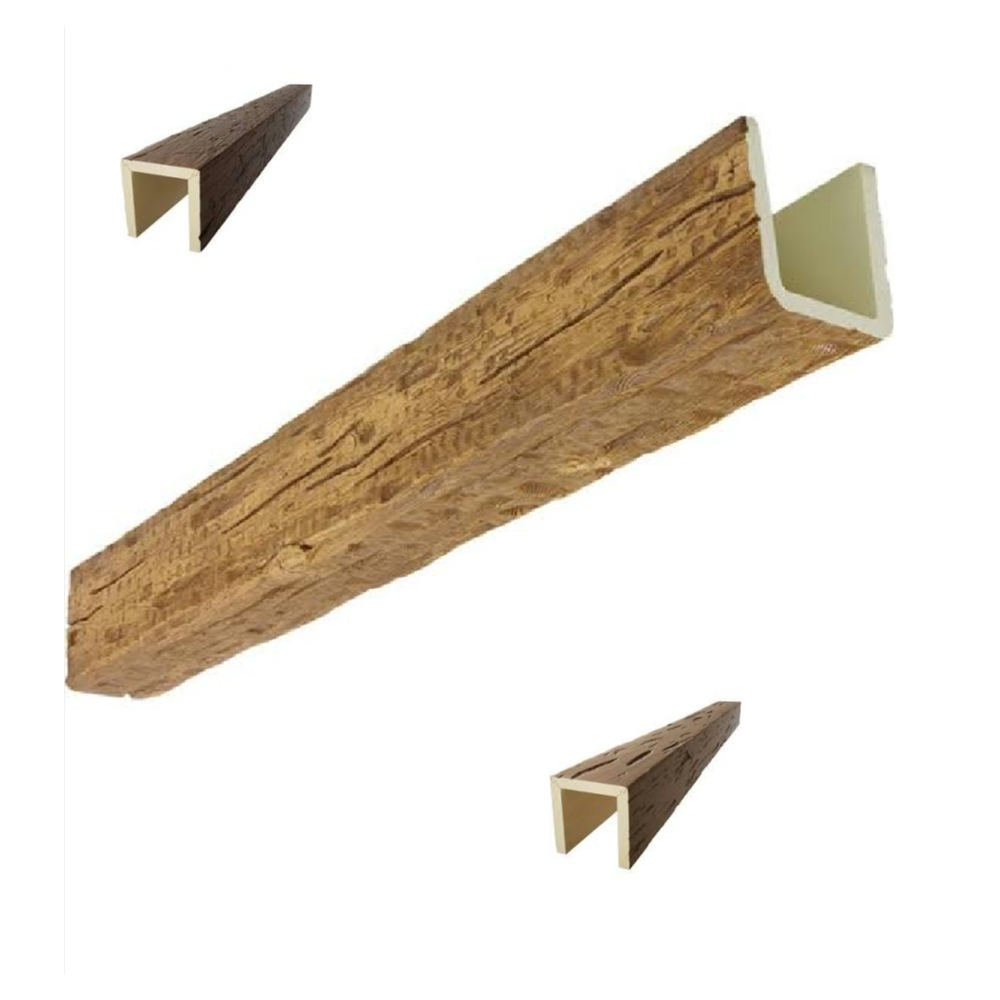
Polyurethane's liquid molding process captures fine surface details with fidelity that extruded PVC cannot reliably achieve. Wood grain textures requiring undercuts, complex profiles with sharp corners, and multi-level surface details all reproduce more accurately through injection molding than extrusion processes accommodate. This reproduction capability directly affects the wood-like authenticity that faux beams aim to achieve.
Texture depth in polyurethane products typically exceeds what PVC manufacturing can produce, creating surface appearances that catch light more naturally and suggest genuine wood character more convincingly. The three-dimensional quality that deep textures provide contributes to visual authenticity that flat surfaces cannot match, regardless of color accuracy or grain pattern design.
Finish adhesion characteristics differ between materials in ways that affect long-term appearance retention. Polyurethane surfaces accept stains, paints, and protective coatings with adhesion that maintains appearance through years of service. PVC surfaces may require specific coating systems designed for vinyl substrates, limiting finish options while potentially affecting long-term coating durability.
Physical Performance Characteristics
Impact resistance comparisons favor polyurethane for applications where accidental contact threatens surface integrity. The material's combination of hardness and flexibility absorbs impacts without the cracking or denting that more brittle materials experience. This impact tolerance proves valuable in high-traffic commercial applications and family residential environments where furniture moving and daily activities create collision opportunities.
Thermal stability affects performance in exterior applications and areas with temperature variation. PVC experiences greater dimensional change through thermal cycling than polyurethane, potentially creating joint gaps or alignment problems in challenging environments. Polyurethane's thermal stability provides advantage in applications where temperature fluctuations stress installation integrity.
UV resistance varies by formulation within both material categories, but premium polyurethane products typically incorporate more robust UV stabilization packages than PVC alternatives include. Extended sun exposure affects both materials eventually, but polyurethane's UV resistance often provides longer service life before appearance degradation becomes noticeable.
Weight and Handling Properties
Both materials weigh substantially less than timber equivalents, simplifying handling and reducing structural support requirements. However, density differences between the materials create modest weight variations that affect large installations. PVC tends toward higher density than polyurethane, making very large beams heavier than polyurethane equivalents of the same dimensions.
The weight implications for installation practice differ between materials. Heavier PVC beams may require more robust mounting systems than polyurethane alternatives, particularly for ceiling installations where fastener capacity determines secure attachment. This mounting consideration affects both material cost and installation labor in ways that overall project budgeting should anticipate.
Shipping economics favor lighter materials through reduced transportation costs. For large projects with substantial beam quantities, the weight difference between polyurethane and PVC can affect freight expenses noticeably. International shipping where weight directly influences container utilization makes this consideration particularly relevant.
Cost Considerations and Value Assessment
Material cost comparisons between polyurethane and PVC vary with market conditions, order quantities, and product quality levels. Generalizations that favor one material across all market conditions fail to account for the substantial variation that competitive markets produce. Project-specific pricing from qualified suppliers provides accurate comparison basis that generic statements cannot replace.
Installed cost analysis incorporating mounting requirements, finish systems, and maintenance expectations reveals lifecycle economics that initial price comparison obscures. The mounting system differences that weight variation creates affect installation labor costs, while long-term maintenance requirements influence ownership costs over building service life. Comprehensive cost analysis supports specification decisions that initial price comparison might not justify.
Value assessment extends beyond direct costs to include appearance satisfaction, installation confidence, and maintenance simplicity. Premium polyurethane's superior texture reproduction may justify higher pricing for applications where appearance quality determines success. PVC's lower cost may represent better value where appearance standards accept less authentic textures and where budget constraints limit specification options.

The choice between polyurethane and PVC faux beams ultimately depends on specific project requirements, budget constraints, and performance priorities. Neither material universally outperforms the other—each offers advantages that suit different applications. Specification professionals who understand these material characteristics make selections that serve project interests rather than following categorical recommendations that may not apply to their particular situations.
Quality variation within each material category affects outcomes significantly. Premium PVC products may outperform budget polyurethane alternatives, while quality-conscious polyurethane manufacturers distinguish themselves from commodity competition. Product-specific evaluation rather than material-category generalization provides accurate assessment basis that broad characterizations cannot provide.
The faux beam market continues evolving as manufacturing improves and new formulations address historical limitations. Both material categories benefit from ongoing development that enhances performance and expands application possibilities. Specification professionals who stay current with these developments make recommendations that incorporate latest capabilities rather than relying on outdated information that newer products have superseded.

Technical References
ASTM standards cited in every specification
Test Data
Lab results from internal testing program
Updated 2026
Reviewed against current product specs


