Interior designers, architects, and procurement specialists who specify PU faux timber beams for substantial projects understand that color and texture matching can make or break an installation's visual success. What appears straightforward in product catalogs or website images can differ significantly when actual beams arrive on-site. The pre-production sample confirmation process exists precisely to prevent these discrepancies from causing project disruptions, costly reorders, and unsatisfactory finished installations.
Quality manufacturers recognize that production samples represent the most critical quality assurance step in custom beam orders. By creating representative samples before committing to full production runs, both buyers and manufacturers protect themselves against misunderstandings that could prove expensive to resolve after manufacturing completes. This mutual investment in clarification benefits all parties involved in custom beam projects.
The Purpose of Pre-Production Samples
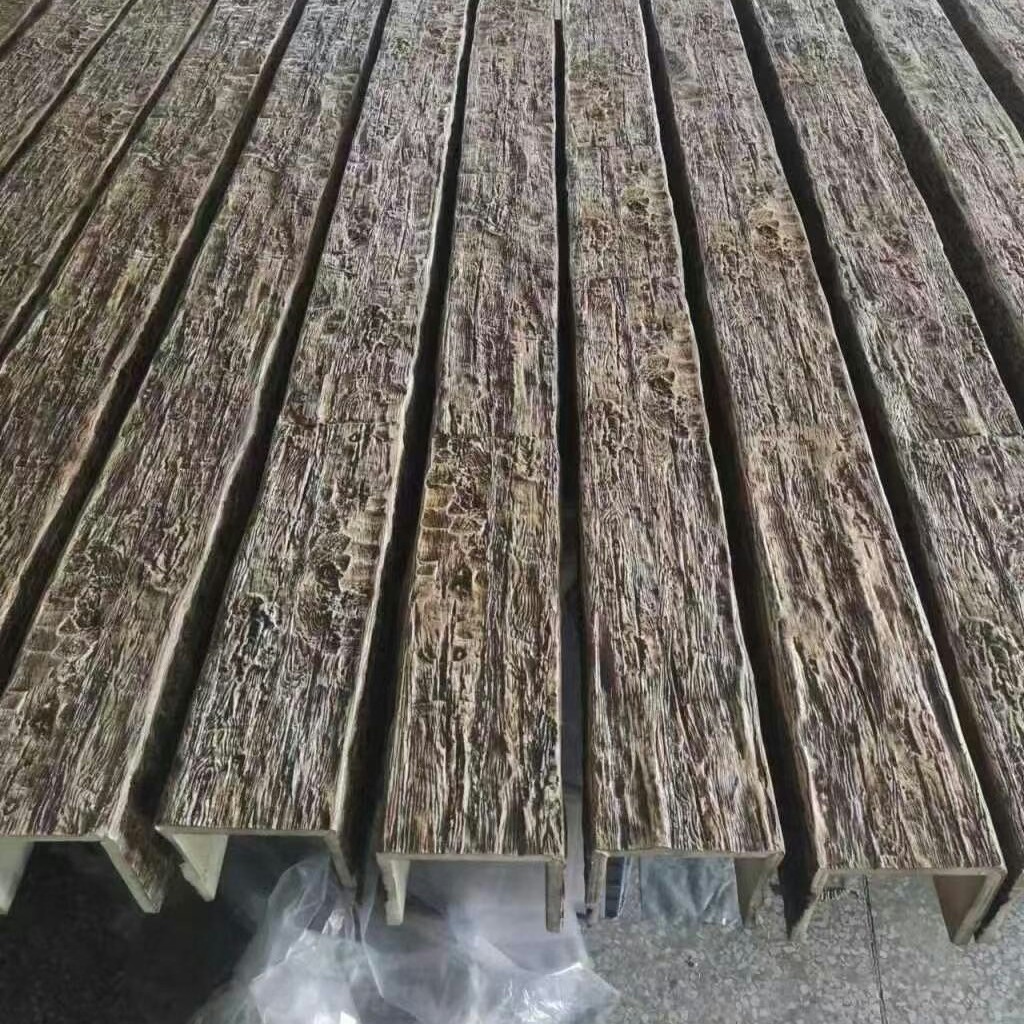
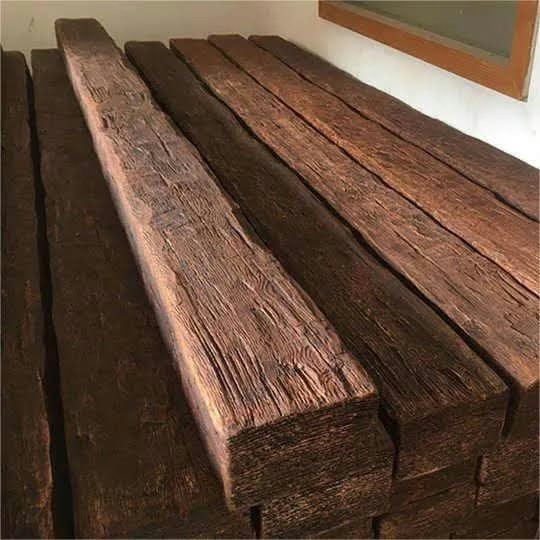
Pre-production samples serve multiple essential functions in custom beam procurement. First and most obviously, they allow buyers to evaluate actual product appearance before committing to full quantities. Photographs and descriptions cannot fully convey how light interacts with finishes, how pronounced grain patterns appear in context, or how different beams relate to each other visually.
Beyond appearance evaluation, samples enable practical testing that reveals performance characteristics. Samples can be subjected to cleaning tests, scratch resistance evaluation, and exposure testing that simulates conditions beams will encounter during their service life. These tests identify potential issues before they affect complete installations.
Samples also establish reference standards against which production quantities can be verified. When full orders arrive, comparing random selections to approved samples provides objective quality verification that protects both parties. This reference standard prevents disputes about whether production meets specifications, as the approved sample itself defines the acceptance criteria.

Initiating the Sample Process
The sample request process typically begins with detailed specifications from the buyer. These specifications should include desired wood species appearance, preferred finish colors, texture intensity expectations, and dimensional requirements. The more specific these specifications, the more closely manufacturers can target buyer expectations with sample production.
Manufacturers may request additional context to ensure appropriate sample creation. Room lighting conditions, adjacent materials, architectural style, and installation environment all influence appropriate finish selection. Experienced manufacturers ask questions that help identify optimal configurations rather than simply producing whatever their standard processes generate.
Timeline expectations should be established early in the process. Sample production requires dedicated manufacturing time that cannot be rushed without compromising quality. Typical sample lead times range from five to fifteen business days depending on complexity and manufacturer workload. Expedited service may be available for urgent requirements, though premium pricing often applies.
Evaluating Sample Quality
When samples arrive, systematic evaluation ensures thorough assessment before approval. Begin with overall visual inspection from normal viewing distances, assessing whether the general appearance matches expectations. Note any immediately apparent discrepancies that require attention before proceeding with detailed evaluation.
Close examination reveals details invisible from normal viewing distances. Grain pattern consistency, texture depth, color uniformity, and surface finish quality all merit attention. Run fingers across surfaces to assess texture characteristics that photographs cannot convey. Evaluate edges and end grain for consistency with face surfaces.
Contextual evaluation proves essential for accurate assessment. Samples should be viewed under lighting conditions matching the installation environment, positioned relative to other materials that will appear nearby, and evaluated from distances typical for the application. A sample that appears perfect in a warehouse may seem less suitable when integrated into its intended context.
Approval and Revision Cycles
When samples meet expectations, formal approval initiates production. Approval documentation should reference specific sample identifiers, date of approval, and any conditions or variations that have been agreed upon. This documentation protects both parties by establishing clear specifications that production must match.
When samples require modification, constructive feedback guides revision attempts. Rather than simply rejecting samples, providing specific feedback about what requires adjustment helps manufacturers understand and address concerns efficiently. Reference specific observations rather than general statements like "doesn't look right" to accelerate revision cycles.
Revision cycles typically require additional time and may involve additional costs depending on manufacturer policies. Budgeting for one or two revision rounds helps manage expectations and prevents pressure to approve unsuitable samples simply to meet deadlines. The investment in proper sample approval typically proves far less expensive than resolving problems after full production completes.
Documentation Best Practices
Comprehensive documentation throughout the sample approval process creates valuable records for future reference. Photograph samples from multiple angles under controlled lighting conditions. Record specific product specifications, batch numbers, and manufacturing identifiers that enable precise reordering. Note any variations or special conditions that affected approval decisions.
Create formal approval documentation that captures what was approved and by whom. Include sample retention policies that specify how long samples should be preserved and under what conditions. This documentation proves invaluable if questions arise about production quality or if reorders require matching to previous orders.
Communication records should be preserved as well. Email exchanges, specification documents, and meeting notes provide context that helps resolve ambiguities that may arise later. When multiple stakeholders participate in approval decisions, documentation ensures alignment and prevents miscommunication.
Production Monitoring
Approved samples should be referenced throughout the production process to ensure consistency. Quality control personnel use samples as comparison standards during inspection processes. Production workers reference samples when setting up equipment or mixing finishes. This consistent reference point maintains alignment between what was approved and what gets produced.
Random sampling during and after production provides ongoing verification that manufacturing remains aligned with approved standards. Statistical quality control approaches allow efficient verification of large quantities without requiring examination of every unit. When sampling identifies deviations, corrective action can address issues before entire productions are completed.
Common Sample Approval Challenges
Color matching between samples and production quantities occasionally presents challenges. Subtle variations in raw materials, mixing processes, and application conditions can create differences that become visible when samples and production are compared directly. Clear specifications about acceptable tolerance ranges help manage these inevitable variations.
Texture consistency across beam surfaces may also vary. Wood grain patterns, in particular, resist perfect replication across multiple pieces. Understanding that some variation is inherent in the material helps set appropriate expectations while ensuring that extreme variations are identified and addressed.
Dimensional variations, while less common than appearance issues, can affect installation compatibility. Sample evaluation should include dry-fit testing with mounting systems and connection hardware to verify that production quantities will install as expected. Catching dimensional issues in samples prevents problems with full orders.
The pre-production sample confirmation process represents an investment in project success that sophisticated buyers recognize as essential. By taking time to evaluate and approve samples properly, buyers protect themselves against costly errors while ensuring that finished installations meet the visual and performance expectations that motivated the project in the first place.
Technical References
ASTM standards cited in every specification
Test Data
Lab results from internal testing program
Updated 2026
Reviewed against current product specs


