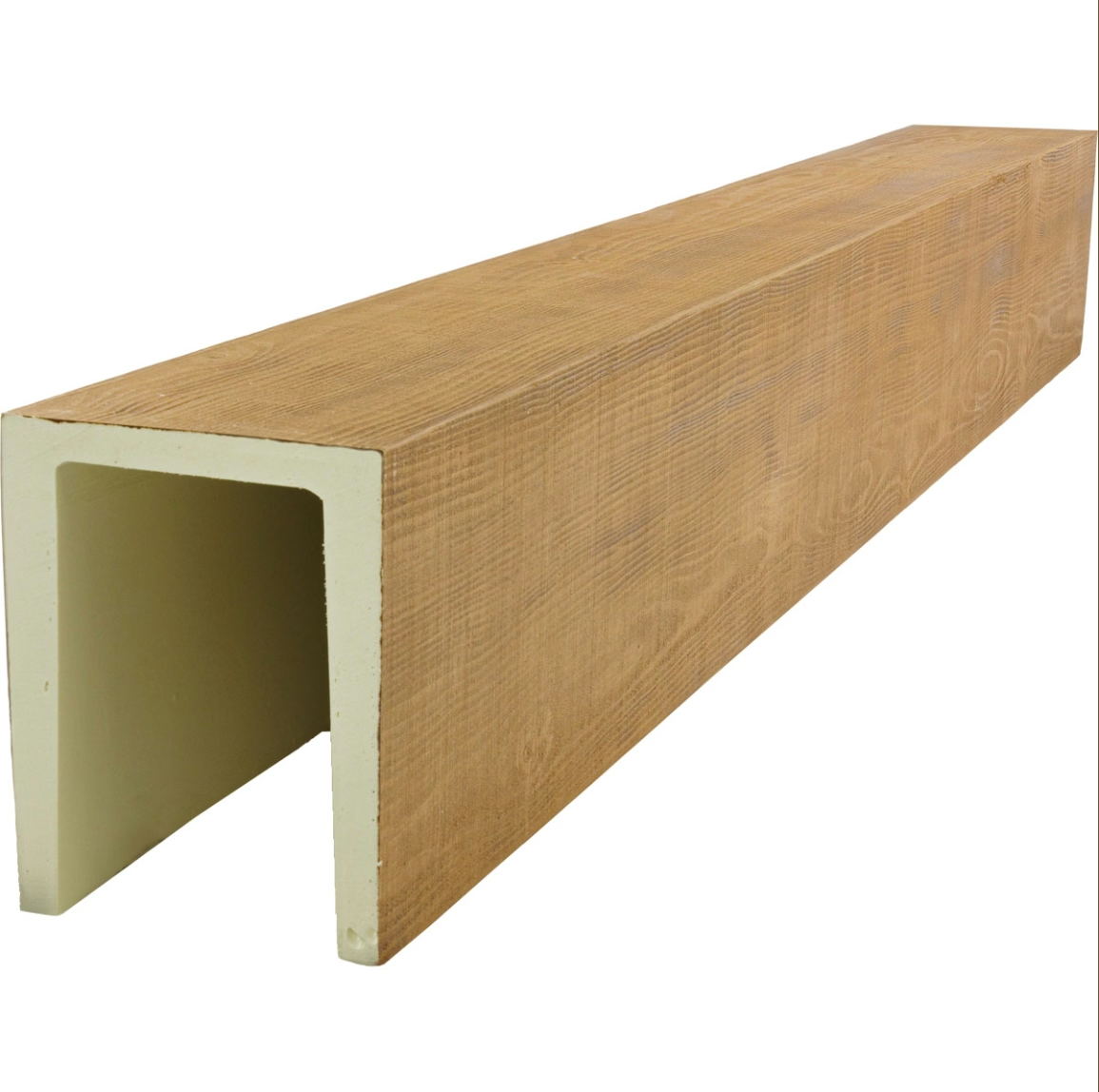
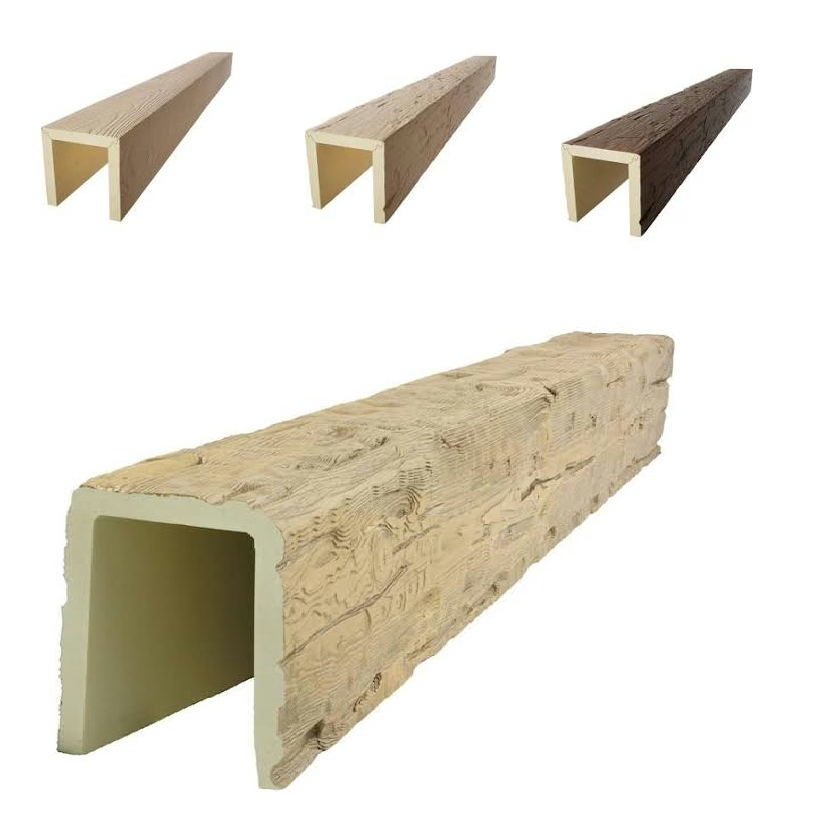
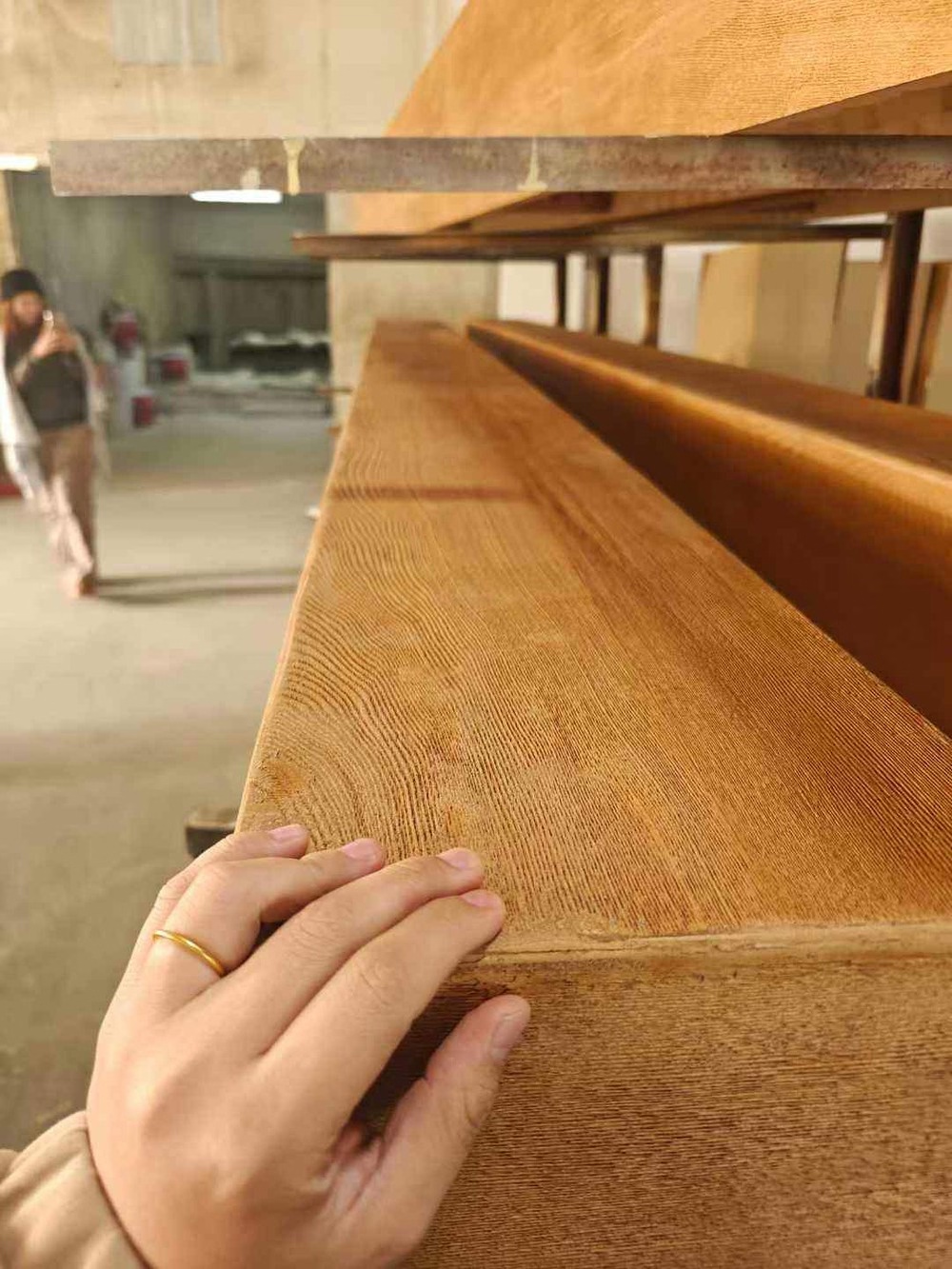
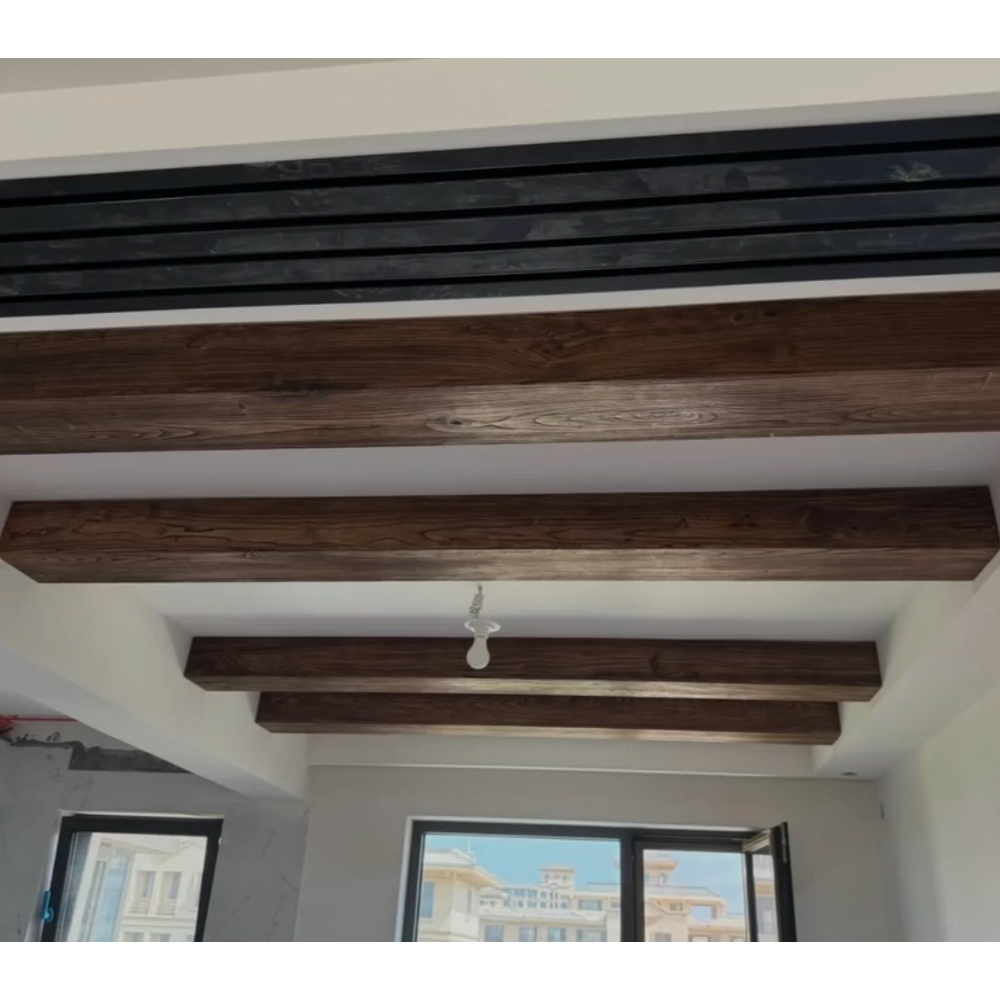
The quest for authentic wood appearance without wood's inherent limitations has driven innovation in synthetic building materials for generations. Early alternatives often appeared obviously artificial, their smooth surfaces and uniform patterns betraying their manufactured origins. Contemporary faux timber beams represent a fundamental transformation in this technology, using advanced manufacturing processes to capture details that even trained observers mistake for natural wood. Understanding how these products achieve their remarkable realism helps architects, builders, and property owners make informed decisions about incorporating them into their projects.
The manufacturing process begins with carefully selected natural wood samples that exemplify the species and style being replicated. These master samples undergo detailed scanning and analysis, capturing not only obvious features like grain patterns and knot locations but also subtle variations in surface texture, color gradients, and edge conditions. This comprehensive documentation provides the foundation for creating molds that reproduce these characteristics with fidelity impossible through manual replication.
Mold creation represents one of the most critical stages in achieving realistic appearance. Master craftsmen use the scanned wood samples to create negative molds that capture every surface detail in reverse. The mold surface must be perfectly smooth where no texture is desired while incorporating microscopic variations that create the tactile quality of natural wood. Multiple iterations and refinement ensure that the final mold produces pieces meeting the exacting standards of contemporary consumers who expect authenticity in their finishing materials.
Advanced Polyurethane Formulations
The polyurethane material itself has evolved significantly from early formulations that lacked durability or failed to accept finishes convincingly. Modern formulations begin with carefully selected polymer combinations that provide the flexibility required for detailed molding while maintaining the rigidity necessary for structural applications. These compounds cure to a consistent density throughout each piece, eliminating the variations that affect natural wood's appearance and performance.
Fire retardancy has become a standard requirement in commercial specifications and increasingly in residential applications as well. Contemporary formulations incorporate fire-retardant additives that achieve meaningful flame spread ratings without compromising surface finish quality or structural properties. This safety enhancement occurs invisibly within the material matrix, requiring no visible coatings or periodic reapplication to maintain fire performance throughout the product's service life.
UV stability represents another critical formulation consideration, particularly for beams installed in spaces with significant natural light exposure. Early polyurethane products yellowed or chalked when exposed to sunlight, quickly revealing their synthetic nature. Modern UV-stable formulations maintain their appearance through years of exposure, allowing installation in sunlit atriums and conservatories without concerns about accelerated degradation.
Surface Texture Reproduction
The tactile authenticity of contemporary faux timber beams depends on sophisticated texture reproduction that goes far beyond simple surface embossing. High-quality manufacturers use multi-stage texturing processes that create the layered appearance natural wood develops over decades of aging. Initial surface textures capture large-scale grain patterns, while secondary treatments add fine grain details and surface wear that suggests genuine age.
Knot reproduction demonstrates the attention to detail distinguishing premium products from lesser alternatives. Natural wood knots vary dramatically in size, shape, color, and surrounding grain distortion. The best faux beams incorporate multiple knot styles across a single piece, with the wood grain clearly bending around and through each knot structure. This organic variation creates the visual interest that makes natural wood so appealing and synthetic alternatives so often disappointing.
Edge and end grain textures receive equal attention during manufacturing development. Unlike surface textures that might be captured in a single mold operation, edge details require specialized processing that maintains consistent appearance around the beam's perimeter. End grain, where the beam would naturally be cut perpendicular to the grain direction, presents particular challenges that premium manufacturers solve through specialized treatments creating the distinctive porous texture of natural wood ends.
Color Application Techniques
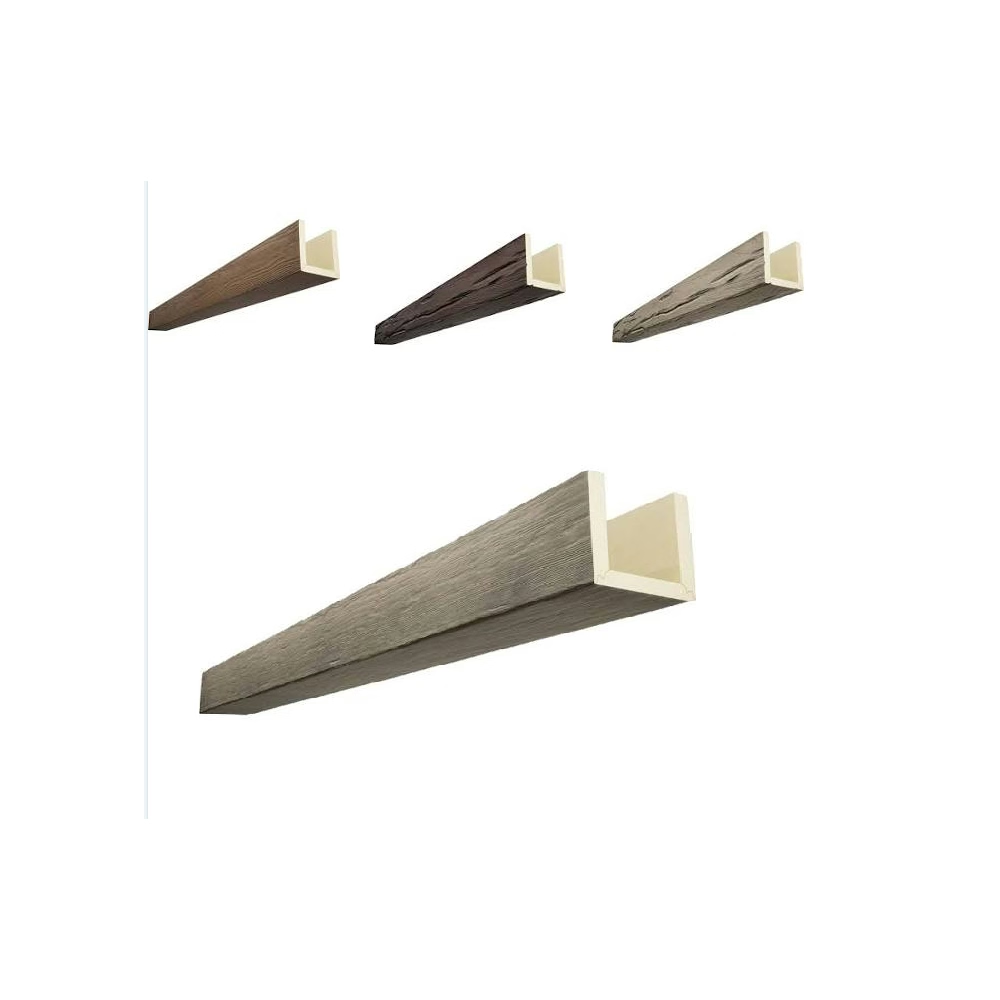
Achieving realistic coloration in faux timber beams requires techniques far more sophisticated than simple painting. Natural wood colors arise from complex interactions between wood chemistry and light, creating depth and variation that flat colors cannot reproduce. Contemporary manufacturers employ multiple application methods including layered staining, toning, and glazing that build up color in ways that suggest the dimensional quality of natural wood.
Grain highlighting uses subtle color variations to emphasize the flow of wood fibers across the beam surface. This technique creates visual movement that draws the eye along the beam's length, mimicking how natural light reveals wood grain structure. The color intensity varies systematically across the surface, darker in valley areas and lighter on raised grain peaks, just as genuine wood responds to illumination.
Finish application protects these carefully applied colors while maintaining their visual depth. Modern topcoats range from matte to satin sheens that replicate various natural wood finishes without the maintenance requirements of actual wood coatings. Some manufacturers offer multiple finish options within a single product line, allowing selection of appearance without changing the underlying beam material.

Quality Control and Consistency
Manufacturing precision enables quality control standards impossible with natural materials. Each faux beam emerges from the production process conforming to exact dimensional specifications, eliminating the sorting and selection required when working with natural wood. Installers know precisely what they will receive, allowing accurate project planning and scheduling.
Surface consistency between pieces ensures that installations requiring multiple beams present a uniform appearance. Natural wood beams might vary significantly in color, grain density, or knot frequency even when cut from the same tree. Faux beam production maintains consistency across entire production runs, allowing installations that appear as though a single beam was replicated rather than assembled from unrelated pieces.
Dimensional stability testing verifies that each beam maintains its shape and size throughout storage, transport, and installation. Unlike natural wood that may warp, twist, or bow in response to humidity changes, quality faux beams remain dimensionally consistent. This stability simplifies handling and installation while ensuring that finished installations retain their appearance indefinitely.
Environmental Considerations
The sustainability profile of faux timber beams offers advantages that increasingly influence purchasing decisions. Polyurethane production requires no timber harvest, preserving forests while meeting design demands for wood aesthetics. This conservation benefit multiplies across installations, potentially saving significant timber volume that would otherwise be harvested for decorative applications.
Manufacturing efficiency further enhances the environmental profile of faux timber products. Production facilities can optimize material usage, recycling waste material back into new products or into other industrial applications. Natural wood processing generates significant waste through sawdust, chips, and pieces rejected due to defects, while faux beam production captures nearly all input material in useful products.
The longevity of quality faux timber beams contributes to reduced environmental impact over their service life. Natural wood beams in demanding applications may require replacement after a decade or two due to deterioration, while properly installed faux beams remain serviceable for generations. This extended service life reduces the replacement frequency and associated environmental costs of ongoing maintenance.
Selecting Quality Products
Distinguishing premium faux timber beams from inferior alternatives requires attention to several quality indicators. Surface texture depth provides an immediate comparison point, as high-quality products feel convincingly like natural wood to the touch while lesser products often feel plasticky or uniformly smooth. Running your hand across the beam surface reveals whether the texture matches wood's characteristic irregularity.
Finish quality becomes apparent through visual inspection under various lighting conditions. Premium products maintain consistent appearance across the entire surface without patches of uneven color or visible application marks. The finish should enhance rather than obscure the underlying texture, providing visual depth that suggests dimensional material rather than flat coating.
Warranty coverage indicates manufacturer confidence in their products. Extended warranties covering ten years or more suggest that the manufacturer has thoroughly tested their products and stands behind their performance. Products carrying only minimal warranty coverage may indicate formulation or manufacturing concerns that the manufacturer prefers not to publicize.
Installation Considerations
While faux timber beams offer numerous advantages over natural wood, successful installation requires attention to material-specific requirements. The optimal adhesive selection differs between polyurethane and natural wood, requiring products specifically formulated for synthetic substrates. Using incorrect adhesive may result in bond failures that compromise installation integrity.
Fastening strategies must account for polyurethane's different holding characteristics compared to natural wood. Standard wood screws may strip out if overtightened, while anchor systems designed for masonry or drywall provide insufficient engagement. Quality manufacturers specify appropriate fastening methods, and following these recommendations ensures secure, lasting installations.
Handling during installation requires less care than natural wood would demand, as faux beams resist the impacts and scratches that damage natural materials. This durability simplifies jobsite logistics while reducing waste from damaged materials. However, sharp objects should still be kept away from beam surfaces, as the finish can be cut or gouged despite the underlying material's toughness.
Technical References
ASTM standards cited in every specification
Test Data
Lab results from internal testing program
Updated 2026
Reviewed against current product specs