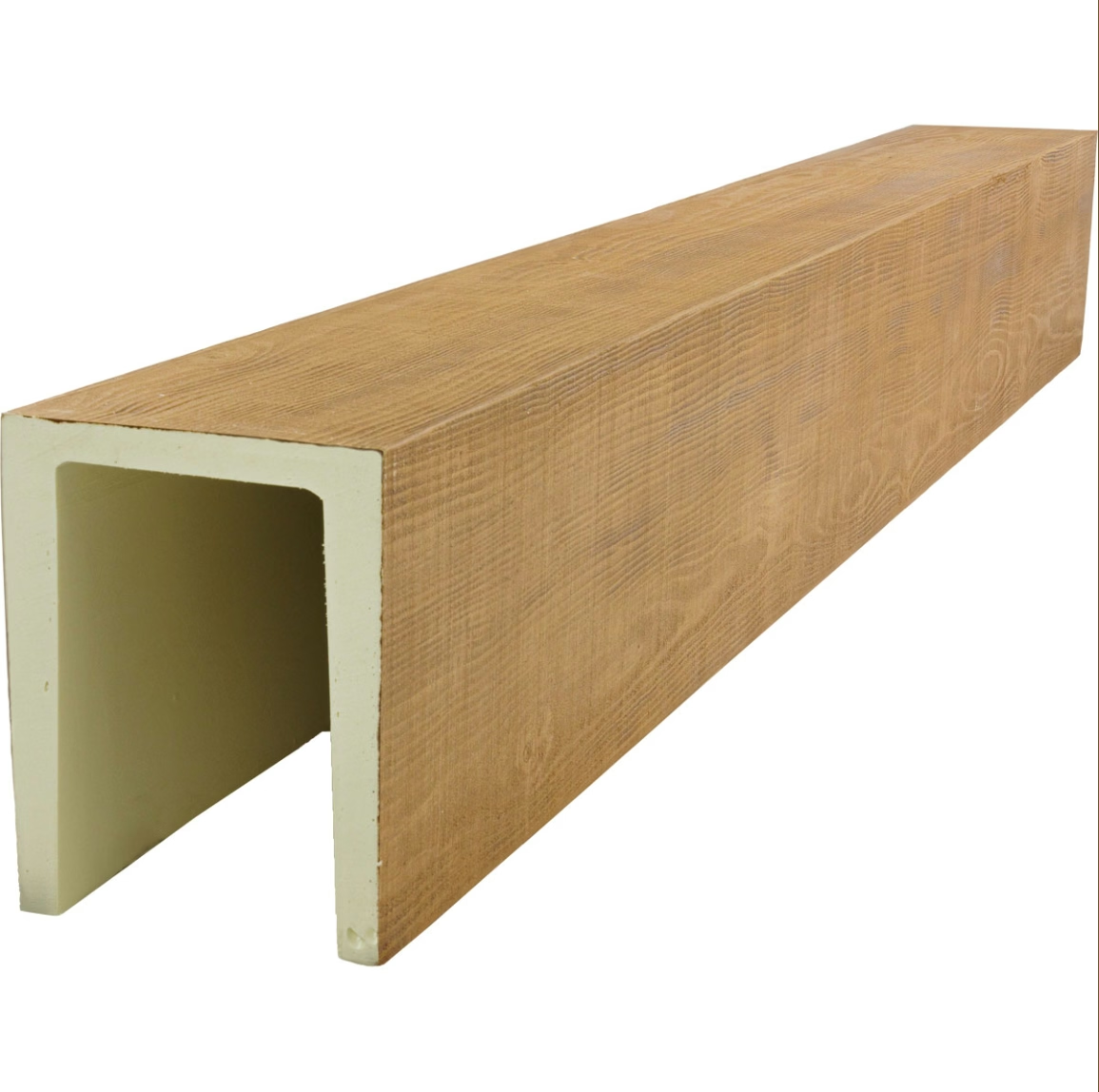
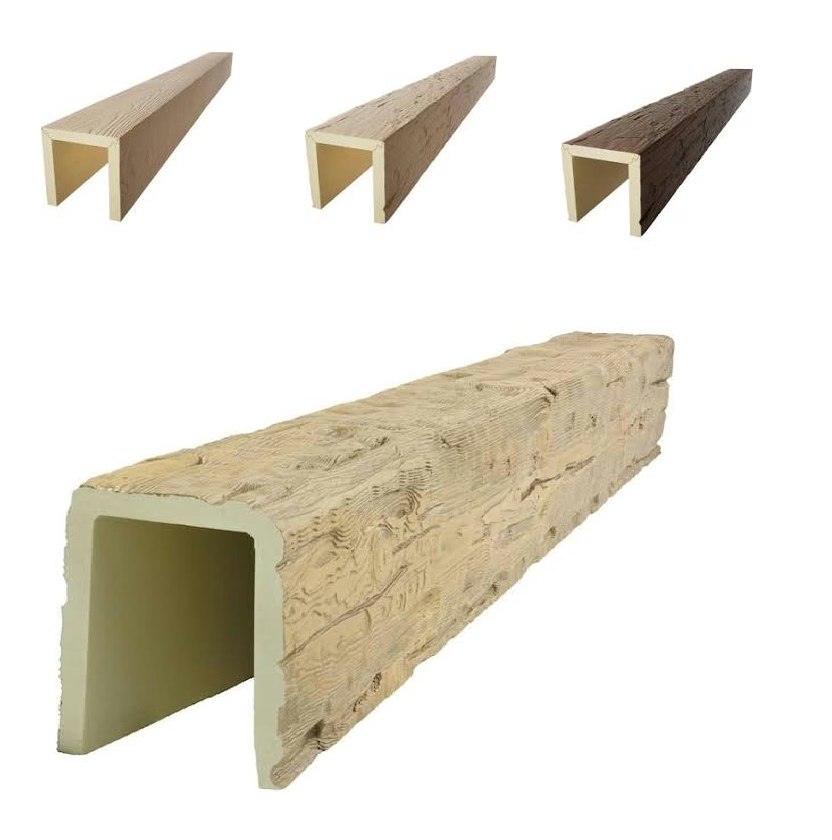
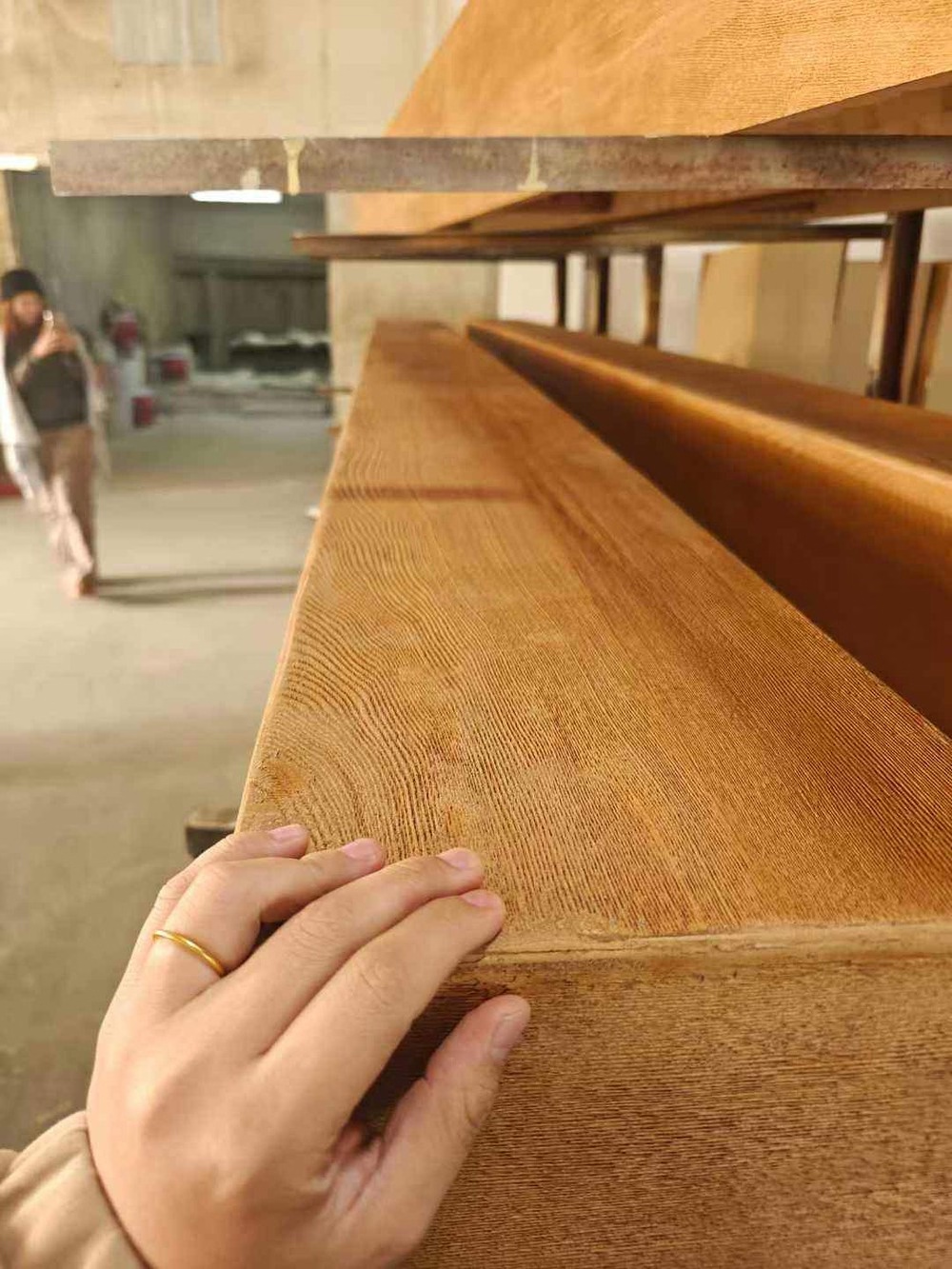
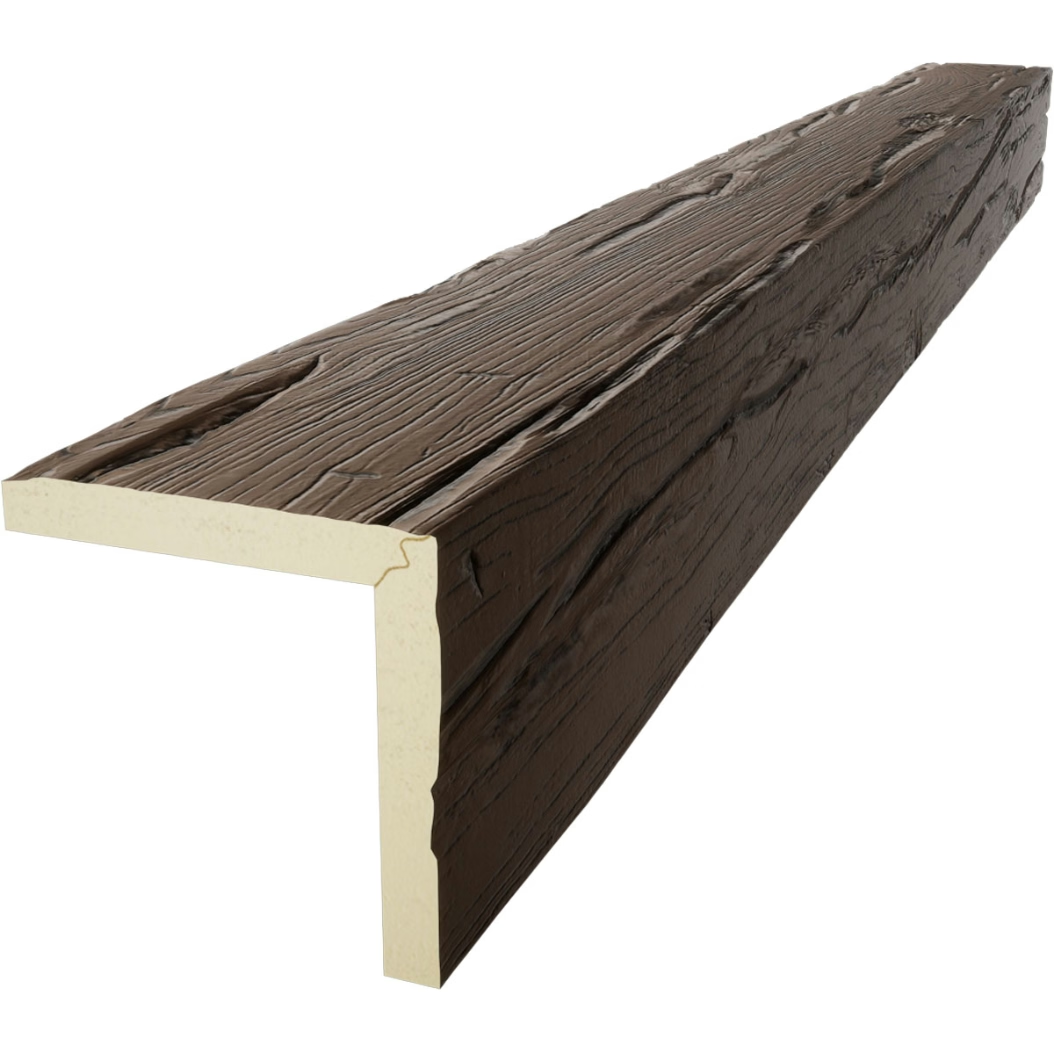
The global construction and renovation market increasingly recognizes polyurethane faux wood beams as essential finishing materials. For international buyers—distributors, developers, construction companies, and design firms—understanding what distinguishes export-grade products from standard alternatives directly impacts project success. Premium export-grade polyurethane building materials represent a manufacturing and quality category designed specifically for the demands of international commerce: rigorous consistency, comprehensive documentation, reliable logistics, and performance that doesn't vary across climate zones or installation contexts.
These products serve markets ranging from North American residential renovations through European commercial developments, Middle Eastern luxury hospitality projects, and Asian-Pacific new construction. Each market brings distinct requirements—regulatory compliance, cultural aesthetic preferences, logistics constraints—and export-grade materials address these variations while maintaining the consistent quality that brands require.
Defining Export-Grade Quality Standards
The term "export-grade" encompasses manufacturing, testing, and documentation practices that exceed standard production specifications. These elevated standards exist because international supply chains expose products to conditions and requirements that domestic distribution doesn't encounter.
Manufacturing consistency represents the foundation of export-grade quality. Every beam in a production batch must match specified dimensions, weight, texture, and finish precisely. This consistency enables accurate project estimation, predictable installation behavior, and results that meet client expectations. Premium manufacturers achieve this consistency through automated production processes, rigorous raw material specifications, and statistical quality control that identifies deviations before products ship.
Raw material selection distinguishes export-grade production. Premium polyurethane formulations utilize consistent, high-quality inputs that perform predictably across temperature and humidity ranges. These formulations resist UV degradation, maintain dimensional stability, and accept fasteners and adhesives reliably. Budget formulations may perform adequately under ideal conditions but fail when exposed to the variable conditions of international shipping and diverse installation environments.
Surface preparation and finishing receive particular attention in export-grade production. Factory finishes must survive container shipping, warehouse storage, and on-site handling without damage. Premium manufacturers utilize deep-penetration finishing systems that integrate colorants with the substrate, creating finishes that resist chipping, scratching, and UV-related fading. The investment in finishing quality pays dividends throughout the supply chain and into the installation's service life.
Testing and certification validate quality claims. Export-grade materials typically undergo testing for flame resistance, structural performance, emissions, and durability. Third-party testing provides independent verification that products meet specifications and applicable regulations. This documentation proves essential for customs clearance, insurance purposes, and client confidence in markets where specification verification is standard practice.
Logistics and Supply Chain Advantages
Export-grade polyurethane materials offer logistics advantages that ripple through project economics. Understanding these advantages helps buyers optimize procurement and reduce total project costs.
Packaging designed for international shipping protects products through the supply chain. Premium export packaging utilizes reinforced cartons, protective inner wrapping, and securing materials that prevent damage during container loading, ocean freight, and overland transportation. The investment in proper packaging typically costs less than the damage claims and project delays that inadequate packaging creates.
Weight optimization reduces shipping costs without compromising quality. Polyurethane beams weigh substantially less than equivalent timber products—a beam that would weigh hundreds of pounds in solid timber might weigh ten pounds in premium polyurethane. This weight differential translates directly to reduced shipping costs, particularly for air freight or expedited shipments. It also simplifies on-site handling and reduces labor requirements for installation.
Dimensional packaging efficiency affects container utilization. Premium manufacturers design their product lines with export packaging efficiency in mind, developing beam lengths and profiles that pack densely without waste. This optimization can reduce shipping costs by fifteen to twenty-five percent compared to less-optimized alternatives, a meaningful saving on large projects.
Lead time reliability distinguishes premium export suppliers. International projects often operate on tight schedules where delays cascade through dependent activities. Premium manufacturers maintain production capacity and raw material inventories that support consistent lead times, enabling accurate project scheduling. This reliability proves particularly valuable for projects with fixed completion dates or liquidated damages clauses.

Performance Across Climate Zones
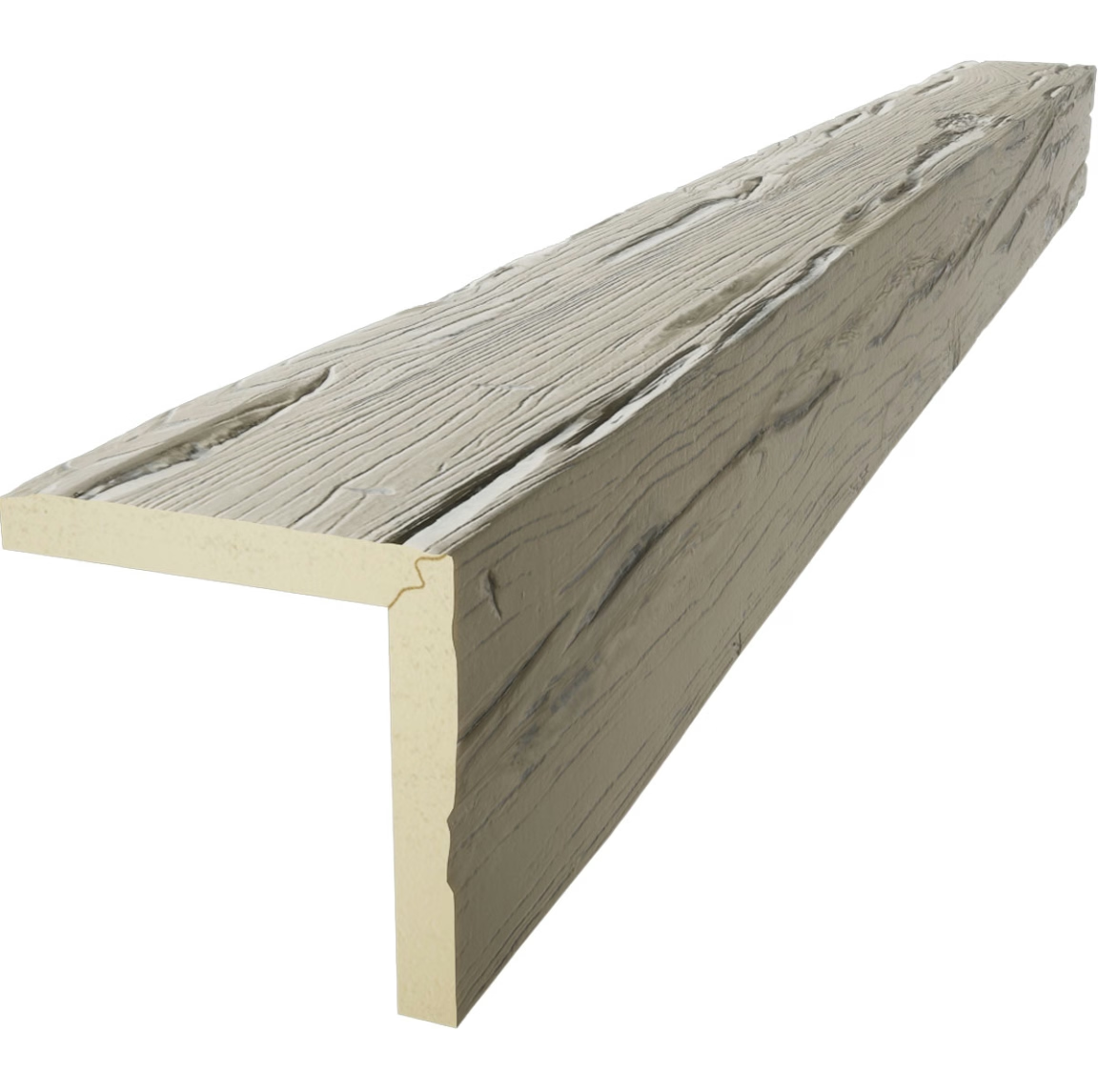
The dimensional stability of premium polyurethane proves essential for international projects spanning climate variations. From tropical humidity to desert aridity, from temperate seasonal changes to consistently controlled interior environments, export-grade materials perform consistently without the adaptation requirements that affect timber products.
Humidity resistance eliminates the moisture-related concerns that plague timber in tropical and coastal environments. Premium polyurethane doesn't absorb water, doesn't swell, doesn't develop mold or rot, and doesn't release harmful emissions as it degrades. These characteristics prove particularly valuable in regions where high humidity is persistent and where timber products would require expensive treatment or frequent replacement.
Temperature stability addresses concerns in extreme climate zones. Polyurethane maintains its dimensions and properties across temperature ranges that would cause timber to check, split, or delaminate. In hot, sunny climates, premium polyurethane formulations resist softening and maintain their structural integrity. In cold environments, the material doesn't become brittle or crack under impact loads.
UV resistance has historically challenged polyurethane products, but premium export-grade materials utilize advanced additive packages that provide substantial protection against ultraviolet degradation. This protection proves essential for installations in high-altitude locations, in buildings with significant glass exposure, and in outdoor applications where direct sunlight is unavoidable.
The consistent performance across climates simplifies the specification process for multi-project buyers. A product that performs in Vancouver will perform equally well in Dubai or Sydney. This consistency reduces the need for regional product selection, simplifies inventory management, and ensures that results remain consistent regardless of installation location.
Regulatory Compliance and Documentation
International construction markets increasingly require documentation demonstrating regulatory compliance. Export-grade polyurethane materials ship with comprehensive documentation packages that support compliance verification and simplify customs clearance.
Flame resistance certification has become standard requirement in most markets. Premium export-grade materials are tested and certified to applicable flame resistance standards, with documentation that supports compliance verification by authorities having jurisdiction. This certification typically covers both the material itself and its flame contribution characteristics.
Emissions testing addresses indoor air quality concerns that have grown in importance across all markets. Premium polyurethane products are tested for volatile organic compound emissions and typically achieve low or very low emissions ratings that satisfy the most stringent requirements. This testing proves essential for projects seeking green building certifications or operating in markets with strict indoor air quality regulations.
Material safety data sheets and technical data packages support safe handling, storage, and installation. Export documentation includes comprehensive information about product characteristics, safe handling procedures, and installation requirements. This documentation protects both installers and end users while providing the technical information that specification professionals require.
Country of origin documentation facilitates customs classification and tariff optimization. Premium manufacturers maintain documentation that clearly establishes origin, supporting accurate tariff classification and duty calculations. For buyers optimizing supply chain economics, this documentation proves essential for procurement planning.
Supporting International Business Relationships
Successful international trade in construction materials requires more than quality products—it requires relationships and support structures that enable buyers to succeed. Premium export suppliers recognize this reality and invest in support capabilities that differentiate their offerings.
Technical specification support helps international buyers accurately specify products for their specific markets and applications. Premium suppliers maintain technical documentation in multiple languages and can provide specification assistance that addresses local requirements, building codes, and aesthetic preferences. This support prevents specification errors that would create project problems or require costly substitutions.
Sample programs enable buyers to evaluate products before committing to large orders. Premium export suppliers provide sample beams and finish samples that allow physical evaluation in the buyer's market and lighting conditions. This capability proves essential for projects where color and texture matching to existing elements is critical.
Responsive communication across time zones supports project coordination. Premium suppliers maintain customer service capabilities that accommodate international business hours, enabling timely response to questions and concerns regardless of the time difference involved. This responsiveness prevents delays and demonstrates the supplier commitment that characterizes long-term business relationships.
Logistics coordination simplifies the complex process of international delivery. Premium suppliers can coordinate with shipping companies, customs brokers, and inland transportation providers to ensure smooth delivery to final destinations. This coordination capability reduces the buyer's logistics burden and ensures that products arrive in condition and on schedule.
Export-grade polyurethane building materials and faux wood beams represent a mature product category that serves international markets effectively. For buyers seeking reliable quality, consistent performance, and supply chain efficiency, premium export products deliver advantages that standard alternatives cannot match. The combination of manufacturing excellence, logistics optimization, and relationship support creates value that extends throughout the project lifecycle.
Technical References
ASTM standards cited in every specification
Test Data
Lab results from internal testing program
Updated 2026
Reviewed against current product specs