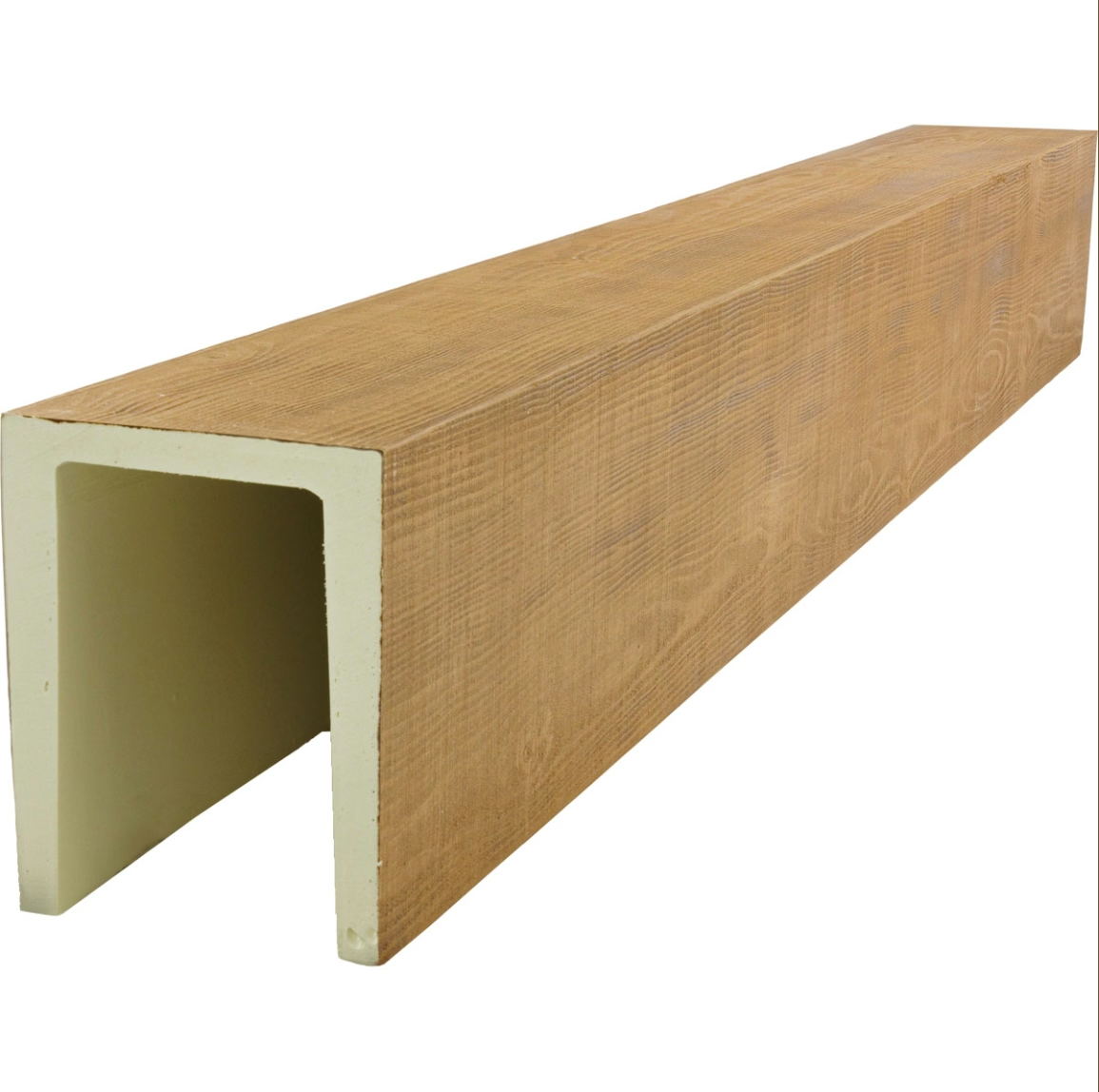
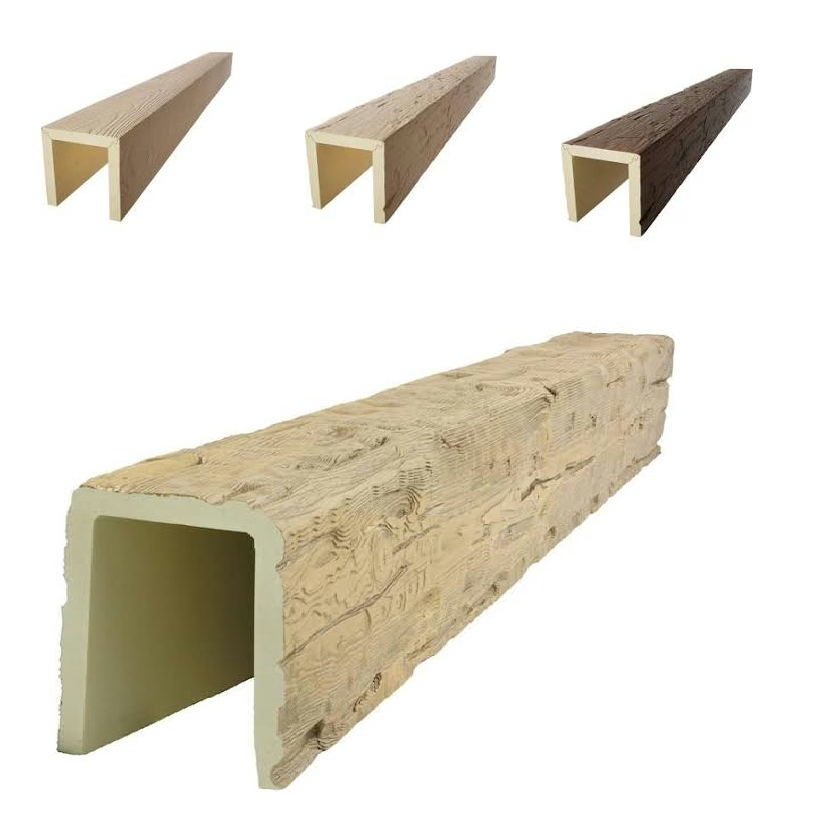
The distinction between structure and finish represents one of the fundamental organizing principles of building design and construction. Structure provides the mechanical systems that keep buildings standing, the envelopes that separate interior from exterior, and the infrastructure that enables occupancy. Finishing elements address not structural performance but rather the sensory experience of inhabiting those structures—the visual richness, tactile quality, and emotional character that distinguish buildings designed for human occupation from mere shelter. Within this hierarchy, finishing elements carry special significance because they are the surfaces that occupants encounter continuously, the elements that register most immediately in perception and memory. Premium faux wood beams occupy an important position among finishing elements, providing the visual benefits of timber without the structural complications.
The quality of finishing elements communicates the overall quality of construction to anyone who enters a space. Even if the underlying structure is technically adequate, cheap or poorly executed finishes create an impression of inferior quality that colors all subsequent perception. Conversely, high-grade finishing elements suggest care and craftsmanship throughout the building, elevating the perceived quality of everything they surround. This principle operates regardless of whether observers consciously analyze what they see; the impressions form automatically through the same perceptual mechanisms that have evolved to evaluate environments for safety and suitability. Buildings that communicate quality through refined finishes generate trust and satisfaction, while those that skimp on finishing elements undermine their own value regardless of underlying structural adequacy.

The selection of finishing elements should be guided by the concept of appropriate quality—the level of finish that matches the building's intended use, market positioning, and lifecycle expectations. Luxury residences and high-end commercial spaces demand finishing elements that reward close inspection, that exhibit the subtleties and imperfections that characterize genuinely crafted objects. Commodity buildings may appropriately employ less refined finishes that provide acceptable appearance at economy pricing. Faux wood beams span this quality spectrum, with premium products designed for high-end applications and economy alternatives suitable for budget projects. Understanding this range enables accurate specification that matches quality to context rather than defaulting to either extreme.
The relationship between finishing elements and building systems requires careful coordination during design and construction. Faux wood beams intersect with lighting, HVAC, fire suppression, and acoustic systems in ways that demand integrated planning. Recessed light fixtures must be positioned to avoid beam interference or must be coordinated to appear intentional within the beam composition. Supply and return air grilles must be located where they will not create visible drafts or temperature stratification. Sprinkler heads must be positioned to satisfy code requirements while maintaining beam aesthetic integrity. Premium manufacturers provide technical guidance on these coordination issues, while experienced contractors develop installation sequences that accommodate system requirements without compromising finish quality.
Environmental performance considerations increasingly influence finishing element selection as building codes and rating systems impose stricter requirements. Natural timber in interior applications raises concerns about deforestation, transportation emissions, and the chemical treatments sometimes applied to extend service life. Faux wood beams address these concerns through manufacturing processes that minimize environmental impact and through product formulations that avoid harmful chemical additives. Premium manufacturers increasingly incorporate recycled content in their polyurethane compounds and design products for eventual recycling at end of life. These environmental attributes support green building certification requirements while aligning with the values of building owners and occupants who prioritize sustainability.
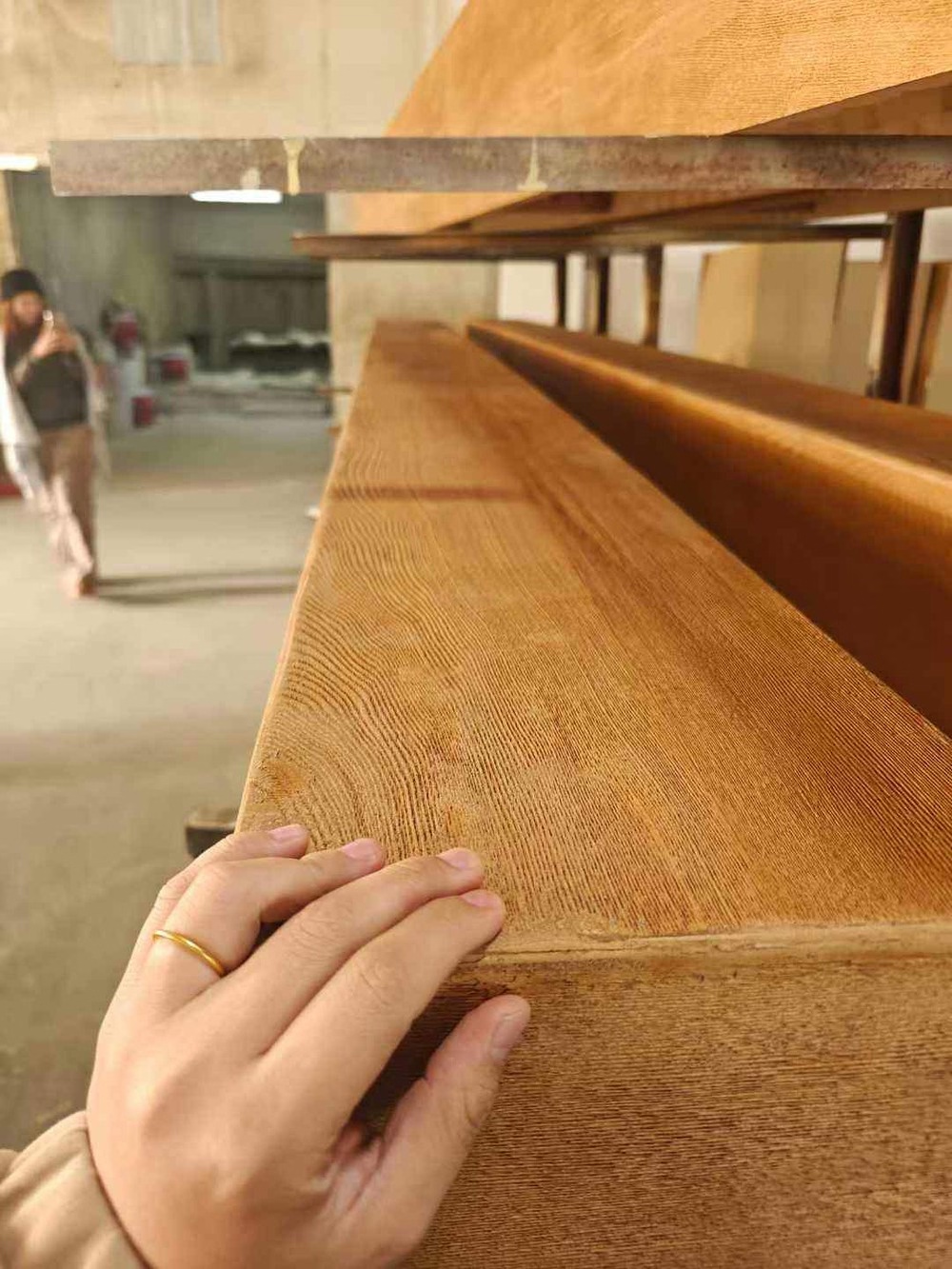
The tactile dimension of finishing elements often receives insufficient attention despite its importance to overall experience. People perceive spaces through multiple sensory channels simultaneously, with touch providing information that sight alone cannot capture. The smoothness of a polished surface, the warmth of wood grain under fingertips, the subtle texture that suggests age and authenticity—these tactile qualities shape impressions in ways that visual observation cannot replicate. Premium faux wood beams incorporate surface textures designed to provide satisfying tactile experience, with grain patterns and color variations that invite touch rather than appearing artificially uniform or plasticky. This attention to tactile quality distinguishes premium products from alternatives that may look acceptable from a distance but fail to reward closer engagement.
Maintenance requirements for finishing elements should be considered during specification, as ongoing care demands affect lifetime ownership cost and occupant satisfaction. Some finishes require regular attention from trained maintenance staff; others can be cleaned by ordinary custodial personnel using standard procedures. Faux wood beams fall into the latter category, with cleaning requirements no more demanding than those for painted millwork. This maintenance simplicity reduces operating costs while ensuring that the beams continue to present their best appearance throughout their service life. Building owners appreciate the reduced supervision and troubleshooting that accompanies maintenance-simple finishes.
The integration of finishing elements with building controls and smart systems represents an emerging consideration for contemporary construction. Faux wood beams can accommodate integrated lighting, sensors, and other electronic components without compromising their appearance or structural performance. Premium manufacturers work with technology integrators to develop beam products that serve as platforms for building intelligence while maintaining their role as high-grade finishing elements. This convergence of aesthetics and technology positions faux beams as solutions that satisfy current requirements while remaining adaptable to future capabilities.
Technical References
ASTM standards cited in every specification
Test Data
Lab results from internal testing program
Updated 2026
Reviewed against current product specs