The pursuit of interior excellence drives significant investment by homeowners, designers, and building professionals who recognize that the quality of built environments profoundly affects human experience. Spaces that inspire, comfort, and delight require thoughtful design and appropriate material selection, with each choice contributing to the cumulative effect that determines whether environments succeed or merely function. Among the available options for interior enhancement, premium faux wood beams stand out as investments that reliably deliver substantial returns in aesthetic quality, practical performance, and enduring value. This comprehensive assessment examines why these products have earned their reputation as the ultimate interior upgrade choice.
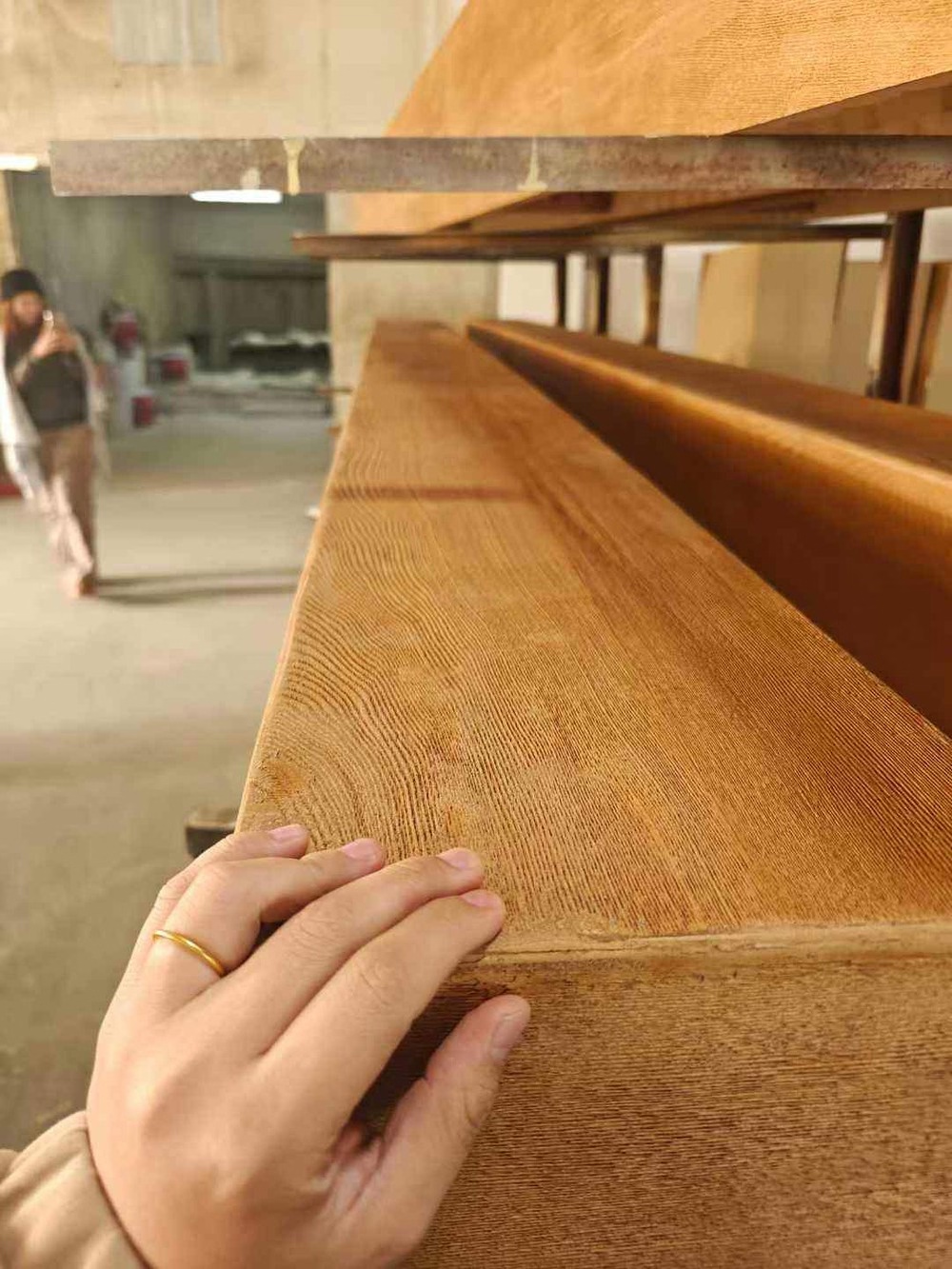
Aesthetic impact represents the most immediately apparent benefit of faux wood beam installations, and in this dimension the products deliver remarkably. The visual transformation that beams provide exceeds what their modest cost would suggest possible, with ceiling treatments that suggest craftsmanship, warmth, and architectural sophistication. Premium products achieve authentic wood appearance through manufacturing techniques that capture the subtle complexities of natural grain, the dimensional variations that characterize genuine timber, and the three-dimensional presence that makes beams read as architectural elements rather than surface decorations. This convincing authenticity distinguishes premium faux beams from cheap imitations that may resemble wood from a distance but fail to reward closer inspection.

Practical performance characteristics of premium faux beams address concerns that might otherwise temper enthusiasm for their aesthetic benefits. The lightweight construction eliminates structural requirements that authentic timber would impose, allowing installation in virtually any building without engineering evaluation or structural modification. The dimensional stability of polyurethane ensures that installed beams maintain their appearance regardless of humidity fluctuations, temperature changes, or building system performance variations. The durability of the material resists impacts, scratches, and the wear that occurs in busy households or commercial environments. These performance characteristics ensure that the aesthetic benefits of beam installation persist throughout the product's service life without the maintenance interventions that authentic timber would require.
The economic value proposition of faux wood beams strengthens when all relevant factors are considered. Initial acquisition costs are favorable compared to authentic timber, particularly when structural engineering, specialized installation, and ongoing maintenance requirements are factored into the authentic wood comparison. Installation labor costs are reduced by the lightweight handling and adhesive attachment methods that eliminate the equipment and personnel that timber installation would require. Lifetime ownership costs are minimized by the elimination of refinishing, repair, and replacement expenses that accumulate for authentic timber over time. The combination of lower acquisition costs, reduced installation expenses, and minimized lifetime maintenance creates an economic case that favors faux beams across virtually every application.
Design flexibility distinguishes premium faux beams from authentic timber alternatives in ways that expand creative possibilities. Natural wood dimensions are constrained by tree sizes and milling limitations; polyurethane casting enables arbitrary lengths, profiles, and surface treatments that exist only in imagination. Designers have specified beams with compound curves, integrated lighting channels, and decorative details that woodworkers could only approximate with great difficulty. This freedom to design without material constraints enables solutions that would be impractical or impossible with authentic timber, allowing designers to realize visions that previously existed only in concept. The design flexibility of faux beams has catalyzed innovation in ceiling treatment and architectural detailing.
Environmental considerations increasingly influence material selection decisions as sustainability awareness grows among consumers, designers, and building professionals. Faux wood beams address environmental concerns through multiple mechanisms: they eliminate demand for slow-growing timber species, they incorporate recycled content in some formulations, and they provide long service life without the chemical treatments that some wood products require. While polyurethane production involves petrochemical inputs, the extended service life and eliminated replacement cycles of faux beams reduce the cumulative environmental impact compared to timber alternatives that require periodic replacement. This environmental profile, while not perfect, compares favorably with authentic wood when full lifecycle impacts are considered.
The verification of quality in faux wood beams requires attention to the characteristics that distinguish premium products from inferior alternatives. Surface texture depth and authenticity determines whether beams reward close inspection or reveal themselves as cheap imitations. Finish adhesion and color consistency ensures that appearances persist without the fading, chipping, or discoloration that lesser products exhibit. Dimensional accuracy enables precise fitting and clean joints that contribute to professional-quality installations. Premium manufacturers address these quality dimensions through manufacturing processes designed for consistency and durability, producing products that satisfy discriminating expectations. The investment in premium quality returns through installations that perform beautifully for decades.
The comprehensive assessment of premium faux wood beams as interior upgrade choices reveals a product category that delivers on its promises across every relevant dimension. Aesthetic impact rivals authentic timber while surpassing cheap imitations. Practical performance eliminates the structural demands and maintenance requirements that accompany natural wood. Economic value proves favorable when lifecycle costs are properly considered. Design flexibility enables creative solutions that authentic materials cannot achieve. Environmental impact compares favorably when full lifecycle effects are evaluated. Quality verification ensures that premium products satisfy expectations that inferior alternatives disappoint. These combined advantages position premium faux wood beams as the definitive choice for interior upgrades that demand excellence without requiring excessive investment.
Technical References
ASTM standards cited in every specification
Test Data
Lab results from internal testing program
Updated 2026
Reviewed against current product specs