The architecture and construction industry has witnessed a significant shift in how designers approach ceiling decoration over the past decade. What once required heavy timber harvesting, specialized installation crews, and weeks of labor now can be accomplished in a fraction of the time using modern material solutions. Premium polyurethane faux wood beams represent one of the most compelling innovations in this space, offering an array of benefits that appeal to both residential homeowners and commercial project managers.
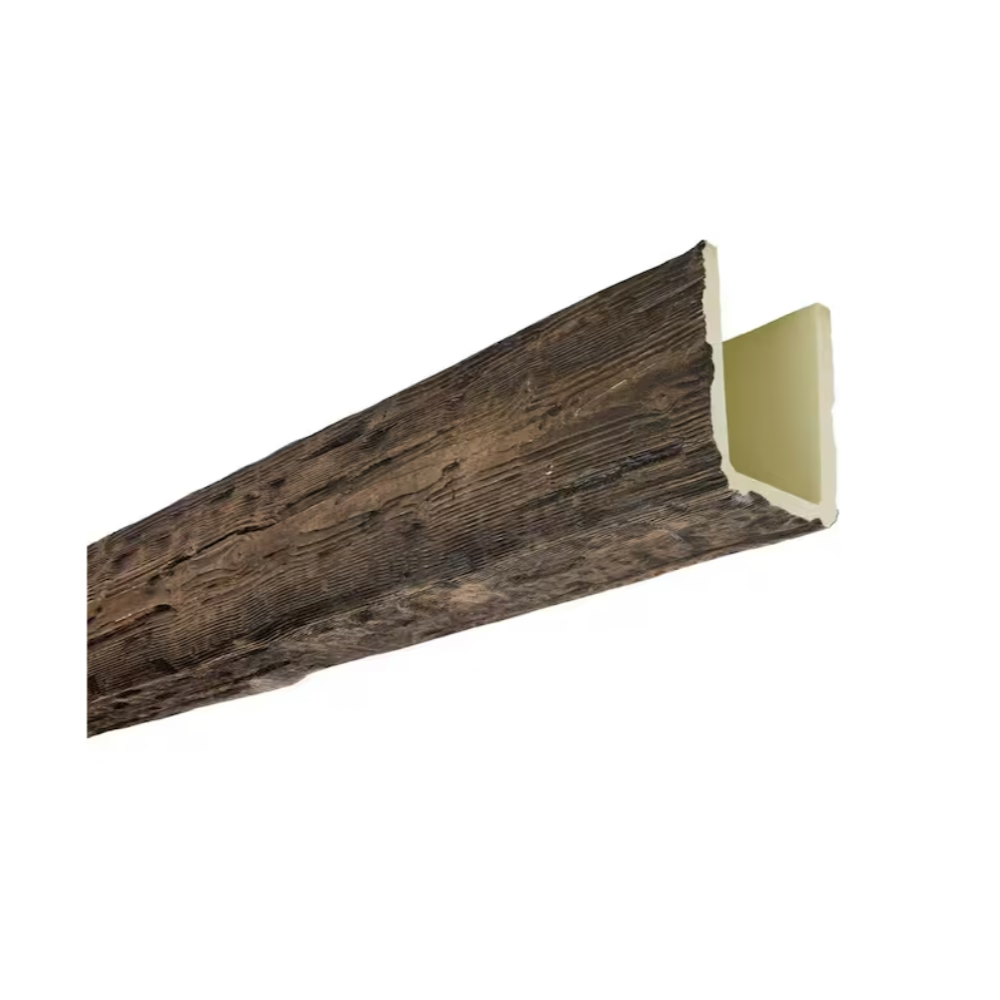
When you examine the core composition of these materials, the advantages become immediately apparent. Polyurethane begins as a liquid compound that gets molded into precise shapes, allowing manufacturers to capture every grain detail and knot pattern found in natural wood. The resulting product weighs a fraction of its wooden counterpart while maintaining structural integrity that withstands everyday use. Contractors report that a single worker can handle beams that would have required two or three people when working with solid timber, dramatically reducing labor costs on every project.

Understanding Polyurethane Material Technology
The chemistry behind polyurethane creation involves combining diisocyanates with polyols to produce a polymer with remarkable versatility. Manufacturers can adjust the density during production, creating beams that range from lightweight hollow cores to solid reinforced structures capable of supporting significant weight. This flexibility means project managers can specify the exact material characteristics needed for each unique application without compromising on visual quality.
Temperature resistance proves particularly valuable in regions with extreme climate variations. Unlike natural wood, which expands and contracts with moisture changes, polyurethane maintains its dimensions across a broad temperature range. A beam installed in a sunroom in Arizona performs identically to one placed in a climate-controlled office building in New York. This dimensional stability eliminates the gaps, cracks, and warping that frequently plague traditional wooden beam installations over time.
The manufacturing process also allows for consistent color penetration throughout the material. When contractors need to stain or paint polyurethane beams to match existing décor, the surface accepts finishes uniformly without the blotching sometimes encountered with natural wood grain. This characteristic proves especially valuable when restoring historic properties where matching aged wood tones requires precise color control.
Project Applications Across Different Scales
Residential ceiling projects benefit enormously from the ease of handling these materials provide. A homeowner undertaking a cathedral ceiling renovation can work with these beams without renting heavy equipment or hiring specialized labor. The material cuts cleanly with standard woodworking tools, and mounting hardware designed specifically for polyurethane ensures secure attachment to existing ceiling structures. Weekend warriors and DIY enthusiasts find the work surprisingly approachable once they understand the basic techniques involved.

Commercial construction projects present different challenges that these materials address equally well. Hospitality designers frequently specify polyurethane beams for lobby renovations where the visual impact of exposed ceiling structure creates a memorable first impression. The material accepts integrated lighting systems without the fire safety concerns associated with drilling into natural timber. Restaurant owners appreciate how these beams contribute to warm, inviting atmospheres while withstanding the humidity fluctuations common in commercial kitchens and dining areas.
Retail space designers leverage the consistent quality of manufactured beams to create cohesive visual experiences across multiple locations. Unlike natural wood, where each beam carries unique characteristics that may or may not align with a designer's vision, polyurethane products deliver predictable aesthetics project after project. This consistency proves invaluable for franchise operations seeking to maintain brand identity across geographically dispersed locations.
Cost Analysis and Budget Considerations
Initial material costs for premium polyurethane beams typically exceed those of dimensional lumber, yet the total project expenditure often favors the synthetic alternative. When you account for reduced labor requirements, eliminated finishing work, and the absence of specialized equipment rental, the economic picture shifts considerably. Project managers preparing budgets for client presentations find that itemized cost breakdowns reveal these materials frequently deliver superior value despite higher per-unit pricing.
Transportation expenses represent an often-overlooked factor in material selection. Natural wood beams of equivalent visual impact require heavy shipping loads, specialized handling equipment, and protection against weather damage during transit. Polyurethane beams arrive packaged compactly, ship at lower freight rates, and arrive at the job site ready for immediate installation without additional preparation steps.
The long-term maintenance profile of polyurethane further strengthens its economic case. Natural wood requires periodic refinishing, pest treatment, and structural assessment as it ages. Polyurethane maintains its appearance without such interventions, surviving decades of use while retaining its original aesthetic qualities. For property owners calculating lifetime ownership costs rather than simply initial expenditure, these materials demonstrate compelling advantages.
Design Flexibility and Aesthetic Options
The molding process used to create polyurethane beams enables designers to explore visual possibilities unavailable with natural materials. Intricate corbels, complex beam profiles, and elaborate decorative elements can be mass-produced with consistent quality. This capability opens creative horizons for designers working on period-accurate restorations or cutting-edge modern installations.
Color matching becomes straightforward when working with materials that accept paint and stain uniformly. A designer specifying a particular wood species can achieve convincing approximations using polyurethane products stained to precise specifications. The ability to create custom colors during manufacturing eliminates the uncertainty of on-site finishing while ensuring batch-to-batch consistency across extended projects.
Texture options span the spectrum from smooth contemporary profiles to deeply weathered barn wood appearances. Manufacturers offer collections targeting specific aesthetic movements, allowing designers to select beams that align with their creative vision without compromise. This variety means polyurethane successfully serves applications ranging from minimalist Scandinavian interiors to rustic mountain lodges.

Environmental and Sustainability Considerations
Modern polyurethane production has evolved significantly regarding environmental responsibility. Contemporary manufacturers utilize recycled content in many product lines, diverting waste materials from landfills while producing construction components with reduced virgin resource dependencies. This development addresses one of the primary criticisms leveled against synthetic materials in earlier decades.
The extended service life of polyurethane beams contributes to their environmental profile by reducing replacement frequency. A beam that maintains structural integrity and visual appeal for fifty years generates fewer environmental impacts than alternatives requiring multiple replacement cycles over equivalent periods. Additionally, the dimensional stability of polyurethane means these beams rarely contribute to construction waste through premature failure or cosmetic degradation.
Energy consumption during production also favors synthetic materials when compared against the harvesting, milling, drying, and transportation impacts associated with natural timber. Life cycle assessments conducted according to standardized methodologies consistently demonstrate lower embodied energy in polyurethane products relative to natural wood beams of equivalent visual impact.
Working With Polyurethane Beams
Installation professionals appreciate how predictably these materials behave during fabrication and mounting. Unlike natural wood, polyurethane does not contain hidden defects like internal checks or stress fractures that only become apparent during installation. Every beam meets the exact specifications established during the ordering process, reducing surprises and callbacks that damage profitability and reputation.
Fastening methods differ somewhat from those used with natural timber, requiring understanding of the material's specific properties. Expansion and contraction movement occurs differently in polyurethane than in wood, meaning installers must follow manufacturer guidelines regarding gap tolerances and fastener spacing. These requirements prove straightforward once understood and add minimal time to project schedules.
Finishing work, when desired, proceeds efficiently due to the uniform surface characteristics of polyurethane. Paint adheres consistently without the grain raising or fiber swelling that complicates finishing natural wood. Stains penetrate evenly without blotching, allowing craftspeople to achieve professional results without extensive experience in wood finishing techniques.
Supplier Selection and Quality Assurance
Not all polyurethane beam manufacturers deliver equivalent quality, making supplier selection a critical decision point for project managers. Premium producers utilize high-density formulations that resist impact damage and maintain structural stability under load. Lower-quality alternatives may appear similar initially but often develop problems within years that compromise both aesthetics and safety.
Warranty coverage provides useful insight into manufacturer confidence in their products. Reputable producers stand behind their offerings with warranties extending five years or longer, reflecting the expected service life of properly manufactured materials. Caution serves buyers well when encountering products offered without meaningful warranty protection or with warranty terms that contain excessive exclusions.
Sample evaluation enables buyers to assess material quality directly before committing to large orders. Requesting beam samples allows inspection of surface quality, density characteristics, and finishing response in advance of project purchases. This due diligence prevents disappointment while building confidence in the selected materials and suppliers.
The transformation of ceiling decoration through premium material solutions continues as more construction professionals discover the practical advantages of polyurethane faux wood beams. Whether specified for residential renovations or commercial new construction, these innovative products deliver lasting value that justifies their adoption across diverse project types.
Technical References
ASTM standards cited in every specification
Test Data
Lab results from internal testing program
Updated 2026
Reviewed against current product specs

