The question of where to source building materials involves more than simply locating available products. Project success correlates strongly with material quality, and quality correlates strongly with sourcing strategy. For ceiling beam applications demanding authentic appearance and lasting performance, premium polyurethane faux beams from specialized suppliers represent ideal alternatives to Home Depot offerings that serve different market segments with different priorities.
Home Depot occupies a specific niche in the building materials ecosystem, serving do-it-yourself homeowners, casual renovators, and projects prioritizing immediate availability over specialized requirements. This positioning serves legitimate market needs that specialty channels cannot efficiently address. However, projects requiring refined aesthetics, specific technical characteristics, or expert guidance benefit from sourcing relationships that retail channels struggle to provide.
The ideal alternative status of premium polyurethane beams derives from multiple advantages that collectively justify the designation. Quality superiority, selection breadth, technical support, and value optimization combine to create sourcing solutions that align with project requirements rather than forcing requirements to accommodate sourcing limitations.

Comprehensive Quality Advantages
Material formulation differences between premium and retail products affect every performance characteristic that building professionals value. Premium polyurethane manufacturers invest in formulation development that produces densities, hardness levels, and durability properties optimized for demanding applications. These formulations cost more to produce but deliver performance that budget alternatives cannot match.
Manufacturing precision in premium production facilities exceeds retail product capabilities significantly. Computer-controlled mixing, temperature management, and molding processes produce consistent results that pass rigorous quality inspection. Each beam meets exacting specifications regardless of when it was produced, enabling confident specification without inspection of individual pieces.
Finish application processes receive attention in premium facilities that retail production cannot justify. Multiple coat systems, proper curing intervals, and quality verification ensure that finishes resist wear, maintain color consistency, and accept touch-up work when needed. These finishing details distinguish products that maintain appearance for decades from those that degrade within years.
Selection Breadth and Availability
Product variety available through specialty suppliers far exceeds retail shelf offerings in both style range and dimension options. Contemporary, traditional, rustic, and historic profiles populate digital catalogs without the space constraints that limit physical retail presence. Architects and designers can specify precisely the profile that serves their creative vision rather than selecting from whatever happens to be stocked.
Non-standard dimensions available through specialty manufacturing accommodate project requirements that retail stock cannot satisfy. Beams longer, shorter, wider, or narrower than standard sizes can be produced to exact specifications, eliminating the compromises that arise when projects must accommodate available inventory. This flexibility enables design optimization rather than design compromise.
Hard-to-find styles and discontinued profiles sometimes remain available through specialty suppliers even when retail stock has moved on. Manufacturers maintaining broad product lines sometimes continue producing items for specialty channels that lack sufficient volume for retail distribution. This availability can prove crucial when matching existing installations or completing projects started years earlier.
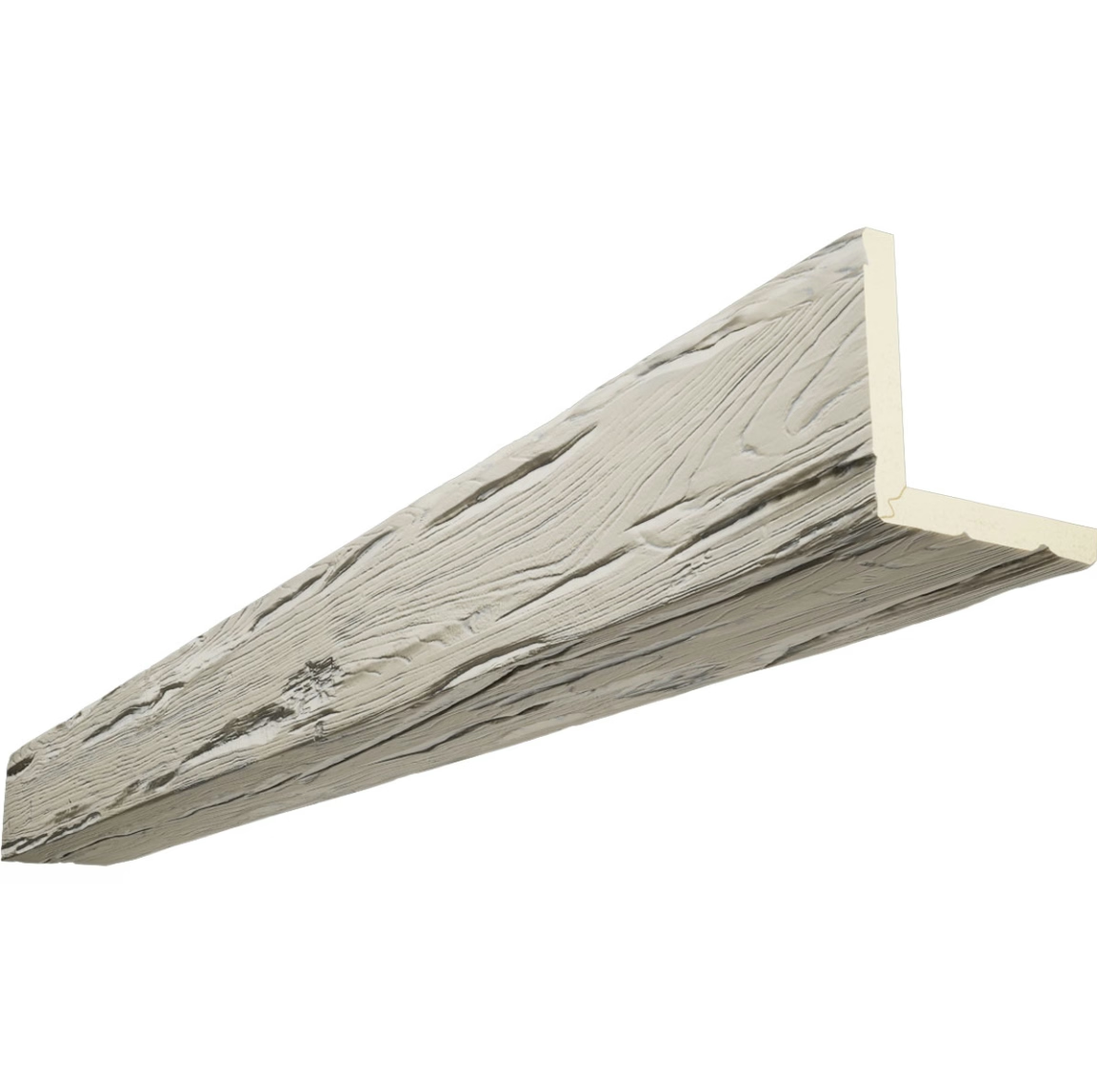
Technical Expertise and Specification Support
Product knowledge depth available through specialty suppliers exceeds retail capabilities by design. Staff specializing in beam products understand installation requirements, load considerations, and finishing techniques at levels that general retail employees cannot achieve. This expertise enables informed recommendations that serve project requirements rather than clearing inventory.
Specification assistance helps architects and contractors select products that satisfy project requirements. Technical documentation including load charts, installation guides, and fire ratings supports proper application of materials in regulated environments. Retail channels provide minimal technical support, leaving purchasers to determine applicability without expert guidance.
Problem resolution through specialty channels often proves more effective than retail customer service. Staff with deep product knowledge can diagnose issues and recommend solutions that generic return processes cannot provide. This support capability proves valuable when challenging installations encounter unexpected conditions.
Value Optimization Strategies
Total cost of ownership analysis frequently favors premium products despite higher initial pricing. The extended service life, reduced maintenance requirements, and elimination of replacement cycles combine to produce lifecycle costs below those of budget alternatives. This economic reality challenges simple price-focused purchasing assumptions.
Shipping cost comparison between delivered specialty products and self-transported retail purchases often favors delivered options. The vehicle requirements, fuel consumption, and time investment for retail pickup may exceed shipping charges, particularly for larger orders. This hidden cost factor deserves consideration during purchasing decisions.
Project efficiency gains from quality materials reduce labor costs that may exceed material costs significantly. Beams that install cleanly, finish uniformly, and perform reliably enable faster project completion than alternatives requiring corrective work, touch-up finishing, or eventual replacement. These efficiency gains compound across multiple projects for professional contractors.
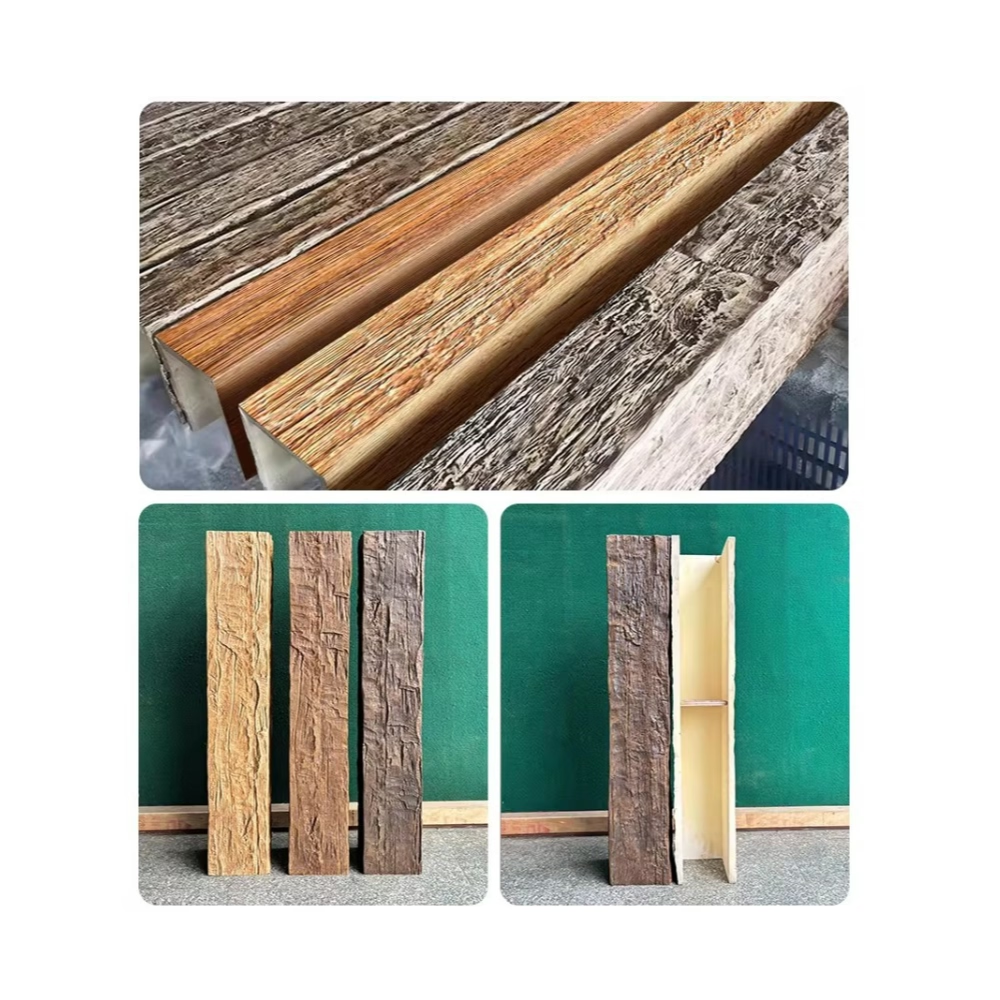
Installation Success Factors
Fit precision in premium products reduces installation challenges that consume time and generate callbacks. Dimensional tolerances in specialty production ensure that beams align properly, join cleanly, and mount securely without the adjustments that tolerance accumulation requires in budget products. This precision translates directly to installation efficiency.
Fastener compatibility with premium materials receives manufacturer attention that retail products may lack. Accessories, mounting systems, and hardware designed specifically for premium polyurethane ensure reliable attachment without the experimentation that generic fasteners require. This coordinated approach to installation requirements improves outcomes.
Finish quality that accepts painting, staining, and touch-up work enables aesthetic refinement during and after installation. Premium materials respond predictably to finishing treatments, allowing contractors to achieve desired appearances without the uncertainty that affects lesser products. This finishing flexibility supports design intent throughout the installation process.

Professional Contractor Perspectives
Trade professionals who specify materials across multiple projects understand quality differences that occasional purchasers may not recognize. The consensus among experienced contractors favors specialty sourcing for projects where appearance and performance matter. This professional preference reflects accumulated experience with both sourcing options.
Business efficiency considerations influence contractor sourcing decisions alongside product quality factors. Specialty suppliers who understand contractor needs provide ordering convenience, consistent quality, and reliable delivery that support profitable project execution. These relationship benefits exceed simple product transactions.
Reputation management concerns affect professional specifiers more acutely than occasional purchasers. Installations that fail, degrade, or disappoint damage contractor reputations in ways that individual homeowners may not experience similarly. The risk premium associated with uncertain quality justifies investment in reliable sourcing.
Appropriate Channel Selection
Project complexity influences appropriate sourcing channel selection. Straightforward replacements utilizing existing stock may appropriately utilize retail channels, while complex installations requiring specific characteristics benefit from specialty sourcing. This situational assessment optimizes channel selection based on project requirements.
Urgency considerations sometimes override quality preferences when immediate availability addresses critical needs. Understanding when urgency trumps quality enables appropriate channel selection for specific circumstances rather than reflexive default to either extreme.
Relationship development with specialty suppliers creates benefits that accumulate over time for regular purchasers. Contractors establishing ongoing supply relationships access priority service, volume pricing, and technical support that one-time retail transactions cannot provide. These relationship values compound across extended periods.
The ideal alternative status of premium polyurethane faux beams relative to Home Depot offerings reflects comprehensive advantages across quality, selection, support, and value dimensions. Projects deserving quality outcomes deserve sourcing strategies that support those outcomes, making specialty suppliers the appropriate choice for ceiling beam applications where results matter.
Technical References
ASTM standards cited in every specification
Test Data
Lab results from internal testing program
Updated 2026
Reviewed against current product specs


