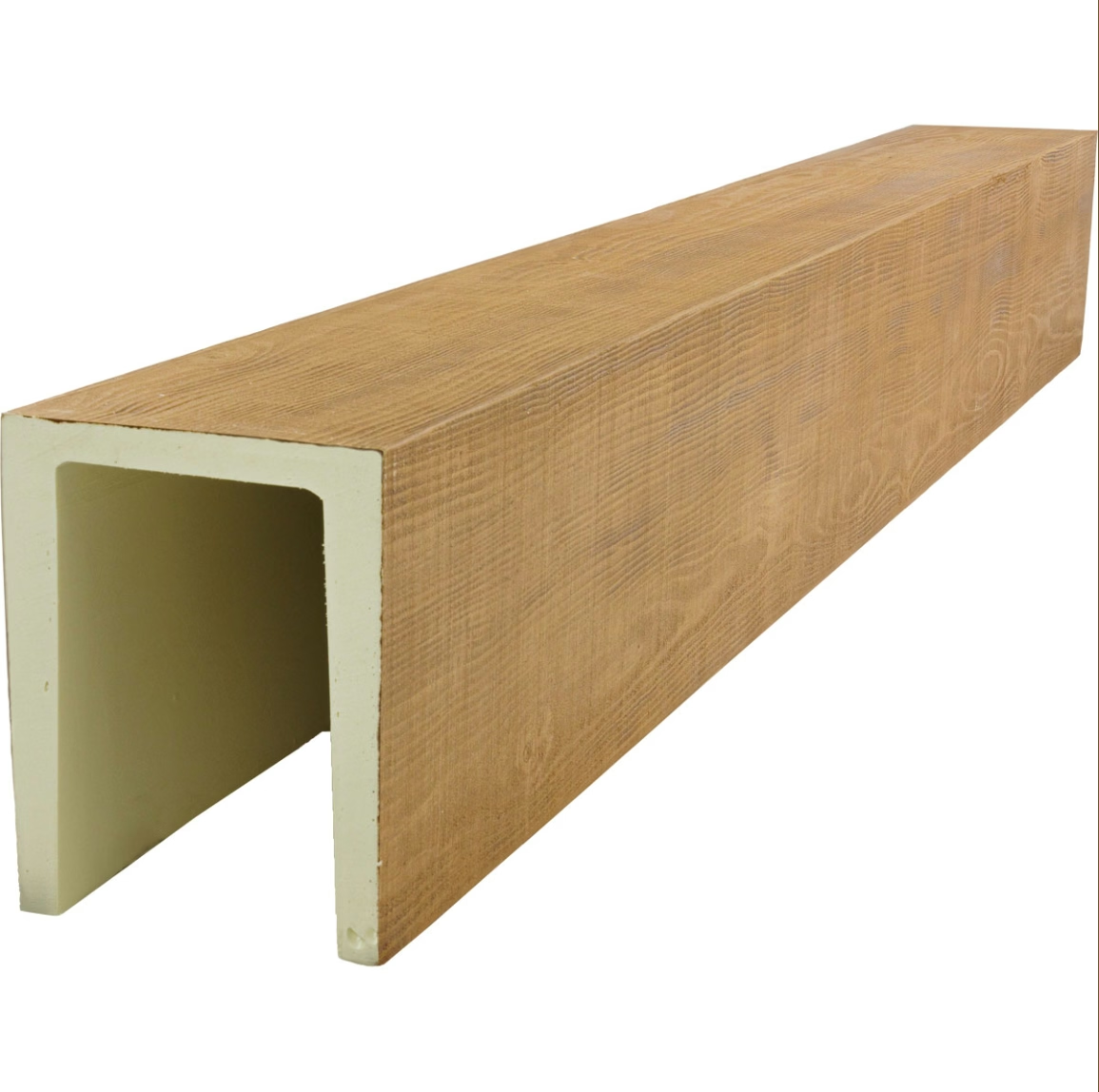
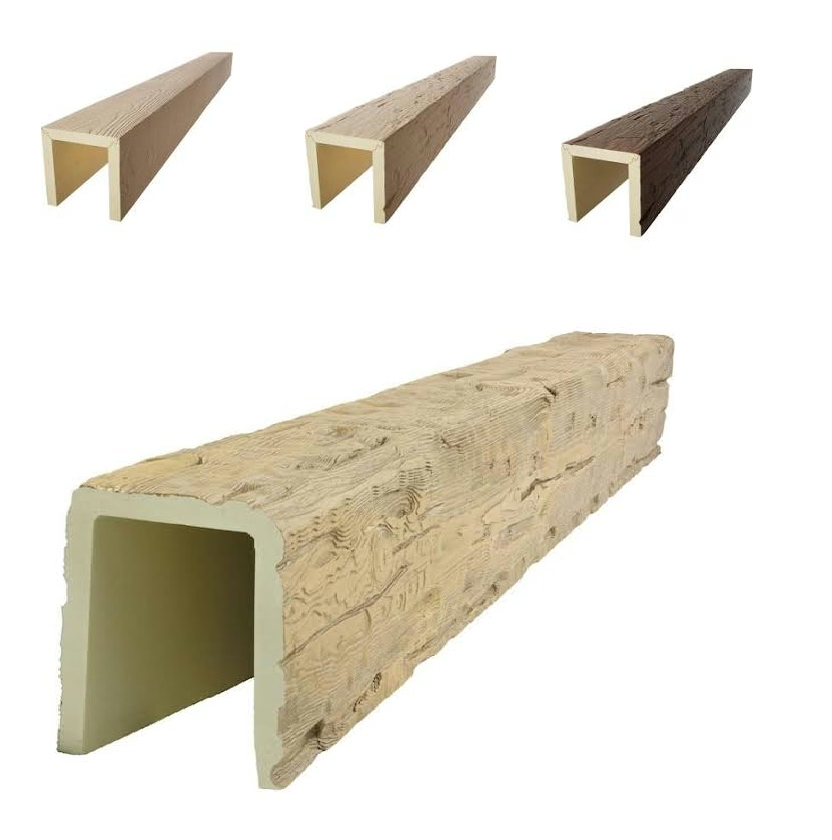
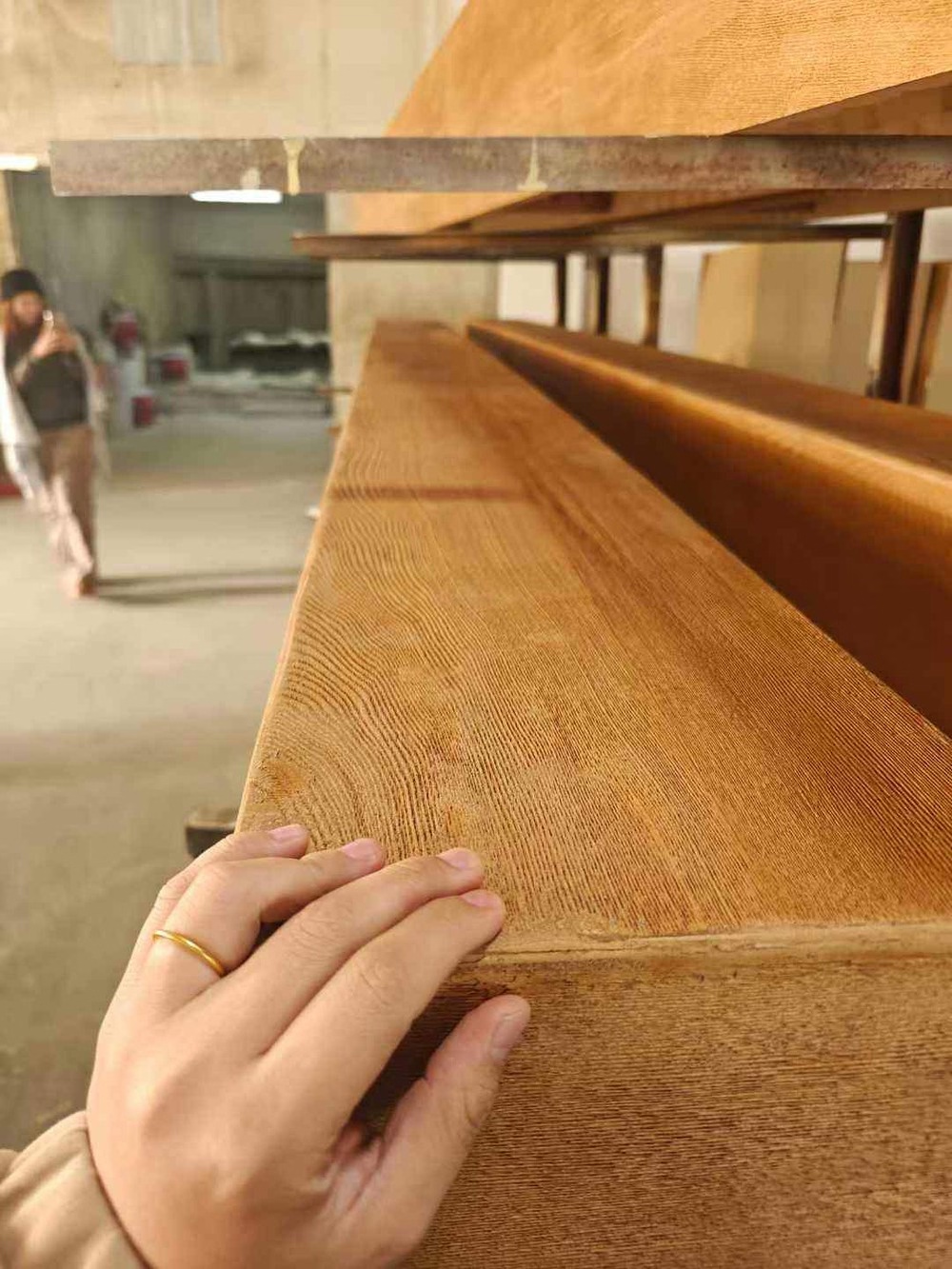
The way British consumers and trade professionals purchase building materials has changed fundamentally over the past decade. The journey from specialist builder's merchant with limited stock and extended lead times to comprehensive online catalogues with detailed specifications, high-resolution imagery, and direct-to-site delivery has democratised access to products that were previously the preserve of contractors with established supplier relationships. PU faux wood beams exemplify this transformation — available now from multiple UK-based suppliers and international sellers serving the British market, with the full specification and quality spectrum accessible through online research.

This shift to online purchasing brings genuine benefits — broader product choice, price transparency, and the convenience of home or site delivery — but it also introduces challenges that traditional merchant purchasing did not present. Products cannot be examined before purchase; quality must be assessed from photographs and specifications; delivery logistics must be managed to ensure that products arrive when needed and in acceptable condition. Navigating these challenges effectively requires knowledge that many online beam purchasers lack.
Understanding the UK Beam Market
The UK market for PU faux wood beams has expanded significantly as awareness of the product category has grown among homeowners, interior designers, and trade professionals. This growth has attracted both established manufacturers serving the market through distributor networks and newer suppliers operating primarily through e-commerce channels.
UK-based manufacturers and distributors offer the advantage of familiar delivery timescales, customer service in UK time zones, and compliance with UK and European product standards. These suppliers typically hold stock of popular profiles and finishes, enabling rapid delivery within the UK. The trade-off is often a more limited product range than international suppliers can offer and prices that reflect the overhead costs of UK-based operations.
International suppliers — including manufacturers based in Europe, North America, and Asia — serve the UK market through direct-to-consumer shipping and through UK-based distribution partners. The product range from international suppliers can be substantially broader, with access to profile types and finishes not stocked by UK-based alternatives. Delivery timescales are typically longer, and import compliance requirements must be addressed. The cost advantages of international manufacturing can be significant but must be weighed against these logistical factors.
Specialist beam distributors occupy a middle ground, offering curated product ranges selected for quality and relevance to the UK market. These suppliers often provide technical consultation, installation guidance, and after-sales support that pure e-commerce operators cannot match. The premium charged for this service is typically modest relative to the overall project cost and may represent good value for customers unfamiliar with beam specification.
Product Specification for Online Purchase
Specifying beams for online purchase requires translating the design intent into product attributes that online catalogues can address. This translation involves several dimensions of specification that must be resolved before ordering.
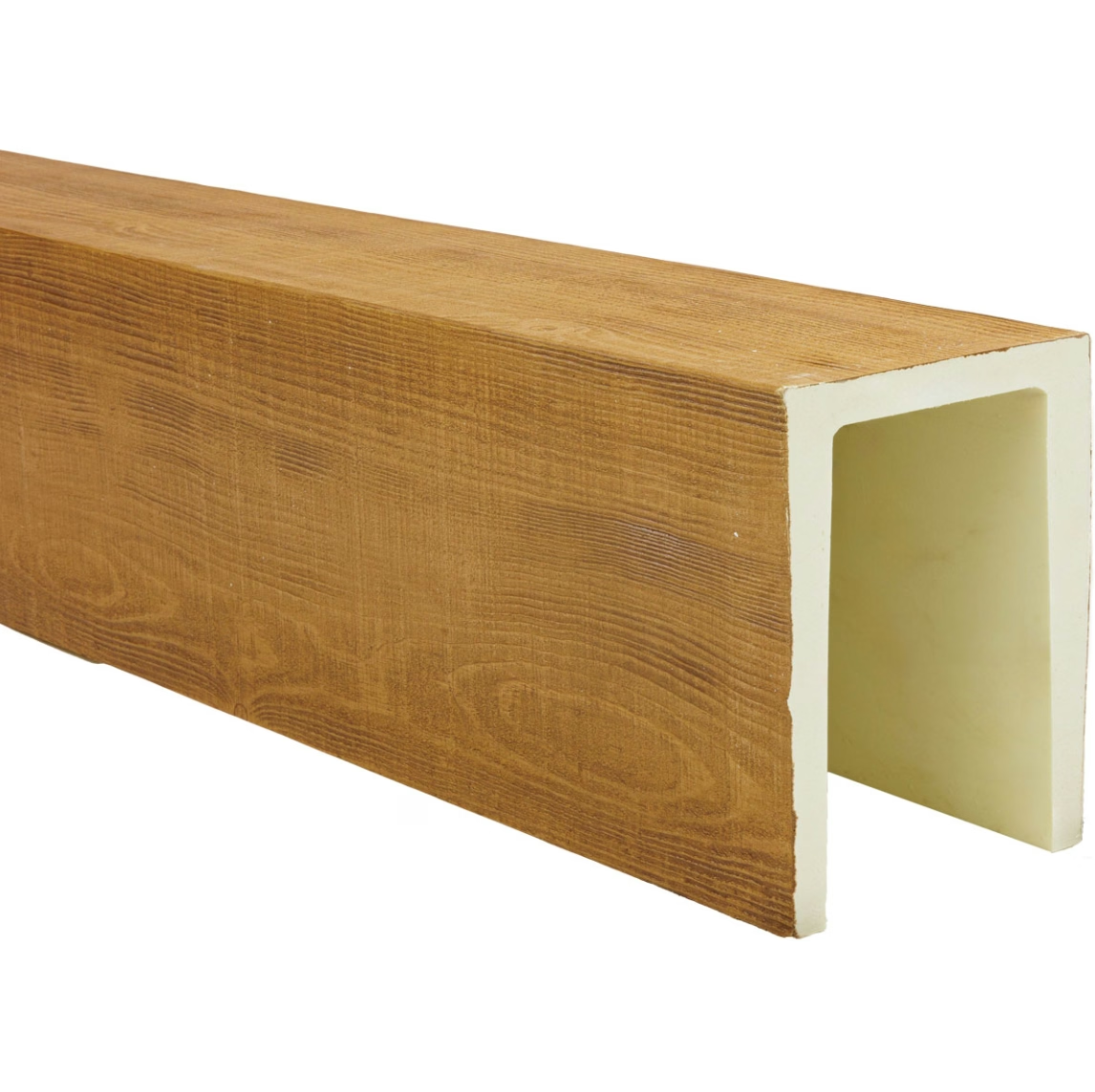
Profile type determines the cross-sectional shape and visual character of the beam. Online catalogues typically categorise profiles by style — rustic, contemporary, traditional — with each style encompassing several specific profile options. The selection should be made with reference to the overall design concept and the specific aesthetic the room requires. Where possible, requesting physical samples before final order commitment is advisable for projects where the visual result is critical.
Dimensions must be specified precisely, including the depth, width, and length of each beam. Online catalogues provide dimensional specifications for all products; these should be cross-checked against the room measurements and the proposed layout before ordering. Common online purchasing errors include ordering beams that are too short for the required span, selecting profiles with insufficient depth for the visual effect intended, and underestimating the number of beams required for a given configuration.
Finish selection is particularly important for online purchases where the actual appearance cannot be verified before ordering. High-resolution product photographs should be examined carefully, noting the lighting conditions under which photographs were taken. Requesting finish samples is strongly recommended for projects where colour accuracy is important, particularly when beams must coordinate with existing materials. Most reputable suppliers provide small finish samples at nominal cost or no charge.
Verifying Quality and Compliance
The quality range available in the online PU beam market is substantial, and products at different price points reflect genuine quality differences that affect both the visual result and the long-term performance. Understanding how to assess quality from online information enables better purchasing decisions.
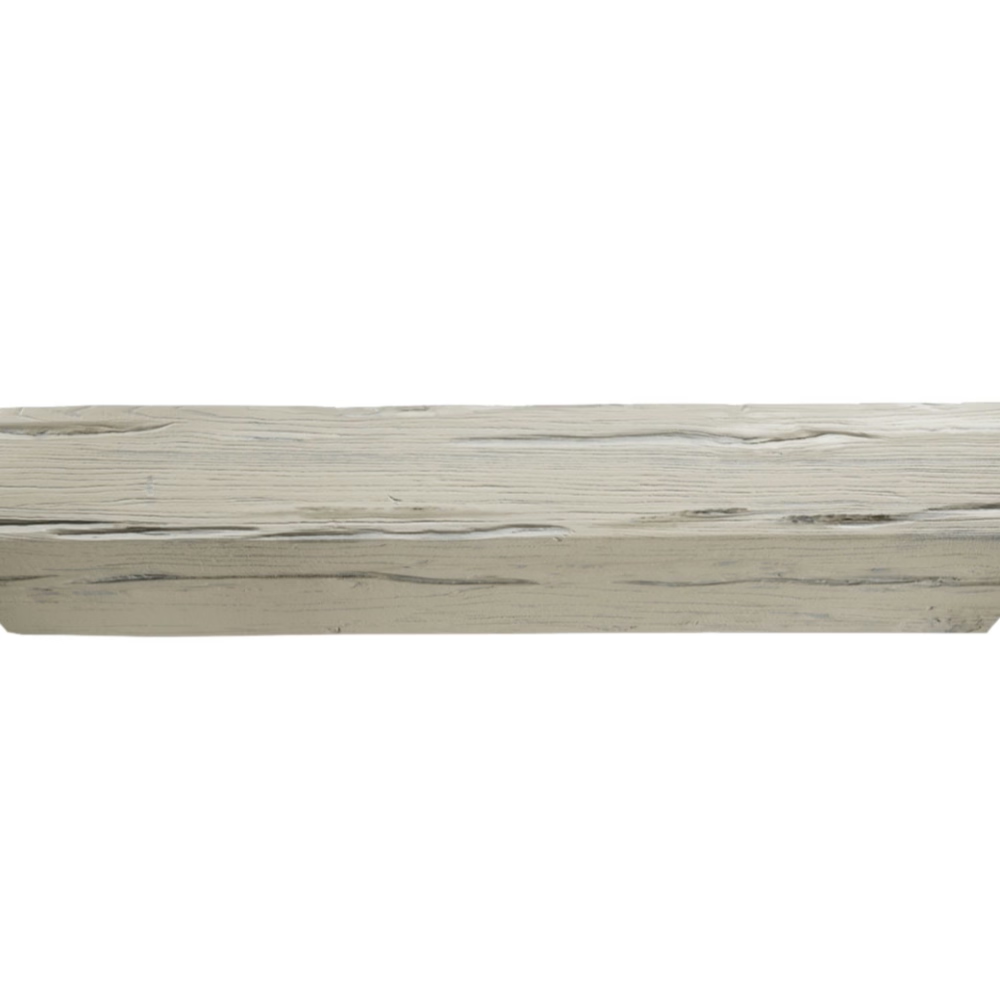
Surface finish quality can be assessed from detailed product photographs, paying attention to the consistency of texture across the beam surface, the crispness of edge definition, and the presence or absence of visible mould lines or surface defects. High-quality products present clean, consistent surfaces; economy products may show the imperfections that lower manufacturing standards produce.
Dimensional consistency is more difficult to assess from online information but can be inferred from the consistency of product descriptions and from reviews mentioning installation experience. Products with tight dimensional tolerances are easier to install and produce cleaner joints than products with inconsistent cross-sections.
Fire performance certification is essential for commercial applications and increasingly expected for residential applications as awareness of fire safety grows. UK and European fire performance standards — classified as Euroclass ratings from A to F — should be documented for all products under consideration. The absence of fire certification documentation is a significant red flag for any commercial application.
Delivery Logistics for UK Projects
UK delivery logistics for beam products depend on the supplier, the product type, and the delivery destination. Understanding these logistics before ordering prevents the scheduling disruptions that delivery complications can create.
Standard delivery to mainland UK addresses typically requires 3 to 10 working days depending on whether the product is in stock and the delivery destination. Northern Ireland, Scottish Highlands and Islands, and other remote locations may incur additional delivery charges and extended lead times. These geographical factors should be confirmed before ordering to avoid unexpected costs.
Beam products are large and relatively fragile items that require appropriate handling during transit. Quality suppliers use purpose-designed packaging that protects beam surfaces and edges during transit; economy packaging may result in damage in transit that is discovered only on delivery. Inspecting deliveries immediately on arrival and documenting any damage before the delivery driver departs is essential for enabling claims processing.
Site access for large beam deliveries requires consideration before ordering. Beams of 3 metres or longer require a van or larger vehicle for delivery; standard courier services cannot accommodate these lengths. Suppliers offering their own delivery fleet can typically provide more flexible scheduling than pallet courier services, coordinating delivery to suit the site programme.
Installation Support and Resources
The availability of installation support varies significantly between online suppliers, and this variation affects the purchasing decision for customers without existing beam installation experience.
Installation guides and technical documentation should be available from all reputable suppliers. These resources should cover fixing method selection, joint construction techniques, and finishing recommendations specific to the products supplied. The quality of this documentation reflects the supplier's commitment to successful customer outcomes and can be assessed during the pre-purchase research phase.
Technical consultation — whether by telephone, email, or video call — enables customers to discuss their specific project requirements with knowledgeable staff who can advise on product selection, quantity calculation, and installation approach. Suppliers offering this consultation service provide valuable support for customers specifying beams for the first time.
Installation video content has become increasingly common as suppliers recognise the value of demonstrating installation techniques visually. These resources — available on supplier websites and YouTube channels — provide step-by-step guidance that complements written documentation and helps customers understand what the installation process involves before committing to the purchase.
Common Online Purchasing Pitfalls
The most common issues that arise from online beam purchasing fall into several predictable categories that can be avoided with appropriate care.
Underestimating quantity is the most frequent ordering error. Beam configurations require specific numbers of beams; failing to calculate the full requirement before ordering results in shortfalls that delay installation and may result in colour variation if the reordered batch is from a different production run. Calculating beam requirements before ordering — including accounting for joints, wastage, and any contingency — prevents this problem.
Mismatched finish expectations arise when the beam finish differs from the customer's assumption about what the finish would look like. This mismatch is particularly common with rustic or hand-textured finishes where the variation is intentional and desirable but differs from the uniform appearance that catalogue photographs may suggest. Requesting samples before ordering eliminates this source of dissatisfaction.
Incompatible fixing requirements emerge when customers order beams without understanding what fixing methods are appropriate for their ceiling substrate. Beams ordered for direct adhesive fixing may not be suitable for the existing ceiling; beams ordered for bracket fixing may require substrate conditions that are not present. Reviewing the fixing requirements before ordering and confirming compatibility with the existing ceiling prevents installation difficulties.
Making the Most of Online Purchasing
Online beam purchasing rewards the informed buyer. Customers who take time to research products, verify specifications, request samples, and confirm delivery logistics before ordering consistently report better outcomes than those who select from catalogue photographs without deeper investigation.
The combination of online research — specifications, reviews, technical documentation — with physical sample assessment provides the most complete basis for purchasing decisions. Requesting samples, examining them in the actual room conditions, and comparing them against adjacent materials eliminates the uncertainty that purely online purchasing can introduce.
Building a relationship with a reliable supplier provides ongoing benefits beyond the initial purchase. A supplier who understands the customer's project can provide relevant recommendations, flag potential issues before they become problems, and provide continuity of service across future beam requirements. This relationship value is particularly significant for trade customers undertaking multiple projects who benefit from a trusted supply relationship.
Technical References
ASTM standards cited in every specification
Test Data
Lab results from internal testing program
Updated 2026
Reviewed against current product specs