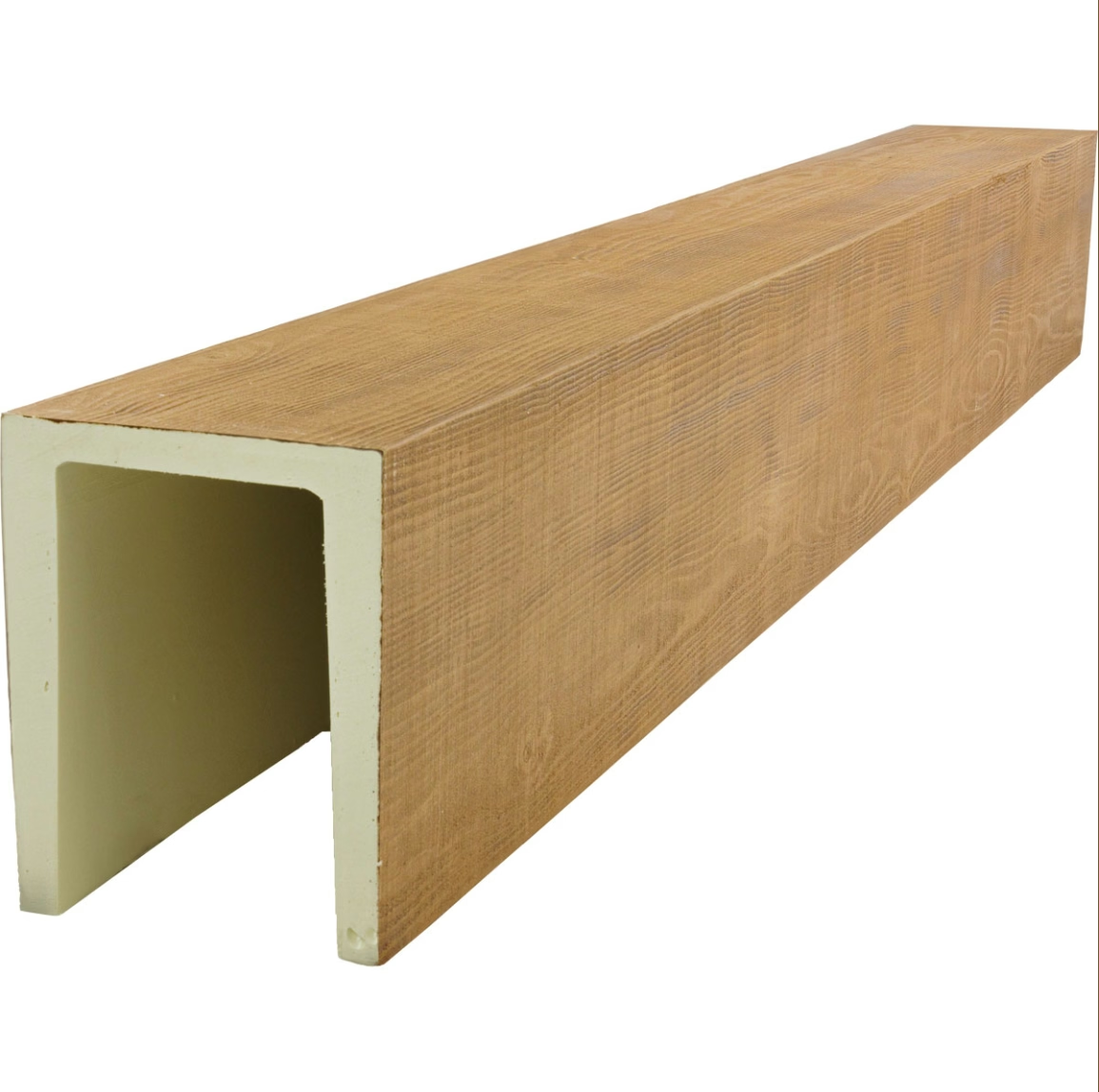
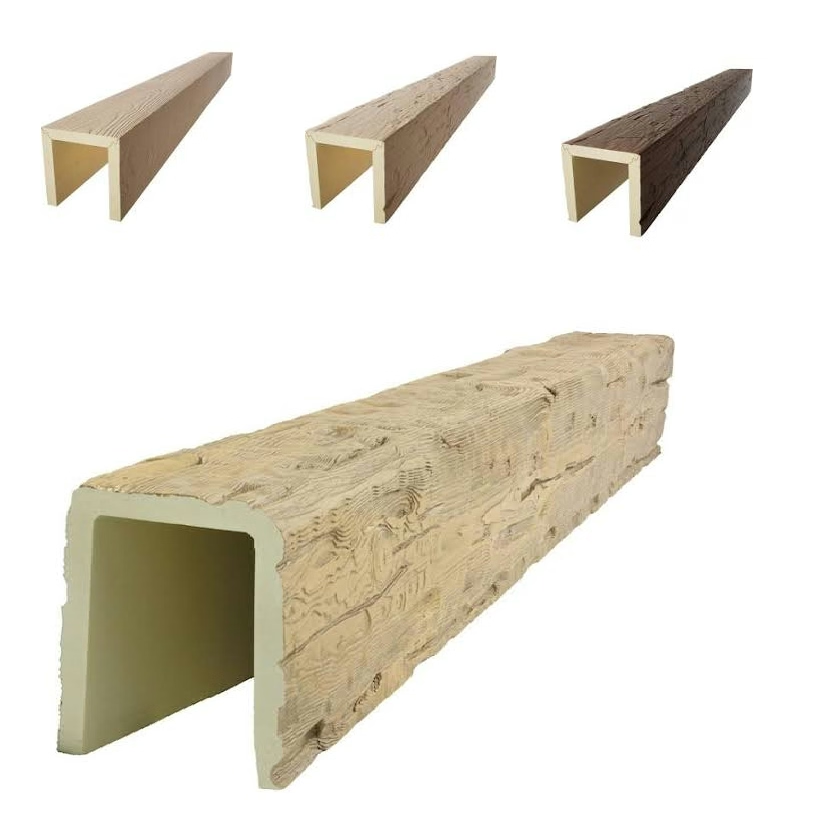
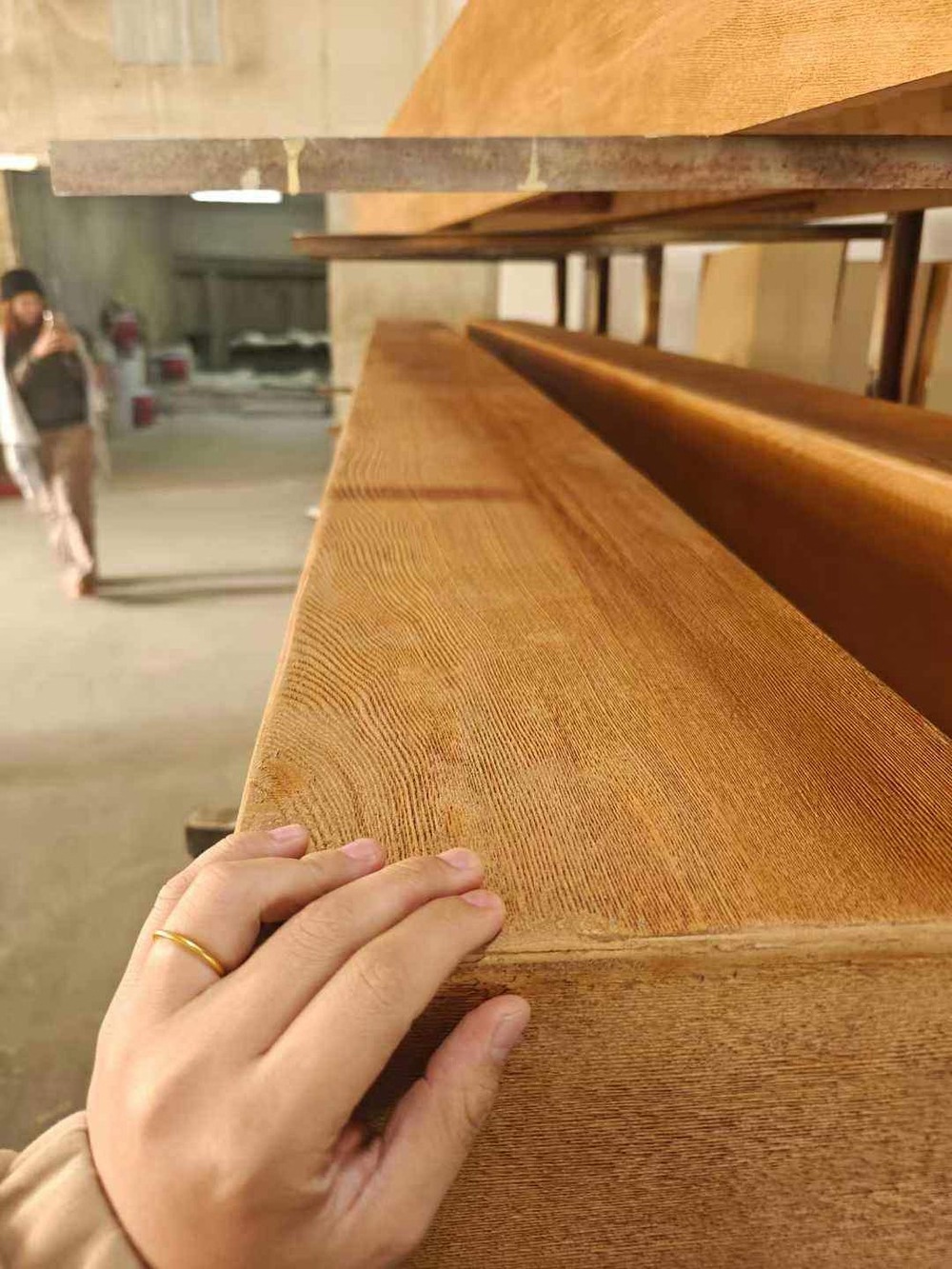
The appeal of timber in architectural applications extends beyond mere aesthetics. Wood carries cultural associations accumulated over millennia of human construction—warmth, craft, connection to the natural world, and a sense of age and character that synthetic materials struggle to replicate. Any serious alternative to timber must address not just the visual appearance but the emotional and cultural resonances that wood carries. Understanding this challenge helps explain why some faux wood products succeed while others fail to satisfy.
Precision casting of polyurethane into precisely crafted molds offers a solution that addresses both the visual and the experiential qualities of timber. The process captures details at a resolution that hand application cannot consistently achieve, while the material itself provides a surface that responds to light and touch in ways that read as authentic. The combination creates products that satisfy not only visual inspection but the more demanding scrutiny of people who know and appreciate real wood.
The Casting Process and Its Advantages
Polyurethane casting begins with the creation of master patterns that define the exact surface to be reproduced. These patterns may originate from actual wood samples, computer modeling, or combinations of both approaches. The master pattern determines every subsequent casting, so investment in pattern quality pays dividends through the entire production run.
The mold-making process creates negative impressions of the master pattern in rubber or silicone materials that capture fine surface detail without damaging the original. Multiple molds enable production scaling while maintaining consistency across pieces. Modern mold materials provide excellent release properties, dimensional stability, and longevity that supports high-volume production.
Casting itself involves mixing liquid polyurethane components and pouring them into prepared molds. The chemical reaction causes the material to cure and solidify while assuming the exact shape of the mold cavity. Temperature, mixing ratios, and cure time all influence the final properties of the cast piece. Quality manufacturers maintain tight process controls to ensure consistency from piece to piece.
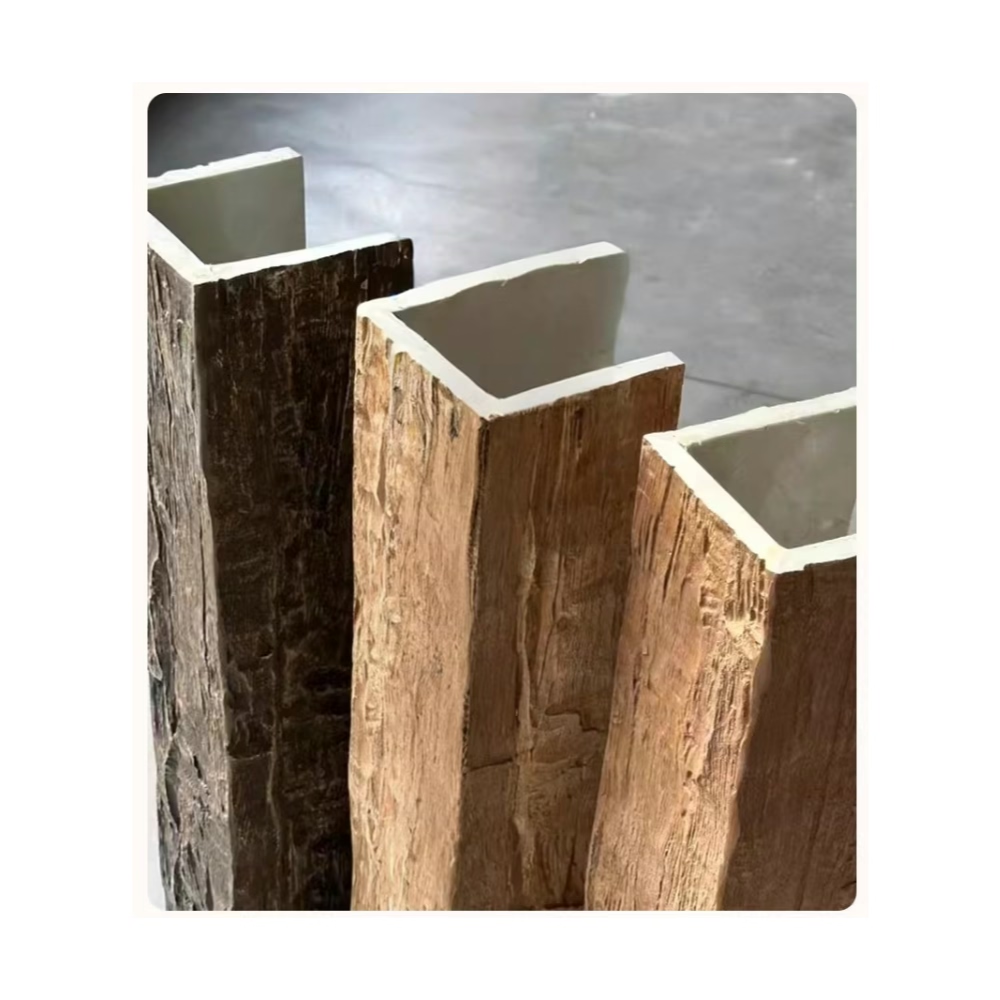
The replication accuracy achievable through this process is remarkable. Grain lines measure in fractions of millimeters. Knot rings capture the organic irregularity of natural growth patterns. Color gradients transition smoothly rather than stepping. The cumulative effect of these details creates surfaces that present as timber to casual observers and satisfy careful inspection by those with expertise in wood identification.
Surface Treatment and Finishing
Raw castings require additional processing before they become finished products ready for installation. Surface preparation removes any minor flash or seam lines that resulted from the mold process. This work requires skill to avoid compromising the detailed surface that the casting process created. Skilled operators use fine abrasives and light touches to achieve smooth surfaces without flattening the authentic texture.
Finish application follows surface preparation. The range of possible finishes spans from clear sealers that preserve the natural appearance of the material to opaque colors that match any specification. Stain and grain techniques apply color in layers that simulate the way natural wood absorbs pigments, creating depth and variation that read as authentic rather than painted.
Texture enhancement follows finish application. Some products benefit from additional texturing that breaks up uniform surfaces with subtle variation. This might involve light brushing to accentuate grain lines, random scratching to simulate age wear, or targeted distressing to suggest years of service. These treatments add character that distinguishes finished products from sterile uniformity.
Quality control during finishing ensures that each piece meets standards for color matching, texture consistency, and surface quality. Pieces that do not meet standards receive rework or rejection. The goal is delivery of products that appear to be a homogeneous set rather than individual items assembled from varied production.
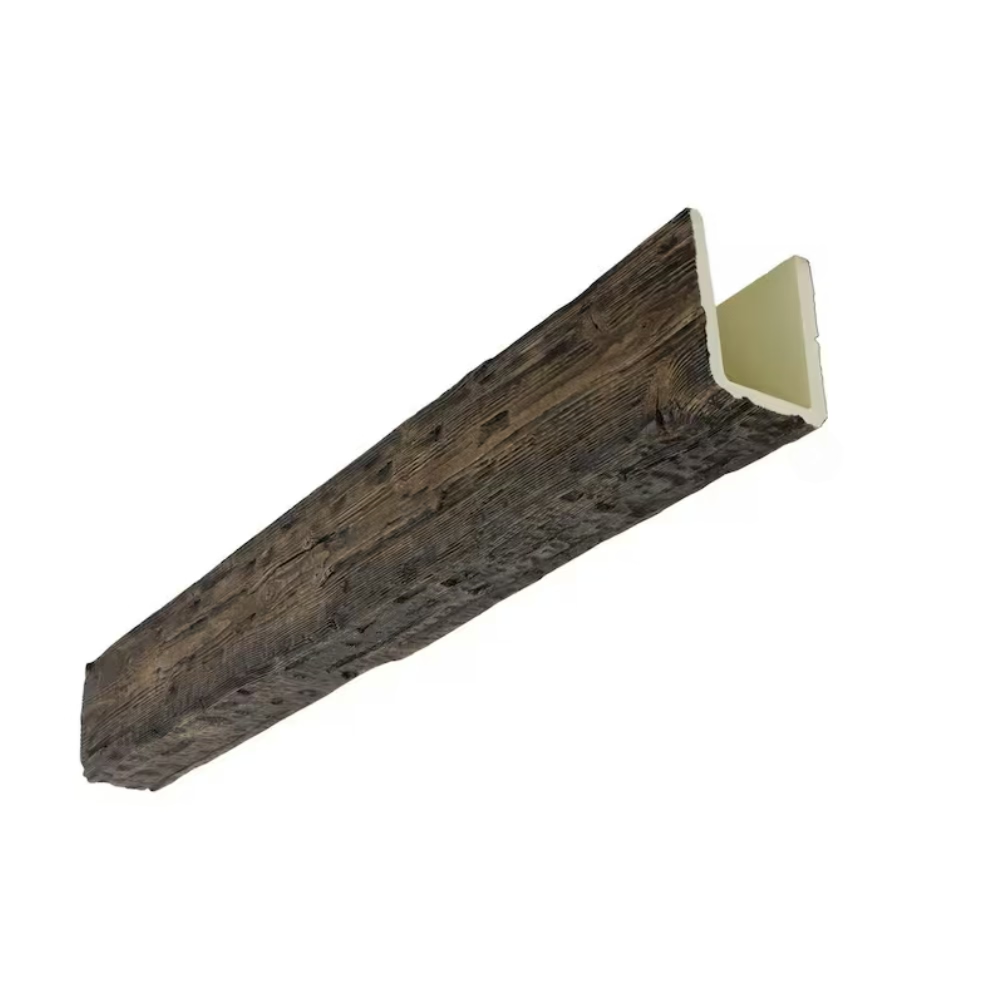
Species and Style Variations
The flexibility of cast polyurethane supports an extensive range of species representations. Oak, maple, walnut, cherry, and pine all receive accurate treatment with characteristic grain patterns, color ranges, and textural qualities that distinguish each species. Specialty species including teak, mahogany, and exotic varieties extend the range further for projects with specific aesthetic requirements.
Beyond natural species, cast polyurethane enables representations of weathered and aged woods that would be difficult or impossible to obtain in genuine timber. Reclaimed barn wood, driftwood, and weathered exterior timbers all present opportunities for replication. The casting process captures the character of aged materials without requiring the actual sourcing and processing of reclaimed wood.
Contemporary and abstract treatments expand the design possibilities further. Clean-lined beams with minimal grain representation suit modern interiors. Bold, graphic treatments with exaggerated grain and strong color create statement pieces for creative applications. The manufacturing process accommodates these variations without additional difficulty.

Performance Characteristics of Cast Products
The physical properties of cast polyurethane beams provide advantages that genuine timber cannot match. Impact resistance exceeds that of natural wood, with the material absorbing and distributing energy rather than denting or cracking. This durability proves valuable in commercial applications and residential spaces with active families.
Dimensional stability throughout environmental cycling eliminates the movement and distortion that natural wood experiences. Beams maintain their as-installed dimensions regardless of humidity or temperature conditions. Joints remain tight, finishes stay intact, and the visual character of the installation persists without adjustment.
Moisture resistance addresses the primary vulnerability of natural wood. Cast polyurethane does not absorb water, which means it does not swell, warp, or rot. Applications in humid environments, wet areas, or exterior locations under cover all perform reliably without the protection requirements that natural wood would demand.
Insect resistance follows from the material's synthetic nature. Termites and other wood-boring insects have no interest in polyurethane. The installation does not require chemical treatment or ongoing pest management related to the beam material itself.
Installation Considerations
Cast polyurethane beams install using methods appropriate to their lightweight construction. Standard carpentry tools and techniques apply, with adaptations for the specific properties of the material. Screw holding, for example, requires attention to achieve secure connections without splitting or crushing the material.
Adhesive bonding provides additional security when combined with mechanical fastening. Construction adhesives formulated for polyurethane substrates create strong, lasting bonds. The combination of adhesive and mechanical attachment ensures installations that perform reliably under all conditions.
Handling during installation benefits from the material's durability. Unlike natural wood, cast polyurethane does not have weak planes that might cause breakage during transport or positioning. The material tolerates the bumps and scrapes of normal construction handling without damage.
The combination of authentic appearance, durable performance, and practical installation has established cast polyurethane beams as a preferred solution across residential and commercial applications. Projects seeking the character of timber without its limitations find the material satisfies both visual and practical requirements comprehensively.
Technical References
ASTM standards cited in every specification
Test Data
Lab results from internal testing program
Updated 2026
Reviewed against current product specs