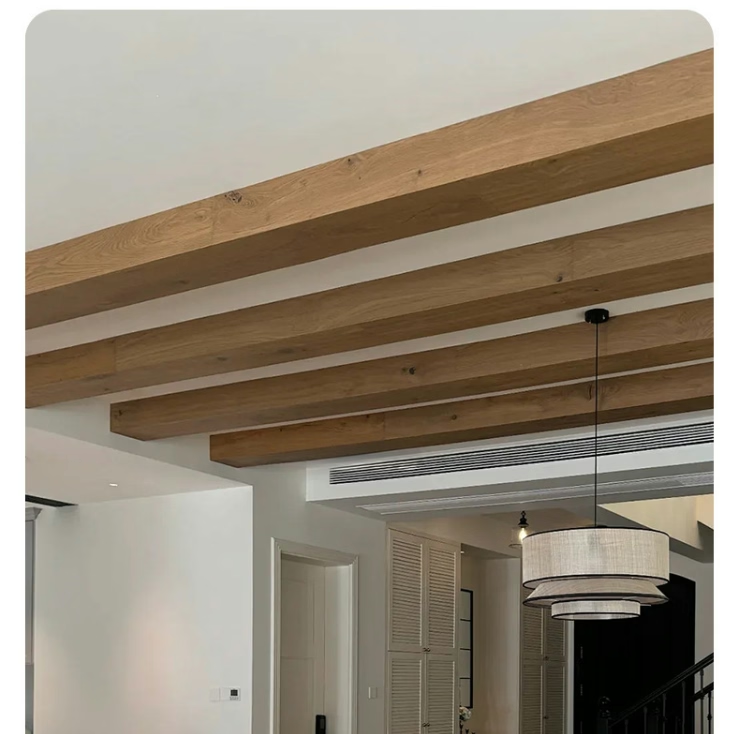
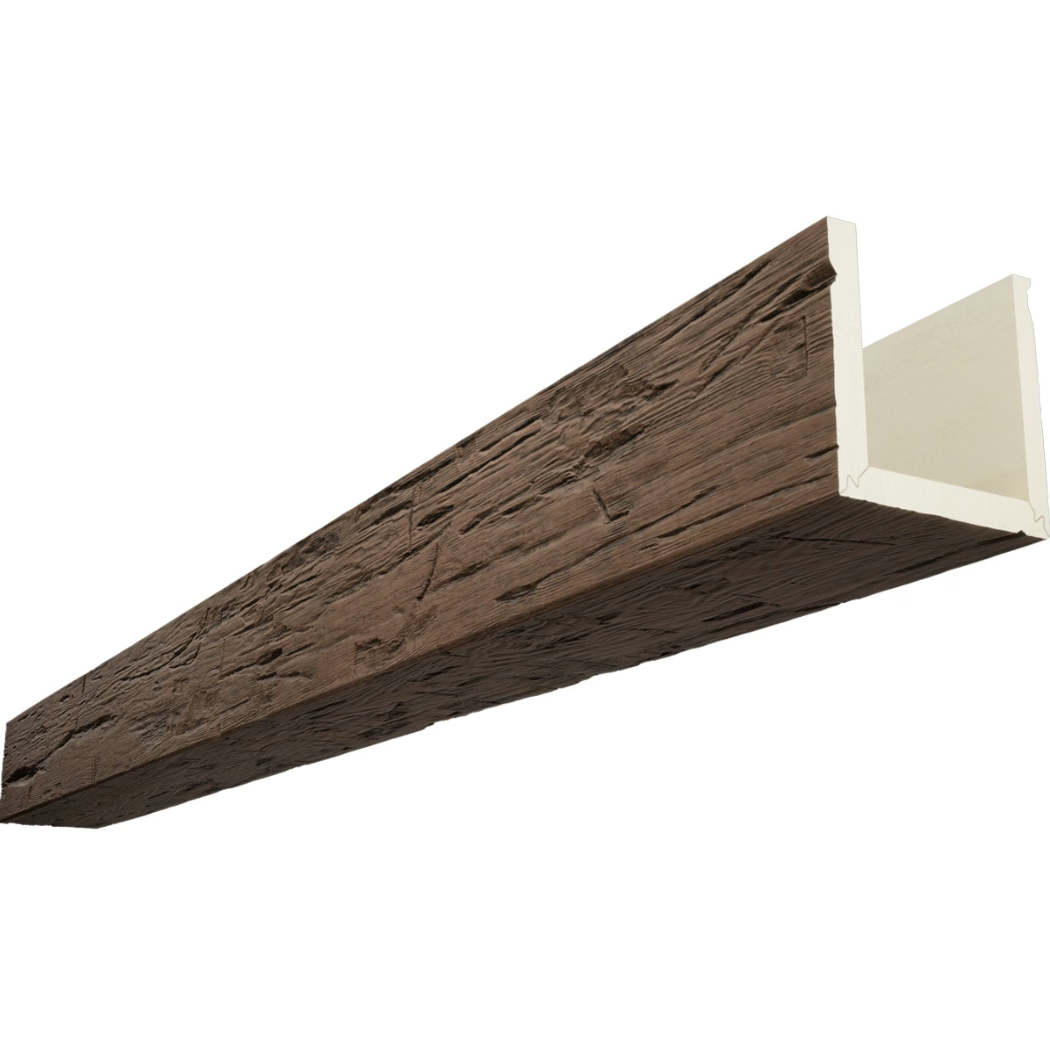
The building materials industry has witnessed significant evolution in how products move from manufacturers to end users, with private branding emerging as a powerful strategy for distributors seeking to differentiate their offerings. Faux wood ceiling beams present particularly attractive opportunities for private branding, given their growing popularity and the fragmented market for quality products. Private custom branded beams allow retailers to capture margin that would otherwise flow to manufacturers while building customer loyalty through exclusive product lines.
Private branding in this context refers to the practice of placing a retailer's, distributor's, or brand's name and identity on products manufactured by third parties. The customer perceives these products as exclusive offerings from their trusted supplier, even though the underlying manufacturing occurs elsewhere. This arrangement benefits all parties: manufacturers gain volume through multiple private label customers, while branded distributors capture value from customer relationships and market access.
The Economics of Private Label Beams
Private label arrangements fundamentally alter the economics of beam procurement. Rather than competing on manufacturer pricing for commodity products, branded distributors set their own prices and capture the full margin between production cost and retail value. This margin expansion can significantly improve profitability for distributors who successfully execute private label strategies.
The initial investment required for private label programs varies based on customization scope. Basic private labeling—adding branding to existing products—requires minimal upfront investment. More comprehensive programs involving custom formulations, exclusive finishes, or proprietary designs require tooling investments, minimum order quantities, and longer development timelines that must be recovered through sustained volume or premium pricing.
Volume commitments typically accompany private label arrangements, as manufacturers need production certainty to justify setup costs and inventory investment. Understanding break-even volumes for specific private label configurations helps distributors evaluate whether particular opportunities align with their business models and sales projections.
Branding Implementation Options
Logo placement represents the most common and accessible branding approach. Embossed, printed, or applied logos create immediate brand identification without affecting product functionality. Logo positioning on beam ends or concealed surfaces maintains brand presence while preserving the authentic wood appearance of visible surfaces.
Packaging customization reinforces brand identity throughout the customer experience. Branded boxes, wrapping, and documentation create cohesive presentation that extends brand recognition from point of sale through installation. Premium packaging options convey quality positioning that supports higher price points.
Documentation and support materials offer additional branding opportunities. Branded installation guides, care instructions, and warranty documentation create professional presentation while reducing customer service burden. These materials also serve as marketing touchpoints that reinforce brand positioning throughout the ownership experience.

Quality Control in Private Label Programs
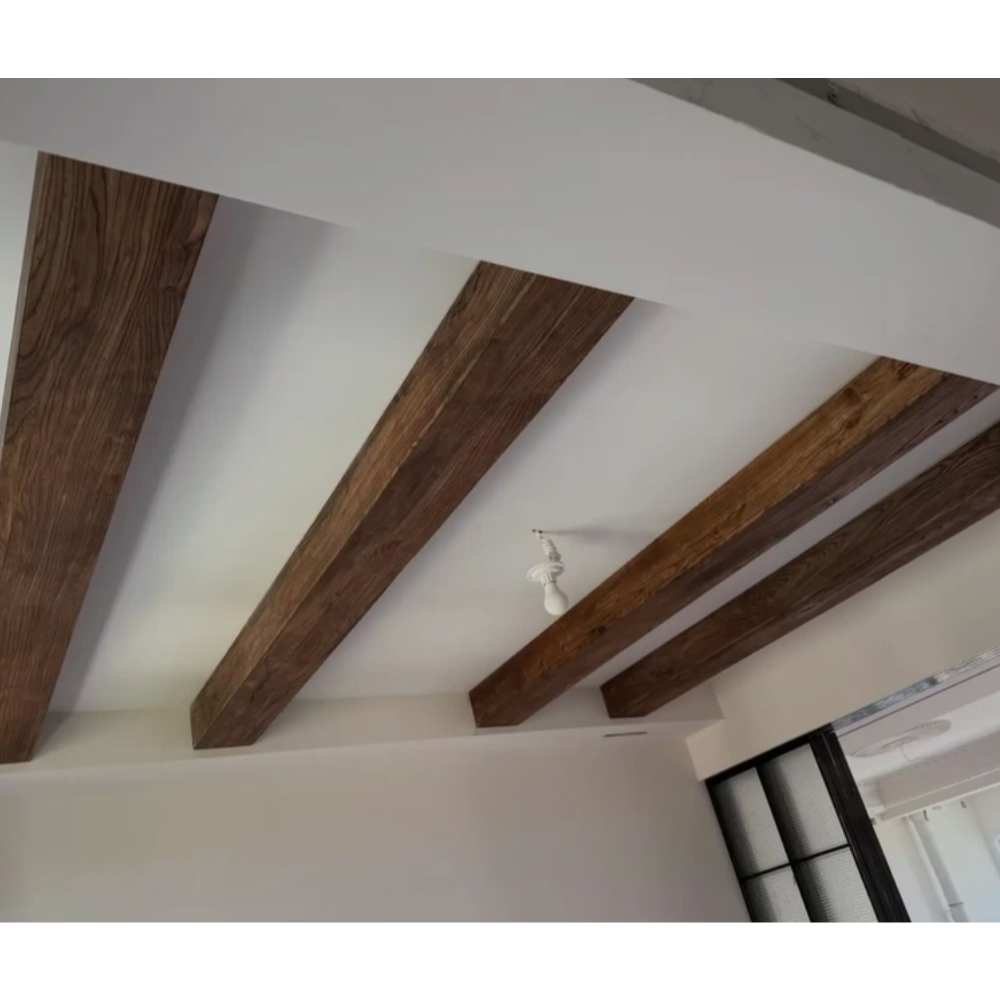
Reputable manufacturers apply identical quality standards across private label and standard products. The production processes, material specifications, and inspection procedures remain consistent, ensuring that branded products meet the same performance requirements regardless of labeling. Requesting documentation of quality processes helps verify this consistency.
Factory inspection capabilities provide additional assurance for private label programs. Third-party inspection services can verify product quality before shipping, reducing risks associated with receiving non-conforming materials. These services prove particularly valuable for initial orders or new supplier relationships where performance history remains limited.
Consistency monitoring across production runs ensures that branded products maintain consistent quality over time. Statistical quality control approaches, regular sampling, and customer feedback integration all contribute to sustained quality that protects brand reputation. Manufacturers with established quality management systems provide better foundation for private label programs than those without systematic approaches.
Building Exclusivity Through Customization
True differentiation often requires going beyond simple labeling to include genuine product customization. Custom finishes developed exclusively for a brand create barriers to competitive imitation that pure labeling cannot achieve. Customers seeking specific appearances must purchase from the exclusive source, creating sustainable competitive advantage.
Dimensional customization provides another avenue for differentiation. Offering beams in lengths, widths, or profiles unavailable elsewhere attracts customers with specific requirements that standard products cannot satisfy. This specialization justifies premium pricing while building customer loyalty among those who cannot find equivalent products elsewhere.
Packaging and presentation customization extends brand experience beyond the product itself. Premium packaging materials, branded documentation, and thoughtful accessories create perceived value that supports pricing strategies. The unboxing experience has become increasingly important in consumer decision-making, making investment in presentation worthwhile for brands targeting retail consumers.
Market Positioning Considerations
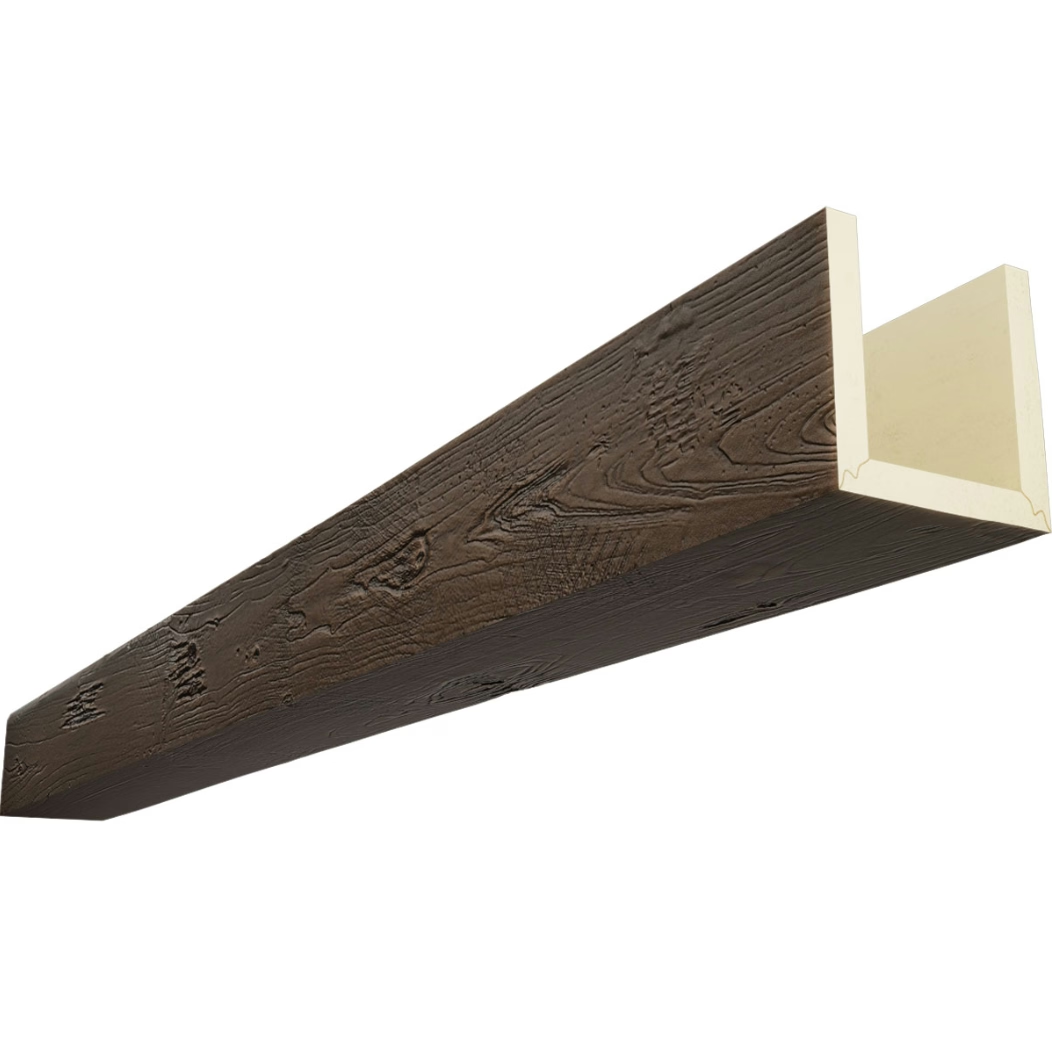
Private label beams can serve different market positions depending on distributor strategy. Some private label programs target value-conscious customers with competitive pricing, while others pursue premium positioning that justifies higher prices through superior quality or exclusive features. Clear positioning guides all subsequent decisions about pricing, distribution, and marketing.
Competitive analysis helps inform positioning decisions. Understanding what other private label and branded products occupy different market segments prevents direct confrontation with established competitors while identifying underserved opportunities. Differentiation through quality, service, or specialization creates sustainable positions that pure pricing competition cannot provide.
Channel conflict considerations affect private label strategies for distributors serving multiple channels. Private label programs that sell through retail channels may conflict with distributors' direct sales operations or vice versa. Clear policies about channel restrictions, MAP pricing, and territory limitations help prevent internal competition that erodes private label margin potential.
Getting Started with Private Label
Successful private label programs typically begin modestly, expanding as experience and confidence grow. Initial orders might involve basic labeling on existing products, with customization depth increasing as sales validate market acceptance. This approach limits initial investment while gathering real-world feedback about product-market fit.
Supplier selection proves critical to private label success. Manufacturers with established private label experience understand the specific requirements these programs involve, including flexible minimums, responsive communication, and consistent quality. Evaluating potential suppliers through sample evaluation, reference conversations, and pilot orders helps identify partners suited to specific needs.
Legal considerations including trademark registration, contract terms, and liability allocation should receive professional attention before launching private label programs. Protecting brand identity, establishing clear quality expectations, and defining dispute resolution procedures all require legal review that prevents future problems.
Private custom branded faux wood ceiling beams represent a strategic opportunity for distributors seeking to differentiate their offerings and improve profitability. By transforming commodity procurement into branded retail, private label programs create value that flows directly to distributors who execute them effectively.
Technical References
ASTM standards cited in every specification
Test Data
Lab results from internal testing program
Updated 2026
Reviewed against current product specs