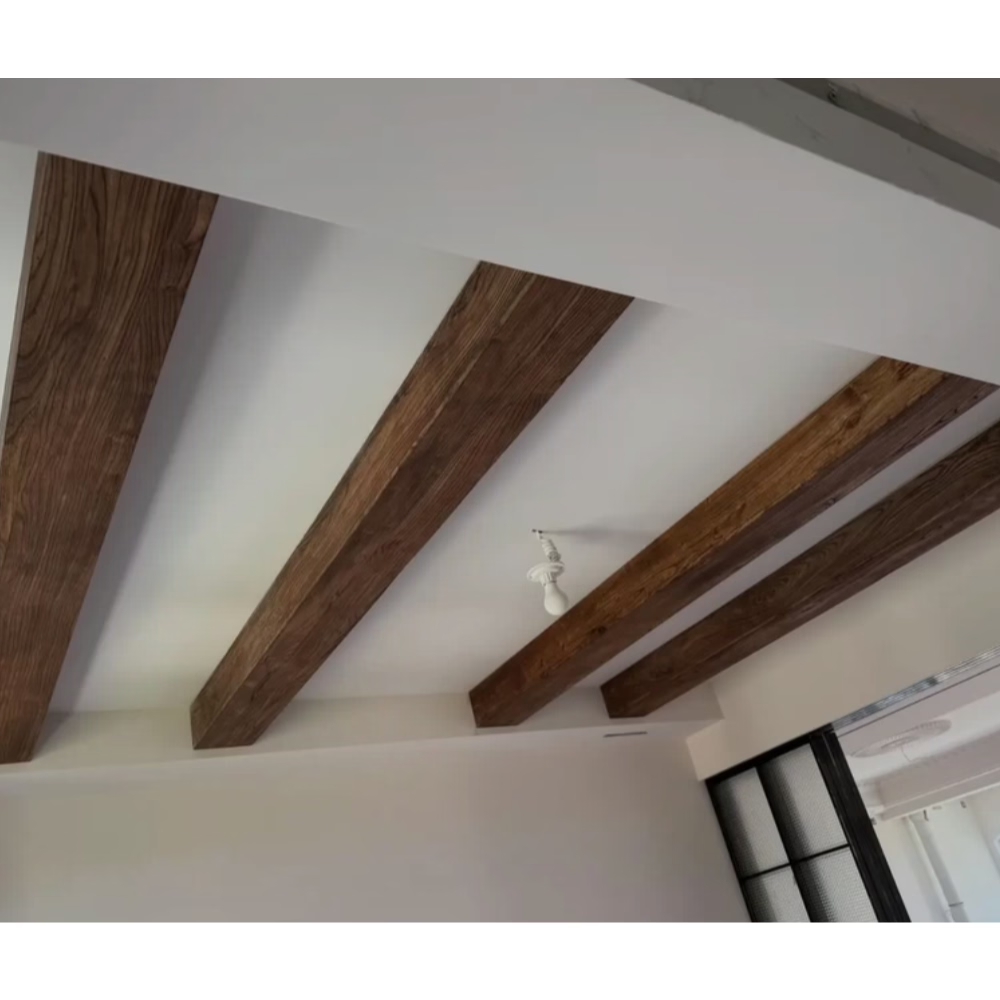
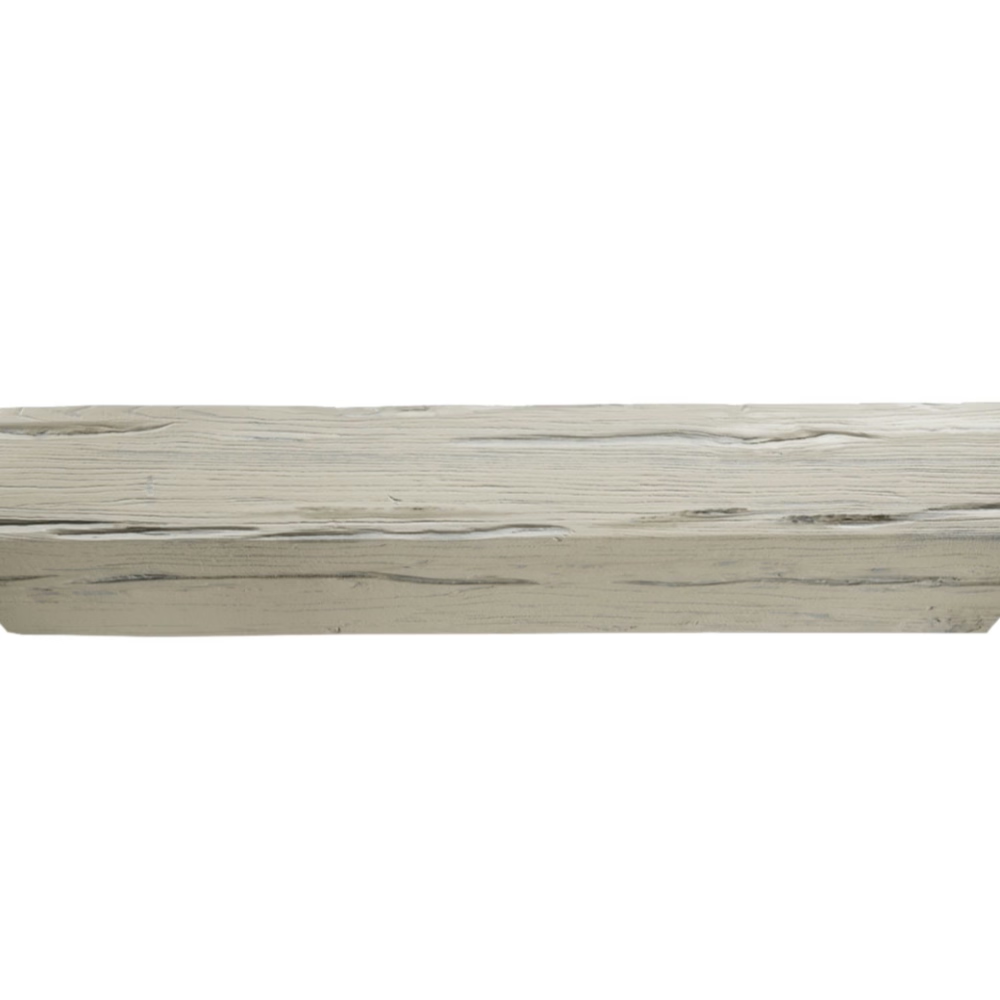
Building product distribution has evolved substantially over recent decades, with private label programs reshaping competitive dynamics across numerous categories. PU faux wood beams have emerged as attractive candidates for private label programs due to their growing market demand, quality variation across suppliers, and customer willingness to pay premiums for trusted brands. Understanding how private label programs function helps businesses evaluate whether these arrangements suit their strategic objectives.
The fundamental value proposition of private label for beam distributors involves capturing margin that would otherwise flow to manufacturers of branded products. By attaching their own brand identity to manufactured products, distributors transform purchasing relationships into retail opportunities. This transformation requires different capabilities than traditional distribution—brand building, marketing, and customer service become as important as logistics and procurement.
How Private Label Programs Function
Private label arrangements begin with agreements between brand owners (distributors) and manufacturers. These agreements specify which products will carry the brand identity, how quality standards will be maintained, pricing structures, exclusivity terms, and various operational procedures. The manufacturer produces products according to agreed specifications, while the brand owner handles marketing, sales, and customer relationships.
Production typically draws from the manufacturer's standard product range, with customization applied to create the appearance of distinct products. This might involve different finish colors, packaging configurations, or dimensional variations that distinguish private label products from the manufacturer's standard offerings. The extent of customization determines both investment requirements and competitive protection.
The brand owner receives products without manufacturer branding, adding their own identification before sale to end customers. Products may be physically identical to manufacturer's standard items, but the branded presentation creates perceived differentiation that supports different pricing. Experienced private labelers understand that effective differentiation requires more than simple labeling, but basic programs can succeed with minimal differentiation.
Investment Requirements
Financial requirements for private label programs vary substantially based on program scope and ambitions. Entry-level programs requiring only basic labeling may involve minimal upfront investment beyond product purchase commitments. These programs offer lower risk but also limited competitive protection, as the differentiation from manufacturer branding alone provides minimal barriers to competition.
Intermediate programs involving custom packaging, documentation, and marketing materials require greater investment but create more sustainable differentiation. Setup costs for custom packaging, photography, and printed materials accumulate quickly, often reaching several thousand dollars for initial launches. These investments must be recovered through sustained volume or premium pricing over time.
Advanced private label programs involving custom formulations, exclusive tooling, or proprietary products require substantial investment that only makes sense for businesses with significant volume commitments. Tooling for custom beam profiles, for example, might cost tens of thousands of dollars and require ongoing volume to justify. Such investments demand careful analysis of realistic sales projections and competitive payback periods.

Operational Considerations
Successful private label programs require operational capabilities beyond basic distribution. Inventory management becomes more complex when private label products must be stocked to maintain availability while avoiding excessive carrying costs. Unlike standard products that can be sourced quickly, private label items may require longer lead times for replenishment, necessitating buffer inventory investment.
Quality monitoring assumes heightened importance in private label programs. The brand owner bears responsibility for product quality even though they don't control manufacturing. Establishing quality checkpoints, inspection procedures, and communication protocols with manufacturers helps ensure consistent product experiences that protect brand reputation.
Customer service requirements increase with private label programs. Questions about product specifications, installation support, warranty claims, and returns all flow to the brand owner rather than the manufacturer. Building customer service capacity—including technical knowledge, responsive communication, and problem resolution authority—prevents service gaps that erode brand equity.
Marketing Private Label Products
Effective marketing distinguishes successful private label programs from failed ones. Without marketing investment, even excellent private label products struggle to achieve visibility against established manufacturer brands with marketing budgets. Brand development requires sustained investment in digital presence, product photography, content creation, and potentially paid advertising.
Content marketing proves particularly valuable for building private label brand equity. Detailed product information, installation guides, and design inspiration content demonstrate expertise while improving search visibility. Blog posts, videos, and social media content create ongoing engagement that builds brand awareness over time.
Differentiation messaging should highlight unique attributes of private label products rather than simply claiming superiority. Authentic wood comparisons, installation benefits, or design applications create compelling narratives that resonate with target customers. Generic quality claims fail to create meaningful differentiation in crowded product categories.
Risk Management
Private label programs involve risks that require active management. Supplier concentration risk—depending on single manufacturers for product supply—can be mitigated through relationship development with multiple manufacturers or contractual provisions ensuring supply continuity. Losing a manufacturer partner can devastate private label programs without contingency planning.
Quality risk extends beyond normal product concerns because the brand owner bears reputation consequences of manufacturing failures. Comprehensive quality agreements, inspection protocols, and contingency plans for quality issues help manage this exposure. Insurance coverage for product liability provides additional protection for businesses with significant private label exposure.
Competitive response from manufacturer brands can pressure private label pricing and margins. Established brands may introduce competitive products, adjust pricing, or increase marketing investment in response to private label success. Sustainable private label strategies should anticipate competitive responses rather than assuming protected positions.
Evaluating Private Label Opportunities
Assessing private label potential requires honest evaluation of available capabilities and market conditions. Businesses with existing brand equity, marketing capabilities, and customer relationships may find private label attractive as an extension of established positions. Businesses lacking these capabilities may struggle despite having strong product distribution skills.
Market analysis should evaluate competitive intensity, customer price sensitivity, and differentiation potential. Categories with high brand loyalty and established leaders present challenging private label environments, while fragmented categories with limited strong brands offer more accessible opportunities. Beam markets vary regionally and by channel, requiring localized analysis.
Financial modeling should project realistic volumes, pricing, and costs to determine whether private label programs can achieve target returns. Optimistic projections often drive private label launches, but conservative scenarios should guide investment decisions to avoid overextension when initial sales fall short of expectations.
Private label custom brand PU faux wood beams offer compelling opportunities for businesses with appropriate capabilities and market access. By carefully evaluating programs against organizational capabilities and market conditions, businesses can determine whether private label strategies align with their strategic objectives.
Technical References
ASTM standards cited in every specification
Test Data
Lab results from internal testing program
Updated 2026
Reviewed against current product specs


