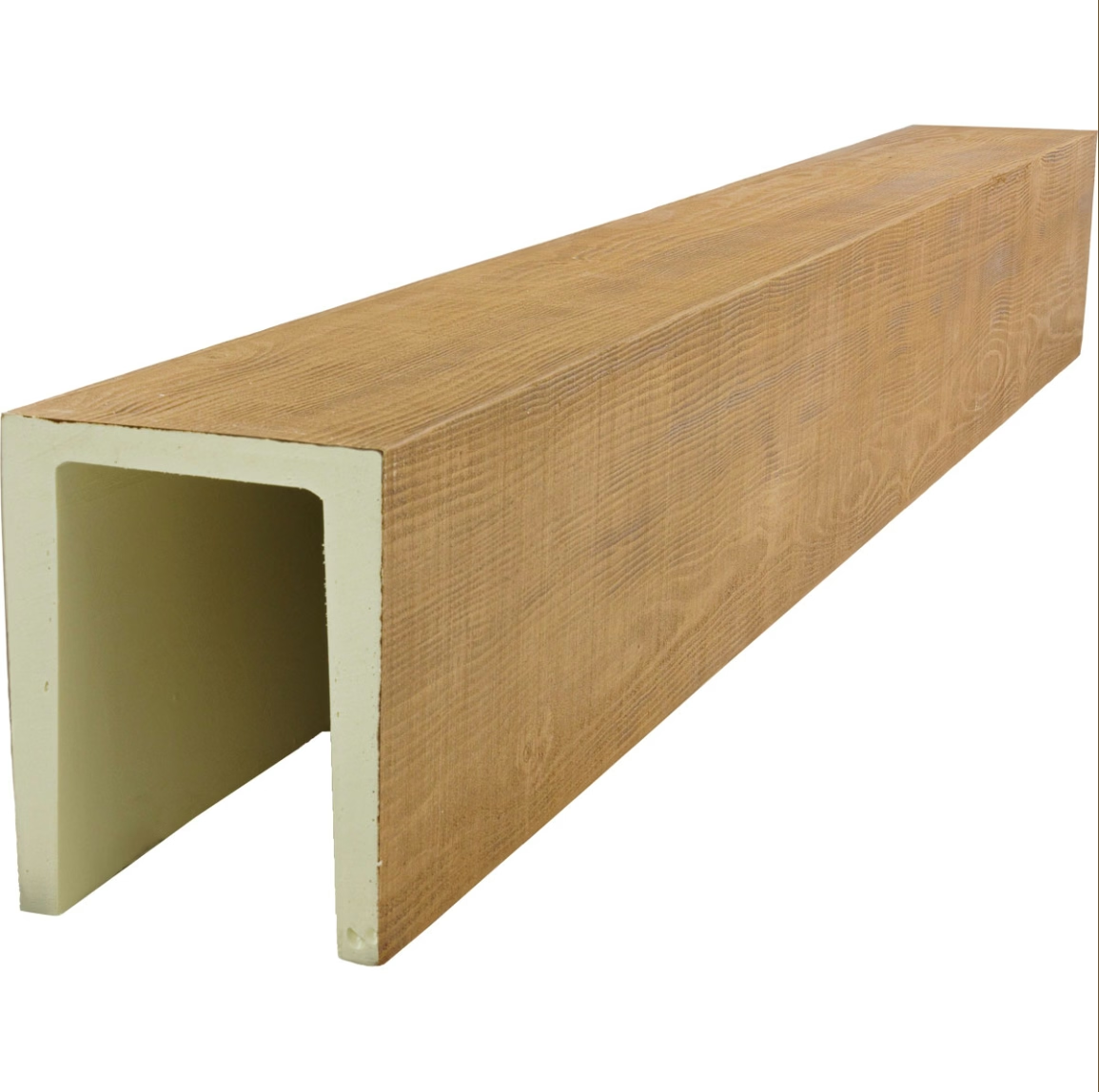
There's a meaningful difference between a product brochure that exists to look attractive and one that exists to communicate specifications. Most consumers never notice the difference. Architects, designers, importers, and project managers catch it immediately.
A premium PU faux beam brochure is fundamentally a communication tool. It introduces the product line, organizes the available options in a way that supports decision-making, and provides the technical depth that serious projects require. The brochures that fail at this role tend to be largely marketing content — beautifully photographed but vague on the details that matter for installation, specification, and procurement.
The ones that succeed blend inspiration with information. They show the products in real spaces so the reader can picture them in their own project, but they also include the dimensional data, finish codes, and technical specifications that allow the reader to commit to the product without follow-up calls.
What Belongs in a Premium Brochure
A premium brochure that stands up to architectural specification and commercial procurement isn't built by accident. Each section has a specific job, and the sequence matters as much as the content itself.
What Belongs in a Premium Brochure
The first section of a well-built brochure establishes what the product is. For premium PU beams, that means explaining the material composition, the manufacturing process, and the design intent. Buyers of premium products want to understand what they're paying a premium for, and the brochure is where that story gets told.
The introduction should address why polyurethane. What does the material do well, and why is it the right choice for ceilings, accent structures, and decorative architectural features in modern construction? The answer involves weight considerations, finish fidelity, installation efficiency, and dimensional stability. The brochure should be specific about these advantages without overselling.
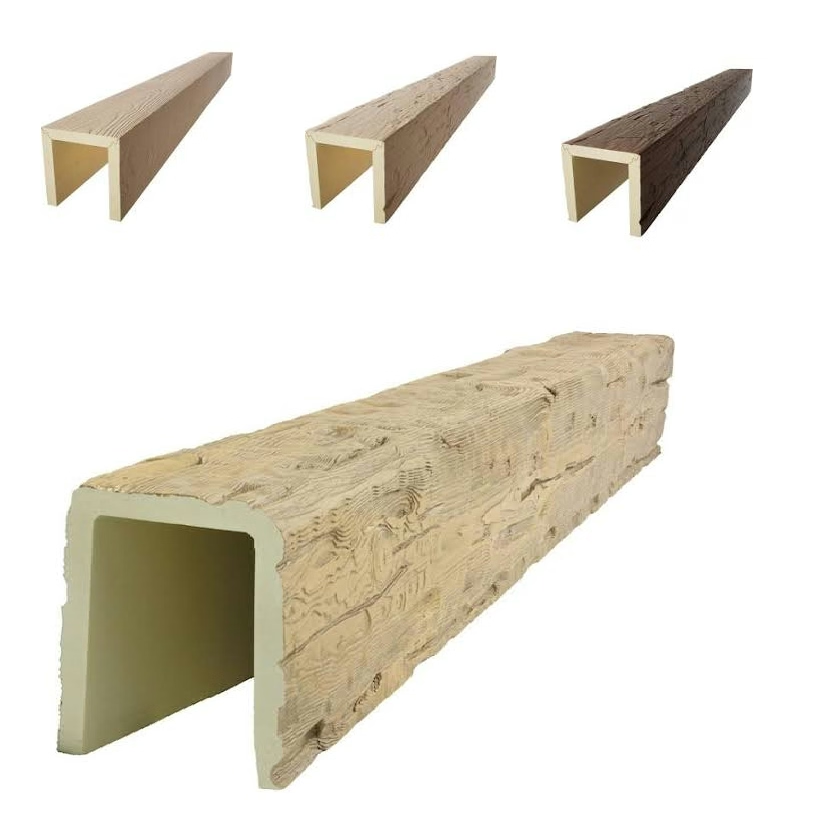
The second section typically shows the product family organized by profile and size. Premium lines usually offer a curated set of profiles rather than an overwhelming catalog. Each profile has distinct characteristics — hand-hewn, smooth, weathered, distressed — and the brochure should communicate those qualities visually and in copy. A project architect choosing between profiles benefits from seeing each profile in finished projects, ideally in different lighting conditions.
The third section covers finishes. This is where premium brochures often go deeper than standard catalogs. Each finish is a specific combination of base color, surface treatment, and grain depth. Premium lines typically offer 8 to 15 finishes rather than 4 or 5, and each one carries a specific product code that downstream specifications reference. Sample chips or close-up photography helps the reader evaluate finishes without requesting physical samples first.
The fourth section addresses installation at a high level. Detailed installation manuals are separate documents, but the brochure should explain enough that a reader understands what's involved. Where beams can be installed, what mounting methods are recommended, what surfaces they're compatible with, and what conditions they shouldn't be used in.
The fifth section covers project applications. Premium brochures show the products in real settings — living rooms, hospitality lobbies, restaurants, commercial interiors — to communicate how the products perform in actual use. These pages are often what convince a designer that a premium product is worth the investment for their project.
The sixth section provides technical specifications and certifications. This is the meat of the brochure for procurement and specification purposes. Fire ratings, density, load-bearing capacity, material composition, VOC content, available sizes and lengths, lead times, warranty information.
Visual Standards for Premium Brochures
The visual quality of a premium brochure communicates as much as the words on the page. A brochure with consistent high-resolution imagery across multiple projects signals that the manufacturer has built a production line capable of consistent results. Inconsistent image quality across pages often reveals that a manufacturer uses stock photography or limited production samples.
Premium brochures typically show beams in fully designed environments — not studio shots of isolated products. This gives readers a more accurate sense of how the beams integrate into finished rooms. A studio shot of a single beam against a white background communicates dimensions but not visual warmth. A beam in a vaulted family room with morning light coming through nearby windows communicates the experience of living with the product.
Color accuracy in printed brochures is important. Premium manufacturers use calibrated printers and high-quality paper stock so the printed finishes closely match actual product samples. Brochures with poor color accuracy become a source of project complaints when installed product doesn't match what was specified.
The Difference Between Consumer and Specifier Brochures
Many manufacturers publish two brochures for the same product line — one aimed at homeowners and DIY purchasers, and one aimed at architects, designers, and commercial buyers. The consumer brochure tends to emphasize inspiration, simplicity, and reassurance. The specifier brochure emphasizes technical accuracy, code compliance, and integration with project workflows.
A specifier brochure should include details the consumer version doesn't need. Detailed CAD drawings with dimension callouts, material safety data sheet references, performance test results, finish composition details, warranty terms, lead times for standard and custom orders, and packaging specifications for estimating freight.
For project managers and importers, the specifier brochure often lives in a digital library for years, getting referenced repeatedly across projects. The investment in a well-built specifier document pays off across the entire relationship.
How Architects Use the Brochure in Practice
In real workflow, the brochure serves several purposes. The first is introduction — the architect discovers the product line, sees the available profiles and finishes, and forms an initial sense of fit. The second is presentation — the architect brings the brochure to a client meeting to walk through finish and profile options visually. The third is specification drafting — the architect uses the brochure's technical data to write a CSI specification section. The fourth is submittal reference — once the contractor installs the product, the architect compares the as-installed work against the original product data.
Each of these uses favors slightly different content. A brochure that works for all four uses thematically is more valuable than one that only supports one or two. Architects often bookmark specific pages and reference them repeatedly, so pages need to be useful in isolation, not just as part of a linear narrative.
From Specification to Long-Term Reference

A brochure's usefulness doesn't end when an order ships. Long after the product is installed, the brochure remains a working document in importer kits, designer libraries, contractor offices, and facility files. Sections covering importer needs, custom capabilities, and sustainability each carry weight in different parts of the project lifecycle.
What Importers Look For in a Brochure
Wholesale importers sourcing products for distribution in their markets have slightly different needs. They need a brochure that works in their local market, both linguistically and aesthetically. This often means requesting translated versions or working with manufacturers who publish region-specific brochures.
Importers also use brochures to train their own sales teams. A new sales representative studying a premium product line benefits enormously from a well-organized brochure that explains not just what the products are but how to talk about them. Premium manufacturers sometimes provide sales training materials alongside brochures for this exact reason.
For importers selling into projects rather than consumer retail, the brochure often becomes a reference document shared downstream with architects and contractors. The importer's brand may appear on a customized version of the manufacturer's brochure, which becomes a sales tool for the importer as well as a reference for the customer.
Customization and White-Label Options
Many premium manufacturers offer white-label brochures for their distributor and importer networks. The distributor's logo appears on the cover, the contact details reflect the distributor's local offices, but the product photography and technical data remain the manufacturer's. This approach lets distributors maintain consistent branding in their markets while leveraging the manufacturer's documentation work.
White-label brochures are especially useful for importers who sell into multiple markets, each with their own language and aesthetic preferences. A consolidated product story with localized branding is more efficient than maintaining parallel documentation sets.
Custom Finishes and Bespoke Projects
Premium PU faux beam brochures typically include a section on custom capabilities. Most premium manufacturers offer custom finishes beyond their standard line, sometimes custom profiles for projects large enough to justify a dedicated mold, and custom dimensions for unusual applications.
A brochure should explain the process for custom orders — minimum order quantities, lead time implications, sample approval workflow, and any cost premium associated with custom work. Architects specifying custom finishes for distinctive projects need to know whether their timeline can accommodate custom production. A clear custom-orders section in the brochure answers those questions preemptively.
Sustainability and Indoor Air Quality
For premium projects, especially those pursuing LEED, WELL, or Living Building Challenge certifications, sustainability documentation in the brochure matters. VOC content, formaldehyde emissions, material sourcing, manufacturing location, and certifications like GREENGUARD Gold or Indoor Advantage all become differentiators.
Premium manufacturers tend to publish their sustainability data in the brochure rather than burying it in separate environmental product declarations. Architects writing specifications consult the brochure first, and the easier it is to access sustainability data, the more likely it is to be incorporated into the project's documentation.
For commercial importers selling into markets with strict environmental regulations — Europe, parts of Asia, the Middle East — sustainability documentation in the brochure often determines whether the product is even considered for the project.
The Brochure as a Long-Term Reference
A premium product brochure often has a remarkably long useful life. Where consumer brochures are replaced or updated frequently, a well-built premium brochure can remain relevant for two or three years before requiring revision. Architects keep them in digital libraries, importers keep them in sales kits, and contractors sometimes reference them on jobsites when questions come up.
This longevity makes the initial investment in a quality brochure worth it for the manufacturer. The document earns returns across many projects, many relationships, and many years. For premium products especially, where the market rewards longevity and consistency, that long useful life is a feature, not a coincidence.
What the Best Brochures Avoid
The brochures that frustrate architects and specifiers tend to share common flaws. Vague technical claims — "fire rated" without specifying test method and result. Marketing language in place of specifications — "the warmest finish available" without finish codes. Inconsistent image quality that suggests misleading photography. Missing dimensional data, leaving readers to guess at sizes. Generic installation guidance that doesn't address the specifics of the product line.
A premium brochure avoids these by being specific, accurate, and useful. The best ones treat the reader as a serious professional who needs real information to make a real decision. The marketing still matters, but it's always anchored in technical substance that supports the project's actual needs.
For buyers, importers, and designers evaluating premium PU faux beams, the brochure is often the first piece of documentation that earns trust. A document that looks polished, communicates clearly, and provides the technical depth the project requires signals a manufacturer that understands the difference between premium positioning and premium execution. That signal shapes which products get specified on the projects that matter most.
Technical References
ASTM standards cited in every specification
Test Data
Lab results from internal testing program
Updated 2026
Reviewed against current product specs