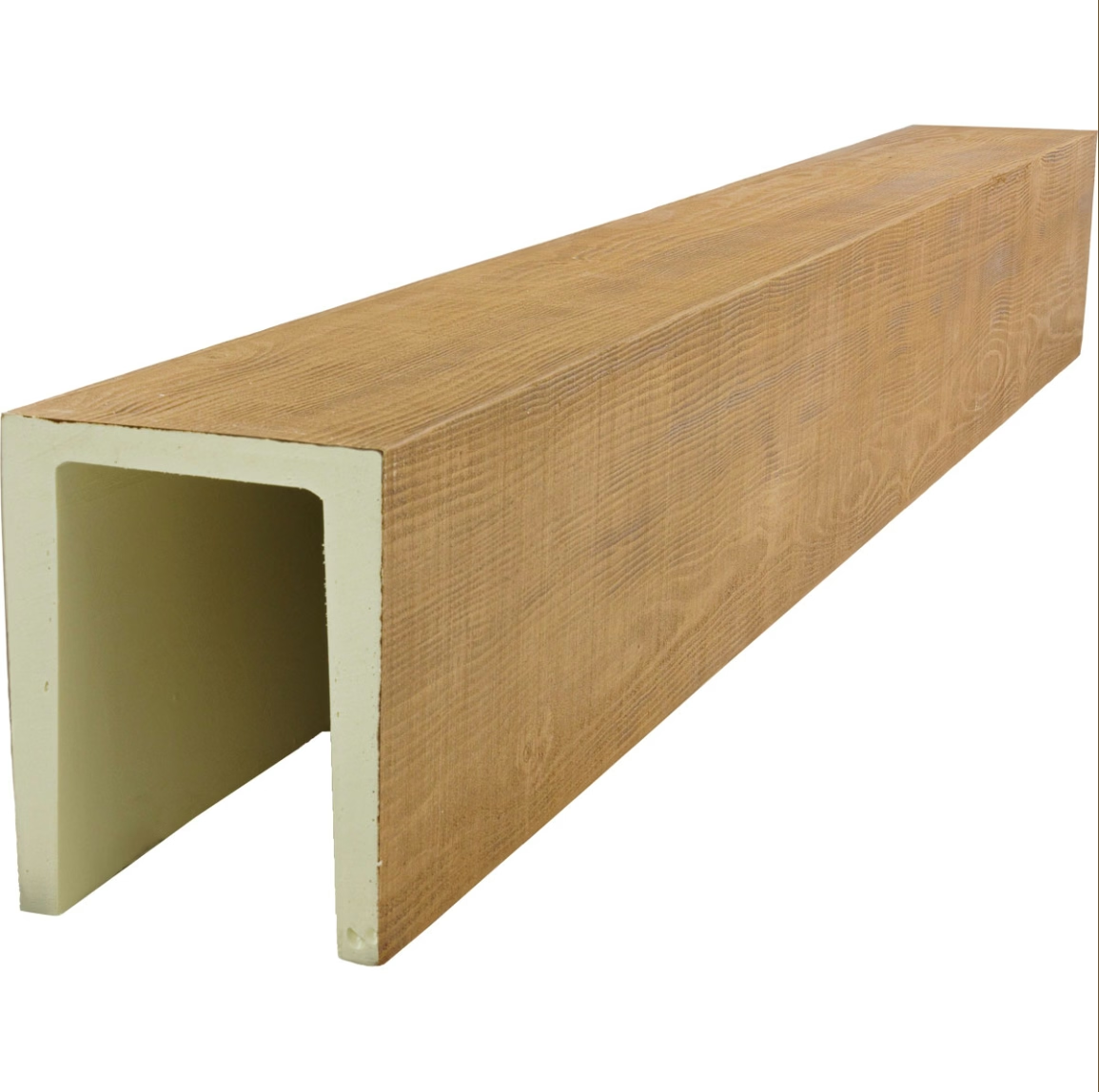
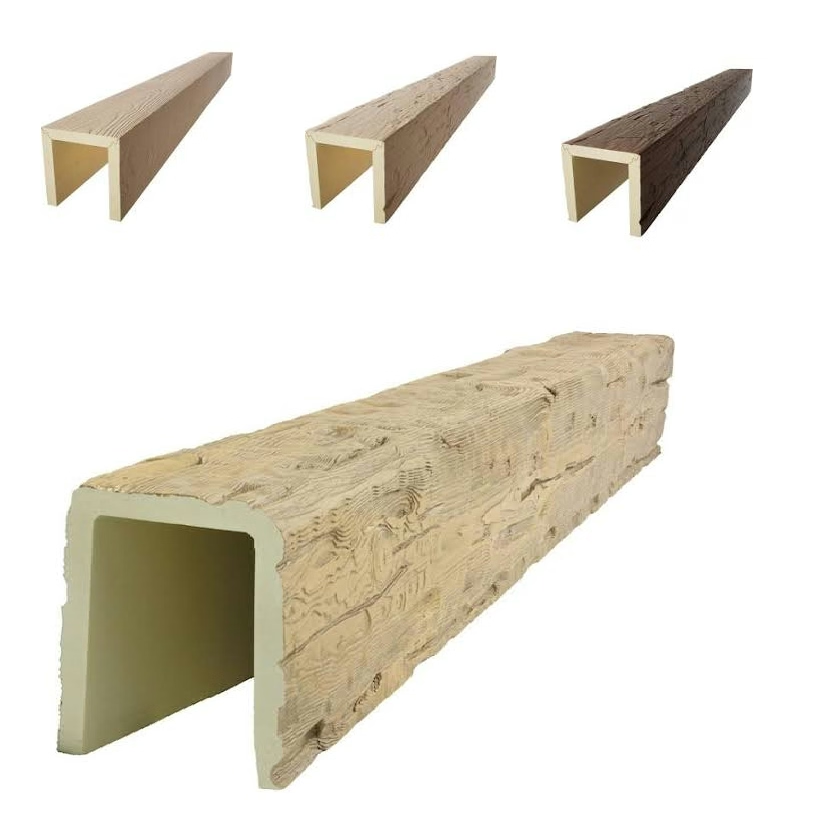
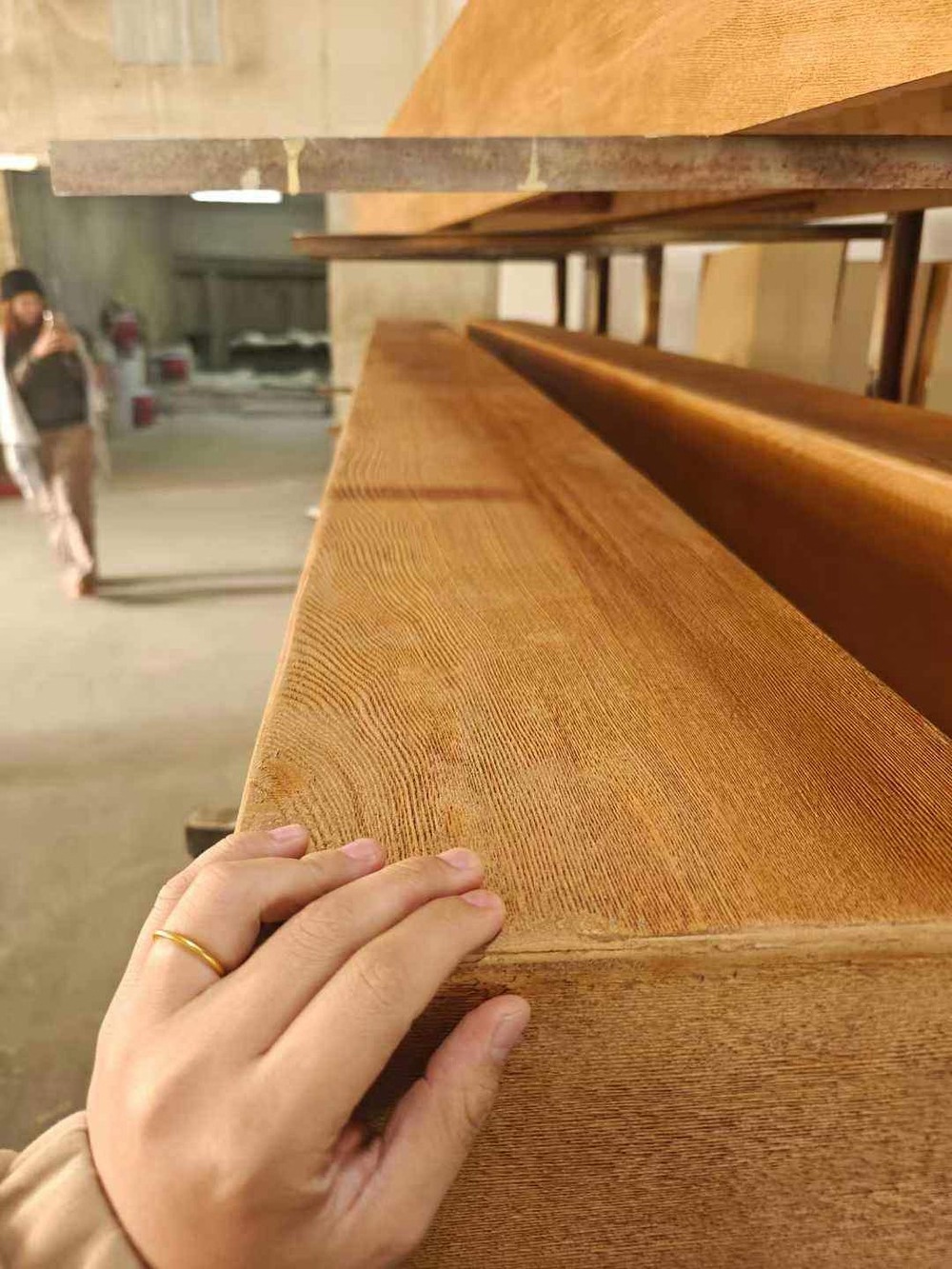
Standard faux wood beam offerings serve the majority of residential and commercial applications effectively, with sizes, styles, and finishes selected to match common design preferences and typical installation conditions. However, projects with unique requirements demand manufacturer capabilities that extend beyond catalog products. Custom polyurethane timber solutions address these specialized needs, providing architects, designers, and builders with the flexibility to achieve intended design outcomes even when project specifications deviate significantly from typical applications.
Dimension customization represents the most frequently requested custom capability. Standard beams typically ship in lengths from eight to sixteen feet, with widths and depths following established profile conventions. Projects requiring beams outside these ranges—whether extremely long spans for cathedral ceilings, unusually thick beams for dramatic visual presence, or narrow widths for delicate accent applications—benefit from manufacturers offering custom length, width, and depth options. Premium manufacturers produce beams to exact specifications, eliminating the compromise between available sizes and project requirements that forces inferior solutions.
Profile customization addresses architectural details that standard shapes cannot provide. While many installations use conventional beam profiles, architectural projects often feature unique details including circular beams for curved ceilings, tapered beams that narrow from base to top, beams with integrated crown molding profiles, and compound shapes that serve structural and decorative functions simultaneously. Creating these custom profiles requires mold-making capabilities that capture complex geometries while maintaining the authentic wood texture details that distinguish quality faux beams from basic alternatives.
Finish customization enables precise color matching and texture specification that standard offerings cannot achieve. Corporate projects requiring beams to match existing woodwork, historic restorations demanding specific aged patinas, and design projects incorporating unusual color palettes all benefit from custom finishing capabilities. Professional manufacturers maintain color matching technology and skilled finish technicians who can reproduce target appearances from physical samples, color specifications, or digital references. The ability to specify exact color values and finish characteristics ensures that custom beams integrate seamlessly with surrounding elements.
Integrated feature customization adds functional capabilities to faux beams beyond their visual role. Recessed lighting channels, speaker mounting locations, HVAC register cutouts, ceiling fan mounting plates, and concealed mounting systems all represent features that can be incorporated during manufacturing rather than requiring field modification. These integrated features improve installation efficiency, ensure proper support for attached components, and maintain clean visual appearance that field modifications might compromise. Manufacturers with engineering capabilities work with design teams to develop custom features that serve project-specific requirements.
Structural customization addresses load-bearing and support applications where beam performance must meet specific engineering requirements. While most faux beam applications are purely decorative, some installations require beams to support actual loads from ceiling finishes, attic storage, or hanging elements. Custom formulations, internal reinforcement options, and mounting configurations designed for specific load requirements ensure that beams perform safely in these applications. Engineering documentation supporting structural custom beams provides the documentation that building officials often require for permit approval.
Material certification customization provides documentation required for specific applications or jurisdictions. Commercial projects in regulated industries may require beams to meet specific fire ratings, emissions standards, or environmental certifications. Custom manufacturing can incorporate additives or modify processes to achieve required certifications, with testing documentation provided to verify compliance. International projects may require different certification standards than domestic applications, and experienced manufacturers understand how to produce beams meeting various global requirements.
Sample development for custom projects follows systematic processes that refine specifications before full production commitment. Initial concept discussions establish project requirements and identify technical challenges. Prototype development produces sample beams that demonstrate proposed approaches, allowing designers to evaluate appearance, verify dimensions, and test features before committing to production. Sample review cycles refine specifications based on actual prototype evaluation, ensuring that final production beams meet expectations. This iterative process reduces risk on both sides, building confidence that custom solutions will achieve intended outcomes.
Production planning for custom beams differs from standard product manufacturing due to unique specifications and potentially limited order quantities. Lead times for custom orders typically exceed standard product availability, requiring advance planning to accommodate production scheduling. Setup costs for custom molds and finishes amortize across production quantities, influencing pricing for small-run custom orders. Professional manufacturers communicate these factors transparently, helping buyers understand pricing structures and lead time requirements for their specific custom needs.
Quality assurance for custom beams incorporates additional verification steps appropriate to non-standard specifications. Dimensional verification confirms that custom profiles match approved prototypes and project requirements. Functional testing validates integrated features perform as designed. Finish verification ensures color matching meets specified targets. These verification steps may extend quality check procedures beyond standard inspection routines, but ensure that custom products meeting unique specifications perform as intended.
Collaboration between buyers and manufacturers throughout custom projects improves outcomes significantly. Clear communication about requirements, constraints, and expectations prevents misunderstandings that might compromise results. Regular progress updates during production allow early identification of any issues requiring specification clarification. Site coordination during installation ensures that custom beams install properly given actual field conditions. This collaborative approach transforms custom projects from speculative efforts into predictable successes.
The investment in custom faux beam solutions often proves more cost-effective than compromising design intent or implementing inferior alternatives. Custom beams eliminate waste from extensive field modification of standard products, reduce installation labor through optimized fit, and avoid the maintenance challenges that improperly matched solutions create. When evaluated against total project cost including potential remediation and ongoing maintenance, custom solutions frequently demonstrate superior value despite higher initial pricing.

Project examples demonstrate the range of applications where custom faux beams provide superior solutions. Historic property restorations requiring beams matching original timber dimensions and weathering patterns benefit from custom mold creation and specialized finishing. Modern architectural projects featuring unusual ceiling geometries depend on custom profiles that standard products cannot replicate. Luxury hospitality properties seeking unique design elements use custom capabilities to create signature features that guests remember. These examples illustrate the value that custom manufacturing brings to projects with requirements beyond ordinary.
Long-term relationships with custom manufacturers provide ongoing benefits for organizations with recurring custom requirements. Established relationships streamline communication, with manufacturers understanding preferences and project approaches from previous collaborations. Repeatability improves when custom specifications can reference previous projects rather than starting specification processes from scratch. Volume commitment discussions become possible when manufacturers understand future project pipelines. These relationship benefits reward early investment in custom capability development.
Technical consultation during custom project development helps buyers understand what is achievable within polyurethane manufacturing constraints. Not every design conceived can be practically manufactured, and early technical review identifies potential issues before significant development investment. Experienced manufacturers suggest alternative approaches that achieve similar results within manufacturing capabilities, often developing innovative solutions that exceed original design expectations. This consultative relationship distinguishes professional custom manufacturers from simple production shops.

Technical References
ASTM standards cited in every specification
Test Data
Lab results from internal testing program
Updated 2026
Reviewed against current product specs