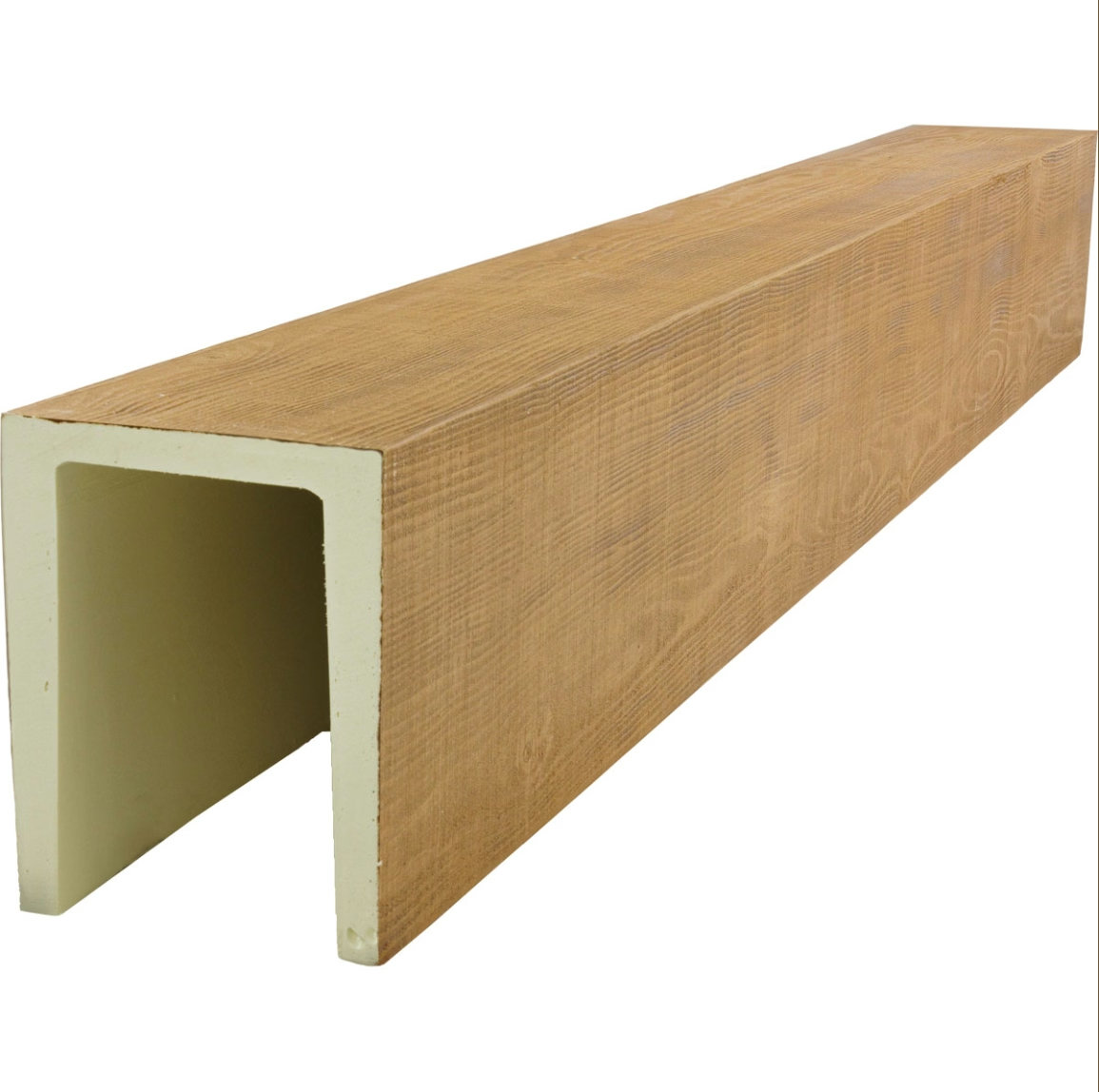
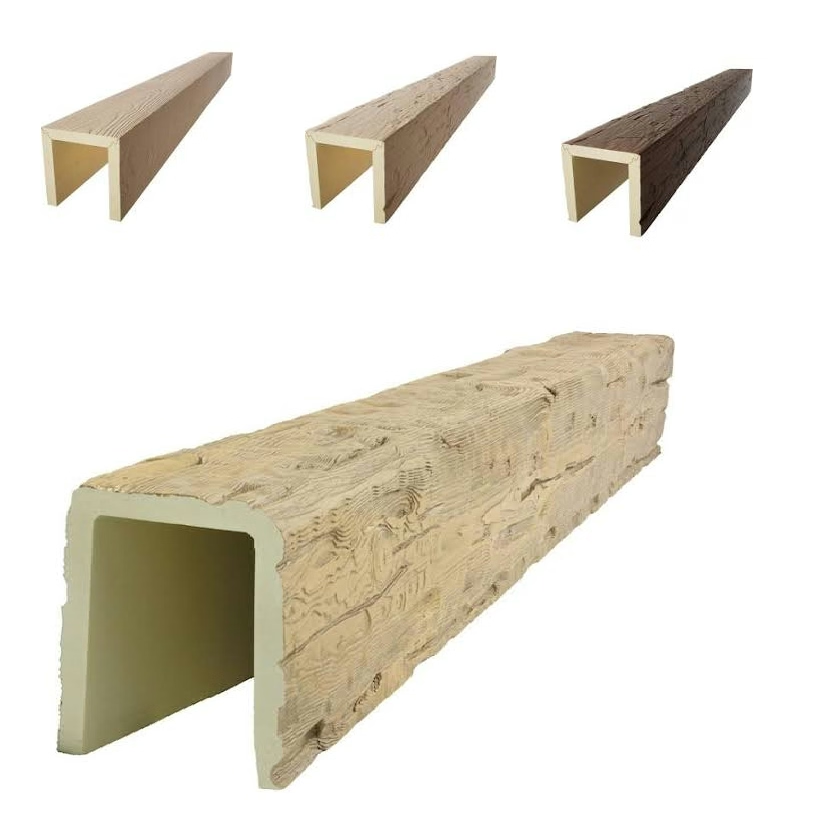
The growing popularity of polyurethane faux wood beams has attracted manufacturers ranging from sophisticated industrial producers to small operations with questionable quality control. This market diversity creates purchasing challenges for buyers who lack technical expertise to distinguish premium products from inferior imitations. Understanding professional quality assessment standards empowers buyers to make informed decisions that protect their investments.
James Chen, an interior designer with twenty years of experience specifying architectural products, learned this lesson expensively when a budget beam purchase resulted in color inconsistencies that became visible after installation. The project required complete replacement at triple the original material cost, plus additional labor expenses that exceeded the savings from buying cheaper products. This experience motivated him to develop systematic evaluation criteria that he now applies to all beam purchases.
Physical Property Testing
Material composition fundamentally determines product performance across all relevant metrics. Quality polyurethane beams utilize high-density formulations that achieve appropriate structural strength while maintaining realistic appearance and workable weight. Testing physical properties provides objective data that distinguishes premium products from cost-reduced alternatives.
Density measurement offers the simplest initial assessment, with quality beams typically ranging from 6-10 pounds per cubic foot depending on profile design and structural requirements. Beams significantly lighter than this range may lack adequate structural integrity for intended applications, while unusually heavy beams suggest inferior formulations or excessive filler materials that compromise durability. Request density specifications from manufacturers and compare across competing products.
Compression testing evaluates load-bearing capacity by measuring force required to compress beam material by specific percentages. Quality products maintain structural integrity under loads exceeding 300 PSI without permanent deformation, ensuring adequate support for typical installation requirements. Manufacturers should provide compression strength data verified through independent laboratory testing rather than internal claims.
Impact resistance testing measures how beams respond to sudden force exposure common during installation and service. Quality materials absorb impact energy without cracking, chipping, or surface damage that compromises appearance. Request documented impact test results using standardized methods such as ASTM D256 Izod or Charpy testing to compare products objectively.
Surface Finish Evaluation
The visual authenticity of faux wood beams depends almost entirely on surface finishing quality, making finish evaluation critical to purchasing decisions. Premium finishing processes create realistic wood appearances that withstand environmental exposure and regular handling, while inferior finishes degrade rapidly under similar conditions.
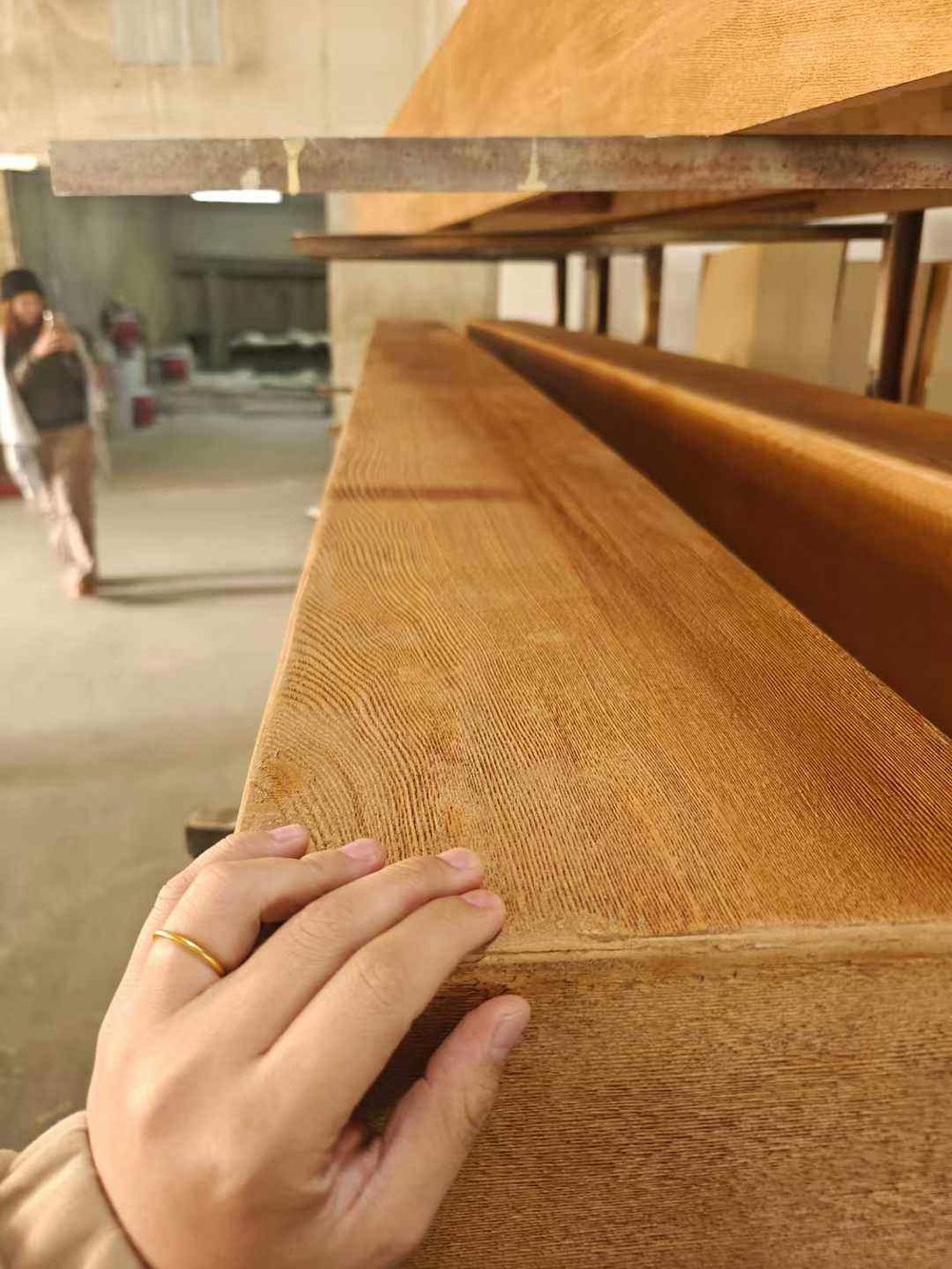
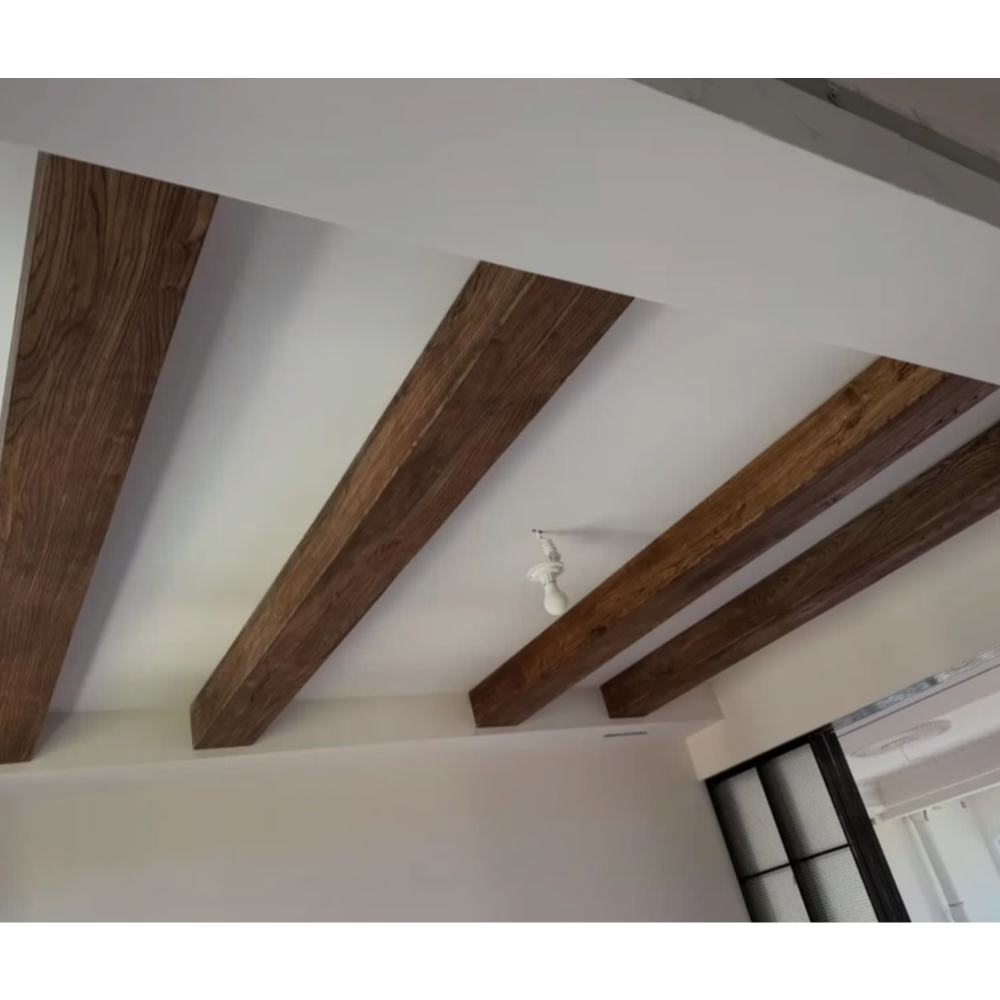
Texture reproduction accuracy distinguishes authentic-looking beams from obvious imitations. Run your hand across beam surfaces to evaluate whether texture patterns match genuine wood characteristics. Quality products display varied textures with consistent grain patterns, natural-looking imperfections, and depth that responds to lighting changes. Uniform textures without variation signal mass-production processes that sacrifice authenticity for efficiency.
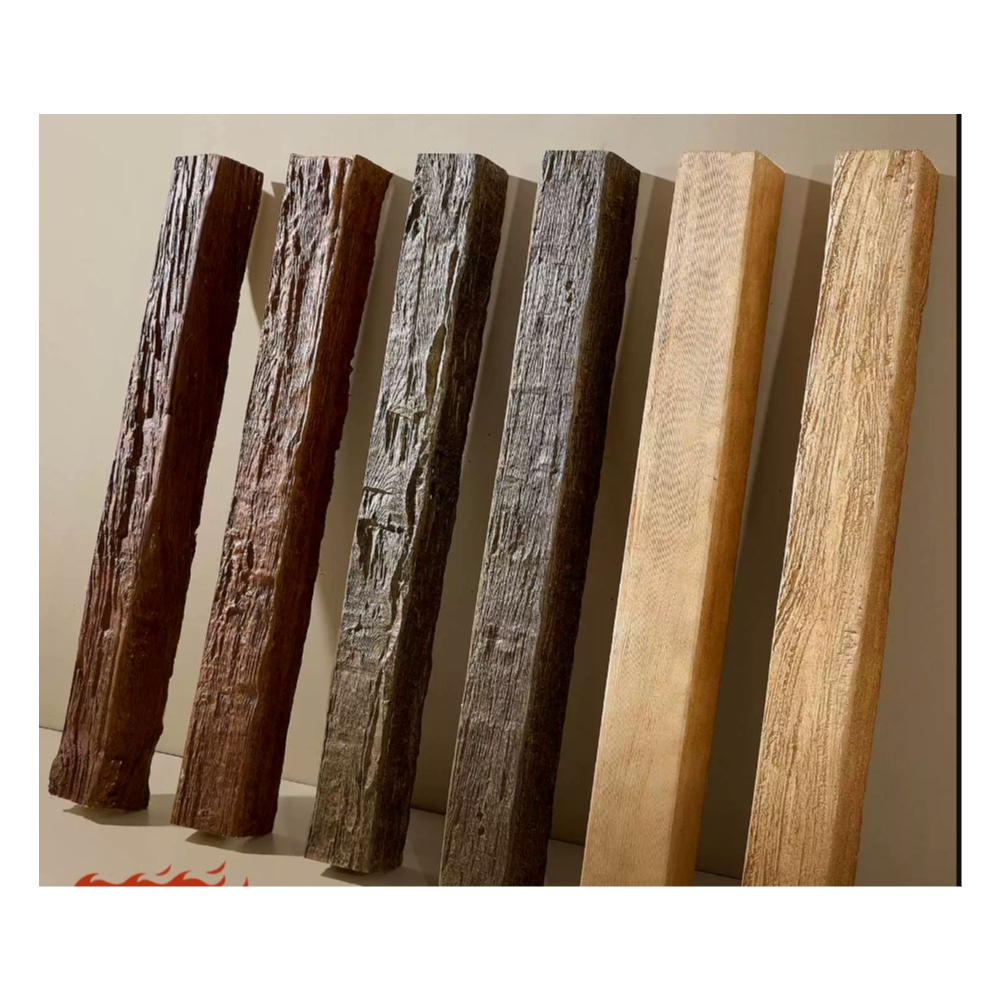
Color consistency within individual beams and across purchase orders indicates quality control processes that premium manufacturers implement. Examine beam surfaces under natural lighting conditions to identify color variations that become visible after installation. Quality products display subtle color gradients that replicate natural wood's character without obvious patches, splotches, or transitions that appear artificial.
Adhesion testing for painted or stained finishes evaluates whether surface treatments will remain attached during service. Quality finishes bond strongly to polyurethane substrates, resisting peeling, chipping, or flaking that compromises appearance. Perform simple adhesion tests by pressing tape firmly against beam surfaces and removing it rapidly—quality finishes resist pull-off while inferior products display immediate adhesion failure.

Structural Integrity Assessment
Beyond material density, beams must exhibit structural characteristics that ensure successful installation and long-term performance. These properties relate to dimensional stability, connection compatibility, and long-term durability under typical service conditions.
Dimensional consistency across beam lengths and profiles ensures installation efficiency and visual quality. Measure multiple beams from purchase orders to verify that dimensions match specifications within acceptable tolerances. Variations exceeding manufacturer tolerances complicate installation, create gaps at joints, and produce visible inconsistencies in completed installations.
Edge detail quality indicates manufacturing precision that affects both appearance and structural performance. Examine beam edges to verify sharp, well-defined profiles without rounding, chipping, or surface irregularities. Quality beams display crisp transitions between surfaces that replicate woodworking precision, while inferior products show mold flash, incomplete filling, or excessive finishing that compromises authentic appearance.
Thermal expansion characteristics matter for installations in spaces with significant temperature variation. Quality polyurethane formulations accommodate thermal cycling without warping, bowing, or separation from mounting surfaces. Request thermal expansion coefficient data and verify that recommended installation methods account for dimensional changes during temperature extremes.
Manufacturer Verification
Product quality ultimately reflects manufacturing capabilities, quality control processes, and business practices that determine whether products consistently meet specifications. Verifying manufacturer credentials provides confidence that purchased products will perform as expected throughout their service life.
Production facility evaluation, when possible, reveals manufacturing capabilities that distinguish professional operations from hobby shops. Professional manufacturers operate controlled facilities with appropriate equipment, trained personnel, and systematic processes that ensure consistent quality. Request facility tours or virtual inspections that demonstrate professional operations.
Certification documentation provides third-party verification of manufacturer claims regarding product performance. Quality manufacturers obtain independent testing and certification for relevant properties including fire resistance, structural capacity, and environmental safety. Request copies of current certifications from recognized testing organizations rather than accepting manufacturer self-certification.
Business longevity indicates whether manufacturers support their products with ongoing service, replacement availability, and technical assistance. Companies that disappear after sales leave buyers without recourse when problems emerge. Verify business registration, review customer feedback across multiple sources, and confirm that manufacturers maintain support capabilities that match their product offerings.
Warranty and Support Evaluation
Professional product warranties reflect manufacturer confidence in quality while providing buyers with recourse when problems emerge. Warranty terms vary significantly between manufacturers, making careful evaluation essential for protecting purchasing investments.
Warranty coverage scope determines what problems qualify for remedy. Quality warranties cover manufacturing defects, finish failures, structural problems, and dimensional inconsistencies that affect product performance. Review warranty language carefully to identify exclusions, limitations, or conditions that narrow coverage in ways that disadvantage buyers.
Warranty duration reflects product confidence, with quality products typically backed by warranties ranging from five years to lifetime coverage depending on application and manufacturer philosophy. Longer warranties indicate manufacturer confidence but require verification that companies will remain in business to honor commitments. Evaluate warranty terms alongside business stability assessments.
Support quality determines how effectively manufacturers address problems when they occur. Contact manufacturers before purchasing to evaluate response quality, technical knowledge, and customer service effectiveness. Quality manufacturers provide responsive support that addresses concerns professionally, while problematic companies often provide inadequate or nonexistent support when problems arise.
Technical References
ASTM standards cited in every specification
Test Data
Lab results from internal testing program
Updated 2026
Reviewed against current product specs