
The journey from raw polyurethane formulation to a finished faux timber beam involves numerous transformation stages, each requiring vigilant oversight to deliver a product that performs reliably in demanding interior environments. Manufacturers who prioritize quality control understand that every batch of polyurethane resin carries subtle variations in cellular structure and response to mold release agents, which means the inspection process must adapt continuously rather than rely on static checkpoints alone.
Raw material verification begins at the receiving dock, where incoming polyurethane components undergo spectral analysis to confirm chemical composition matches specification sheets. technicians extract small samples from each shipment and compare infrared absorption patterns against reference libraries, identifying any deviation in catalyst ratios or filler concentrations before materials enter the production floor. This front-end screening prevents defective compounds from consuming mold time and labor hours downstream, ultimately protecting both manufacturer margins and customer satisfaction.
Density and Cellular Structure Testing
Polyurethane faux beams derive their realistic weight characteristics from carefully controlled foam expansion during the molding process, and density variations directly impact how the finished product accepts fasteners and resists impact damage. Quality control laboratories employ water displacement methods following ASTM D1622 protocols, measuring sample cubes extracted from beam cross-sections to verify target densities fall within acceptable tolerance bands, typically plus or minus five percent of the nominal specification.
Open-cell versus closed-cell structure ratios determine moisture resistance and insulation value properties, parameters that matter significantly when beams may encounter high-humidity environments or serve decorative purposes in poorly ventilated spaces. Microscopy analysis of fractured beam samples reveals cell wall integrity and connectivity patterns, allowing engineers to correlate visual observations with performance data gathered from accelerated aging chambers. When cell collapse or excessive void formation appears in sampling, production technicians adjust mix ratios, injection pressure, or cure timing to restore consistent cellular architecture.
Surface Finish and Texture Verification
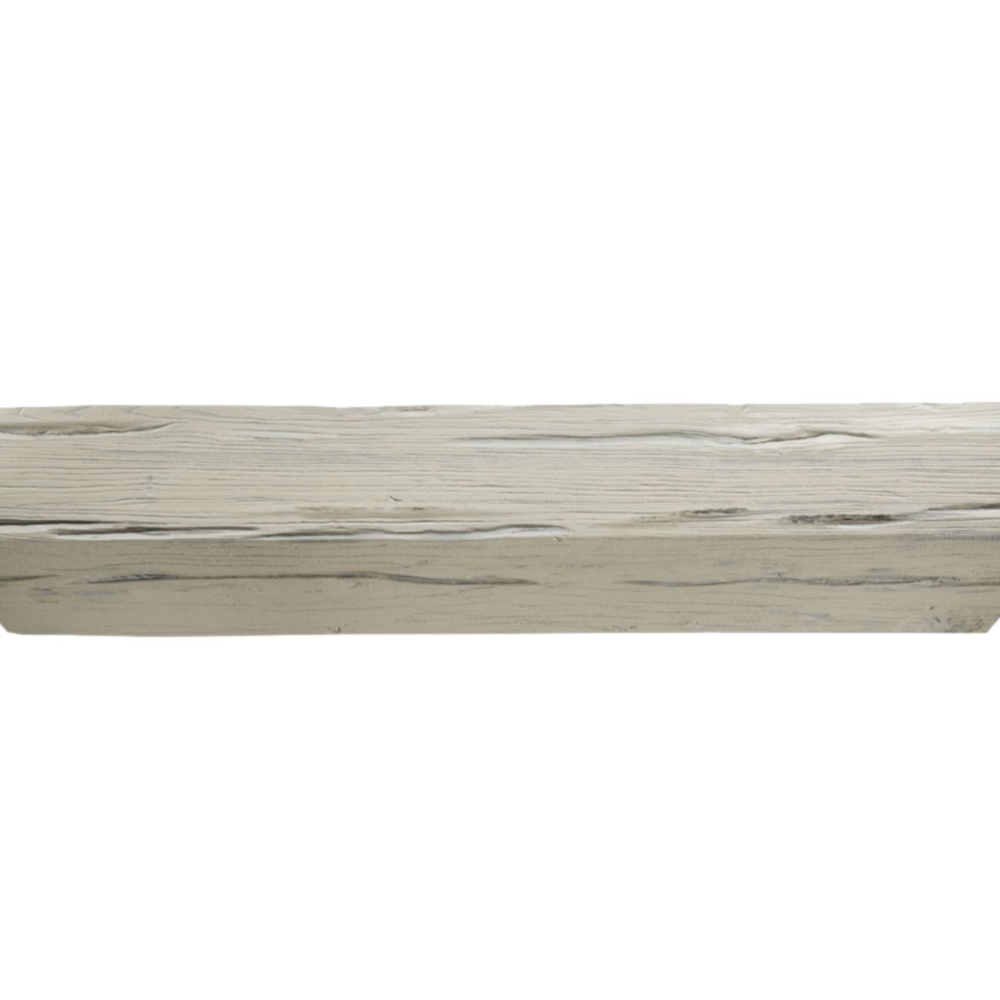
The authentic appearance of faux timber hinges on surface detail that convincingly mimics natural wood grain, knot patterns, and weathering marks. Inspectors evaluate each beam under standardized lighting conditions, examining texture depth consistency across the full length and flagging any areas where release agent residue, air pockets, or flash material compromise the intended aesthetic. Professional manufacturers maintain reference panels representing acceptable quality thresholds, enabling inspectors to make consistent pass-fail determinations across different shifts and personnel.
Color consistency verification follows similar principles, with spectrophotometric measurements capturing Lab* values across multiple measurement points on each beam. Natural wood exhibits subtle tonal variation that enhances realism, so quality specifications often permit controlled ranges rather than demanding uniform coloration. When batch-to-batch color drift exceeds tolerance, color matching technicians recalibrate pigment loading in surface coating formulations, ensuring replacement beams integrate seamlessly with existing installations in renovation scenarios.
Dimensional Accuracy Assessment
Faux beams must fit together precisely during installation, with mating surfaces meeting at consistent angles and interlocking profiles engaging without gaps that would require extensive caulking or putty work. Quality control stations measure critical dimensions including overall length, width, height, and angular tolerance using precision calipers and digital protractors, recording results in statistical process control charts that reveal trending issues before they produce out-of-specification output.

Weight verification complements dimensional checks, as the mass of a polyurethane beam correlates directly with its density and structural integrity. Scales integrated into packaging stations flag beams that deviate significantly from expected weight ranges, triggering investigation into potential material inconsistencies or molding defects that might not be visible during surface inspection alone.
Packaging and Shipping Protection
Even the most meticulously inspected beam can arrive damaged at its destination if protective packaging proves inadequate for the rigors of freight handling. Quality teams test packaging configurations using simulated vibration and drop protocols, evaluating cushioning materials and corner reinforcement effectiveness before committing to production packaging specifications. Shrink wrap tension, cardboard box compression strength, and label placement accuracy all fall within the quality control scope, ensuring that finished products reach customers in the same condition they left the manufacturing facility.
Environmental conditioning chambers expose packaged beams to temperature extremes and humidity cycling that mirror storage conditions during overseas container shipments, identifying potential condensation issues or packaging material degradation that could compromise product quality during transit. By simulating months of transport stress in compressed timeframes, quality engineers refine packaging solutions that protect investments throughout the supply chain.

Continuous Improvement Through Data Analysis
Modern quality control extends beyond reactive inspection toward predictive analytics that identify process drift before defective products reach completion. Statistical process control software monitors key quality indicators in real-time, alerting operators when measurements approach tolerance boundaries and enabling immediate corrective action. Root cause analysis of customer complaints and warranty returns feeds back into design specifications and process parameters, creating feedback loops that steadily improve product performance over successive production generations.
Documentation trails maintained throughout manufacturing enable traceability from finished beam back to specific batch numbers of raw materials, allowing manufacturers to respond quickly if field performance issues emerge and targeted recalls become necessary. This accountability infrastructure protects end customers who rely on faux beams for long-term aesthetic installations while reinforcing manufacturer credibility in competitive global markets.
Technical References
ASTM standards cited in every specification
Test Data
Lab results from internal testing program
Updated 2026
Reviewed against current product specs


