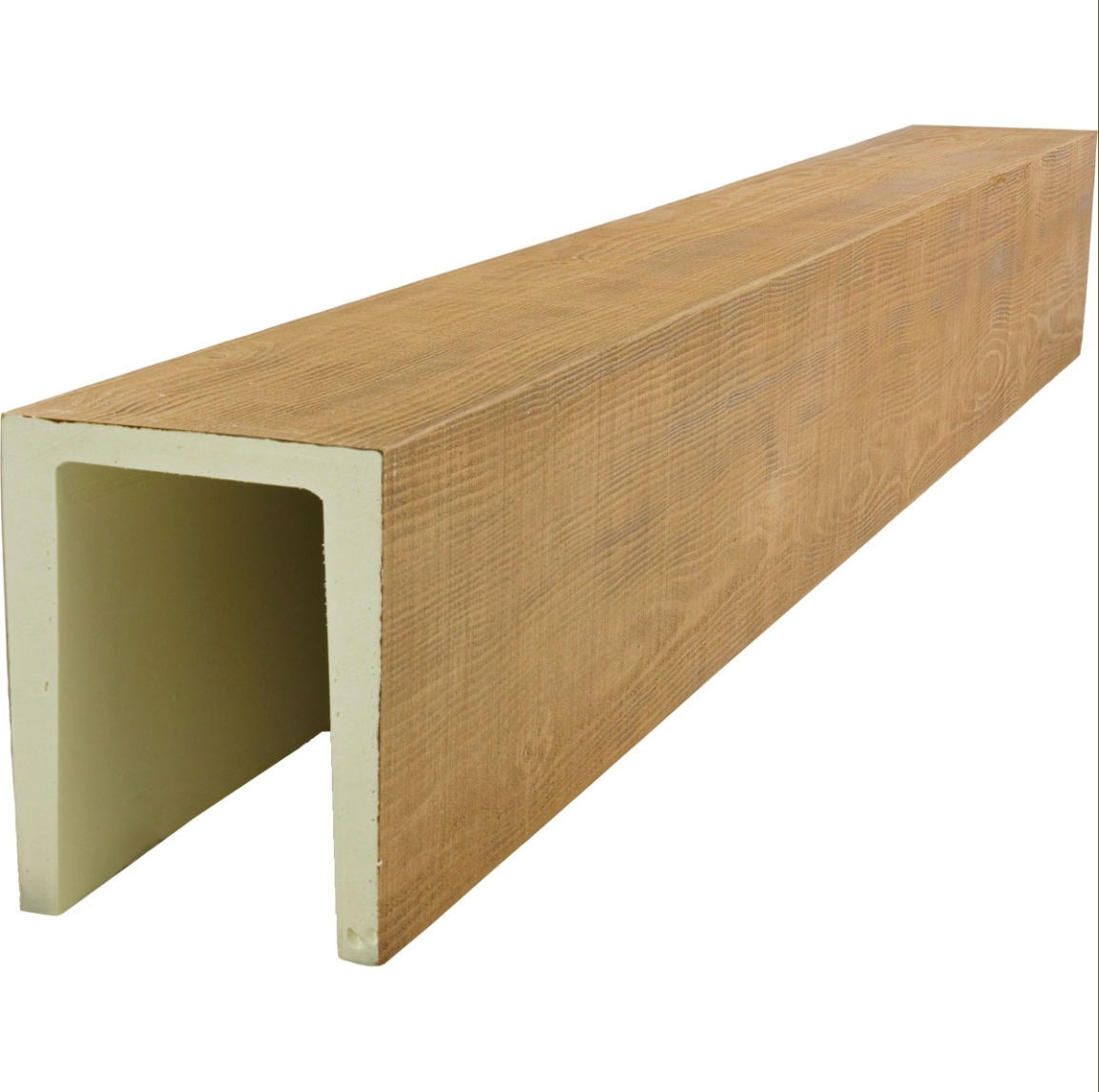
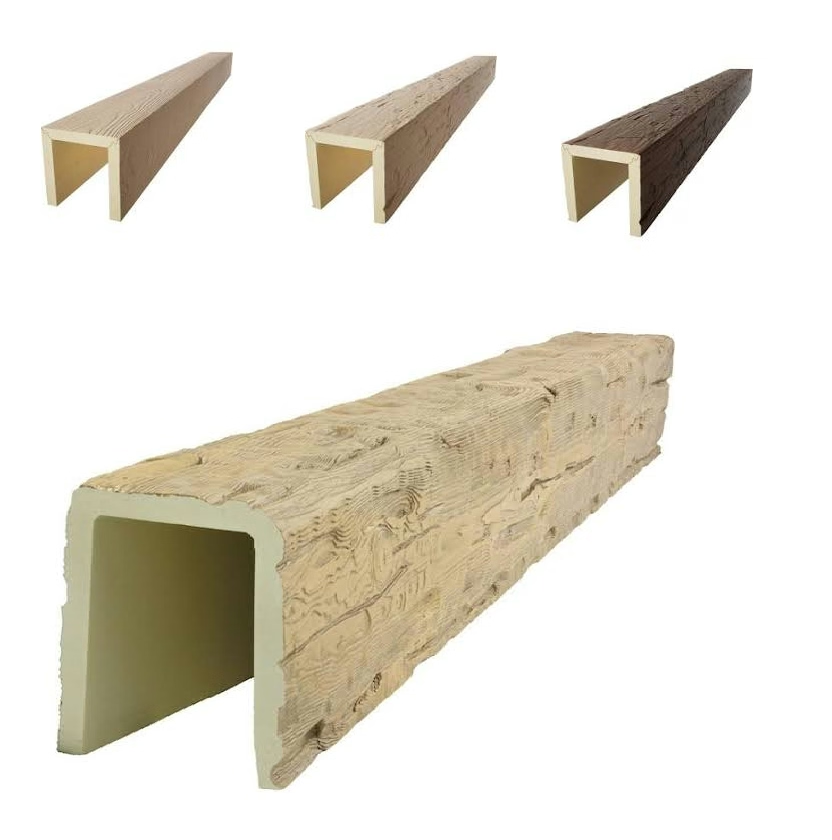
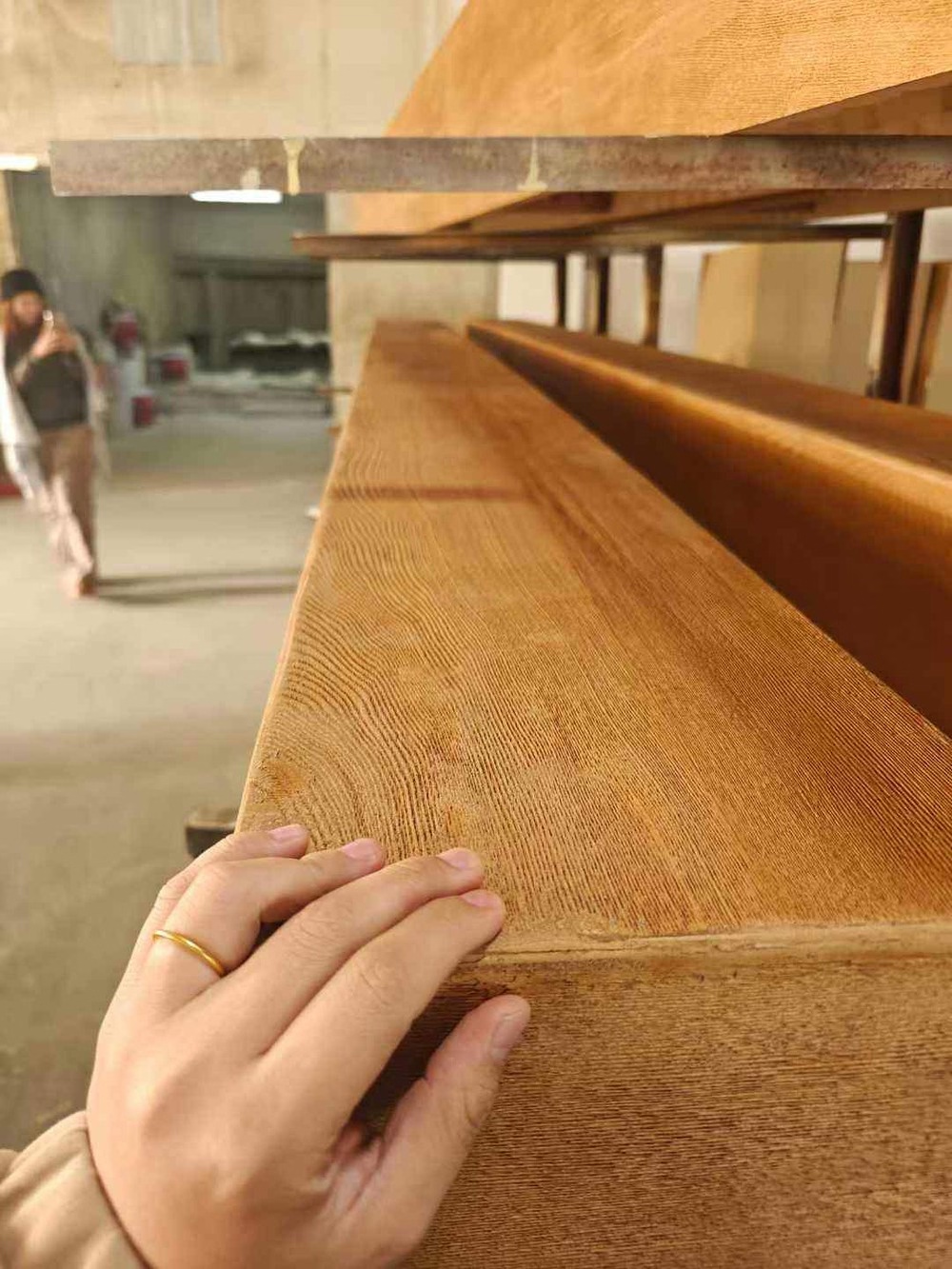
Understanding how polyurethane faux beams perform under fastener loading enables installers to make informed decisions about bracket selection, mounting methods, and support spacing that ensure long-term installation integrity. Unlike natural wood with its variable grain strength and potential for checking or rot, polyurethane offers consistent material properties that allow meaningful load prediction when proper testing data informs engineering calculations.
Screw withdrawal resistance depends on multiple interacting factors including polyurethane density, screw thread geometry, engagement depth, and loading rate. Professional installers who grasp these relationships can specify appropriate fastening arrangements and communicate realistic load expectations to clients, avoiding both over-engineered solutions that waste material and under-engineered approaches that risk failure.
Density Effects on Withdrawal Resistance
Polyurethane faux beams span a range of formulations from approximately 40 to 120 kilograms per cubic meter, with density directly correlating to mechanical performance across all strength metrics. Higher-density products offer proportionally greater screw withdrawal resistance, making them preferable for applications involving significant cantilever loads or concentrated bracket connections. Lower-density options remain suitable for decorative installations where fastening requirements are minimal.
Testing protocols following ASTM D1761 standards measure the force required to pull screws from polyurethane at controlled displacement rates, with results typically reported in Newtons or pounds-force for standardized screw sizes. A typical 75 kg/m³ density beam might achieve withdrawal resistance of 400-600 N for a #8 screw engaging 25mm depth, while 120 kg/m³ density could reach 700-1000 N under identical conditions. These values serve as baselines requiring adjustment for specific product formulations and environmental conditions.
Screw Type and Thread Geometry Selection
Standard wood screws perform adequately in polyurethane but do not necessarily maximize withdrawal resistance given the material's distinct failure modes compared to natural timber. High-low thread designs, featuring alternating thread heights, provide superior grip by creating distinct engagement zones that resist pull-out through progressive interlock rather than continuous bearing. Self-drilling screws with aggressive thread profiles further enhance performance by penetrating smoothly and establishing thread engagement immediately.

Screw diameter selection balances withdrawal resistance against material displacement risk, with larger fasteners providing greater load capacity but potentially causing localized crushing when loaded near beam edges. Professional installers typically limit screw diameter to no more than one-third of the beam's smaller cross-sectional dimension when edge margins prove tight, selecting longer engagement rather than larger diameter to achieve required capacity.

Engagement Depth and Spacing Requirements
Withdrawal resistance increases approximately proportionally with engagement depth within practical ranges, meaning a screw engaging 50mm depth provides roughly double the resistance of one engaging 25mm. This relationship holds until approaching the beam's full cross-section, where reduced back-wall distance begins limiting achievable resistance. Installers should target minimum 20mm engagement for light-duty applications and 35mm or greater for structural connections.
Multiple fastener spacing affects individual withdrawal requirements by distributing applied loads across available connections. Industry guidelines recommend minimum 10mm edge distance and 15mm fastener spacing to prevent interaction effects that would reduce individual fastener capacity. When these spacing requirements conflict with beam dimensions, switching to higher-density products or alternative connection methods may prove necessary.
Environmental Factor Considerations
Temperature extremes affect polyurethane mechanical properties, with elevated temperatures reducing stiffness and strength while cryogenic conditions increase brittleness. Installations in unconditioned spaces such as covered porches or poorly insulated attic zones should incorporate safety factors that accommodate expected temperature ranges, potentially doubling calculated safety margins for exterior applications.
Moisture exposure generally has minimal effect on polyurethane's mechanical performance, distinguishing it favorably from natural wood that swells,rots, or delaminates under similar conditions. However, freeze-thaw cycling can degrade surface aesthetics in exterior applications, potentially affecting fastener hole geometry over extended service periods. Sealant application around fastener penetrations provides additional protection against moisture infiltration at connection points.
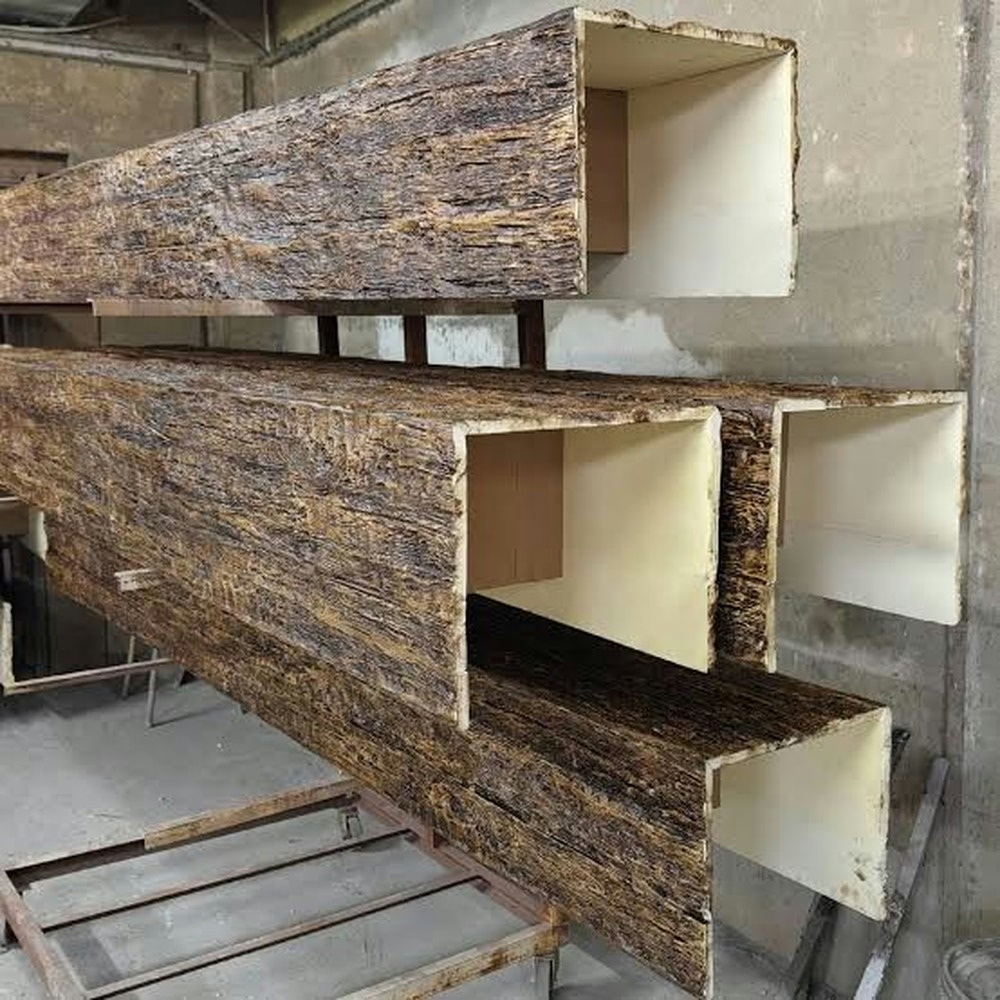
Bracket and Hanger Compatibility
Structural steel brackets designed for dimensional lumber often prove over-designed for polyurethane beams, but their load ratings provide safe guidance for bracket selection when applied conservatively. Manufacturer load tables for beam hangers typically reference wood species specific gravity values, requiring adjustment when应用到 polyurethane. A bracket rated for 2x6 southern pine (specific gravity approximately 0.55) might require 50% capacity reduction for use with 75 kg/m³ polyurethane (effective specific gravity approximately 0.10).
Cleat mounting systems that engage beam sides rather than bottoms distribute loads more favorably, avoiding the concentrated stress points that bottom-mount connections can create. Professional installers often specify continuous cleat mounting for applications involving significant cantilever or point loads, accepting the additional installation complexity in exchange for enhanced connection reliability. Through-bolting with washer plates provides maximum withdrawal resistance for critical applications where fastener replacement would prove difficult after installation.
Technical References
ASTM standards cited in every specification
Test Data
Lab results from internal testing program
Updated 2026
Reviewed against current product specs