The evolution of building materials has consistently moved toward solutions that combine visual appeal with practical performance. Within this trajectory, polyurethane faux beams occupy a distinctive position—delivering the warmth and character of traditional timber while eliminating the inherent limitations that have frustrated builders and designers for generations. Understanding why these manufactured alternatives have earned the designation "premium" requires examining multiple dimensions where they excel.
Premium status in construction materials derives from several interconnected qualities: exceptional durability, consistent quality, design flexibility, and favorable total cost of ownership. PU faux beams score highly across each of these dimensions, offering value propositions that extend well beyond simple cost comparison with natural materials. For architects and designers making specification decisions, the accumulated advantages often make manufactured beams the clearly superior choice.
The manufacturing precision underlying modern PU beams represents a fundamental advantage over naturally-sourced timber. Each beam emerges from molds or machining processes that maintain exacting tolerances throughout production runs. Whether a project requires two beams or two hundred, each piece exhibits consistent dimensions, uniform appearance, and predictable performance characteristics. This reproducibility simplifies specification, installation, and long-term maintenance in ways that natural materials cannot match.
Timber, by contrast, presents inherent variability that complicates every phase of the building process. Wood from different trees—even from the same tree at different heights—exhibits variation in grain density, color, and workability. Knots appear unpredictably; checking and splitting may occur during drying; warping may develop in storage. Skilled craftspeople learn to work around these variations, but the additional labor and expertise required adds cost and uncertainty to every timber installation.
Durability testing demonstrates why PU beams earn premium classification for long-term applications. Accelerated aging protocols simulate decades of service exposure, evaluating performance under temperature extremes, humidity cycling, and UV exposure. High-quality PU formulations pass these tests without significant degradation, maintaining appearance and structural integrity through the equivalent of fifty years or more of typical use. Natural wood, subjected to identical testing, shows substantially greater deterioration across multiple performance metrics.
Moisture resistance deserves particular attention in durability comparisons. Wood's organic structure absorbs water readily, leading to dimensional changes, fungal growth, and eventual decay. Even treated timbers face limitations in wet environments, requiring regular inspection and periodic reapplication of protective coatings. PU beams resist moisture absorption inherently, performing reliably in basement spaces, bathrooms, pool enclosures, and exterior covered areas where wood would deteriorate rapidly.
The lightweight nature of polyurethane translates to practical installation advantages that compound throughout a project's lifecycle. A beam that weighs one-tenth as much as its timber equivalent reduces structural requirements for supporting elements, simplifies handling and positioning, and enables installation by individual workers rather than crews. These factors reduce labor costs proportionally while expanding the range of applications where beam installations become practical.
Consider a residential renovation where homeowners desire the rustic charm of exposed timber ceilings but lack the structural capacity to support heavy authentic beams. Traditional approaches might require expensive structural reinforcement or abandonment of the design intent. PU faux beams eliminate this constraint entirely, installing on standard ceiling framing without concern for load calculations or support engineering. The same visual transformation becomes achievable regardless of existing construction limitations.
Architects working on commercial projects appreciate how lightweight PU beams affect design possibilities. Large-span ceiling installations, dramatic cantilevered features, and multi-level beam compositions become feasible when weight constraints disappear. The design vocabulary expands to include expressions that would be structurally impractical or prohibitively expensive with authentic timber, enabling architectural visions that push beyond conventional limitations.
Finish quality on premium PU beams rivals the finest millwork finishes available for natural wood. Factory-controlled application conditions produce surfaces free from dust nibs, orange peel, or other application defects common in on-site finishing. Color consistency across beam sets ensures uniform appearance throughout installations, eliminating the frustrating variation that often appears when finishing wood beams from different lumber pieces.
The premium positioning of PU beams extends to environmental considerations that increasingly influence material selection. Sustainable forestry practices, while improving, cannot eliminate the fundamental resource consumption inherent in timber harvesting. PU beam production, by contrast, uses minimal raw material per unit of finished product, and many manufacturers now incorporate recycled content that further reduces environmental footprint.
Transportation logistics favor manufactured beams throughout distribution channels. The weight reduction compared to timber reduces fuel consumption and emissions per unit shipped. Durability during handling eliminates the damage losses that plague timber distribution. These practical advantages translate to reliable availability and competitive pricing regardless of geographic distance from manufacturing centers.
For foreign trade applications specifically, the consistency and predictability of PU beams address challenges that complicate international timber sourcing. Phytosanitary regulations, species restrictions, and import documentation requirements that complicate timber imports do not apply to manufactured polyurethane products. Customs clearance proceeds smoothly, and delivery timelines remain reliable regardless of origin country or seasonal shipping constraints.
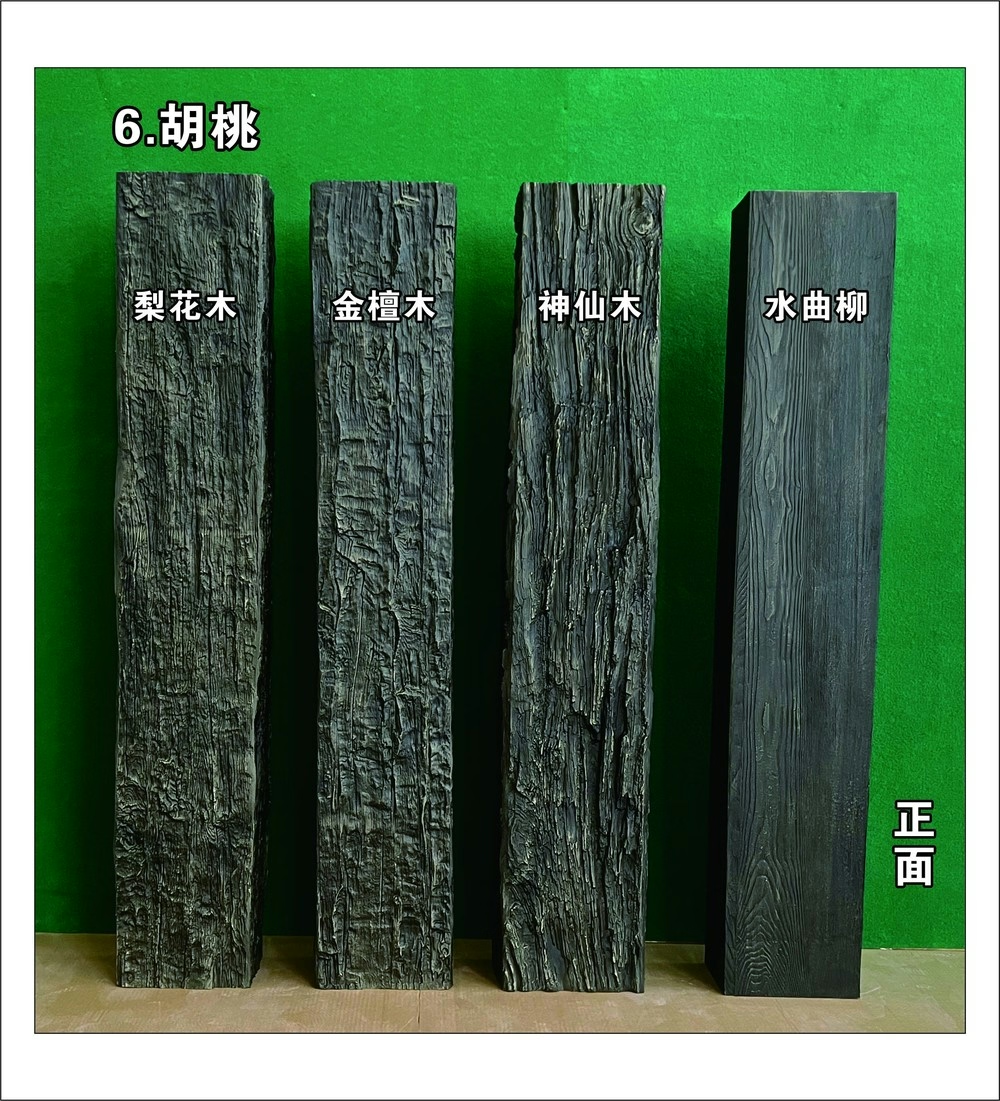
The aesthetic range available in premium PU beams deserves emphasis for design professionals exploring material options. Far from the limited offerings of early synthetic alternatives, contemporary products include extensive collections of profiles, textures, and finishes that address virtually any design requirement. Hand-hewn rustic textures, sleek contemporary profiles, ornate traditional designs, and entirely custom geometries all fall within production capabilities. This range eliminates the need for compromise between aesthetic vision and practical constraints.
Quality certification and warranty coverage further establish premium positioning. Reputable manufacturers back their products with comprehensive warranties that reflect confidence in manufacturing excellence and material durability. Independent testing certifications verify fire resistance, structural performance, and indoor air quality compliance. These third-party validations provide specification professionals with the documentation required for commercial project approval processes.

The psychological dimension of premium material selection deserves acknowledgment. Clients specifying high-end materials derive satisfaction from knowing their spaces feature the finest available products. While this emotional factor cannot substitute for objective performance evaluation, it represents a legitimate consideration in client-facing projects where perception matters. PU beams, properly presented, satisfy these expectations while delivering genuine practical advantages.
Maintenance requirements throughout a building's operational life reinforce the premium positioning of quality PU beams. Unlike wood, which requires periodic inspection, treatment, and refinishing, polyurethane beams maintain their appearance with minimal intervention. This characteristic proves particularly valuable in commercial settings where maintenance disruption carries direct costs, and in residential applications where homeowners value low-maintenance design solutions.
Engineering and Structural Considerations
Premium PU beams serve decorative and light-structural applications with demonstrated reliability. Understanding the load-bearing characteristics of these products enables appropriate specification and confidence in performance. Most PU beam installations bear no structural loads whatsoever, instead relying on attachment to existing structural elements that provide all necessary support.
For applications where some load-bearing capacity becomes relevant—such as supporting lightweight fixtures, signage, or ceiling-hung equipment—engineered mounting systems transfer loads directly to structural framing without relying on beam material strength. This separation of decorative and structural functions enables designers to specify beams purely for aesthetic impact while engineering handles functional requirements independently.
Fire engineering presents considerations that responsible specifiers address directly. High-quality PU beams incorporate flame retardant additives that inhibit combustion and reduce flame spread. Testing to standards such as ASTM E84 or EN 13501 provides classification data that building codes reference for approval. Projects in jurisdictions with strict fire requirements should verify that specified products meet applicable standards before proceeding.
Design Collaboration and Custom Solutions
Premium manufacturers increasingly position themselves as design partners rather than simply product suppliers. Collaborative development processes enable architects and designers to explore possibilities that standard catalogs cannot address. Custom profile development, unique finish formulation, and innovative installation systems emerge from these partnerships, producing outcomes that distinguish both the designer and manufacturer.
Prototype development typically involves CAD modeling, physical sample production, and iterative refinement until the design intent achieves satisfaction. This process, while requiring additional time and investment compared to catalog selection, produces results that justify the premium positioning of custom solutions. Projects where standard offerings fall short benefit particularly from this collaborative approach.
Total Value Calculation
Comprehensive evaluation of beam material options requires total value calculation that extends beyond initial purchase price. Lifecycle cost analysis should incorporate anticipated maintenance expenses, replacement timing, operational impacts, and residual value at project end. When these factors enter the calculation, premium PU beams frequently demonstrate superior value despite higher initial costs compared to economy alternatives.
For projects with extended planning horizons or long-term ownership perspectives, the durability and maintenance advantages of quality PU beams compound over time. Buildings that maintain aesthetic appeal without major renovation attract higher valuations and longer tenant retention. The beam specification, though representing a small fraction of total construction cost, contributes to these favorable outcomes disproportionately to its cost share.
Technical References
ASTM standards cited in every specification
Test Data
Lab results from internal testing program
Updated 2026
Reviewed against current product specs


