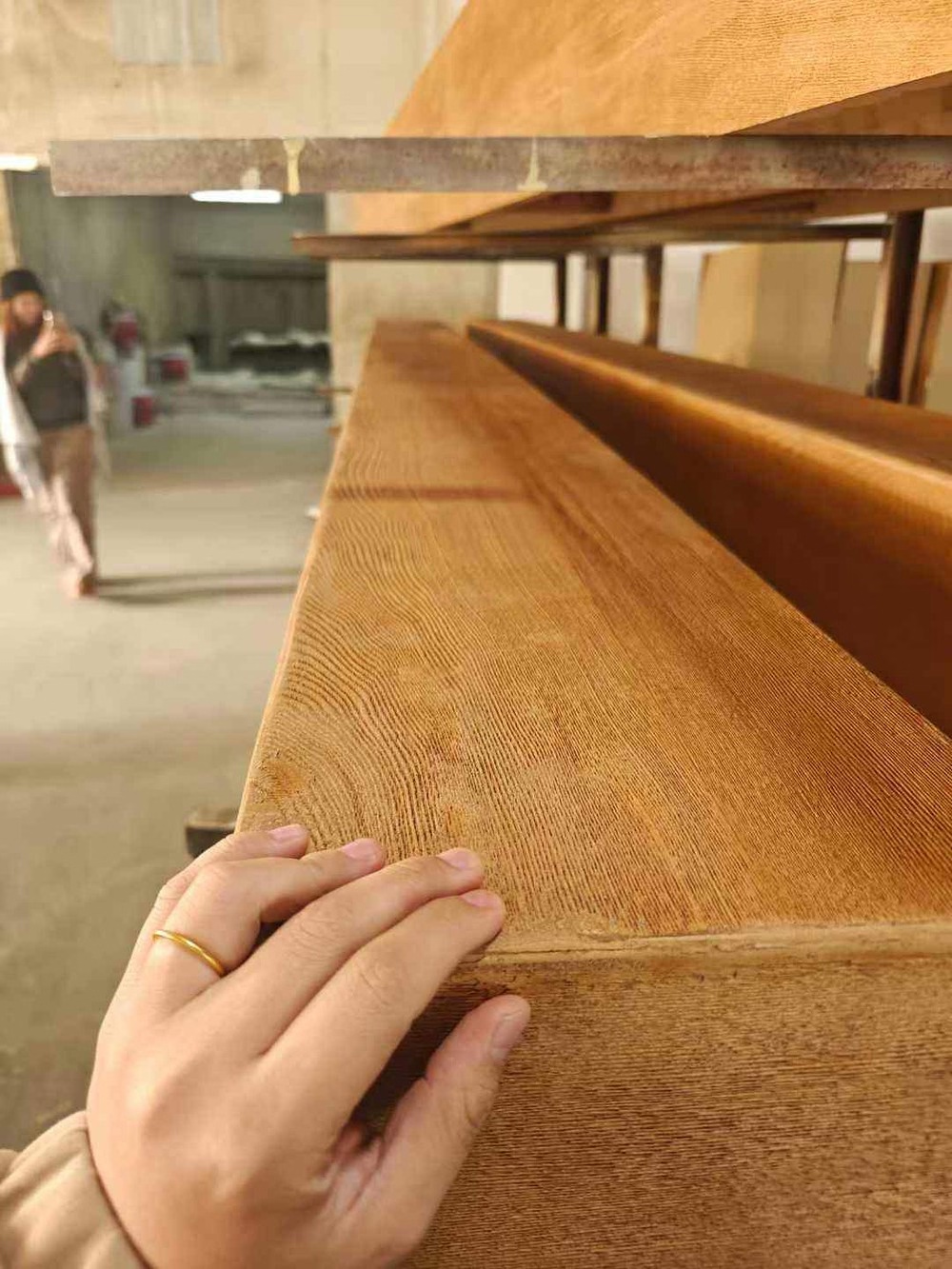
Material selection for beam installations involves weighing multiple factors that affect both immediate project outcomes and long-term ownership experience. PU faux beams and natural timber each offer distinct advantages that suit different applications, budgets, and priorities. Understanding these differences enables informed decisions that align material choices with project requirements, avoiding the disappointment that mismatched selections create. This comprehensive comparison examines the key factors that should guide material decisions.
Material cost represents the most apparent difference between faux and natural beams, though true cost comparison requires examining multiple dimensions. Natural timber beams priced by board footage or linear measure may appear competitive at initial glance, but must be evaluated alongside delivery, handling, finishing, and installation costs that compound rapidly. Faux beams typically include finished surfaces ready for installation, eliminating on-site finishing labor and materials that natural timber demands.
Weight differences create cascading implications throughout project planning and execution. Natural timber density varies by species but consistently exceeds manufactured alternatives by significant margins. A solid oak beam might weigh four to six times more than a comparable PU faux beam, creating dramatic differences in handling requirements, structural demands, and installation logistics. These weight differences affect every phase from material delivery through final installation.
Structural requirements scale with beam weight, creating meaningful cost implications for supporting construction. Ceilings designed for standard residential loads may require reinforcement to support genuine timber beams, adding substantial expense to otherwise straightforward installations. Faux beams eliminate this consideration, installing on standard ceiling constructions without special structural provisions.
Finishing costs for natural timber often surprise project managers who focus initially on material prices. Quality wood finishes require multiple applications with appropriate drying intervals, creating labor costs that may exceed material expenses significantly. Faux beams arrive pre-finished with consistent, durable surfaces that require no on-site treatment, reducing finishing costs to zero while delivering superior results.

Moisture resistance differs substantially between natural and manufactured materials. Timber absorbs atmospheric moisture, leading to expansion, contraction, warping, and eventual degradation in challenging environments. Bathrooms, kitchens, basements, and outdoor applications stress natural timber in ways that manufactured alternatives handle easily. Faux beams resist moisture absorption without special treatment, maintaining appearance in environments where natural timber would fail.
Maintenance requirements affect long-term ownership costs that initial pricing does not reflect. Natural timber surfaces require periodic refinishing, sealing, or touch-up repairs that accumulate substantial expense over building life. Faux beams maintain their appearance with simple cleaning, eliminating ongoing maintenance costs that natural timber demands. This difference compounds significantly over extended ownership periods.
Insect and decay resistance in natural timber requires chemical treatment or careful species selection to ensure adequate durability. Termites, borers, and fungal decay all threaten timber beams in various environments. Manufactured materials resist these biological threats inherently, providing durable performance without treatment requirements or species limitations.
Fire performance in manufactured beams can be engineered to meet specific requirements, while natural timber combusts according to its inherent characteristics. Commercial applications often require fire-rated materials that engineered faux beams can provide consistently. Natural timber fire ratings vary by species and may not achieve required performance levels without specialized treatment.
Consistency of appearance throughout installations differs between natural and manufactured materials. Timber varies naturally between pieces, with color, grain, and character differences that create authentic but potentially inconsistent appearance. Faux beams manufactured to specifications provide uniform appearance across entire installations, supporting projects requiring consistent aesthetics across multiple spaces or extended runs.
Customization flexibility favors manufactured materials for non-standard applications. Faux beams can be produced in specific dimensions, profiles, and finishes that match project requirements precisely. Natural timber availability limits customization options, requiring design adaptation to available inventory or extended lead times for special orders. This flexibility makes faux beams suitable for challenging applications where natural timber would require compromise.
Environmental considerations present complex tradeoffs that depend on specific product sources and manufacturing practices. Natural timber carries concerns about forest management and harvesting practices, though certified sustainable sources address these concerns for environmentally conscious projects. Faux beams reduce demand for harvested timber while requiring petroleum-based manufacturing inputs. Neither material offers simple environmental superiority; informed choices require examining specific product sources.
Availability and lead time affect project scheduling that material costs alone do not capture. Standard faux beam products ship from inventory, enabling rapid project execution. Specialty timber requires sourcing, potentially including international procurement that extends timelines significantly. Schedule-sensitive projects may find natural timber availability incompatible with required completion dates.
Longevity and replacement considerations influence long-term ownership costs. Natural timber can last centuries with appropriate maintenance, potentially outlasting buildings they occupy. Faux beams offer decades of service under typical conditions but may require eventual replacement. This longevity difference partially offsets maintenance cost advantages that manufactured materials provide.
Material comparison between PU faux beams and natural timber reveals meaningful differences across cost, weight, durability, and practical considerations. Neither material proves universally superior; appropriate selection depends on specific project requirements, budget constraints, and ownership priorities. Understanding these differences enables informed decisions that align material choices with project success criteria.
Technical References
ASTM standards cited in every specification
Test Data
Lab results from internal testing program
Updated 2026
Reviewed against current product specs