When contractors and interior designers begin specifying materials for ceiling installations, the age-old question inevitably surfaces: authentic wood or manufactured alternatives? This decision carries significant weight in both residential renovations and large-scale commercial projects. Understanding the nuanced differences between these material options helps stakeholders make choices that align with budget constraints, performance requirements, and aesthetic goals.
The construction industry has witnessed remarkable advances in polyurethane technology over the past two decades. What began as a material primarily used for insulation and packaging has evolved into a sophisticated architectural element capable of mimicking natural wood with startling accuracy. Manufacturers now produce PU faux beams that capture the grain patterns, color variations, and surface textures that make reclaimed timber so visually appealing.

Solid wood beams carry an undeniable authenticity that appeals to purists and heritage conservation projects. The organic variations in grain structure, the natural color gradients from heartwood to sapwood, and the occasional mineral streaks found in aged timber create visual complexity that manufactured products historically struggled to replicate. For restoration work on historic buildings or projects requiring period-appropriate materials, genuine timber often remains the only acceptable choice despite its considerable cost.
The financial dimension of this comparison demands careful analysis. Solid wood beams pricing varies dramatically based on species, grade, and availability. Premium hardwoods like white oak or walnut can cost three to five times more than engineered alternatives, while reclaimed beams command astronomical premiums in markets where vintage timber remains fashionable. Beyond the material cost itself, structural wood requires specialized handling, treatment for insect resistance, and sometimes custom milling to achieve desired dimensions.
PU faux beams eliminate several cost centers that compound expenses in traditional timber installations. The manufacturing process allows precise control over dimensions, eliminating the need for on-site milling or extensive finishing work. A single worker can handle and install PU beams that would require multiple people to maneuver if made from solid hardwood. The lightweight nature of polyurethane—typically 90% lighter than equivalent wood sections—reduces shipping costs, simplifies storage, and enables installation by crews without heavy equipment.
Durability presents another critical factor where modern materials often outperform their natural counterparts. Solid wood remains vulnerable to moisture absorption, which leads to warping, cracking, and eventual structural compromise. In humid environments or applications where temperature fluctuations are pronounced, untreated timber beams may require replacement within a decade. Chemical treatments extend service life but introduce health considerations and ongoing maintenance obligations.
PU faux beams resist moisture absorption inherently, making them suitable for bathrooms, kitchens, and exterior covered applications where traditional wood would deteriorate rapidly. The material does not rot, split, or crack under normal conditions, and it withstands temperature extremes without expanding or contracting significantly. This dimensional stability proves particularly valuable in regions with harsh winters or intense summer heat, where thermal cycling stresses building components continuously.
Fire resistance represents an area where PU beams have made substantial improvements. Early polyurethane products burned readily, limiting their application in commercial buildings with strict fire codes. Modern formulations incorporate flame retardant additives that achieve Class A fire ratings in many products. Combined with the ability to install faux beams in configurations that would be structurally impractical with heavy timber, these fire-safe options open applications in hotels, restaurants, and public buildings where aesthetic ceilings must meet rigorous safety standards.
The installation velocity advantage of PU beams deserves particular attention in commercial contexts where labor costs dominate project budgets. A skilled installer can complete ceiling beam installations at three to four times the rate possible with solid wood. The material cuts cleanly with standard woodworking tools, accepts fasteners reliably, and bonds with common construction adhesives. No specialized training is required, and crews familiar with drywall or trim work can transition to faux beam installations with minimal instruction.

Environmental considerations increasingly influence material selection decisions across the construction industry. Solid wood beams carry a complex environmental profile. While timber represents a renewable resource when sourced from sustainably managed forests, transportation distances, processing energy, and deforestation concerns complicate the sustainability calculus. Reclaimed beams reduce new harvesting impacts but require demolition or deconstruction labor that itself carries environmental costs.
PU faux beams offer different environmental advantages. Their extended service life reduces replacement frequency, and their light weight decreases transportation emissions proportionally. Some manufacturers now produce beams incorporating recycled polyurethane content, diverting material from landfills where polyurethane waste poses disposal challenges. The durability of these products means fewer resources consumed in maintenance and replacement over a building's operational lifespan.
For projects requiring specific load-bearing capacity, solid wood maintains an advantage that remains difficult to overcome with manufactured alternatives. True structural beams supporting roof loads or floor joists must meet engineering requirements that faux beams cannot satisfy. However, the overwhelming majority of beam installations in residential and commercial interiors serve purely decorative purposes. Exposed ceiling beams, mantels, and accent timbers add visual interest without bearing significant loads. In these applications, the distinction between structural and decorative becomes irrelevant, and the practical advantages of PU materials become decisive.
Design flexibility with PU beams often exceeds what timber can offer. Curved beams, complex compound angles, and intricate decorative profiles can be molded or machined consistently at scale. Custom designs that would require expensive carpentry or artisanal woodcarving with timber translate into affordable production runs with polyurethane. This capability enables architectural expressions that budget constraints would otherwise prohibit.
The maintenance burden further distinguishes these materials over time. Wood beams require periodic inspection for insect activity, moisture damage, and surface degradation. refinishing becomes necessary when accumulated wear or color changes detract from appearance. PU beams require no such vigilance—periodic cleaning suffices for decades of service. The practical implications for property managers overseeing multiple buildings or for homeowners seeking low-maintenance design solutions prove substantial.
Warranty coverage typically reflects manufacturer confidence in these materials. PU beam producers commonly offer warranties ranging from ten years to lifetime coverage, testament to the expected service life and reliability of contemporary products. Solid wood warranties, where available, often contain extensive exclusions for environmental conditions and maintenance practices, reflecting the material's inherent vulnerabilities.
Cost Analysis Beyond Initial Purchase Price
Evaluating beam materials requires examining total installed cost rather than unit price alone. The purchase price of solid wood beams represents merely the starting point in a cost analysis that must account for transportation, handling, finishing, and installation labor. PU faux beams compress these ancillary costs dramatically through their handling characteristics and factory-finished surfaces.
Freight expenses for heavy timber beams often exceed material costs when shipping cross-country or internationally. A single solid oak beam might weigh 200 pounds, requiring specialized handling equipment and truck capacity that multiplies shipping rates. The same visual effect achieved with a PU beam weighing under 20 pounds costs a fraction to transport. For foreign trade applications where international shipping predominates, this weight advantage translates directly to competitive pricing and margin improvement.
On-site storage presents another often-overlooked cost consideration. Solid wood beams require climate-controlled storage to prevent moisture absorption and subsequent dimensional changes before installation. Warping or checking that occurs during storage renders expensive timbers unsalvageable for visible installations. PU beams tolerate ambient conditions without concern, simplifying logistics and reducing material waste from mishandling.
Aesthetic Realism in Modern PU Beam Manufacturing
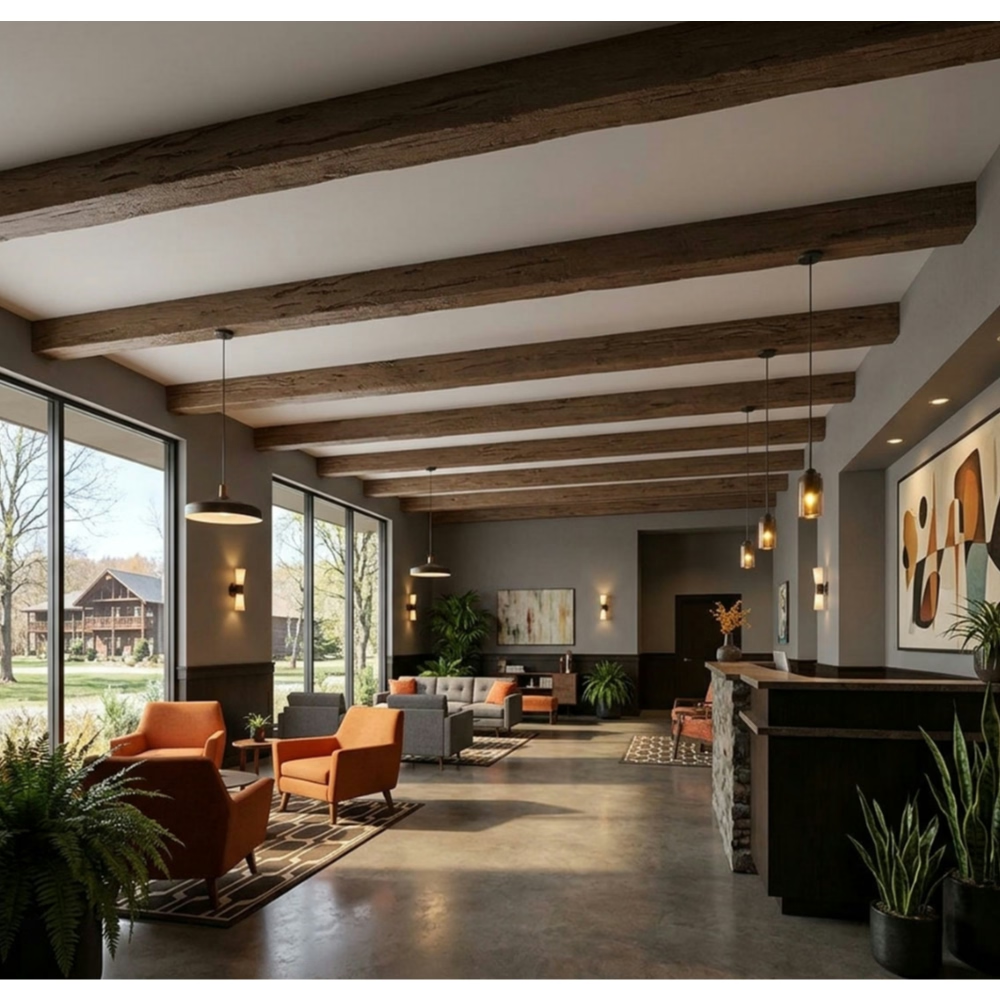
Contemporary PU beam manufacturers have achieved visual fidelity that rivals natural wood in most applications. High-definition texturing reproduces the tactile qualities of hand-hewn, sawn, and planed wood surfaces. Color application techniques create depth and variation that resist the flat, uniformly-colored appearance of early synthetic alternatives.
The ability to produce consistent grain patterns across large installations benefits commercial projects where visual unity matters. Natural wood exhibits variation that some designers find appealing but others consider problematic for projects requiring controlled aesthetics. PU beams allow specification of consistent grain direction, spacing, and character that maintains visual harmony across expansive ceiling installations.
Matching existing woodwork becomes practical with custom color services that reproduce the specific tones of surrounding timber elements. Design teams can submit samples for color matching, receiving beams that integrate seamlessly with existing woodwork or complementary materials. This capability proves particularly valuable in renovation projects where new beams must harmonize with preserved historical elements.
Long-Term Value Proposition
Building owners and property managers increasingly recognize that material decisions carry long-term financial implications beyond initial project costs. Maintenance requirements, replacement cycles, and operational impacts accumulate over a building's lifespan, often exceeding initial material expenses by significant multiples.
PU faux beams deliver value through their minimal maintenance demands and exceptional durability. Buildings featuring these products avoid the periodic inspection, treatment, and refinishing costs associated with natural wood. The consistency of appearance over time means no surprises from unexpected deterioration or appearance changes that would trigger cosmetic renovation.
For commercial operators where downtime carries direct revenue implications, the reliability of PU materials provides additional value. Maintenance activities that require closing areas for treatment or repair translate to lost business. The stability of faux beams minimizes such disruptions, supporting consistent operations that protect revenue streams.
Technical References
ASTM standards cited in every specification
Test Data
Lab results from internal testing program
Updated 2026
Reviewed against current product specs


