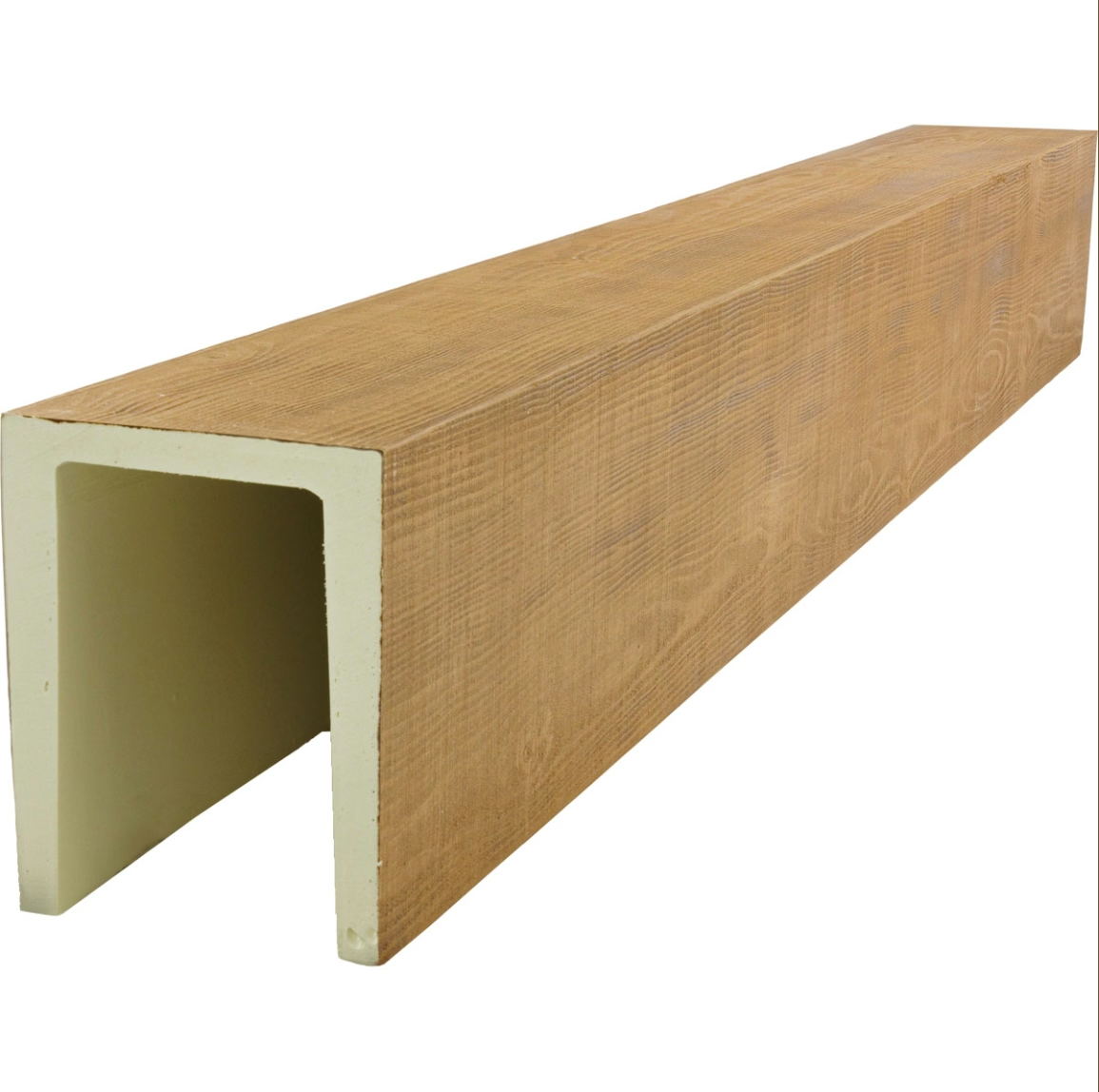
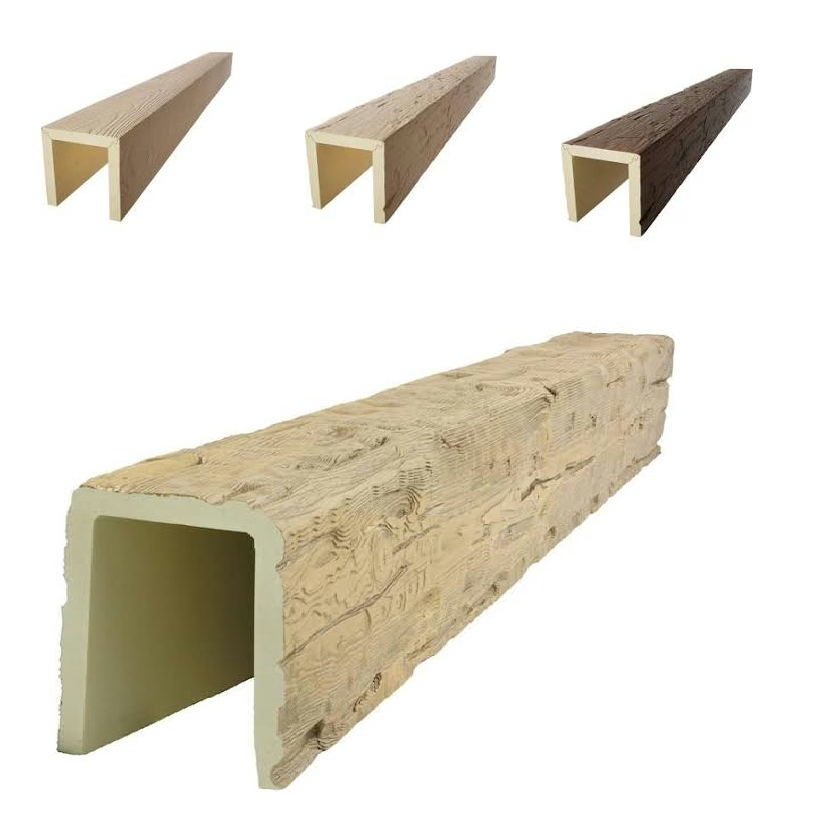
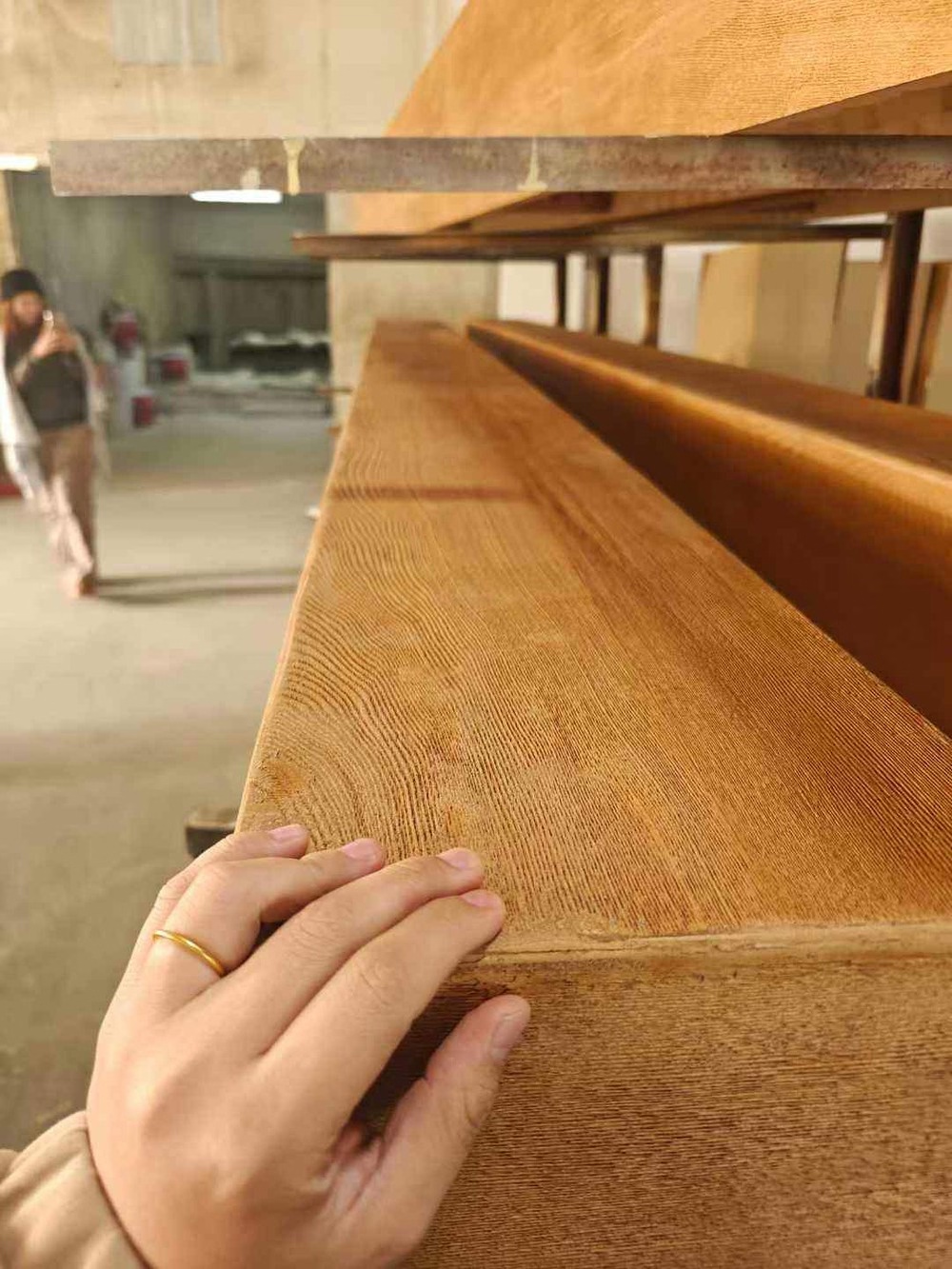
The short version: yes, modern PU faux wood beams can look strikingly authentic. The longer version is more interesting, because the comparison isn't actually one-dimensional. Some cues that scream "this is fake" on older polyurethane products have been engineered out entirely in current manufacturing. Other cues still exist, but they're not the ones most people think to look for.
If you've toured homes with synthetic beams in the past five years, you've probably had a moment of genuine surprise. A beam that looked heavy, weathered, and hand-hewn turned out to weigh about as much as a piece of luggage. That's the moment most people revise their understanding of what's possible with polyurethane. The product category has matured more than many buyers realize, and the visual fidelity now overlaps significantly with real timber — at least under normal viewing conditions.
That said, "looks authentic from across the room" and "looks authentic on close inspection" are different questions. The honest answer depends on what kind of scrutiny you're applying.
What Authentic Looks Like at a Glance
The visual signals that convince a viewer a beam is real happen mostly at conversational distance, where most of the actual scrutiny in real life occurs. Catching the right cues at this range is what separates quality PU manufacturing from the older sticker-decal products that gave faux beams a bad reputation.
What the Best PU Beams Get Right
The most convincing polyurethane beams share several production techniques that distinguish them from earlier generations of faux products. The first is high-resolution mold capture. Manufacturers now cast their molds from actual reclaimed timber, including the irregular saw marks, the slight twist of old growth, and the way knots pull the grain into unexpected patterns. That level of source-fidelity is what makes the surface texture believable.
The second piece is the multi-tone color base coat. Real wood is never one color. It has a gradient from heartwood to sapwood, dark knots, lighter earlywood bands, and patina streaks where air and moisture worked on the surface for years. PU beams that look one flat tone from end to end immediately signal as fake. Quality manufacturers now apply several base tones during production and finish with hand-rubbed highlights that vary beam to beam within the same order, exactly the way real timber behaves.
The third is the surface treatment. Real wood catches light unevenly. Old timber has slightly raised grain, micro-checks where the surface dried over decades, and small areas where the original planing is still visible. PU beams that capture these subtle disruptions in the surface — not just grain pattern, but actual topographical variance — read as authentic because the eye processes depth cues long before it processes color.
When all three are done well, a beam can pass casual inspection from any reasonable distance. Visitors to the home generally won't question it. Listing photos won't reveal it. The only scrutiny it won't survive is a forensic, fingertip-level inspection — and most people don't apply that to ceiling features.
Where Real Timber Still Wins
If you put a side-by-side comparison in front of someone and asked them to identify which is real, certain tells become very reliable. The first is weight. Real timber is heavy in a way you feel immediately. A solid oak beam that runs twelve feet can weigh eighty to a hundred and fifty pounds depending on its cross-section. A PU beam of the same dimensions typically weighs under ten pounds. Lifting them is a giveaway, but that's not something casual observers do.
The second is sound. A solid beam, when tapped, gives off a dull, dense sound that carries weight. A polyurethane beam sounds closer to tapping a piece of dense cardboard. Again, this only matters in hands-on testing.
The third tell is the end grain. Where a real beam has been cut, you can see the actual growth rings, the radial pattern of fibers, and a density that varies across the cross-section. PU beam ends usually show a molded end-cap or the structural core of the product rather than the full depth of grain. This matters most at corners, junctions, and locations where the beam terminates against a wall or another beam.
The fourth is response to environmental change. Real timber moves with humidity and temperature. In winter you might see tiny gaps appear at seams. Over years, real timber develops a patina that responds to UV exposure and the way light hits the surface. PU beams are dimensionally stable and won't develop that organic aging curve.
These differences aren't always disadvantages of PU. Stable dimensions and predictable color are reasons people choose PU in the first place. But they do mean a really determined inspector can still tell the difference.
The Tactile Question
Touch is where opinions split most sharply. Hand-rubbed real oak has a complex surface — slightly oily from natural resins, with grain that you can feel distinctly under your fingertip. Aged pine has a softer, drier feel that almost gives under pressure. Walnut is smooth and almost waxy. Each species has its own tactile identity.
PU beams attempt to reproduce this through texture variation in the surface, but the underlying material always feels like what it is. The hard outer shell has a slightly plastic undertone if you press firmly. Fine details — like the slight fuzz that develops on rough-sawn pine after decades — don't fully translate. A designer who's worked with both materials will catch that on contact. Most visitors won't.
There's also a temperature cue. Real wood feels cool to the touch even in a warm room. Polyurethane tends to feel closer to room temperature. This is subtle and easily missed, but it's there.
Where Inspection Meets Practical Buying Decisions
Most buyers don't run forensic tests on their ceiling beams. The real evaluation happens at conversational distance, in normal lighting, over the lifetime of the installation. That sets up the practical decision criteria that matter more than theoretical authenticity debates.
The Distance-and-Light Test
In practical terms, the question most buyers actually care about is: will guests notice? Will the listing photo reveal it? Will the room feel less "real" because of these beams?
For that question, the answer is essentially no for any PU beam from a quality manufacturer, installed in typical residential conditions with reasonable lighting. The visual cues that matter at conversational distance — beam profile, color depth, surface texture, end-cap transitions — are all engineered to perform well at that range.
Lighting matters more than people expect. Rooms with strong natural light and shadows from the beams projecting onto adjacent surfaces look more dimensional and convincing. Rooms with even, flat lighting tend to flatten everything — real timber included — and reduce the perceived authenticity of all beams. A good installer will often recommend beam placement and finish choices with that lighting dynamic in mind.
Color Matching and Aging
One area where PU arguably outperforms real timber is color consistency at install. You can order five PU beams and they'll arrive in coordinated tones with predictable warmth, fade, and grain distribution. With real reclaimed timber, you spend considerable time sorting, matching, and sometimes staining individual beams to feel like a set.
But over time, real timber develops character that PU doesn't. A reclaimed beam installed in a living room today will, in ten years, have deepened in color, developed small surface checks, and shifted subtly with the home's humidity cycles. A PU beam will look almost identical in ten years. For some buyers, that's a feature — the home stays visually stable. For others, it's a quiet loss of the lived-in feeling that comes with authentic materials.
If long-term patina matters to you, that's a real consideration. If consistent appearance over decades matters more, PU has the practical edge.
How to Evaluate a PU Beam Sample
If you're sourcing PU beams for a project, a few quick checks during the sample evaluation tell you a lot about authenticity. Press your thumb firmly into the underside. Quality PU feels rigid and immediately recovers; cheap PU compresses slightly and feels hollow. Look at the color depth from the side, not the front. Real wood has color variation through its depth; PU has a thin textured skin over a uniform core. Tapping the end of the sample should produce a sound that's slightly resonant but not hollow.

The manufacturers who have invested in the technology to capture real timber in their molds — and who finish their products with multi-tone hand-applied color — produce beams that compete with the visual quality of mid-grade timber. They don't compete with the best reclaimed antique beams, which carry an irreplaceable history. But for the vast majority of residential installations, the gap is no longer the primary decision factor.
What's Right for Your Project
For homeowners and designers choosing between PU and solid timber, the calculation has shifted. The case for real timber was always about authenticity, character, and structural credibility. The case for PU was always about cost, weight, and installation speed. In 2026, the lines have blurred.
If you want a timber feature that looks genuinely old — with the patina, the irregular surfaces, the unmistakable character of reclaimed material from a specific era — solid timber still has an edge that PU doesn't fully replicate. Nothing manufactured feels quite like a beam that came out of a 19th-century barn.
If you want the visual warmth of a beam overhead, the architectural rhythm in a vaulted ceiling, and the sense of substance that timber provides — without the cost, weight, and installation complexity — PU beams now hit the threshold that most homeowners and designers find genuinely convincing. The question isn't really whether PU looks authentic anymore. For most people, in most settings, it does. The real question is whether the use case calls for authenticity at the surface or authenticity at the structural level, and that's a much more interesting design conversation.
Technical References
ASTM standards cited in every specification
Test Data
Lab results from internal testing program
Updated 2026
Reviewed against current product specs