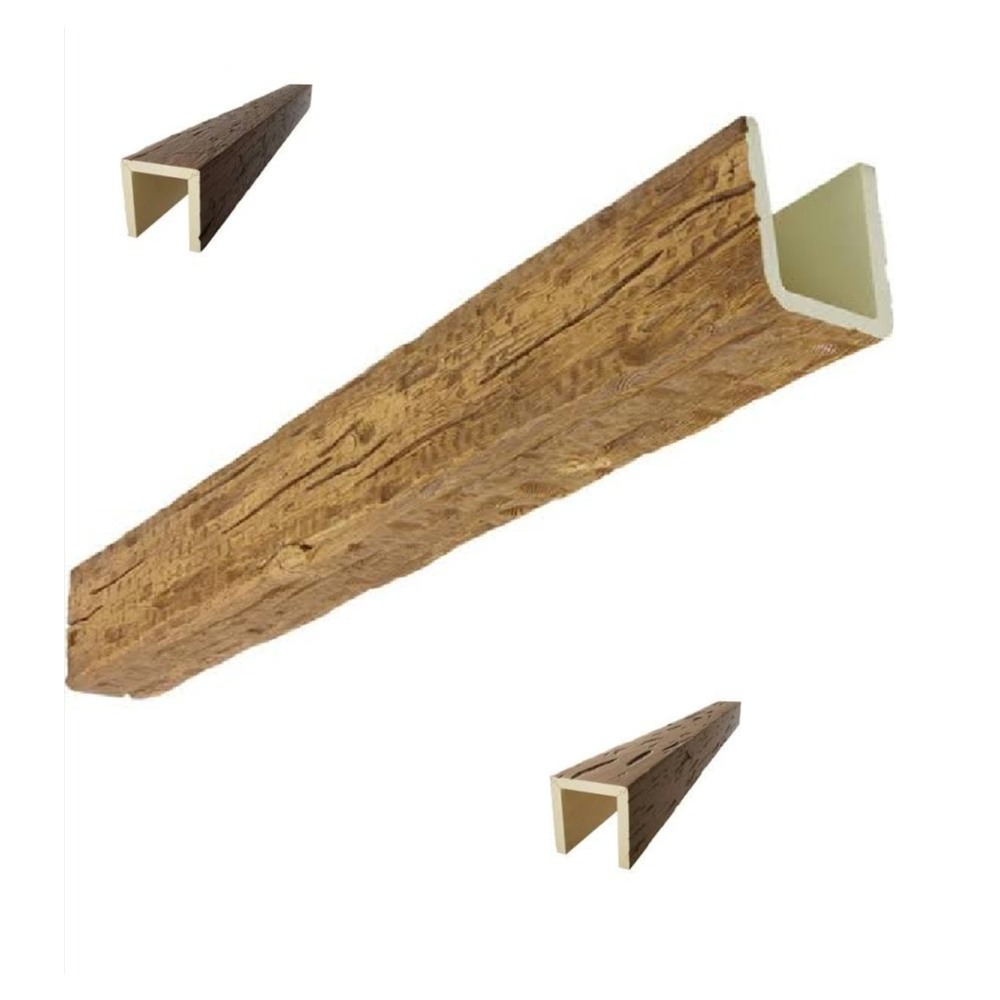
The faux wood beam market encompasses products manufactured from significantly different materials, each with distinct characteristics that affect performance, appearance, and value. PU resin and polystyrene represent the two most common material categories, and understanding their differences proves essential for making informed purchasing decisions. While both materials can produce convincing wood reproductions, their long-term performance characteristics diverge substantially.
Buyers who understand these material differences avoid the disappointment that follows purchasing decisions based solely on initial appearance or price. A beam that looks excellent at purchase but degrades within years represents false economy, while investing in premium materials for temporary installations wastes resources that could be allocated more effectively.
Material Composition and Manufacturing
PU resin beams are manufactured through a chemical reaction process that creates rigid polyurethane foam with consistent cellular structure. Two liquid components combine and expand within molds, filling complex shapes while curing into durable solid forms. This process enables high production precision while accommodating detailed surface textures and varied cross-sectional profiles.
Polystyrene beams are produced through expansion molding of pre-foamed polystyrene beads. Steam heating causes beads to expand and fuse into solid forms that replicate mold contours. This manufacturing approach differs substantially from polyurethane casting, with different capabilities and limitations regarding surface detail, dimensional accuracy, and structural properties.
The manufacturing distinction translates directly into product characteristics. PU resin density can be precisely controlled during production, enabling customization of weight, durability, and cost characteristics. Polystyrene density depends more heavily on bead characteristics and expansion factors, with less flexibility for product-specific optimization.
Durability Comparison
Impact resistance represents the most significant practical difference between these materials. PU resin exhibits meaningful flex and resilience that absorbs impact energy without damage. Polystyrene responds to impact with brittle fracture, cracking or crumbling when struck with force that PU resin would simply deform around.
Thermal stability differs substantially between materials. PU resin maintains dimensional stability across temperature ranges that would cause polystyrene to deform or fail. This characteristic proves particularly important for beams installed near heat sources or in environments with significant temperature variation.
UV degradation affects both materials but differently. Polystyrene yellows and becomes brittle when exposed to sustained sunlight, limiting outdoor applications and challenging indoor installations near windows or skylights. Quality PU resin formulations incorporate UV stabilizers that resist degradation, though extended sun exposure eventually affects even stabilized products.


Surface Quality and Appearance
Texture reproduction capability varies between materials. PU resin captures fine surface detail during molding, enabling embossed textures that convincingly replicate wood grain. Polystyrene's bead-based structure can produce visible bead boundaries that compromise smooth surface appearance, though high-quality products minimize this characteristic.
Edge definition differs based on material properties. PU resin maintains sharp edges during demolding and throughout service life, creating clean profiles that enhance realistic appearance. Polystyrene edges can crumble slightly during handling and installation, creating the worn appearance that might be desirable for aged wood but problematic for clean contemporary installations.
Surface preparation for finishing reveals material differences. PU resin accepts stains and finishes evenly, allowing uniform color development. Polystyrene surfaces may require priming or preparation that ensures finish adhesion and consistent appearance, adding steps to finishing processes.
Weight and Handling
Polystyrene beams are significantly lighter than PU resin equivalents, sometimes weighing less than half as much. This weight difference simplifies handling during installation, particularly for ceiling installations where reducing load bearing requirements might offer structural benefits.
The lightweight nature of polystyrene can create handling challenges, however. The material's brittleness means that polystyrene beams cannot be gripped firmly without risk of damage. Careful handling techniques that distribute support across beam surfaces prevent damage that would not occur with more resilient PU resin.
Installation hardware requirements differ based on material properties. Brittle polystyrene requires mounting approaches that distribute loads across broad bearing surfaces rather than concentrating force at fastener points. PU resin accommodates more traditional fastening methods without risk of cracking around fasteners.
Cost Considerations
Polystyrene beams typically cost less than PU resin equivalents at initial purchase. This price difference reflects material costs and manufacturing process efficiency rather than value, however. Lower purchase prices may prove more expensive over product lifetimes when replacement costs, installation labor for new products, and disposal of failed materials factor into total cost calculations.
Value calculation should account for expected service life, maintenance requirements, and replacement costs. A PU resin beam that costs twice as much but lasts five times as long represents better value despite higher initial investment. The appropriate choice depends on application requirements and budget constraints.
Installation cost differences also affect total project economics. Heavier PU resin beams may require additional labor for handling, while polystyrene's fragility may increase installation time as workers take precautions against damage. These factors vary based on installation complexity and worker experience.
Application Recommendations
Indoor residential applications with limited sun exposure suit both materials adequately. Polystyrene offers budget-friendly entry into beam installations, while PU resin provides durability that protects investments in permanent installations. Choice depends on budget priorities and expected service life requirements.
Commercial environments with high traffic, significant use, or demanding conditions favor PU resin's durability. Restaurants, retail spaces, and hospitality environments that experience continuous use benefit from materials that resist impact damage and maintain appearance despite challenging conditions.
Outdoor applications strongly favor PU resin due to superior UV resistance and thermal stability. Polystyrene products degrade rapidly when exposed to weather, making them poor choices for covered patios, outdoor structures, or any application with meaningful sun exposure.
Environmental Considerations
Disposal characteristics differ between materials. Polystyrene's volume-to-weight ratio creates disposal challenges that have led to increasing restrictions on its use. PU resin, while not without environmental concerns, typically offers better long-term disposal economics through durability that delays replacement.
Manufacturing resource requirements favor polystyrene's lower energy consumption during production. This advantage may be offset by shorter product life requiring more frequent replacement, depending on application requirements and use patterns.
Recyclability potential varies between materials. Both present recycling challenges, though PU resin's durability may enable reclamation programs that polystyrene's fragility prevents. Local recycling infrastructure affects practical disposal options regardless of material properties.
Product comparison between PU resin and polystyrene faux timber beams reveals trade-offs that affect different purchasing priorities. Initial cost favors polystyrene, while durability and longevity favor PU resin. Understanding these trade-offs enables informed decisions that align with specific application requirements and budget constraints.
Technical References
ASTM standards cited in every specification
Test Data
Lab results from internal testing program
Updated 2026
Reviewed against current product specs