There is a particular kind of ceiling that commands attention without asking for it. It might feature heavy cross beams intersecting at right angles, a medallion from which a chandelier gracefully descends, or corbels that give the impression of massive load-bearing supports at the corners of a room. These details communicate structural honesty, a sense that the building was constructed with intention and care. For most of architectural history, achieving this look required actual structural elements, or extremely convincing imitations carved from the same materials as the real thing.
Pure polyurethane resin has changed what is possible in decorative ceiling design. By allowing the manufacture of large, complex, detailed components from a single homogeneous material, it has created a category of products that combine the visual impact of structural timber elements with the practical advantages of a modern composite material.
The Material That Makes Complex Forms Possible
Polyurethane resin begins as a liquid mixture of two components that, when combined, react to form a rigid foam. In architectural molding applications, this reaction takes place inside precision-engineered molds, where the foam expands to fill every detail of the mold surface before curing into a solid piece. The result is a component that reproduces even the most intricate surface details with a fidelity that木工 carving would struggle to match consistently.
The homogeneity of the material is a significant advantage. Because the entire piece is composed of the same polyurethane formulation, there are no layers, veneers, or coatings that can delaminate, chip, or wear through over time. The surface finish, whether smooth or textured to resemble wood grain or stone, is integral to the piece rather than applied to it. This means that minor surface damage can often be repaired with the same material, simply by filling the affected area with a compatible flexible filler and re-texturing if necessary.
The density of architectural-grade polyurethane resin can be tailored during manufacturing to suit different applications. Components intended for high-detail applications, such as ceiling medallions or ornamental trim, are typically produced at higher densities that hold fine details crisply. Structural-feeling components like beams and corbels are produced at densities that provide sufficient rigidity and impact resistance for their intended use.
Decorative Beams: Beyond the Standard Profile
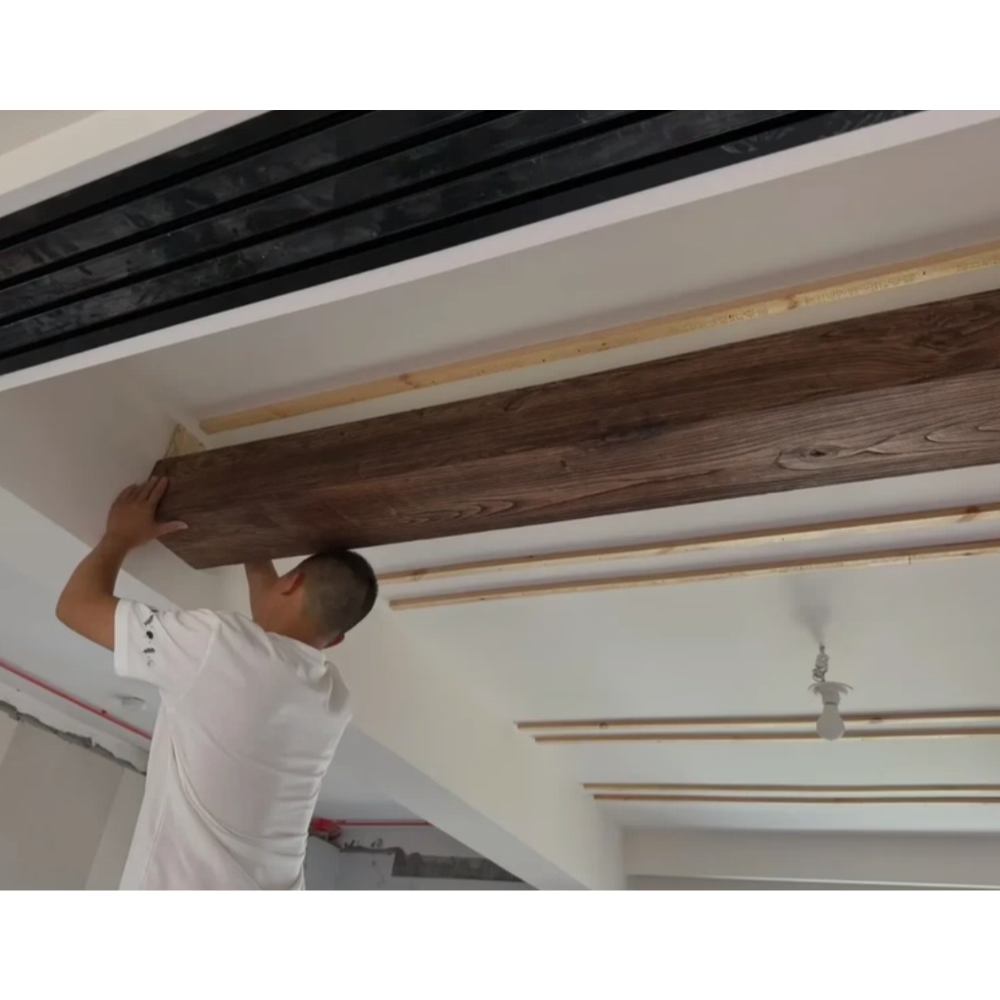
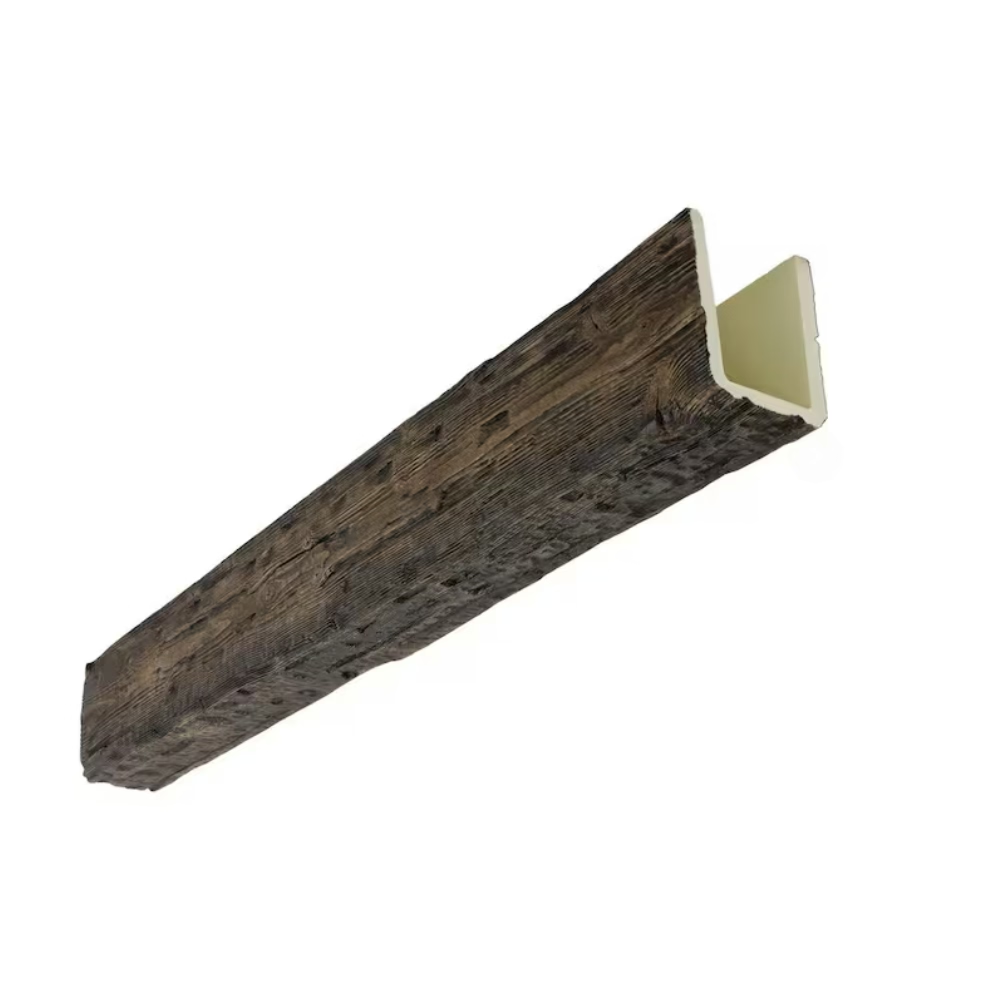
While standard faux wood beams are well known, pure polyurethane resin enables decorative beam systems that go far beyond simple rectangular profiles. Manufacturers use the material's moldability to create coffered beam systems with recessed panel details, beams with built-in crown molding profiles along their top and bottom edges, and beams that incorporate lighting channels or cable management passages within their structure.

Ornamental beams that appear to be assembled from multiple pieces, with visible joinery details such as mortise and tenon connections, scarf joints, and pegged fastenings, can be produced as single monolithic pieces. This eliminates the on-site assembly work that would be required to achieve the same effect with real wood and removes the risk of gaps or misaligned joints that can occur during site assembly.
Another category enabled by PU resin is the hybrid beam-trim system, where the beam itself incorporates mounting provisions for adjacent ceiling elements. A beam might include a recessed channel along its length for LED strip lighting, or a pre-molded socket at its base for a decorative bracket or finial. These integrated features simplify installation by consolidating multiple finishing steps into a single product.
Corbels and Support Elements
Corbels are one of the most visually impactful decorative ceiling components available, and they are also one of the areas where PU resin has made the most dramatic difference in accessibility and practicality. In traditional construction, a corbel is a structural element that steps outward from a wall or column to support a beam or overhang. In decorative applications, corbels serve the same visual purpose without bearing any structural load.
The challenge with real wood corbels is that many of the most attractive designs feature elaborate scrollwork, acanthus leaf carvings, or other ornamental details that are expensive to produce in wood and vulnerable to damage during handling and installation. PU resin corbels reproduce these details perfectly and can withstand the minor impacts and handling that occur during transportation and installation without chipping or cracking.
Large corbels that would weigh hundreds of kilograms in stone or even dozens of kilograms in solid hardwood can be produced in PU resin at a fraction of that weight. This makes it practical to install large decorative corbels in locations where the structure would not support the load of genuine materials. A pair of oversized corbels flanking a fireplace mantel or supporting a short-span beam can create an impression of massive, deliberate construction without the structural implications.
Ceiling Medallions and Ornamental Flatwork
Ceiling medallions serve a specific function: they provide a decorative transition between a ceiling-mounted light fixture and the surrounding ceiling surface. In older homes, these were typically plaster or wood, and the finest examples featured elaborate gadrooning, reeding, and acanthus details that made them true works of art.
PU resin ceiling medallions revive this tradition with products that range from restrained, geometric designs appropriate for contemporary interiors to elaborate classical compositions that would be at home in a Victorian mansion. The material's ability to hold fine detail means that the most intricate designs are reproduced faithfully, and the lightweight nature of the pieces means that even large medallions can be installed by a single person using adhesive alone.
Installation of ceiling medallions is typically straightforward. The medallion is positioned over the electrical box that will support the light fixture, marked for any necessary cutouts, and adhered to the ceiling surface with construction adhesive. The light fixture canopy then covers the attachment point, leaving the medallion visible as a decorative frame around the fixture.
Coordinating Components for Unified Ceiling Systems
The greatest impact comes from combining multiple component types into a coordinated ceiling system. A room that features matching beams, corbels, ceiling medallion, and perimeter trim creates a cohesive design statement that feels more considered than a space where a single beam type is used in isolation.
When specifying components from different product families or manufacturers, pay close attention to finish consistency, dimensional coordination, and mounting requirements. Finish samples should be compared under the lighting conditions present in the actual installation space, as the color temperature of light sources can significantly affect the perceived tone of wood-tone finishes. Dimensional coordination ensures that beam depths, corbel heights, and trim profiles work together visually without awkward mismatches in scale. Mounting requirements, including fastener spacing, adhesive specifications, and weight limits, should be documented and followed to ensure long-term secure attachment.
Technical References
ASTM standards cited in every specification
Test Data
Lab results from internal testing program
Updated 2026
Reviewed against current product specs


