The appeal of timber in interior design is not merely aesthetic; it is deeply psychological. Wood is warm to the touch, visually complex, and associated with craftsmanship, nature, and permanence. Humans have built with wood for thousands of years, and that familiarity has encoded certain expectations into our sense of what a welcoming, well-designed space should contain. When a ceiling features real timber beams, the space feels grounded, substantial, and authentic.
The challenge for manufacturers of decorative faux timber beams is to create something that satisfies these expectations without relying on the actual material. PU resin has emerged as the material best suited to this challenge, and understanding why requires looking closely at both the material's properties and the techniques that manufacturers use to exploit them.
The Wood-Grain Challenge
Real wood grain is not a simple repeating pattern. It is a record of the tree's growth: the earlywood and latewood bands that mark annual growth rings, the medullary rays that create the subtle ray fleck visible in quartersawn oak, the knots that mark the former locations of branches, the color variation between heartwood and sapwood. No two pieces of timber are identical, and the grain of each piece tells a specific story about the tree from which it came.
A convincing faux timber surface must capture the essential visual elements of this natural variation while being reproducible at industrial scale. This is a manufacturing challenge that different materials address differently. Fiberglass can be gel-coated with a wood-grain pattern, but the result tends to look printed and flat. Plaster can be carved or tooled to simulate grain, but the process is labor-intensive and the result is smooth and unyielding. Polyurethane resin's combination of surface adaptability and mold-based manufacturing enables a level of grain authenticity that has steadily improved as manufacturing techniques have advanced.
Surface Texture Techniques
The quality of a faux timber beam's surface texture is the single most important factor in its visual authenticity. At normal viewing distances, most people evaluate wood grain based on three characteristics: the direction and spacing of growth rings, the presence and character of knots, and the surface relief that gives the grain its tactile quality.
Modern PU resin beam manufacturing employs several techniques to achieve realistic surface textures. The most common is surface etching or texturing of the mold itself, where the interior surface of the production mold is treated to carry a negative impression of wood grain. When the foam expands against this textured surface, it inherits a relief pattern that mimics the raised and lowered features of real wood grain. The depth and character of this texture can be precisely controlled, allowing manufacturers to produce anything from the fine, tight grain of old-growth timber to the bold, open grain of fast-grown second-growth wood.
Some manufacturers supplement mold texture with post-molding surface treatments that add further refinement. Hand-tooling of knot areas, for example, creates the characteristic dark center and surrounding irregular grain pattern that distinguishes a convincing knot from a stamped circle. Staining and toning techniques applied after molding build up layers of color that simulate the variation between earlywood and latewood, creating depth that a single surface color cannot achieve.
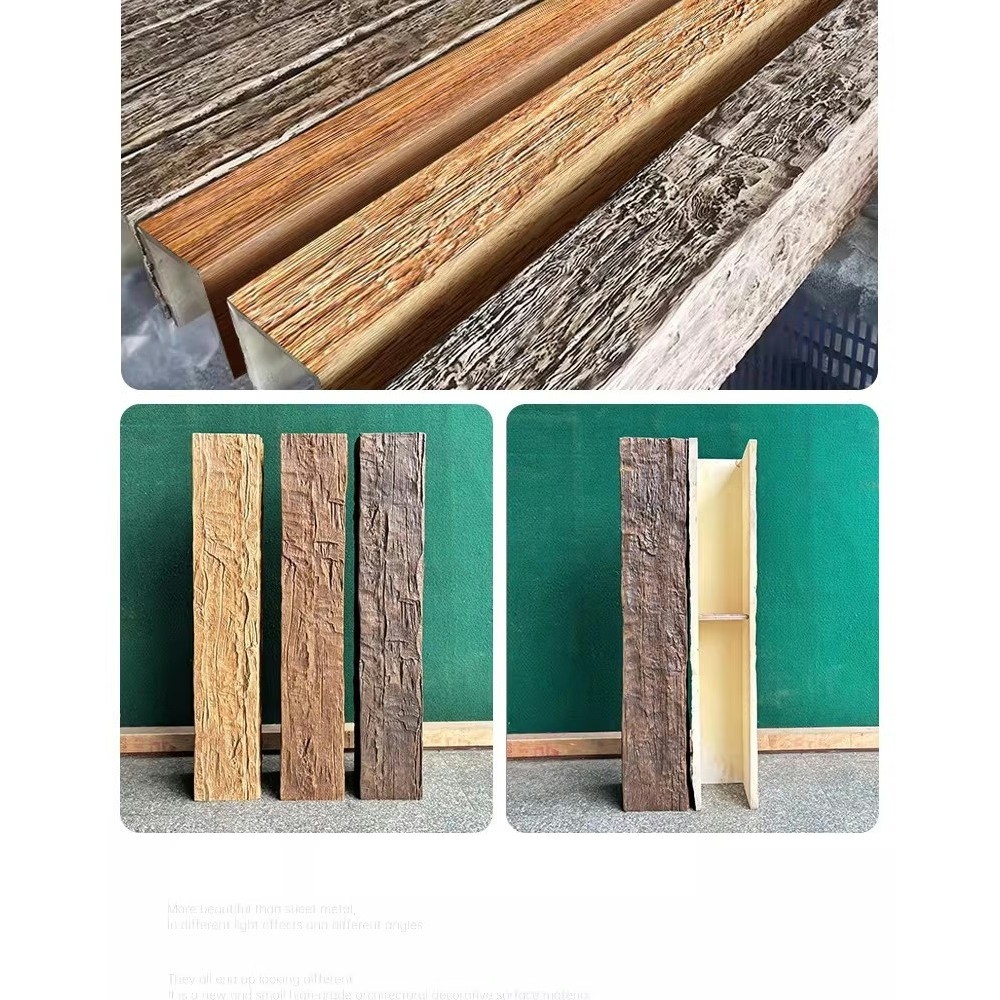
Color and Finish Options
PU resin faux timber beams are available in a broader range of finishes than real timber because the finishing is done under factory conditions rather than on-site. This means more consistent color application, better UV stability through the use of industrial-grade colorants, and the ability to produce finishes that would be difficult or impossible to achieve on natural wood.
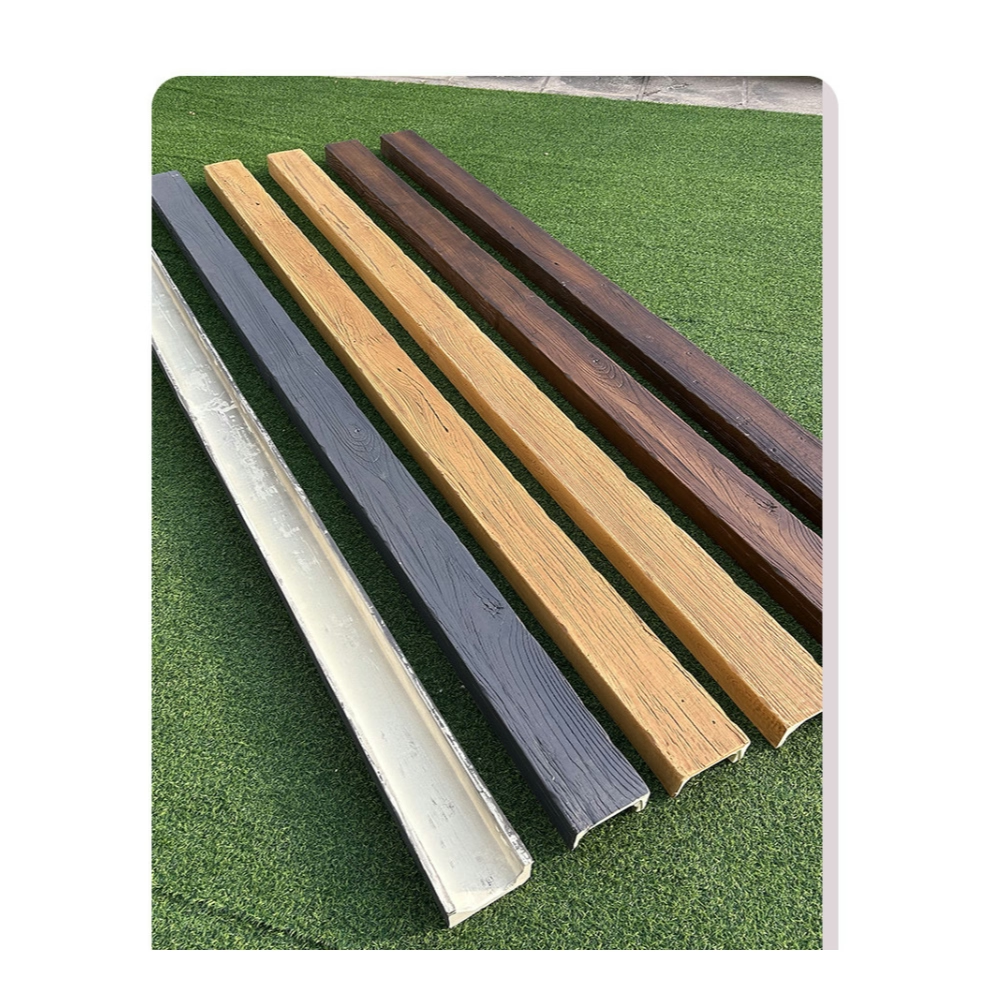
Standard finish options typically include several wood-tone categories. Light natural tones such as honey maple and blonde oak appeal to contemporary and Scandinavian-influenced interiors. Medium tones such as golden oak, cherry, and walnut cover the most popular traditional wood finishes. Dark tones including espresso, mahogany, and ebony serve spaces that require more visual weight and drama.
Specialty finishes have expanded the aesthetic range considerably. Weathered grey finishes, which mimic the silvery patina of reclaimed barnwood, have become extremely popular in modern farmhouse and coastal designs. Whitewash finishes, with varying degrees of translucency that allow the underlying grain to show through, suit Mediterranean, coastal, and cottage-style interiors. Distressed finishes, which incorporate artificially created cracks, dings, and worn edges, add the character of age and use without the premium cost of genuine reclaimed timber.
The Hollow Core Advantage
Most PU resin faux timber beams are manufactured as hollow sections rather than solid pieces. This hollow construction serves several practical purposes simultaneously.
The primary advantage is weight reduction. A hollow beam that measures 300mm by 300mm in cross-section might weigh five to eight kilograms per linear meter, compared to thirty to fifty kilograms for a solid timber beam of equivalent dimensions. This weight difference is transformative for handling and installation, making it practical for a single worker to position and secure beams that would otherwise require mechanical equipment.
The hollow core also provides a passage for electrical wiring, HVAC ductwork, and other building services that may need to run through the ceiling plane. While these services are typically concealed within the ceiling structure in new construction, retrofit installations often have limited options for routing, and the hollow interior of a faux beam provides a convenient and visually unobtrusive pathway.
Finally, the hollow construction allows for the incorporation of internal reinforcement where needed. Aluminum or steel stiffening channels can be inserted into the beam to increase rigidity for long spans or to provide additional support at mounting points, without materially affecting the overall weight or the external appearance of the beam.
Achieving Authenticity in Different Interior Contexts
The authenticity of a faux timber beam installation depends not just on the quality of the individual beams but on how well the beams are integrated into the overall interior context. A flawless beam with impeccable grain texture will look unconvincing if it is paired with trim, furniture, or other elements that contradict the material narrative.
In a space with real hardwood floors and solid wood furniture, a well-matched faux timber beam should be indistinguishable from genuine timber at normal viewing distances. The key is matching not just the color but the age and character of the finish. A brand-new beam with fresh, vibrant color will stand out against floors and furniture that show the subtle tonal shifts of aged wood. A gently weathered or naturally toned finish, on the other hand, will blend naturally with existing wood elements.
In spaces with minimal other wood, the beam has more latitude to establish its own character. A bold, heavily grained beam can serve as a focal point and design anchor, providing the visual warmth that would otherwise require multiple wood elements throughout the room. The beam becomes the dominant material statement, and the surrounding finishes are selected to complement rather than match it.
Technical References
ASTM standards cited in every specification
Test Data
Lab results from internal testing program
Updated 2026
Reviewed against current product specs


