Marketing materials for any product category tend to present the best possible version of that product — carefully lit photographs, professional styling, and language calibrated to generate enthusiasm rather than to inform. Customer reviews and field feedback operate under different incentives entirely, which makes them a uniquely valuable source of information for anyone considering a purchase decision. The pattern that emerges across hundreds of real-world PU faux beam installations is more informative than any single promotional description could be, revealing not just what these products do well but where their actual limitations and surprises lie.
Homeowners who have installed PU faux beams in residential projects represent the largest and most diverse feedback pool. Their experiences span from weekend DIY installations in suburban living rooms to multi-week renovation projects involving entire floors of beam work in historic homes. The consistent themes that emerge from this feedback are illuminating for prospective buyers who want to understand what they are actually purchasing.
The most frequently mentioned positive theme across homeowner reviews is the transformation effect — the dramatic change in a room's character that even a small amount of beam work produces. Reviewers commonly describe rooms that felt generically finished or architecturally anonymous before the beams and distinctly warm and designed afterward. This transformation is attributed not just to the beams themselves but to the way they interact with light, create visual anchoring for furniture groupings, and establish a material coherence that ties the room's design elements together. Multiple reviewers note that guests to their homes comment on the beams first, before any other design element, which suggests the impact is immediately legible even to people who have not studied interior design.

Installation feedback from homeowners is overwhelmingly positive for those who prepared adequately before beginning. The most common advice from reviewers who have completed successful installations is to measure carefully, invest in a good laser level for alignment, and take time to plan the beam layout before making any fastener holes. Homeowners who approached the installation as a straightforward project that could be rushed tend to report more frustration than those who treated it as a finish carpentry task requiring patience and precision. Several reviewers specifically mention that watching manufacturer installation videos before starting would have prevented small mistakes they made on their first attempt.
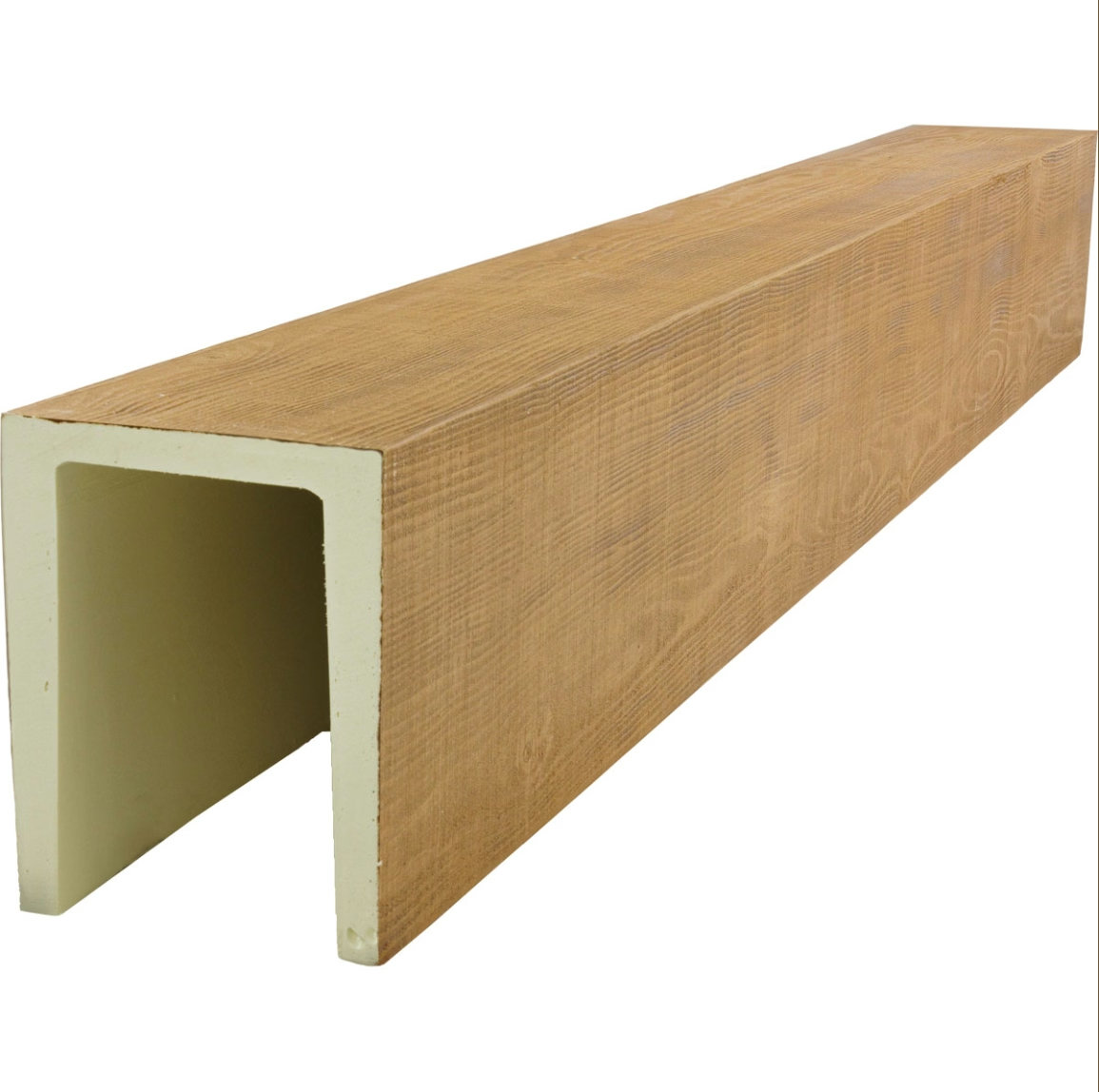
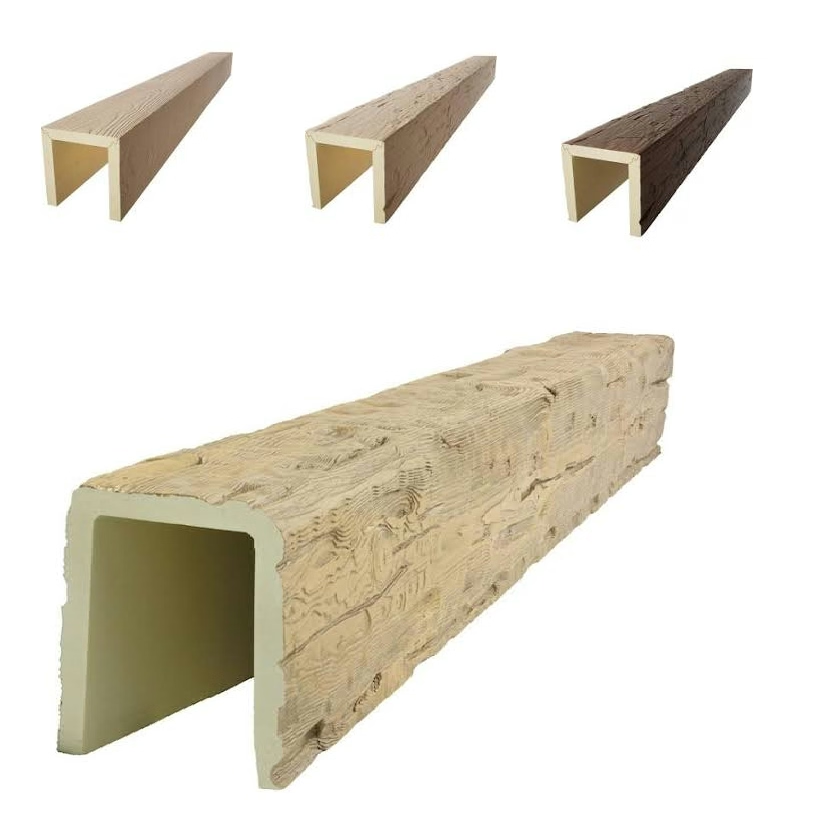
The quality of finish on premium PU beams receives consistent praise in homeowner reviews, with many reviewers expressing surprise at how convincingly realistic the surface appears in their rooms. Several reviewers report that visitors to their homes initially assumed the beams were genuine timber and were visibly surprised when told otherwise. This is perhaps the highest compliment a faux material can receive — the surprise of discovery rather than the disappointment of deception. The realism of the grain texture, the consistency of the color through the finish, and the absence of telltale signs like perfect straightness or uniform surface texture are cited as the specific characteristics that contribute to the convincing appearance.
Contractor reviews provide a different and complementary perspective, focused on installation efficiency, compatibility with building systems, and durability under the sometimes rough conditions of active construction sites. Contractors who specialize in residential renovation are particularly articulate about the practical advantages of PU beams versus genuine timber in the specific context of occupied home renovations. Multiple contractors note that the dust-free cutting of PU material — compared to the sawdust clouds generated by cutting real timber — is a meaningful advantage when working in homes that are otherwise finished and lived-in during the renovation.
Durability feedback from customers who have lived with their installations for several years provides the longest-horizon performance data available. The most common observation from long-term installers is that the beams look essentially the same years after installation as they did on the day they were hung — no fading, no warping, no finish deterioration, no insect activity. Several reviewers specifically contrast this with their previous experience with genuine timber beams in other properties, where the ongoing maintenance required to keep the beams looking presentable was a persistent source of frustration and expense. The absence of maintenance requirements on PU beams is cited as one of their most significant practical advantages.
Designers and architects who have specified PU beams in professional projects bring a specifier's perspective to the feedback pool. Their reviews tend to focus on the reliability of the product — consistent quality across multiple beams, predictable lead times, and finish consistency between initial samples and delivered product. Several design professionals note that the ability to specify exact beam dimensions and have them delivered to those specifications without the dimensional variability inherent in natural timber makes the specification process significantly more predictable. This predictability of outcome is valued highly in professional practice, where client expectations and design intent must align precisely.
The most honest negative feedback from the field tends to cluster around a few consistent themes: initial skepticism about the product category before seeing physical samples, difficulty sourcing exact color matches for existing woodwork in renovation projects, and occasional challenges with very long beam spans where structural reinforcement was insufficient in lower-quality products. The first theme — initial skepticism — tends to resolve itself positively once reviewers physically examine and handle the product, suggesting that the category suffers from an image problem rooted in lower-quality early-generation products that no longer represent the current state of the art. The other themes point to legitimate specification considerations that buyers should address before ordering.
Weight and mounting feedback reveals that the installation experience is largely determined by the quality of the mounting system and the specificity of the installation instructions provided. Beams with well-engineered concealed mounting systems and clear, detailed installation instructions receive excellent reviews for installation ease, while products with inadequate mounting hardware or vague instructions generate frustration. Several reviewers specifically praise products that include template hardware for consistent spacing of mounting clips, noting that this small detail made a significant difference in the accuracy of their installation.
The value proposition emerges clearly from aggregated review data: customers consistently rate the aesthetic result as exceeding their expectations relative to the cost, while expressing appreciation for the practical advantages of lightweight material, consistent quality, and maintenance-free ownership. The most satisfied reviewers tend to be those who approached the purchase with accurate expectations — understanding that they were buying a high-quality faux product designed to replicate the look of real timber rather than an actual piece of reclaimed wood. Customers who harbored unrealistic expectations about what the product could achieve relative to genuine timber tend to leave the least satisfied reviews, suggesting that education and accurate expectation-setting are as important to customer satisfaction as the product quality itself.
Technical References
ASTM standards cited in every specification
Test Data
Lab results from internal testing program
Updated 2026
Reviewed against current product specs