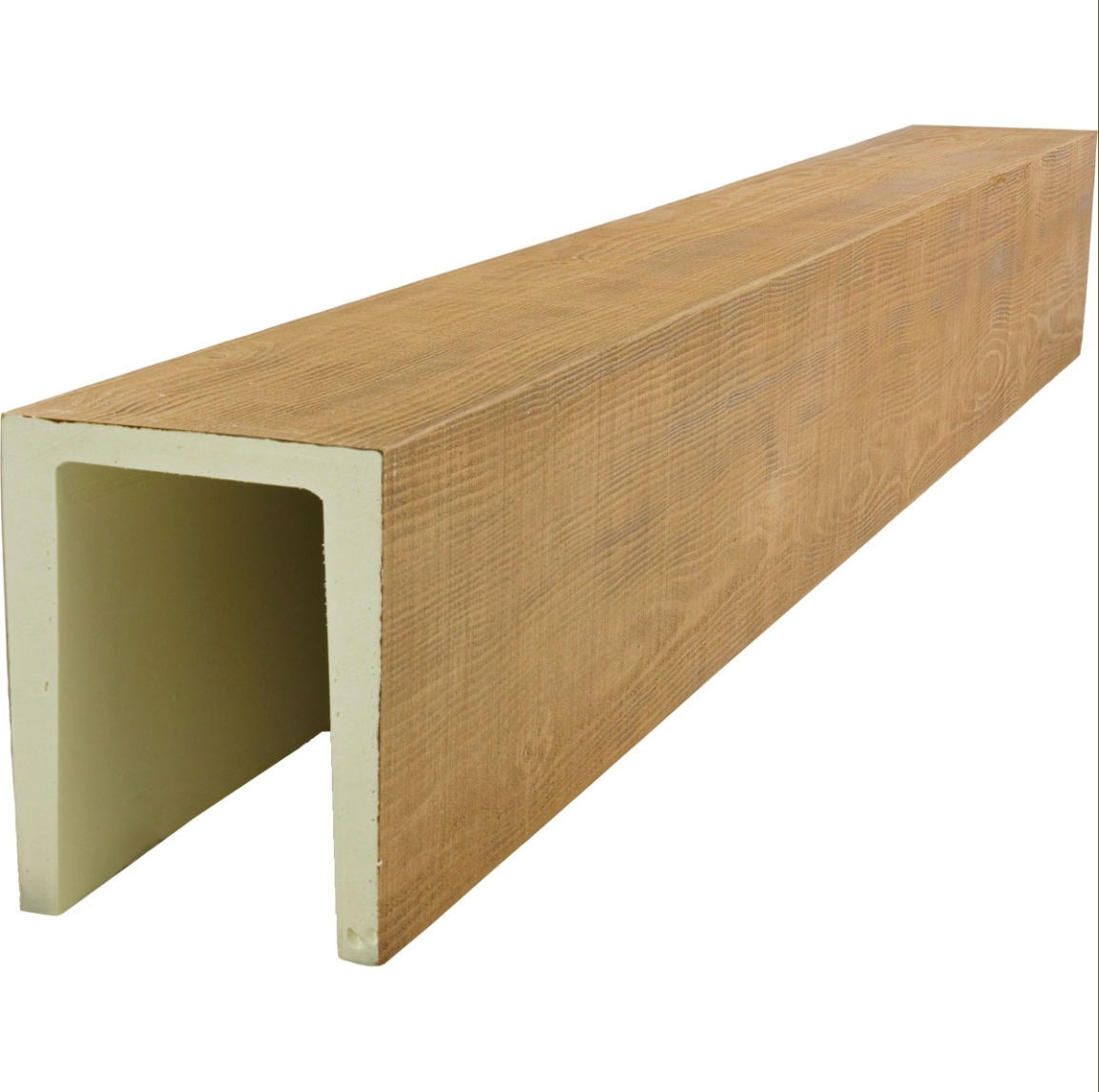
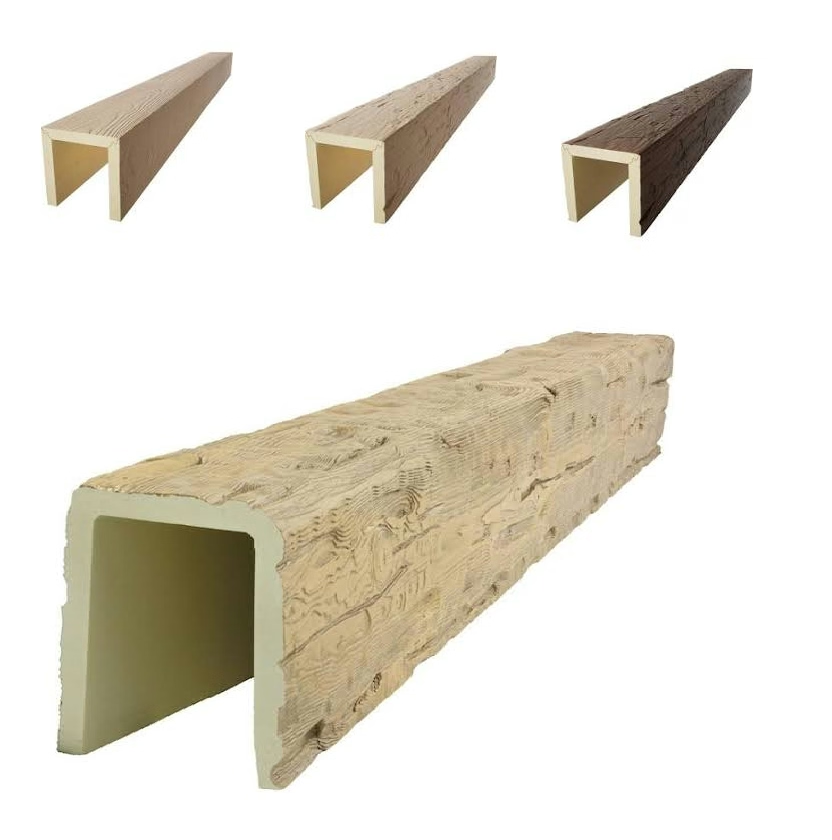
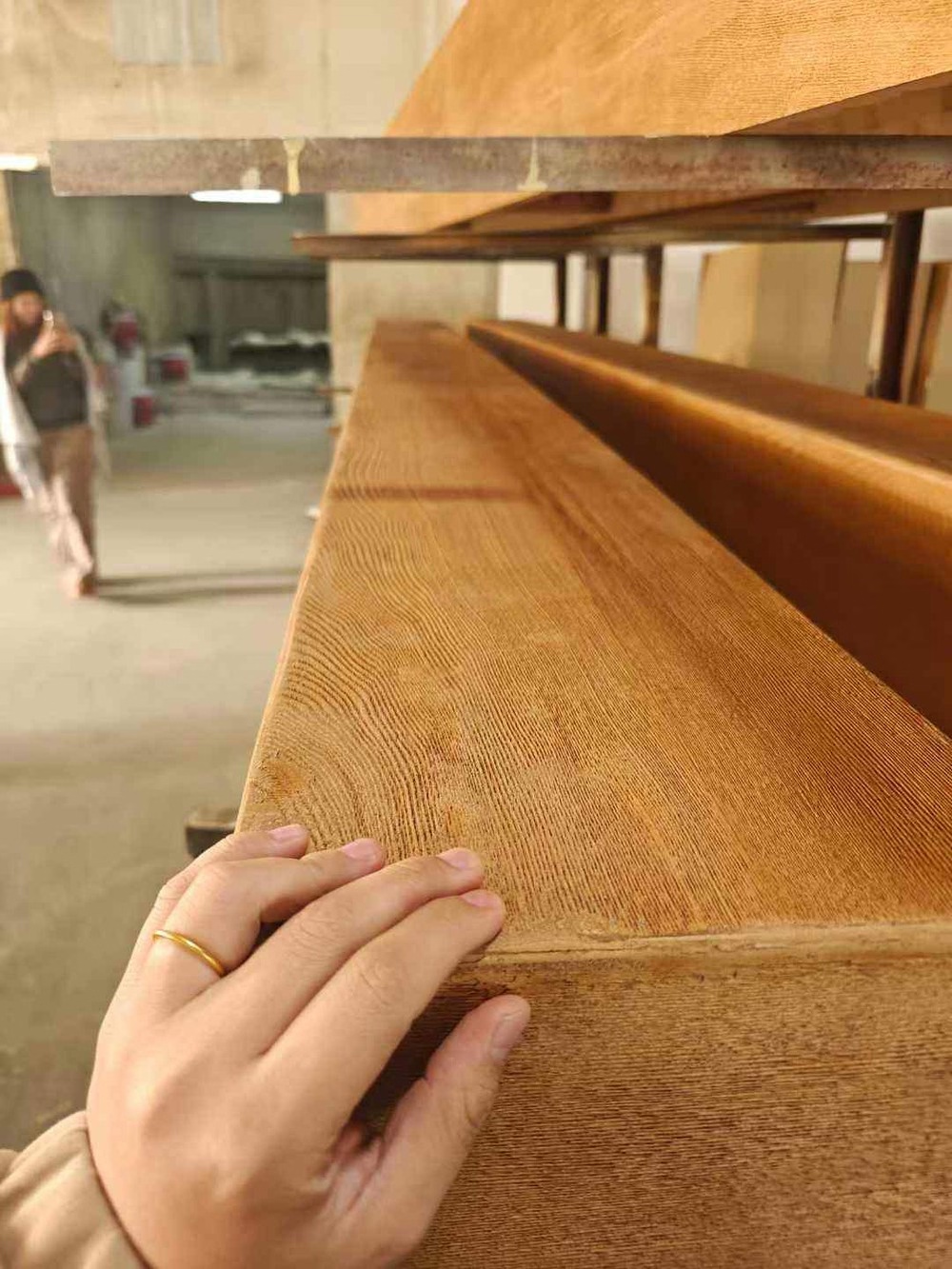
The pursuit of authentic wood aesthetics in interior design often collides with the practical realities of modern building and renovation budgets. Natural timber brings undeniable beauty to spaces—the organic warmth, the distinctive grain patterns, the tactile satisfaction of surfaces shaped by nature over centuries. Yet the weight, the maintenance demands, the cost, and the installation complexity frequently conspire to make genuine timber impractical for applications where it would otherwise provide the perfect finishing touch.
Polyurethane faux beams represent a sophisticated engineering response to this dilemma. By combining material science advances with artistic attention to wood's visual characteristics, manufacturers produce beams that satisfy both aesthetic aspirations and practical requirements. The results speak for themselves: installations that genuinely fool the eye while providing performance characteristics that often exceed natural wood's capabilities.
The Technology Behind Convincing Wood Reproduction
Understanding why modern PU beams achieve such remarkable realism requires examining the manufacturing processes that bring them into existence. The journey from concept to finished product begins with sample selection, where designers identify exceptional specimens of target wood species that display the characteristics worth reproducing—dramatic grain patterns, interesting knot configurations, weathered surface textures that suggest age and history.
From these samples, high-precision molds capture every microscopic detail of the original surface. The molding process must achieve sufficient resolution to reproduce features invisible to casual observation but essential for convincing realism. Grain lines that might measure only fractions of a millimeter in width, the subtle raised or recessed areas around knots, the gradual color gradients across growth rings—every detail gets preserved in the negative space of the production mold.
The polyurethane formulation itself requires careful calibration. Raw material quality and mixing ratios determine final density, surface hardness, and ability to accept textures without introducing artifacts. Too soft, and beams dent easily during handling and installation. Too hard, and the material lacks the slight flexibility that prevents cracking during shipping and temperature cycling. Premium manufacturers balance these properties through continuous refinement of their formulations, often keeping specific recipes as closely guarded proprietary information.
Visual Authenticity: Matching Species Characteristics
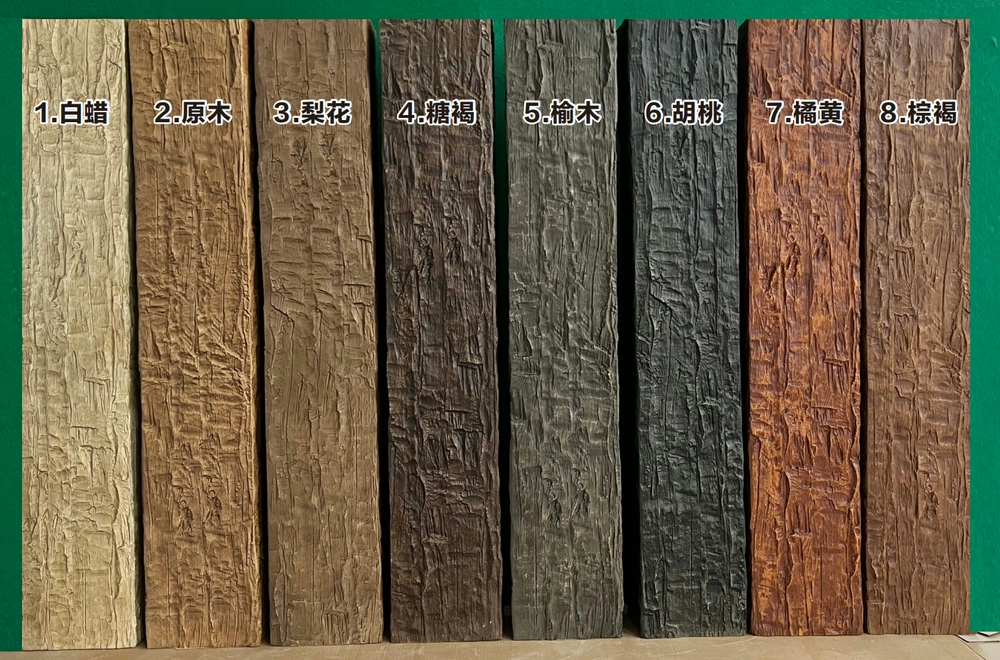
Different wood species present distinct reproduction challenges based on their particular visual signatures. Oak, with its prominent ray cells and pronounced grain figure, demands textures that capture these distinctive features while avoiding overstatement that would appear cartoonish. The challenge intensifies for lighter species where surface variations prove more visible than in heavily-pigmented woods.
Maple presents particularly difficult reproduction requirements. The wood's subtle grain patterns and generally uniform appearance offer fewer visual landmarks for identification. Successful maple reproductions must achieve convincing subtlety, avoiding the temptation to introduce more dramatic features that might improve recognition but would ultimately compromise authenticity.
Cedar and redwood, prized for their rich coloration and natural resistance to decay, require different approaches. The dramatic color gradients from heartwood to sapwood, the distinctive aromatic qualities (reproduced visually through appropriate coloring), and the characteristic knot patterns all demand careful attention. These species also present finishing challenges, as the natural oils that protect genuine cedar resist standard coatings—though this concern proves irrelevant for polyurethane reproductions that require no protective treatment.
Installation Advantages Over Natural Timber
The practical benefits of PU faux beams begin before installation even starts, with shipping and handling costs dramatically reduced by the materials' lightweight nature. Where genuine timber might require specialized transportation and lifting equipment, polyurethane beams ship via standard carriers and arrive at job sites manageable by individual workers. This advantage scales with project size, becoming transformative for large commercial installations where hundreds or thousands of linear feet of beams require distribution throughout a building.
Structural requirements for PU installations prove minimal compared to genuine timber. Natural wood beams serving structural functions demand proper load calculations, appropriate species selection for span ratings, and connections designed to code requirements. Decorative faux beams, typically mounted to existing ceiling structures, require only sufficient fasteners to maintain position under their own weight—usually accomplished with construction adhesive plus mechanical fasteners at regular intervals.
The preparation requirements for PU beams also simplify significantly. Natural timber often requires extended acclimation periods, allowing the wood to reach moisture equilibrium with the installation environment before fastening. This waiting period might span days or even weeks for some species and conditions. Polyurethane beams install immediately upon arrival, with no acclimation required and no concern about the dimensional changes that might follow as natural wood adjusts to new humidity conditions.
Performance Under Real-World Conditions
Exposure testing conducted by manufacturers and independent laboratories confirms polyurethane's durability across environmental conditions that would challenge natural wood. Temperature cycling from well below freezing through summer heat extremes produces no visible or measurable effects in properly formulated products. UV exposure, the primary degradation mechanism for many materials, affects polyurethane more slowly than wood, particularly when the material includes appropriate UV inhibitors in its formulation.
Moisture exposure scenarios that would eventually damage genuine timber leave polyurethane unaffected. Direct water contact, high humidity environments, and even temporary flooding situations cause no lasting harm to synthetic beams. This characteristic proves particularly valuable in applications like pool houses, spa facilities, or bathroom renovations where the aesthetic appeal of wood would otherwise create maintenance challenges.
Impact resistance deserves particular attention for installations in family homes with active children or commercial settings with public traffic. Polyurethane's slightly flexible nature allows it to absorb impacts that would dent aluminum or crack wood, though the material does dent under sufficient force. The surface hardness balances durability with workability, allowing minor repairs using fillers designed for the specific formulation while resisting the daily wear that would affect softer materials.
Cost Analysis: Beyond Initial Purchase Price
Comprehensive cost comparison between PU faux beams and genuine timber requires examining the complete ownership picture rather than focusing solely on initial material expenses. Natural wood carries ongoing maintenance requirements: periodic resealing or repainting, inspections for pest damage, potential repairs for splits or rot, eventual replacement of damaged sections. These costs accumulate over the structure's lifetime, often reaching multiples of the original material expense.
Polyurethane installations require no ongoing maintenance beyond occasional dusting or cleaning. The absence of required maintenance translates directly to cost savings over time while eliminating the disruption and inconvenience of periodic treatment schedules. For commercial applications where maintenance access might require scheduling around business hours or renting specialized equipment, these savings become even more pronounced.
Replacement considerations also favor synthetic materials. Should damage occur through accident or extreme circumstances, individual beams can be replaced without disturbing adjacent installations. Natural timber repairs, particularly for structural elements, might require engineering consultation and specialized contractors. The availability of replacement beams from manufacturers provides insurance against obsolescence that older timber species cannot match.
Making the Selection Decision
Choosing between authentic timber and quality PU reproductions ultimately depends on project-specific priorities and constraints. For applications where genuine wood's specific properties—structural strength, particular species availability, authentic material for historical restoration—justify the associated costs and complications, natural timber remains appropriate. For the vast majority of decorative applications where wood's visual and tactile qualities matter more than its structural capabilities, polyurethane faux beams deliver comparable aesthetics with superior practicality.
The decision becomes clearest when examining the specific installation context. A timber-framed cabin where exposed structural beams celebrate genuine construction methods might warrant authentic materials. A modern home renovation where decorative beams add visual warmth without serving structural purposes typically benefits from the practical advantages of quality reproductions.
The most successful projects often result from clear-eyed assessment of priorities: what visual outcomes matter, what performance characteristics are essential, what budget constraints exist, and what maintenance commitment seems reasonable over the structure's expected lifetime. With these factors clearly understood, the choice between natural and synthetic becomes straightforward, leading to installations that satisfy both aesthetic aspirations and practical realities.
Technical References
ASTM standards cited in every specification
Test Data
Lab results from internal testing program
Updated 2026
Reviewed against current product specs