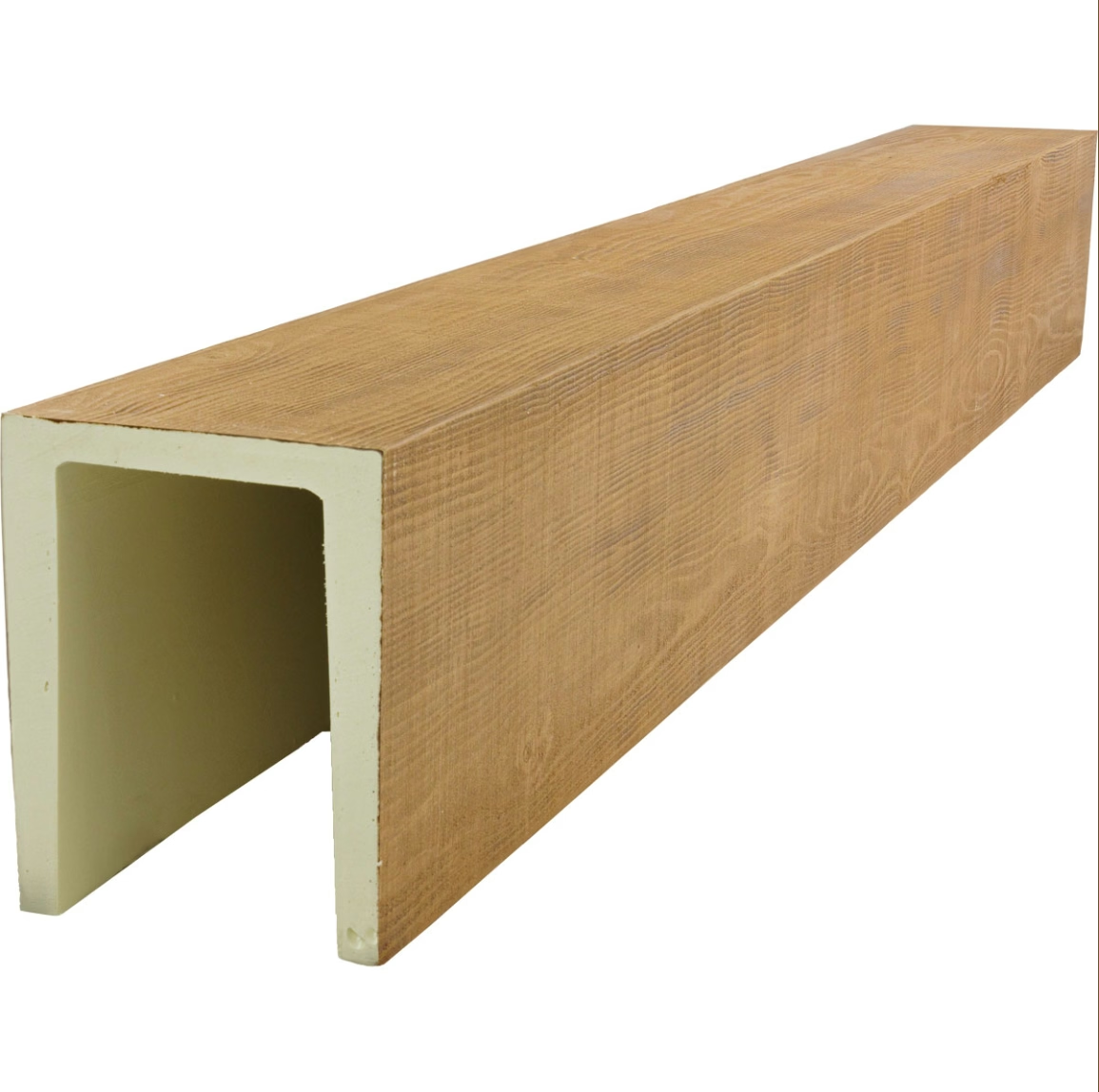
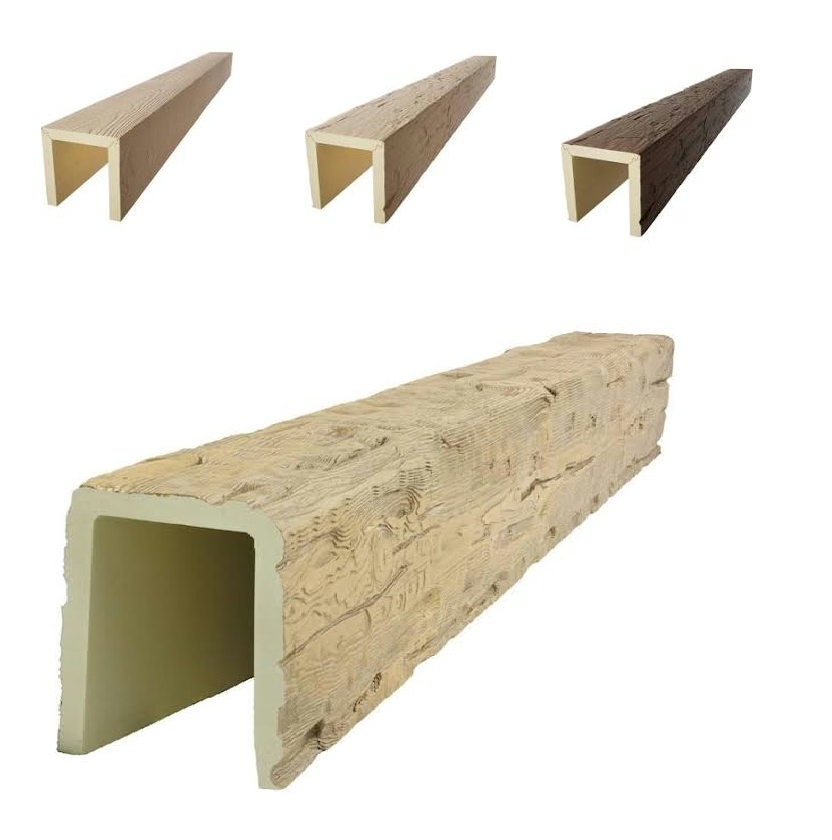
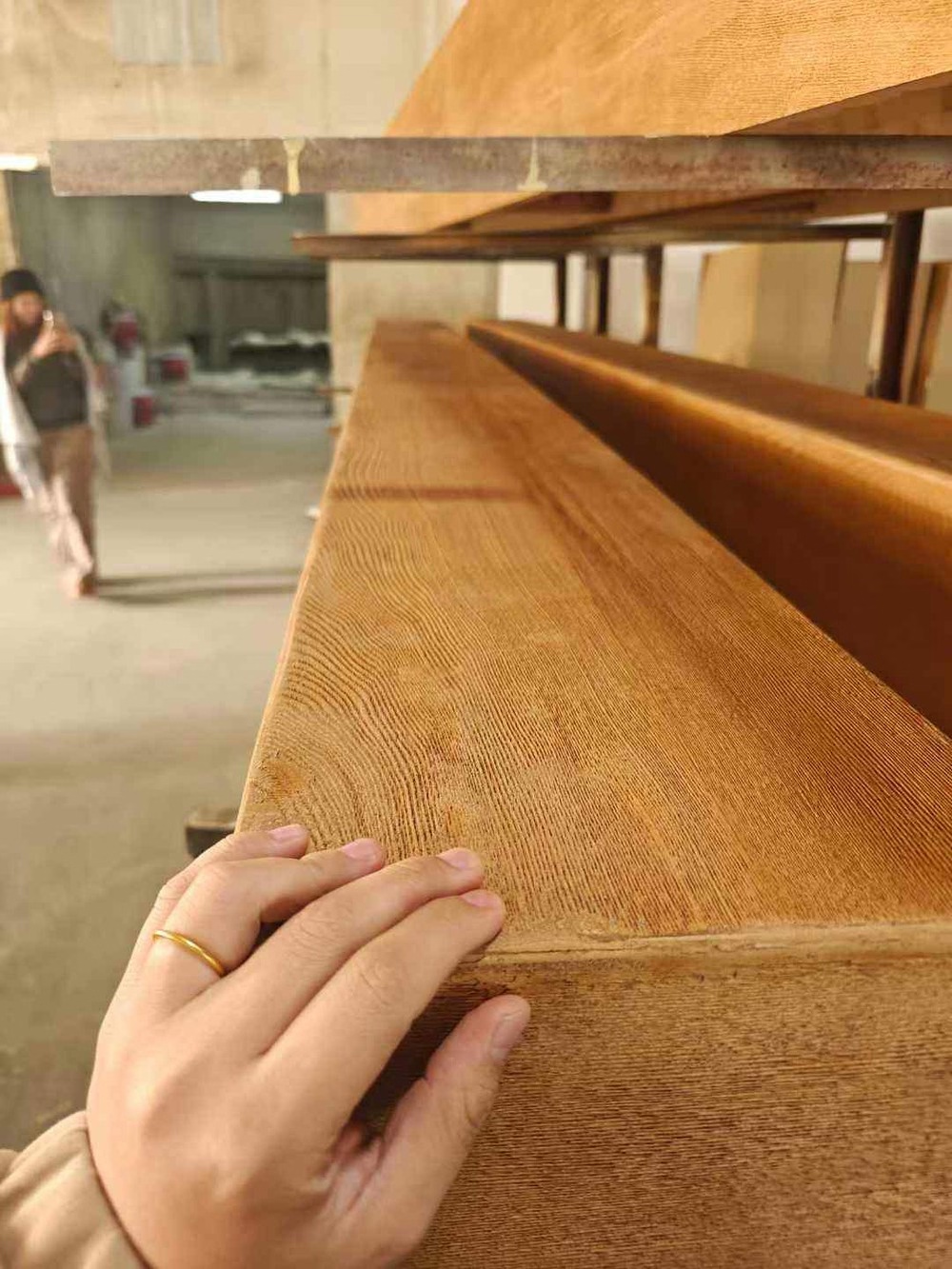
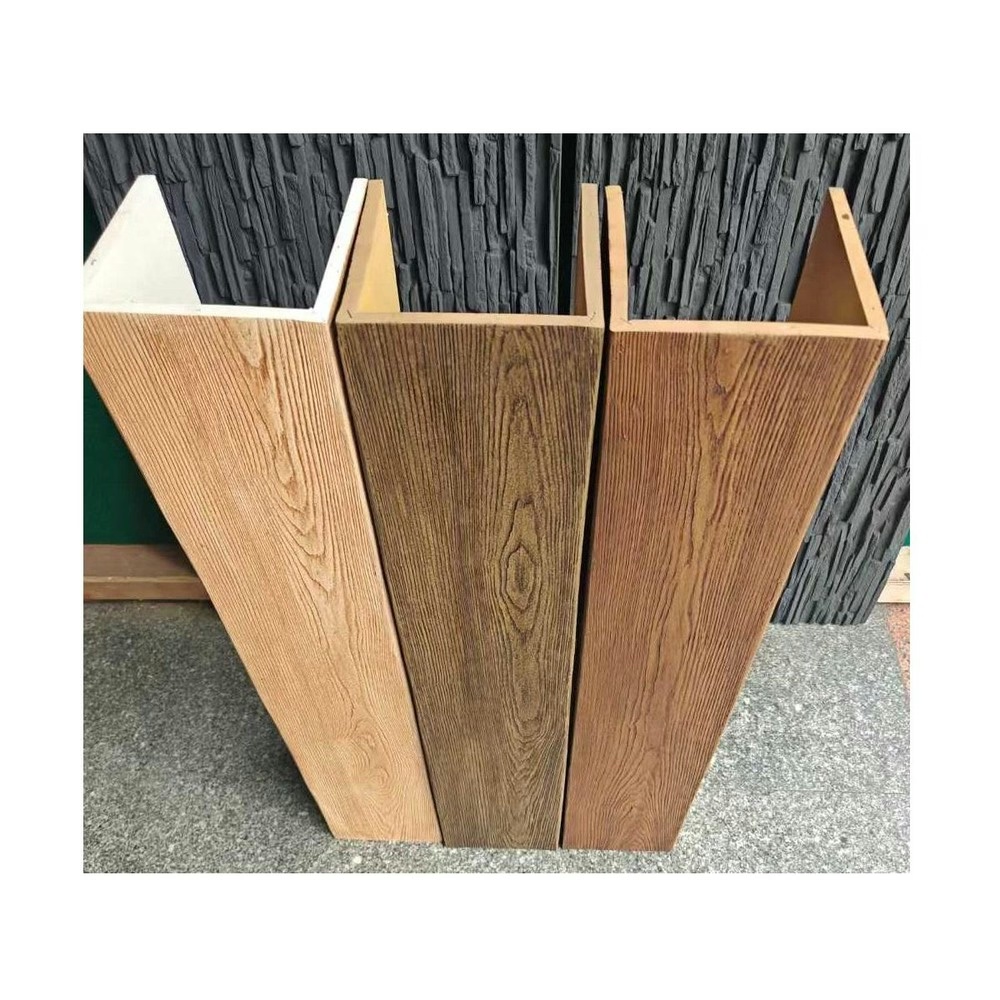
Sustainability considerations have reshaped material selection across the construction and design industries. Consumers increasingly question where materials originate and what environmental consequences accompany their production. Faux wood beams address these concerns directly, offering the aesthetic appeal of timber without requiring forest resources.
The environmental benefits of polyurethane faux beams extend beyond simply avoiding timber harvest. Manufacturing efficiency, transportation logistics, and service life maintenance all contribute to a favorable environmental profile compared to authentic wood alternatives. Understanding these factors helps environmentally conscious consumers make informed decisions.

Timber Harvest's Environmental Impact
Natural timber production involves clearing forests that provide crucial ecological services. Old-growth forests, in particular, represent irreplaceable ecosystems that develop over centuries. Even managed timber plantations require decades to reach harvestable maturity, creating opportunity costs when land could support mature forest or alternative uses.
Transportation distances for premium timber species often span continents. Oak from North American forests, mahogany from South American or African sources, and teak from Southeast Asian plantations all involve significant fossil fuel consumption for international shipping. This transportation footprint compounds the direct environmental impact of harvesting operations.
The processing required for dimensional timber creates additional environmental burden. Kiln drying consumes substantial energy while chemical treatments for decay resistance introduce toxic compounds. These processing steps transform raw timber into finished products suitable for construction but add environmental costs that faux alternatives avoid.
Manufacturing Efficiency of Polyurethane Beams
Polyurethane faux beam production occurs in controlled factory environments optimized for material efficiency. Liquid polyurethane components combine precisely, minimizing waste during the casting process. molds define exact part geometry, eliminating the kerf loss associated with sawing dimensional lumber from logs.
Production facilities increasingly utilize recycled polyurethane in their formulations. Post-industrial and post-consumer recycled materials reduce virgin resource consumption while diverting waste from landfills. This circular economy approach improves environmental performance without compromising product quality.
Energy consumption during manufacturing proves significantly lower than timber processing equivalents. Temperature-controlled molding requires less energy than kiln drying, and production scheduling optimizes equipment utilization to minimize waste heat. These operational efficiencies compound across millions of pounds of annual production.

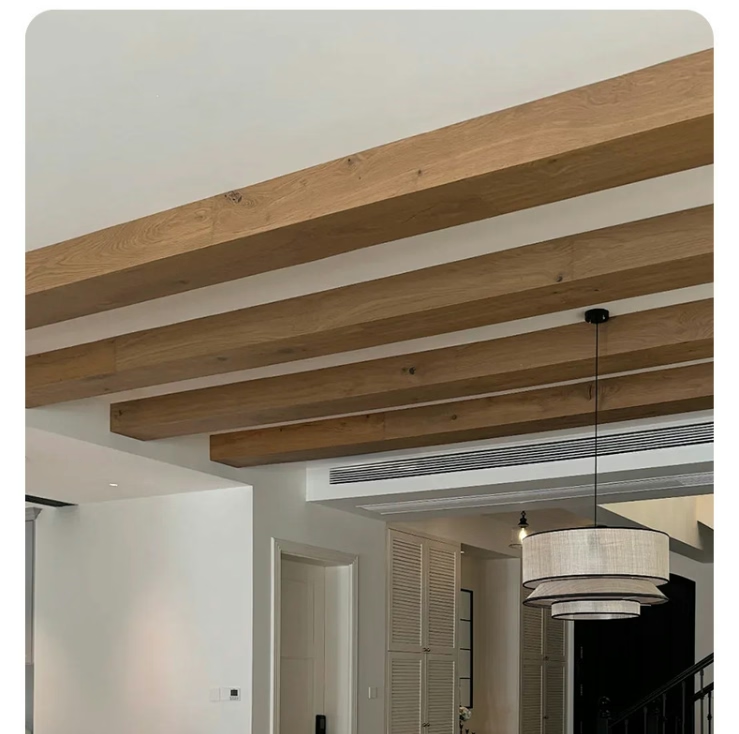
Transportation and Logistics Advantages
The dramatic weight reduction of polyurethane beams relative to natural timber creates cascading transportation benefits. Shipping costs per unit of aesthetic value decrease substantially when lightweight products replace heavy timber. Fewer trucks, ships, and rail cars transport equivalent visual impact to market.
Packaging requirements decrease proportionally with weight reduction. Lighter products suffer less damage in transit, reducing the protective materials necessary for safe transportation. Corrugated cardboard and paper padding replace expanded polystyrene in many applications, simplifying end-of-life disposal.
Storage and handling efficiency improves across the distribution chain. Warehouses can stock larger inventories without structural reinforcement. Retail displays require less robust shelving. Jobsite handling needs fewer workers or mechanical assistance. These logistics advantages reduce labor costs and scheduling constraints throughout the supply chain.
Service Life Environmental Considerations
The extended service life of quality polyurethane beams reduces replacement frequency and associated environmental impacts. Natural wood maintained for outdoor applications may require refinishing every two to three years, with accompanying chemical consumption for stains and sealers. Faux beams resist UV degradation and surface weathering, maintaining appearance without chemical treatment.
End-of-life disposal presents less challenging scenarios for polyurethane beams compared to treated timber. While recycling infrastructure for polyurethane continues developing, the material's inert nature prevents leaching of chemical preservatives into groundwater. Untreated timber, conversely, may contain pentachlorophenol, chromated copper arsenate, or other toxic compounds that complicate disposal.
Biological resistance eliminates the need for pesticide treatment that natural wood often requires. Termites, beetles, and fungal decay organisms attack authentic timber, sometimes requiring chemical intervention. Polyurethane's resistance to these organisms prevents both structural damage and environmental contamination from treatment chemicals.
Indoor Air Quality Implications
Modern building codes increasingly address indoor air quality as a health consideration. Polyurethane faux beams contribute positively to this metric compared to some natural wood alternatives. The material emits minimal volatile organic compounds once fully cured, meeting emissions standards for residential and commercial interior applications.
Formaldehyde concerns affect certain wood products, particularly particleboard and engineered lumber using urea-formaldehyde adhesives. Polyurethane beams contain no added formaldehyde, eliminating this concern for health-conscious consumers. This characteristic proves particularly valuable in healthcare facilities, schools, and other sensitive environments.
Dust and particle generation during installation affects worker health and building cleanliness. Cutting polyurethane produces different particles than wood sawing—lighter, less irritating materials that clean more easily. This practical benefit accompanies the environmental advantages of faux timber.
Making Sustainable Choices
Evaluating sustainability claims requires attention to specific product characteristics rather than broad category assumptions. Not all faux beams share identical environmental profiles—manufacturing practices, material formulations, and company policies vary significantly. Requesting environmental product declarations provides standardized comparison data.
Lifecycle assessment methodology offers comprehensive evaluation of environmental impact from raw material extraction through end-of-life disposal. Quality manufacturers can provide documentation addressing each lifecycle phase. This transparency enables informed decision-making beyond marketing claims.
Supporting companies committed to continuous environmental improvement drives positive industry change. Purchasing decisions reward manufacturers investing in recycled content, energy efficiency, and sustainable practices. This market mechanism accelerates environmental progress across the industry.
Technical References
ASTM standards cited in every specification
Test Data
Lab results from internal testing program
Updated 2026
Reviewed against current product specs