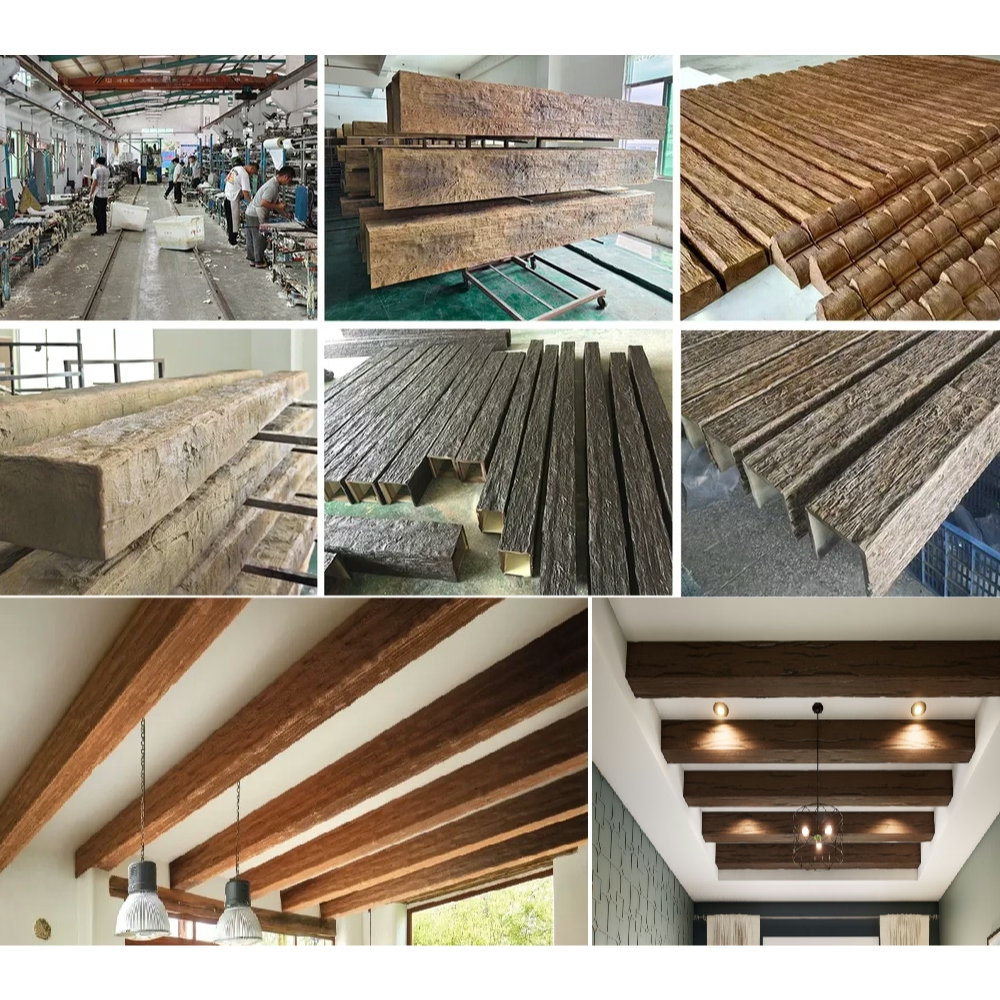
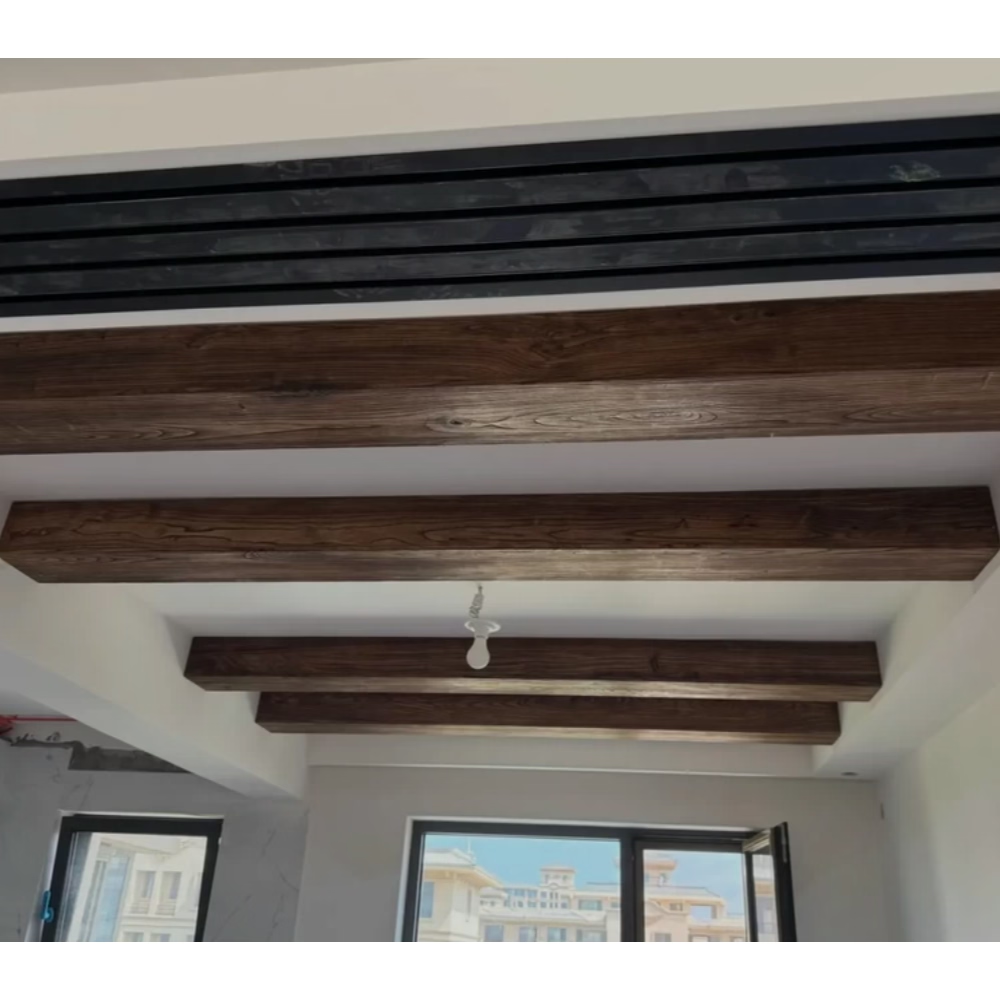
Why Sustainability Matters in Ceiling Beam Selection
Architects and builders face a straightforward question: is a polyurethane faux wood beam more or less sustainable than the solid timber it replaces?
The answer is nuanced and depends on the application, the transport distance, the design life, and the end-of-life pathway. This guide covers the full life-cycle assessment (LCA) for PU faux beams and maps every point where they can contribute to LEED v4.1 credits.
The short answer: PU faux beams are carbon-competitive with solid timber in most residential applications and significantly lower-carbon than solid timber in long-span and multi-story commercial applications — primarily because of weight.
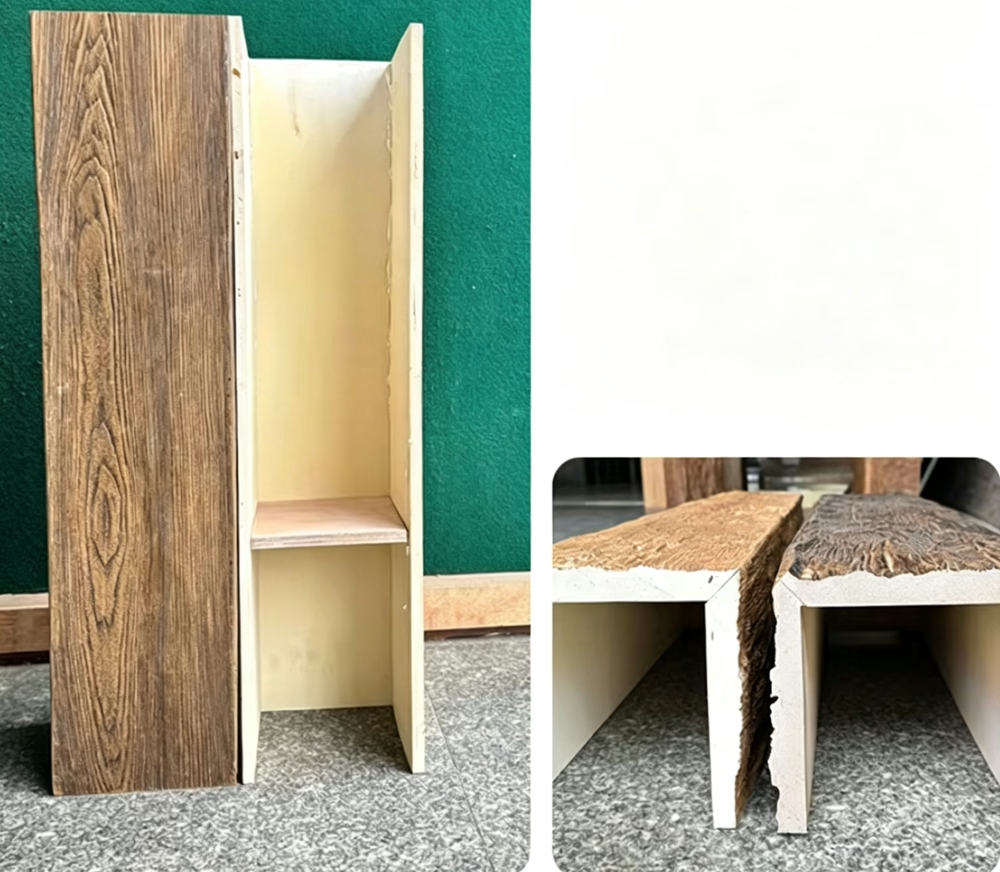
Life-Cycle Assessment: The Full Picture
A proper LCA compares all phases of a material's life:
- Raw material extraction — embodied carbon in the input materials
- Manufacturing — energy use, water use, waste
- Transportation — fuel consumption to the job site
- Installation — energy use for fastening (minimal for lightweight beams)
- Use phase — maintenance energy, replacement frequency
- End-of-life — landfill, recycling, incineration with energy recovery
Embodied Carbon Comparison (per linear foot, 6 in × 8 in profile)
| Material | GWP (kg CO₂e / linear ft) | Notes |
|---|---|---|
| Solid white oak | 8.2 | Logging, kiln drying, milling |
| Solid Douglas fir | 5.1 | Logging, kiln drying, milling |
| MDF (medium-density fiberboard) | 6.8 | Adhesive bonding, pressing |
| Plywood LVL | 7.4 | Laminated veneer, adhesive |
| PU faux beam (0.60 g/cm³) | 4.7 | Petrochemical feedstocks, molding |
| PU faux beam (recycled content) | 3.1 | 30% post-industrial PU recycled content |
| Steel beam (structural) | 12.6 | Blast furnace production |
A standard PU faux beam at 4.7 kg CO₂e/ft is 43% lower-carbon than solid white oak and 25% lower-carbon than Douglas fir on a per-foot basis. The primary advantage comes from the polyol and isocyanate feedstocks being lower-carbon than kiln-drying premium timber.
Transportation: The Weight Advantage
The single biggest sustainability advantage of PU beams is weight. Transport emissions scale directly with weight:
| Material (6 in × 8 in × 10 ft) | Weight | Truckload efficiency (ft per 40k axle) |
|---|---|---|
| Solid white oak | 92 lb | 435 beams |
| Solid Douglas fir | 68 lb | 588 beams |
| PU faux beam | 16 lb | ~2,500 beams |
| Steel beam | 180 lb | 222 beams |
A single 40,000 lb truck can carry ~2,500 PU beams versus 435 solid oak beams for the same payload weight. On a 1,500-mile delivery, PU beams generate roughly 5-6x less transport CO₂ per beam than solid oak.
Design Life: Replacement Frequency
Solid timber beams in residential applications have a design life of 30-50 years but often show visible surface checking, cracking or discoloration within 5-10 years without regular maintenance. A well-maintained PU faux beam has a design life of 50-80 years with a simple repaint cycle every 8-12 years.
Fewer replacements = lower lifetime carbon per year of service.
LEED v4.1 Credit Eligibility
PU faux beams can contribute to five LEED credits in a typical residential or light-commercial project:
MR Credit 2: Environmental Product Declarations (1 point)
PU beams with a product-specific Type III EPD (Environmental Product Declaration, per ISO 14025) can contribute to MR Credit 2. Our premium SKU line includes a product-specific EPD certified by UL Environment. Standard SKU EPDs are in development.
MR Credit 3: Sourcing of Raw Materials (1 point)
- PU foam made from bio-based polyols (e.g., soybean oil, castor oil) counts toward bio-based content. Some premium SKUs use up to 15% bio-based polyol, which satisfies the credit threshold of 10%.
- Post-industrial recycled PU foam content counts toward recycled content under the ISPM definition.
MR Credit 4: Recycled Content (1-2 points)
Beams with documented post-industrial recycled PU content can contribute to MR Credit 4. We offer a 30% recycled-content SKU that qualifies under LEED v4.1 ISPM rules.
EQ Credit 2: Low-Emitting Materials (1 point)
PU beams finished with low-VOC topcoats (≤50 g/L VOC) qualify for EQ Credit 2. All standard SKUs ship with water-based acrylic latex topcoats at under 15 g/L VOC — well below the threshold.
EA Credit 1: Energy Efficiency (indirect)
The reduced transport weight of PU beams contributes to lower Scope 3 transportation emissions, which factor into EA Prerequisite 1 (fundamental commissioning) and the integrative process credit pathway.
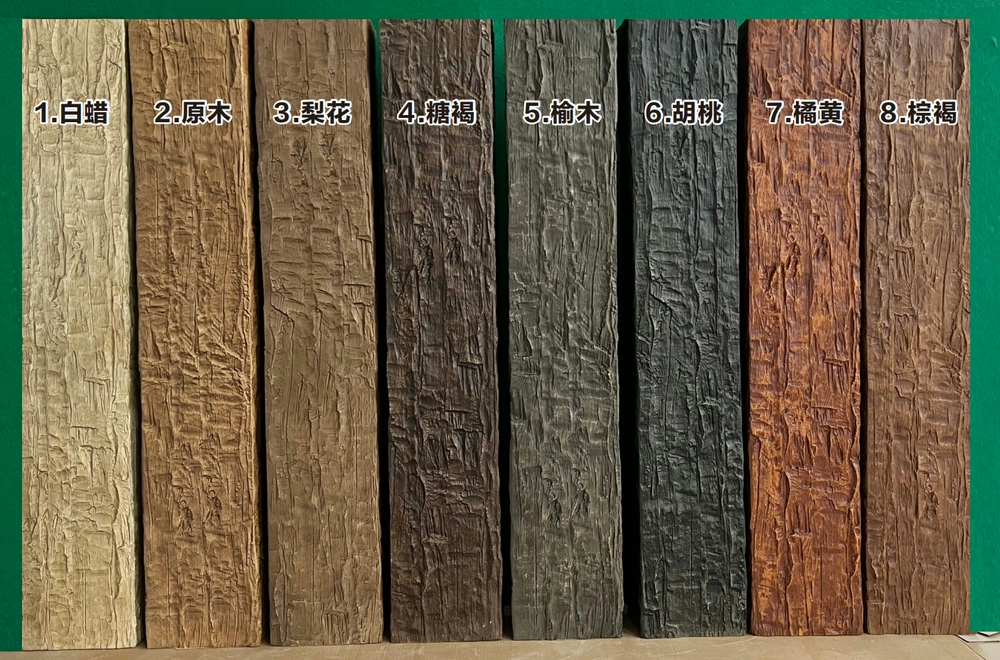
Recyclability: The Real Answer
The honest answer about PU beam recyclability is nuanced:
What can be recycled
- Post-industrial PU foam scraps from manufacturing: 100% recyclable into lower-grade foam products (packaging inserts, carpet underlay)
- Clean, unmixed PU foam (no paint, no adhesive): chemically recyclable via glycolysis back to polyol, which re-enters the foam supply chain
- End-of-life PU beams (with paint stripped): accepted by specialty recyclers in 12 US states
What cannot easily be recycled
- Painted or adhesive-bonded PU foam (paint and adhesive contaminate the recycling stream)
- Mixed-material beams (foam + wood substrate + metal brackets): must be separated before recycling
- Landfill-bound PU foam: does not biodegrade; persists for centuries
End-of-life pathways
| End-of-life pathway | Feasibility | CO₂ implication |
|---|---|---|
| Landfill | Always available | Negative (persistent, no recovery) |
| Incineration with energy recovery | Widely available | Neutral to slightly positive (energy offset) |
| Mechanical recycling (clean foam) | Specialty recyclers, 12 states | Positive (avoids virgin production) |
| Chemical recycling (glycolysis) | Limited, emerging | Very positive (closed-loop polyol) |
| Reuse as structural element | Not applicable | N/A (decorative only) |
The most realistic end-of-life pathway for a PU beam in 2026 is landfill or incineration with energy recovery — not ideal, but better than solid timber in a landfill (which generates methane as it decomposes slowly).
The emerging pathway is mechanical recycling for clean, paint-stripped beams, which is growing in availability.
Bio-Based Polyol Developments
ThePU industry is actively shifting toward bio-based polyols derived from:
- Soybean oil — largest-volume bio-polyol, 10-15% bio-content typical
- Castor oil — higher hydroxyl value, used for higher-density foams
- CO₂-based polyols (Bayer, CarbonC4X technology) — using captured CO₂ as feedstock
Bio-based polyols reduce the petroleum dependency of PU foam by 15-40% depending on the formulation. Our premium recycled-content SKU uses 20% bio-based polyol in the formulation, reducing the GWP by an additional 0.8 kg CO₂e/ft.
Green Building Standards Beyond LEED
Living Building Challenge (LBC)
LBC's Red List includes some isocyanates used in PU foam. For projects pursuing LBC certification, confirm the specific isocyanate type used in the beam formulation. HDI (hexamethylene diisocyanate) is not on the Red List; TDI (toluene diisocyanate) is on the Red List at certain concentrations.
Passive House (PHI / PHIUS)
PH projects focus on operational energy, not embodied carbon — so the sustainability advantage of PU beams in a Passive House project is primarily in reduced transport emissions and longer design life without replacement.
WELL Building Standard
WELL v2 covers indoor air quality rather than embodied carbon. PU beams with low-VOC topcoats (<15 g/L) support Feature 11 (VOC restriction) compliance.
Frequently Asked Questions
Are polyurethane faux beams actually recyclable?
Partially. Clean, paint-free PU foam is mechanically recyclable and chemically recyclable via glycolysis. Painted or adhesive-contaminated beams are difficult to recycle and typically go to landfill or incineration with energy recovery. The industry is actively building end-of-life recycling infrastructure, but it is not yet widely available.
What is the carbon footprint of a PU faux beam vs solid timber?
A standard PU faux beam (4.7 kg CO₂e/ft) is 43% lower-carbon than solid white oak (8.2 kg CO₂e/ft) and 25% lower-carbon than Douglas fir (5.1 kg CO₂e/ft) on a per-foot basis. The advantage is primarily from lower transport emissions (5-6x fewer trucks needed per beam) and a shorter manufacturing energy profile.
Can PU beams contribute to LEED certification?
Yes — through MR Credits 2, 3 and 4 (EPD, bio-based content, recycled content), EQ Credit 2 (low-VOC materials), and indirectly through EA Credit 1 via reduced Scope 3 transport emissions. Specific eligibility depends on the product SKU and project certification version.
Do bio-based PU beams perform as well as petroleum-based?
In our testing, bio-based polyol formulations at up to 20% bio-content show equivalent mechanical properties (density, compressive strength, flexural modulus) to 100% petroleum-based formulations. Above 20% bio-content, the foam cell structure becomes slightly more open and the density-to-strength ratio degrades slightly.
Will a PU beam reduce my project's overall carbon footprint?
For most residential projects, PU beams will slightly reduce the project's embodied carbon compared to solid timber. The transport weight advantage is real and measurable. For projects where the architect specifies a timber aesthetic without the structural requirement, PU is the lower-carbon choice.
How long do PU faux beams last compared to solid timber?
A well-maintained PU beam has a design life of 50-80 years with repainting every 8-12 years. A solid timber beam lasts 30-50 years structurally but shows visible cosmetic degradation within 5-10 years in most climates. Fewer replacements = lower lifetime carbon.
What is the most sustainable faux beam option you offer?
The 30% recycled-content SKU with 20% bio-based polyol has the lowest documented GWP at 3.1 kg CO₂e/ft — 62% lower than solid white oak. Lead time is 1 week longer than standard SKU. For projects with specific embodied carbon targets, this is the recommended spec.
Technical References
ASTM standards cited in every specification
Test Data
Lab results from internal testing program
Updated 2026
Reviewed against current product specs