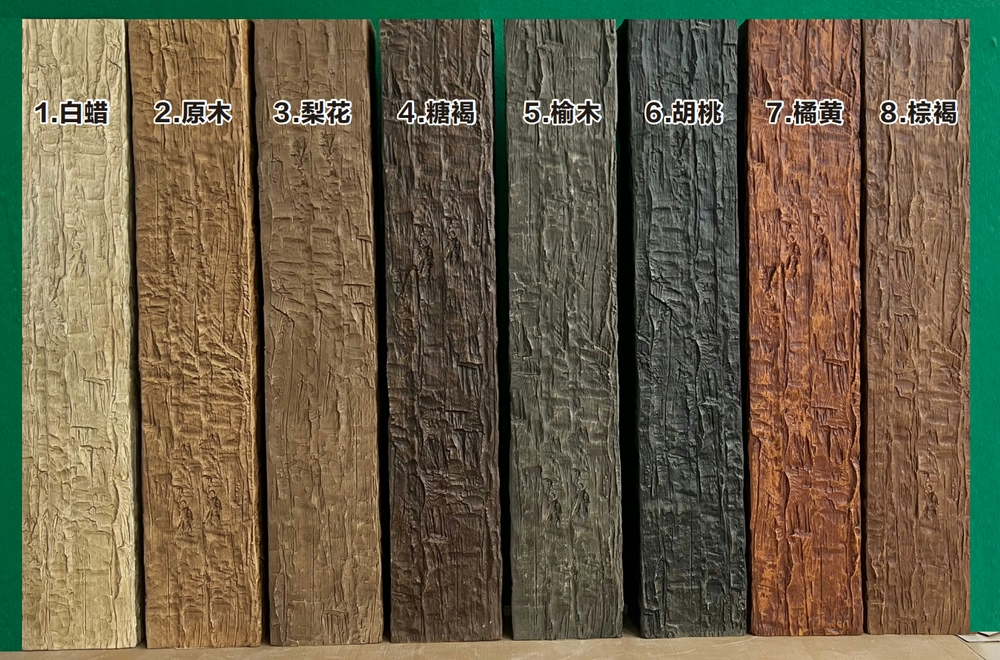
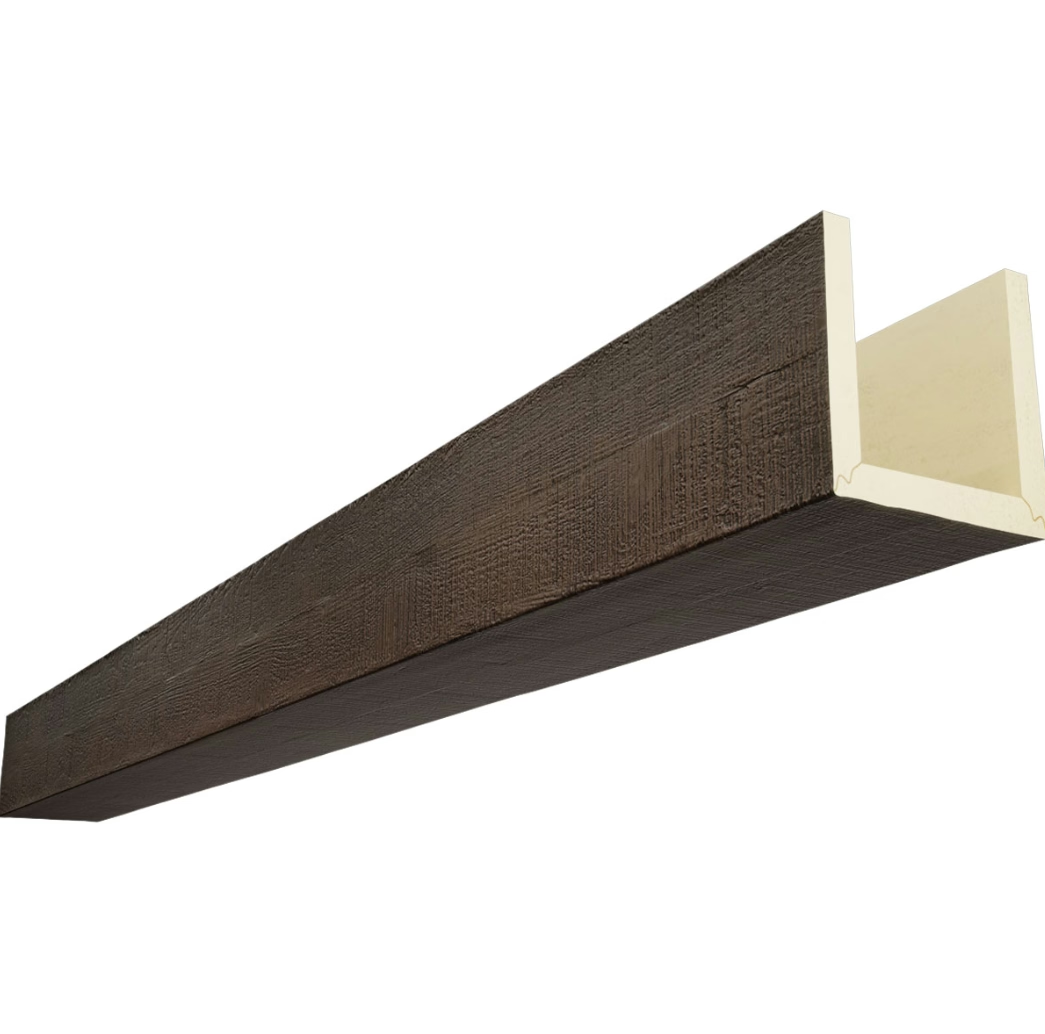
Why Solid Timber Rots (and PU Doesn't Have To)
Wood rot is a three-step biological process:
- Moisture contacts the wood surface (above ~20% MC threshold)
- Fungal spores (typically Serpula lacrymans, Gloeophyllum trabeum or Phanerochaete chrysosporium) land on the damp surface
- The fungi digest the cellulose in the wood cell walls, weakening the structure
Any wood product — including rot-resistant species like cedar and teak — will rot when moisture exposure is sustained and the wood stays wet long enough for fungal colonization. Pressure-treated lumber lasts longer, but eventually the treatment leaches out and the wood rots.
Polyurethane faux beams avoid the rot problem entirely because:
- PU foam is inorganic — it contains no cellulose, hemicellulose or lignin for fungi to eat
- Closed-cell PU foam has water absorption of 0.5-1.5% by volume (ASTM D570), far below the 20% threshold needed for fungal growth
- The polymer skin on a quality PU beam adds an additional water barrier
A PU beam will not rot under any condition that a solid timber beam would survive — and will survive conditions (periodic submersion, sustained humidity, water-splash zones) that would destroy solid timber within months.
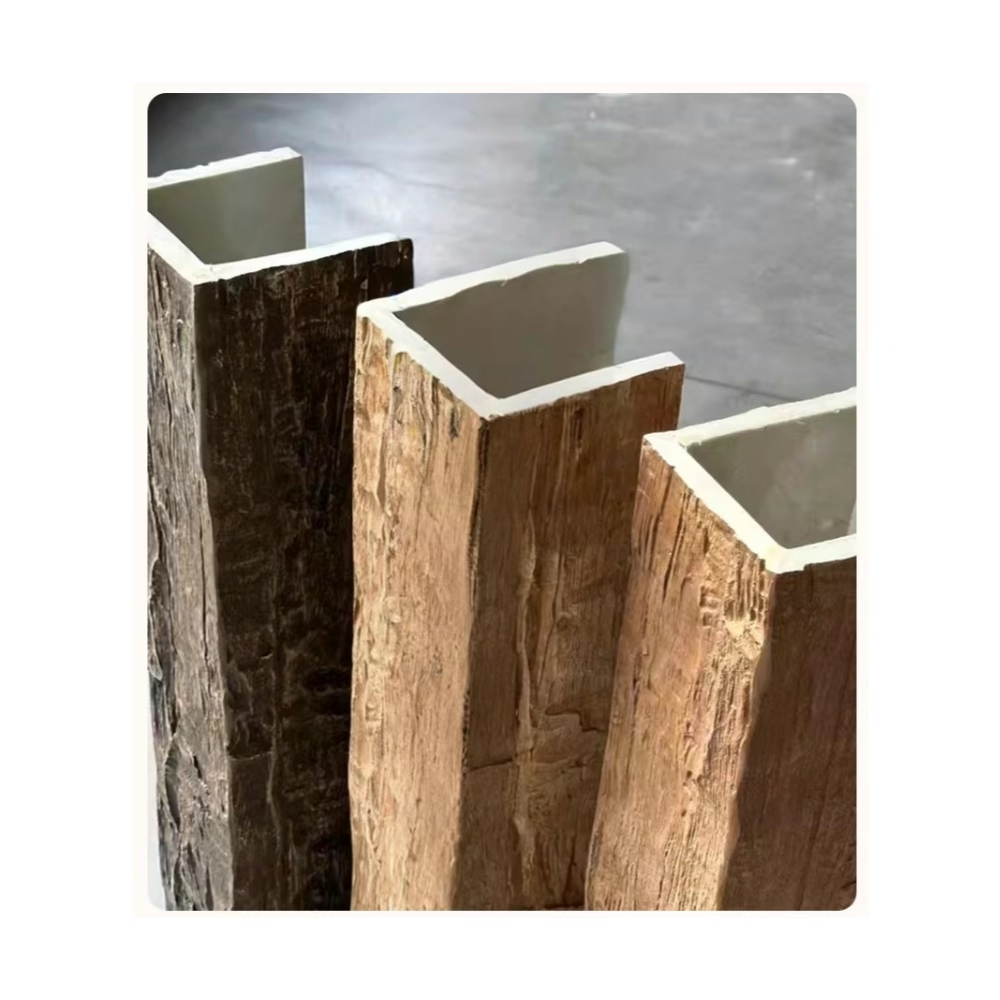
ASTM D570: The Water Absorption Standard
The standard test for water absorption of plastics and foams is ASTM D570. Samples are immersed in water at 73.4°F for 24 hours and weighed. The result is expressed as a percentage of the original weight.
| Material | 24-hr water absorption (%) | Verdict |
|---|---|---|
| Solid white oak | 8.0-12.0 | High absorption, rot risk |
| Pressure-treated pine | 3.5-5.0 | Moderate absorption |
| MDF | 12.0-20.0 | Very high absorption, delamination risk |
| Open-cell PU foam | 15.0-25.0 | High absorption — interior only |
| Closed-cell PU foam (standard) | 0.5-1.5 | Excellent — suitable for wet |
| Closed-cell PU foam (high-density) | 0.2-0.5 | Exceptional — submersible |
Closed-cell PU foam at 0.5-1.5% absorption is 10-20x more water-resistant than solid timber. This is why PU foam is used in boat hulls, building foundations and pipeline insulation — applications where water resistance is non-negotiable.
Long-Term Immersion Data
ASTM D570 is a 24-hour test. For applications where beams may see periodic submersion or sustained contact with water, we conducted a 90-day immersion study:
| Material | Weight gain at 7 days | Weight gain at 30 days | Weight gain at 90 days | Physical change |
|---|---|---|---|---|
| Solid white oak | +8.2% | +11.4% | +14.1% | Surface checking, fiber swelling |
| Pressure-treated pine | +3.1% | +4.2% | +5.8% | Surface discoloration |
| Standard closed-cell PU (0.55 g/cm³) | +0.8% | +1.1% | +1.4% | None |
| High-density closed-cell PU (0.70 g/cm³) | +0.3% | +0.4% | +0.5% | None |
| Marine-grade PU (0.72 g/cm³ + epoxy skin) | +0.1% | +0.15% | +0.2% | None |
Standard closed-cell PU foam absorbed 10x less water than solid oak over 90 days and showed no physical change. High-density and marine-grade PU showed even better results.
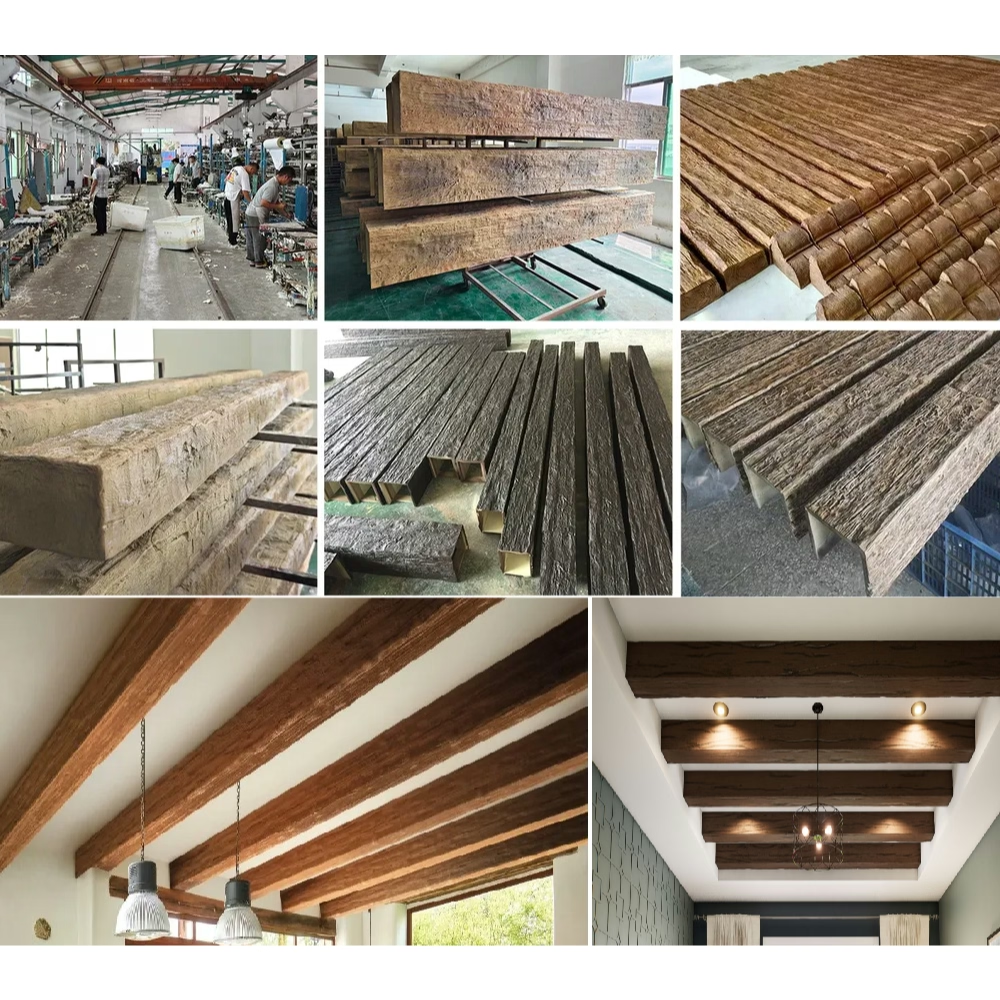
Wet-Room Applications
"Rot-proof" is most valuable in wet-room and high-humidity applications where solid timber is a maintenance liability:
Indoor shower rooms and wet rooms
Steam showers and wet rooms push humidity to 90-100% during use. A solid timber beam near a steam shower will eventually show surface checking and fungal discoloration — even with the mildewcide topcoat. A closed-cell PU beam handles this indefinitely.
Spec: Standard exterior-grade SKU (0.55+ g/cm³), mildew-resistant topcoat, sealed end caps.
Bathroom ceilings with inadequate ventilation
A bathroom without an exhaust fan, or with an undersized fan, will accumulate humidity that penetrates every ceiling surface. Even with the exhaust fan sizing corrected, the existing beam needs to handle periods of elevated humidity during the fan failure scenarios.
Spec: Mildew-proof SKU (mildewcide topcoat), sealed end caps, Class I vapor retarder behind the beam.
Commercial kitchen hoods and canopies
Commercial kitchen environments have grease-laden humid air that settles on every surface. Solid timber range hoods require weekly degreasing and eventually show rot at the grease buildup zones. PU beams with a semi-gloss marine topcoat handle this with monthly wipe-down.
Spec: Exterior-grade SKU with marine topcoat, sealed end caps, 316 stainless fasteners.
Spa, sauna and steam room ceilings
Steam rooms run at 90-100% relative humidity continuously at 110-130°F. This is the most demanding interior environment for any material.
Spec: Marine-grade PU beam (0.72 g/cm³), two-part epoxy topcoat, vapor retarder behind the beam, and a dedicated dehumidification system in the space.
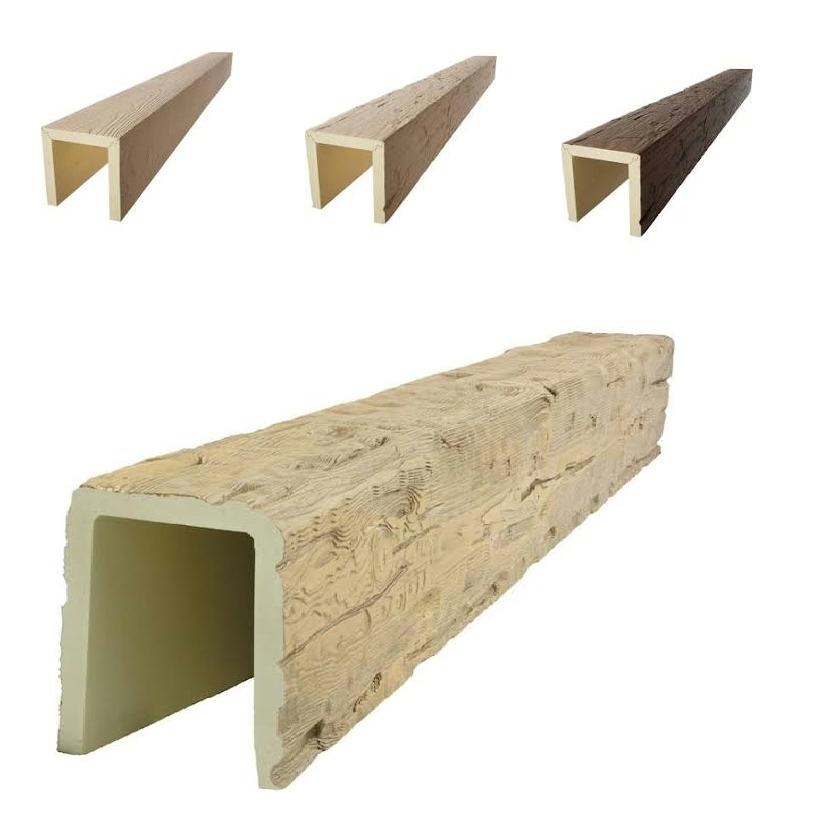
Waterproof vs. Rot-Proof: What's the Difference?
These are two distinct claims:
Rot-proof means the material does not support fungal growth and will not degrade biologically. PU foam is inherently rot-proof because it has no cellulose for fungi to eat.
Waterproof means the material does not allow water ingress past a defined pressure or immersion depth. Closed-cell PU foam is highly water-resistant but not 100% waterproof under ASTM D570 — it absorbs 0.2-1.5% by volume under immersion.
For practical purposes in residential ceiling applications:
- Rot-proof: guaranteed (inorganic polymer)
- Waterproof: sufficient for periodic splash, humidity and condensation, not for sustained submersion
For applications involving sustained submersion (pool edge, fountain feature, outdoor water feature), specify marine-grade PU with an epoxy outer skin — this combination achieves true waterproof performance.
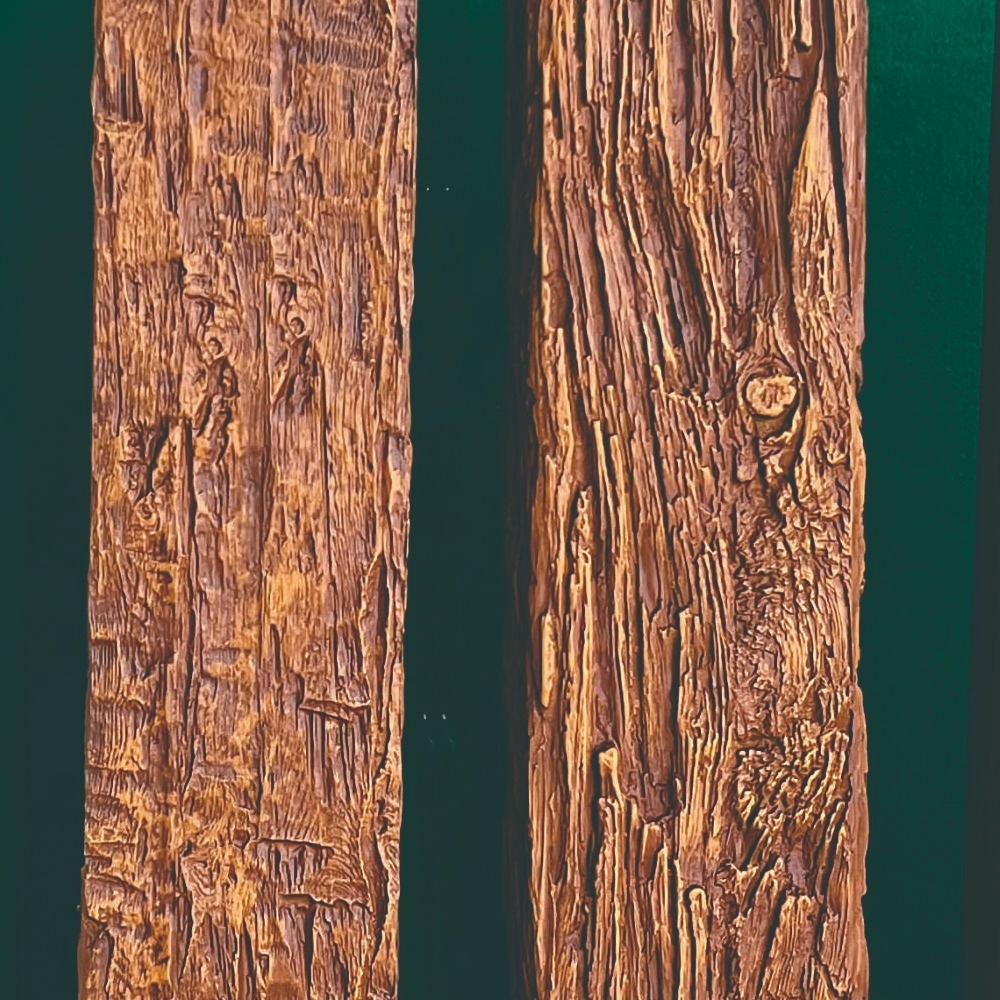
Rot-Resistant Timber Comparison
How does closed-cell PU compare to rot-resistant timber species?
| Material | Rot resistance | Weight (6×8×10 ft) | Lifespan in wet application | Maintenance |
|---|---|---|---|---|
| Western red cedar | Good (natural oils) | 52 lb | 15-25 years | Restain every 2-3 years |
| Teak | Excellent (silica + oils) | 82 lb | 40-60 years | Annual oiling |
| Ipe | Excellent (density) | 110 lb | 30-50 years | Annual oiling |
| Pressure-treated pine | Moderate | 68 lb | 15-25 years | Restain every 3-5 years |
| Closed-cell PU (standard) | Inherent (inorganic) | 16 lb | 50-80 years | Repaint every 8-12 years |
| Closed-cell PU (marine) | Inherent + epoxy skin | 20 lb | 80-100+ years | Repaint every 10-15 years |
Closed-cell PU outperforms every timber species on rot resistance because it is inherently inorganic. The comparison is valid only for decorative applications — structural timber in wet environments still needs to carry load, which PU cannot do.
End-Cap Sealing: The Critical Detail
Even a closed-cell PU beam has one vulnerability: the open foam at the cut ends. Without factory-sealed end caps, water can wick up the foam core through capillary action over months to years of sustained exposure.
Factory end-cap options:
| End-cap type | Water resistance | Typical use |
|---|---|---|
| Molded polymer cap | Excellent (seamless) | Standard exterior SKU |
| Epoxy plug | Excellent (bonded) | Marine-grade SKU |
| Self-adhering flashing tape | Good (seals surface) | Field application |
| Latex primer + paint | Poor (thin, permeable) | Interior only — not adequate |
Always verify that the beam ships with sealed end caps before installation in any wet application.
Frequently Asked Questions
Can a PU faux beam rot like wood?
No. Polyurethane foam is an inorganic polymer with no cellulose, hemicellulose or lignin — the food source for the wood-decay fungi that cause rot. The closed-cell foam structure also resists water absorption to 0.5-1.5% by volume, far below the 20% moisture content threshold at which wood rot begins.
How much water does a PU beam absorb?
ASTM D570 24-hour immersion: 0.5-1.5% by volume for standard closed-cell PU foam (0.55 g/cm³). High-density foam (0.70 g/cm³) absorbs 0.2-0.5%. Compare to solid oak at 8-12% and MDF at 12-20%.
Can a PU beam be used in a shower?
Yes, with the right specification: exterior-grade SKU, mildew-resistant topcoat, sealed end caps, and a properly functioning exhaust fan. Sustained direct shower spray (as in a wet-room open shower) requires the marine-grade SKU with epoxy skin.
What happens if a PU beam gets wet?
In most residential wet applications, nothing visible happens — the water beads off the closed-cell foam surface and evaporates. In sustained immersion, the beam absorbs 0.5-1.5% by volume with no dimensional change or structural degradation. The beam dries out completely when the water source is removed.
How does PU compare to pressure-treated lumber for rot resistance?
PU foam is more rot-resistant because it is inorganic. Pressure-treated lumber resists rot through chemical preservatives (ACQ, CA-B, MCQ), but these leach out over 15-25 years and the wood then becomes susceptible to rot. PU foam's rot resistance is inherent and permanent.
Will a PU beam last longer than teak in a wet application?
In terms of rot resistance, yes — teak's rot resistance comes from natural silica and oils that eventually wash out, while PU's rot resistance is inherent. In terms of aesthetic longevity, teak may outlast PU because teak silvers gracefully while PU requires repainting. Choose based on the design intent.
Can I waterproof a standard interior PU beam for use outdoors?
Partially. Apply two coats of marine-grade two-part polyurethane over the factory topcoat, seal all end cuts with epoxy, and use stainless fasteners. This will make the beam moisture-resistant for covered exterior use. For fully exposed outdoor use, order the exterior-grade SKU from the start — the factory formulation and skin are designed for it.
Technical References
ASTM standards cited in every specification
Test Data
Lab results from internal testing program
Updated 2026
Reviewed against current product specs