
The evolution of polyurethane-based architectural products has reached an impressive milestone with the development of reinforced composite faux wood beams. These engineering advancements address the primary concerns that previously limited broader adoption of polyurethane beams in structurally demanding applications. By incorporating sophisticated reinforcement strategies, manufacturers now offer products that combine the visual appeal of natural timber with performance characteristics suitable for commercial environments and load-bearing scenarios.
Understanding the technical foundation of reinforced composite construction illuminates why these products represent such significant progress. Traditional polyurethane beams relied primarily on the material's inherent properties for structural support. While lightweight and dimensionally stable, standard polyurethane has practical limits regarding load capacity and impact resistance. Reinforced composite technology overcomes these limitations through strategic integration of additional materials that provide enhanced strength without substantially increasing weight.
Engineering Principles Behind Reinforcement
The reinforcement methodology employed in contemporary composite beams draws from principles established in other engineered wood products like laminated veneer lumber and oriented strand board. However, the specific implementation for polyurethane applications involves unique considerations related to material compatibility, thermal expansion characteristics, and aesthetic requirements.
Internal reinforcement typically involves steel or aluminum structural members positioned within the beam cavity. These metal cores provide exceptional load-bearing capacity while remaining completely hidden from view. The surrounding polyurethane shell delivers the authentic wood appearance that makes these products desirable, while the internal framework delivers the structural performance that project specifications require.
Fiber-reinforced polymer composites offer an alternative reinforcement approach that provides substantial strength improvements without the thermal conductivity concerns associated with metal cores. These composite materials resist corrosion, maintain consistent dimensions across temperature variations, and bond effectively with polyurethane during the manufacturing process. The result is a unified beam structure that performs reliably under sustained loads and dynamic stress conditions.
Load Capacity and Structural Applications
Quantifying the load capacity of reinforced composite beams requires understanding the specific reinforcement configuration and beam dimensions. Manufacturers provide load tables that specify maximum uniform load ratings, point load limits, and deflection characteristics for each product line. These specifications enable engineers and architects to select appropriate beams for specific applications with confidence.
For ceiling applications where beams span substantial distances, reinforced composite construction allows profiles that would be impractical with standard polyurethane or even natural timber. The internal reinforcement effectively counteracts the bending forces that cause deflection, enabling longer spans with acceptable performance. This capability expands the design possibilities available to architects working on spaces with open floor plans or unconventional configurations.
Commercial applications frequently involve specifications that standard products cannot meet. Restaurants, retail spaces, and hospitality venues often require ceiling elements capable of supporting signage, lighting fixtures, or decorative elements. Reinforced composite beams accommodate these requirements while maintaining the aesthetic qualities that make wood-look beams so appealing to designers and property owners.

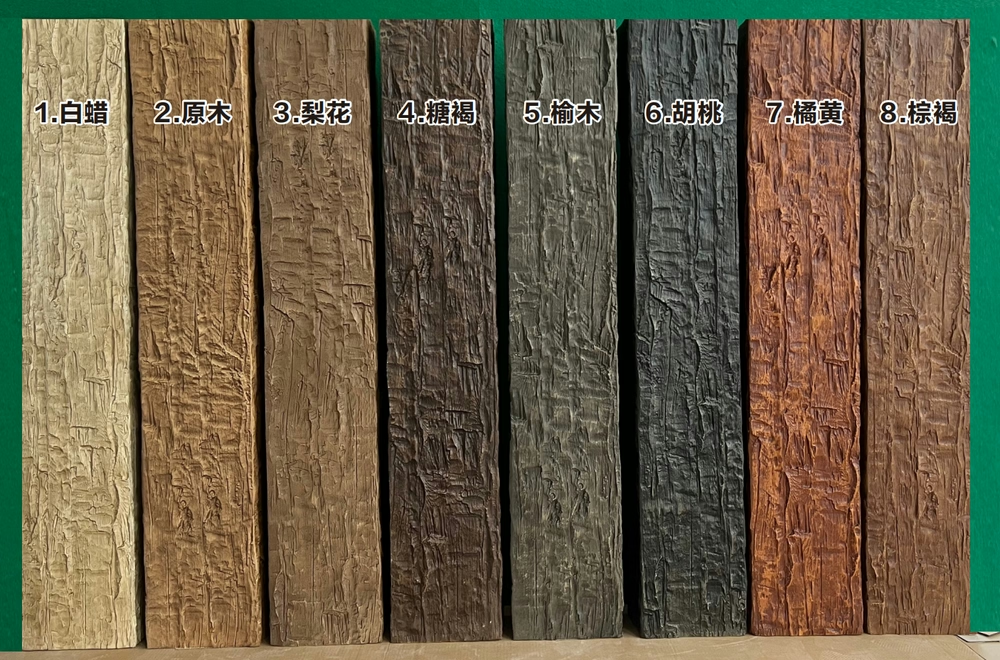
Installation Considerations for Reinforced Products
Installing reinforced composite beams requires attention to specific factors that differ from standard beam installation procedures. The additional weight of internal reinforcement affects handling requirements and mounting specifications. Installers should verify that mounting hardware and support structures accommodate the actual weight of reinforced beams rather than relying on estimates derived from non-reinforced products.
Joining techniques for reinforced beams may require modification compared to standard installation methods. The internal reinforcement creates challenges for notching, cutting, and splicing operations that installers typically perform on-site. Pre-planning and factory-fabricated components can minimize on-site modification requirements, producing cleaner results and stronger finished installations.
Connection details deserve particular attention when working with reinforced beams. The metal or composite internal structure requires appropriate hardware and techniques to ensure secure attachment to supporting structures. Hardware manufacturers offer specialized products designed for engineered wood and composite applications that provide reliable connections while accommodating the specific properties of reinforced polyurethane.
Applications Across Commercial and Residential Sectors
The enhanced durability of reinforced composite beams opens possibilities across diverse application categories. Commercial interiors benefit from the ability to specify longer spans, support heavier loads, and specify products that withstand the demanding conditions of high-traffic environments. Restaurants appreciate beams that maintain their appearance despite exposure to cooking fumes and temperature fluctuations, while retail spaces value the authentic wood aesthetic combined with resistance to impacts from displays and equipment.
Healthcare and educational facilities represent growing markets for reinforced composite beams. These environments demand products that meet stringent fire safety requirements while providing the warm, welcoming aesthetics that contribute to positive occupant experiences. Reinforced polyurethane beams can be manufactured to meet relevant fire codes while delivering the visual qualities that make wood-look products so desirable.
Residential applications benefit equally from the enhanced performance characteristics. Homeowners seeking to create dramatic architectural features in great rooms, home theaters, or outdoor living spaces can specify reinforced beams with confidence that these elements will perform reliably over decades of use. The ability to support ceiling fans, hanging chairs, or other functional elements without additional structural intervention simplifies design implementation and reduces construction costs.
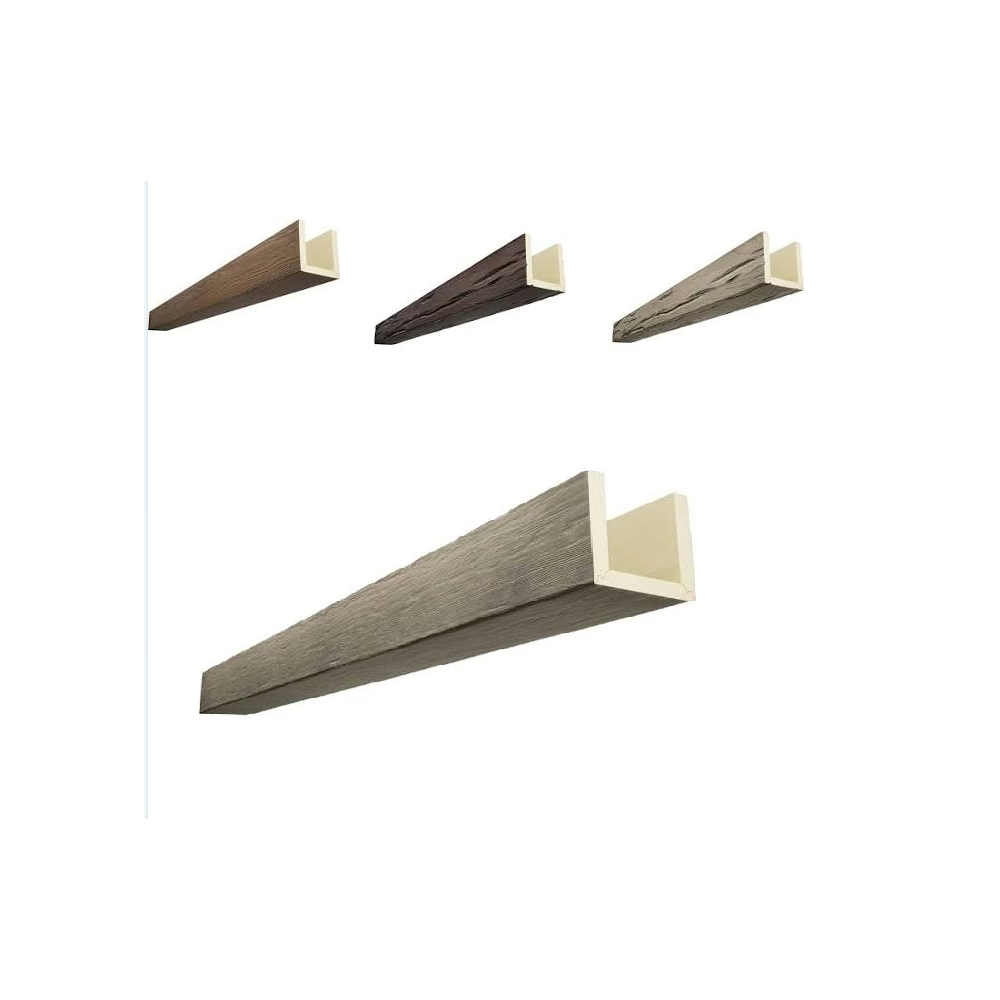
Quality Assessment and Supplier Selection
Evaluating reinforced composite beams requires understanding the specific reinforcement technology employed by different manufacturers. Product literature should clearly describe internal reinforcement materials, load capacity specifications, and applicable warranties. Reputable suppliers provide technical documentation that enables informed product selection and proper specification.
Physical examination of sample products reveals important quality indicators. Joints between reinforcement and polyurethane should be seamless and secure, indicating proper manufacturing processes. Surface finish quality reflects overall production standards and attention to detail. Structural integrity can be assessed through careful inspection of connections and terminations visible at beam ends.
Warranty coverage provides insight into manufacturer confidence in product durability. Extended warranties that cover structural performance demonstrate that suppliers stand behind their reinforcement technology. Industry certifications and testing documentation offer additional verification of performance claims, providing assurance that beams will perform as specified under intended use conditions.
The advancement of reinforced composite technology has fundamentally expanded the application range for polyurethane faux wood beams. By delivering enhanced durability without sacrificing aesthetic qualities, these products serve demanding applications that previously required alternative materials. Design professionals and property owners can now specify beams with confidence, knowing that performance and beauty need not be mutually exclusive.
Technical References
ASTM standards cited in every specification
Test Data
Lab results from internal testing program
Updated 2026
Reviewed against current product specs


