Strategic supply chain partnerships have become essential competitive advantages for businesses operating in the global marketplace. For architectural ceiling beams, these partnerships determine not only procurement economics but also operational capabilities that affect ability to serve customers effectively. Developing relationships with genuinely strategic supply chain partners enables businesses to compete more effectively while reducing operational complexity.
The transition from transactional purchasing to strategic partnership requires shifts in both supplier and buyer behaviors. Strategic partnerships involve mutual commitment, information sharing, and collaborative problem-solving that transactions do not include. Suppliers capable of partnership relationships demand buyers who approach relationships professionally, creating mutual benefits that pure transactions cannot generate.
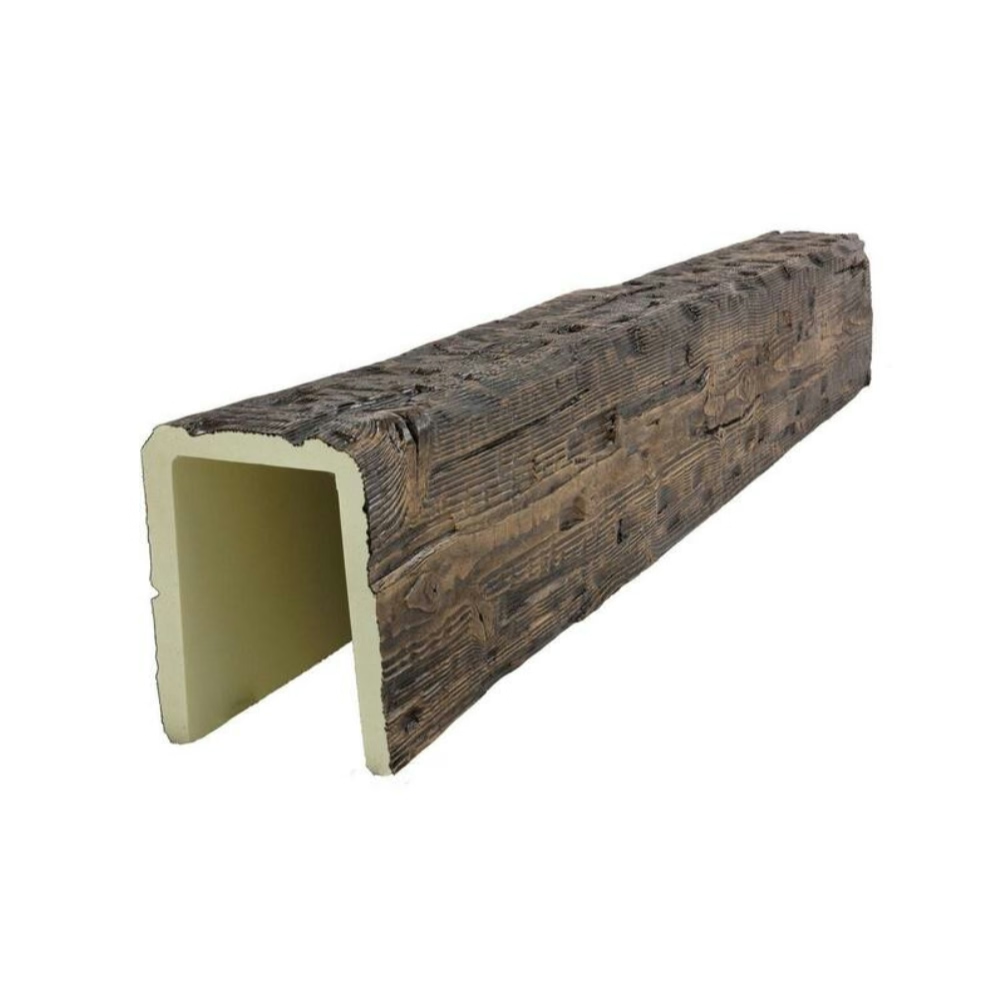
Architectural ceiling beams present particular partnership opportunities given the combination of aesthetic importance, performance requirements, and logistics complexity. Suppliers who understand these product characteristics provide value beyond simple product provision, becoming extensions of buyer operations that enhance competitive positioning.
Partnership Development Framework
Effective partnership development follows systematic approaches that establish foundations for productive long-term relationships. Initial supplier evaluation identifies candidates capable of partnership-level performance. This evaluation examines capabilities, culture fit, and mutual complementarity that enable successful collaboration.
Formal partnership agreements articulate mutual commitments, expectations, and performance standards. These agreements provide frameworks for relationship management while establishing accountability that informal relationships lack. Professional suppliers and buyers recognize the value of documented partnership frameworks.
Joint planning activities establish shared understanding of business direction, market evolution, and opportunity development. Regular strategic discussions maintain alignment as circumstances change. Suppliers who participate actively in joint planning demonstrate partnership commitment that transactional vendors cannot match.
Supply Chain Visibility
Strategic partnerships enable visibility across supply chains that improves planning and execution. Demand forecasting shared with suppliers enables production planning that supports buyer inventory requirements. This visibility prevents both stockouts and excess inventory that result from poor information flow.
Production status communication provides early warning of potential supply issues. Rather than learning about problems when shipments are delayed, strategic partnerships provide awareness of emerging issues while remediation remains possible. This early warning capability enables proactive response that protects buyer operations.
Inventory visibility across supply chain stages helps buyers manage customer commitments with confidence. Knowing where products are in transit, what quantities are available at distribution points, and when additional supply will arrive enables accurate customer communication and commitment.

Collaborative Problem-Solving
Strategic partnerships transform problem resolution from adversarial exchanges into collaborative efforts. When issues arise, partners work together to address root causes and prevent recurrence rather than assigning blame. This collaborative orientation produces better outcomes while preserving relationship quality.
Quality issues receive joint attention that identifies systemic problems requiring systemic solutions. Information sharing about quality performance enables continuous improvement that benefits both parties. Strategic partners view quality challenges as improvement opportunities rather than relationship threats.
Supply disruptions require coordinated response that minimizes impact on final customers. Strategic partnerships enable information sharing and resource coordination that reactive relationships cannot achieve. This disruption response capability protects buyer customer relationships during challenging circumstances.
Strategic Inventory Management
Vendor-managed inventory programs transfer some inventory planning responsibility to suppliers who possess relevant expertise and visibility. These arrangements can reduce buyer inventory investment while improving availability, though they require trust and appropriate contractual frameworks.
Demand smoothing collaboration helps suppliers manage production efficiently while supporting buyer inventory requirements. Sharing seasonal patterns, promotional plans, and market intelligence enables suppliers to anticipate demand that improves their operations while ensuring buyer supply.
Safety stock positioning across supply chains provides buffer against demand and supply variability. Strategic partners collaborate on safety stock levels that protect service levels while minimizing working capital requirements. This balanced approach optimizes inventory investment across the partnership.

Long-Term Value Creation
Strategic partnerships generate value that extends beyond individual transaction economics. Relationship equity accumulates over time, providing benefits that strengthen partnership value. Both parties benefit from this equity accumulation, creating self-reinforcing incentives for partnership investment.
Innovation collaboration produces new products, improved processes, and enhanced capabilities that benefit both parties. Strategic partners share market intelligence, technical expertise, and development investment that generates innovations unavailable through transactional relationships.
Competitive advantages result from partnership capabilities that competitors cannot easily replicate. These advantages manifest in better pricing, superior service, exclusive products, and operational efficiency that translate into market success. Strategic partnerships become strategic assets that support business strategy.
Partnership Health Assessment
Regular partnership assessment evaluates relationship health and identifies improvement opportunities. Performance metrics, relationship quality indicators, and strategic alignment assessment collectively reveal partnership status. Honest assessment enables course correction that maintains partnership value.
Continuous improvement commitments ensure that partnerships evolve rather than stagnating. Identifying enhancement opportunities and implementing improvements keeps partnerships fresh and valuable. Suppliers who commit to continuous improvement demonstrate partnership maturity that benefits both parties.
Exit and transition planning acknowledges that partnerships may need to change over time. Understanding how partnerships conclude gracefully, if necessary, protects both parties while enabling relationship evolution. Professional approach to potential transitions demonstrates partnership respect.
Strategic supply chain partnerships for architectural ceiling beams provide capabilities that enable competitive success in demanding markets. By developing relationships systematically, investing in partnership quality, and managing relationships professionally, businesses build supply chain advantages that translate into market success. The investment in partnership development pays dividends across ongoing operations while creating strategic assets that support long-term business objectives.
Technical References
ASTM standards cited in every specification
Test Data
Lab results from internal testing program
Updated 2026
Reviewed against current product specs