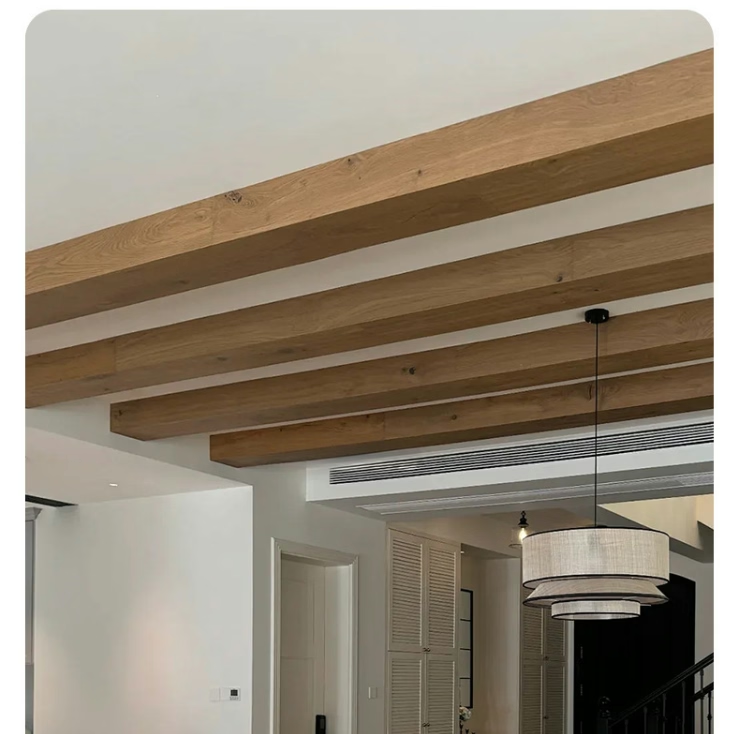
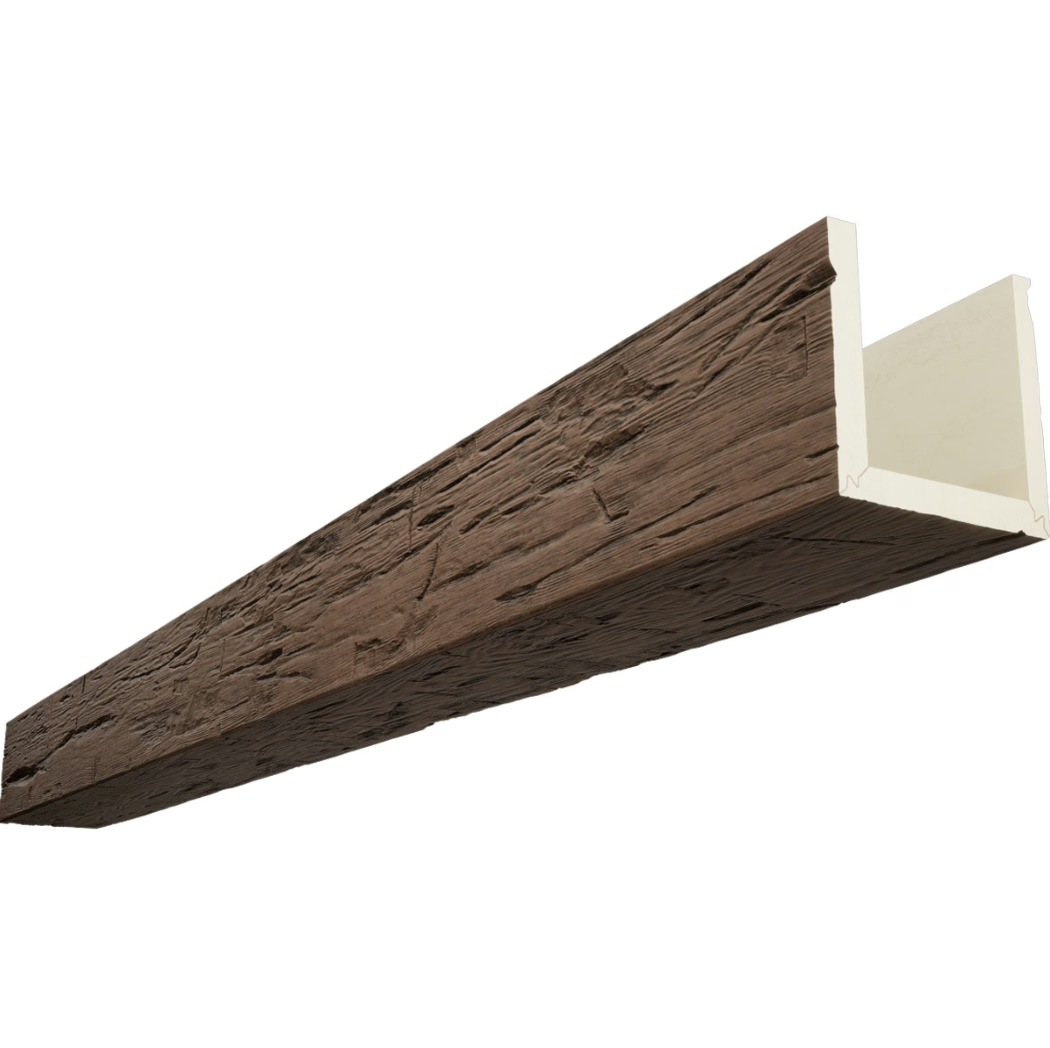
Commercial procurement of construction and finishing materials involves complexities that residential purchasing does not face. Large quantities, tight timelines, specification compliance, and consequential damages for failure create risks that sophisticated buyers have learned to address through structured procurement solutions. Faux timber beam bulk orders present these challenges in concentrated form, making risk-free procurement approaches essential for commercial buyers seeking favorable pricing without unacceptable exposure.
The economic case for bulk purchasing rests on straightforward principles: larger orders justify manufacturer price concessions that smaller orders cannot access. Unit costs decrease as order quantities increase, creating savings that accumulate significantly across substantial purchases. For projects requiring numerous beams—restaurant renovations, hotel lobbies, multi-unit residential developments—bulk procurement can substantially reduce material costs while ensuring consistent product availability throughout installation.
Risk-free procurement frameworks address the specific concerns that commercial buyers face when committing to large purchases. Product quality verification before full commitment, payment protection mechanisms, delivery guarantees, and defect resolution processes all contribute to procurement approaches that enable favorable pricing while managing buyer exposure. Understanding these mechanisms helps buyers negotiate terms that protect their interests while capturing the economic benefits bulk purchasing offers.
Sample-based qualification represents the foundation of risk-free bulk procurement. Before committing to full orders, commercial buyers should obtain samples that accurately represent bulk product quality. These samples allow inspection of surface texture, color consistency, and physical characteristics that affect installation and appearance. Reputable suppliers provide samples at nominal cost or no charge, recognizing that qualified samples are essential for successful bulk transactions.

Specification documentation protects buyers by establishing clear quality standards that bulk products must meet. Written specifications covering dimensions, surface finish, color requirements, and physical characteristics create objective criteria for acceptance evaluation. When products arrive, inspection against specifications determines whether acceptance is appropriate or whether rejection and replacement are warranted. This documentation prevents disputes about whether products meet requirements.
Payment protection mechanisms shield buyers from supplier failure or product non-delivery. Escrow arrangements, payment guarantees, and documented payment terms all contribute to protected transactions. The specific mechanism matters less than the underlying principle—buyers should not release full payment until products are received and verified, and payment terms should reflect the risk distribution both parties accept.
Delivery guarantees address the timing risks that large projects face. Construction schedules typically cannot accommodate significant material delays without costly resequencing and extended overhead. Procurement terms should specify delivery dates with meaningful consequences for non-compliance, ensuring that suppliers prioritize bulk orders appropriately. For critical timelines, liquidated damages provisions create financial incentives that motivate on-time delivery.
Defect resolution processes define how problems that emerge after delivery are addressed. While sample qualification should prevent quality issues, some characteristics may not be apparent until installation or extended exposure. Clear terms for reporting defects, obtaining replacements, and recovering costs associated with defective materials protect buyers from bearing losses caused by supplier failures.
Volume pricing structures should be documented clearly before order commitment. Unit prices at different quantity tiers, minimum order requirements, and price-lock periods all affect the economics of bulk purchasing. Written confirmation of agreed pricing prevents disputes that verbal agreements might create, particularly for orders that extend across multiple deliveries or extended timeframes.
Supply continuity guarantees address concerns about product availability for future needs. Commercial buyers with ongoing projects or maintenance requirements need assurance that matching products will remain available. Contractual commitments for continued availability, even if at adjusted pricing, provide this assurance while allowing suppliers flexibility in cost recovery.
Return policies for bulk orders merit attention despite the qualification processes designed to prevent problems. Unused materials, overage from estimation, and specification changes all create situations where bulk-ordered materials may no longer be needed. Understanding return terms before ordering enables planning that minimizes exposure to these scenarios.
Communication protocols establish clear lines for order tracking, problem escalation, and ongoing coordination. Commercial procurement relationships benefit from designated contacts, regular status updates, and defined escalation paths when issues arise. These protocols prevent the communication breakdowns that often compound procurement problems.
The reputation and track record of potential suppliers significantly affects procurement risk levels. Buyers should research supplier history, including previous commercial clients, project references, and any documented quality or reliability issues. This due diligence provides evidence of likely future performance that supplement contractual protections.
Technology platforms increasingly facilitate risk-free B2B procurement through automated tracking, documentation, and dispute resolution. Online procurement systems may provide built-in protections that simplify risk management. Understanding available platform capabilities helps buyers leverage technology appropriately while maintaining human oversight of significant transactions.
Professional procurement assistance may be appropriate for very large orders or complex commercial projects. Procurement specialists, construction managers, and design professionals with commercial purchasing experience can identify risks and negotiate protections that general buyers might overlook. The cost of professional assistance typically represents a small fraction of the value it protects.
Technical References
ASTM standards cited in every specification
Test Data
Lab results from internal testing program
Updated 2026
Reviewed against current product specs