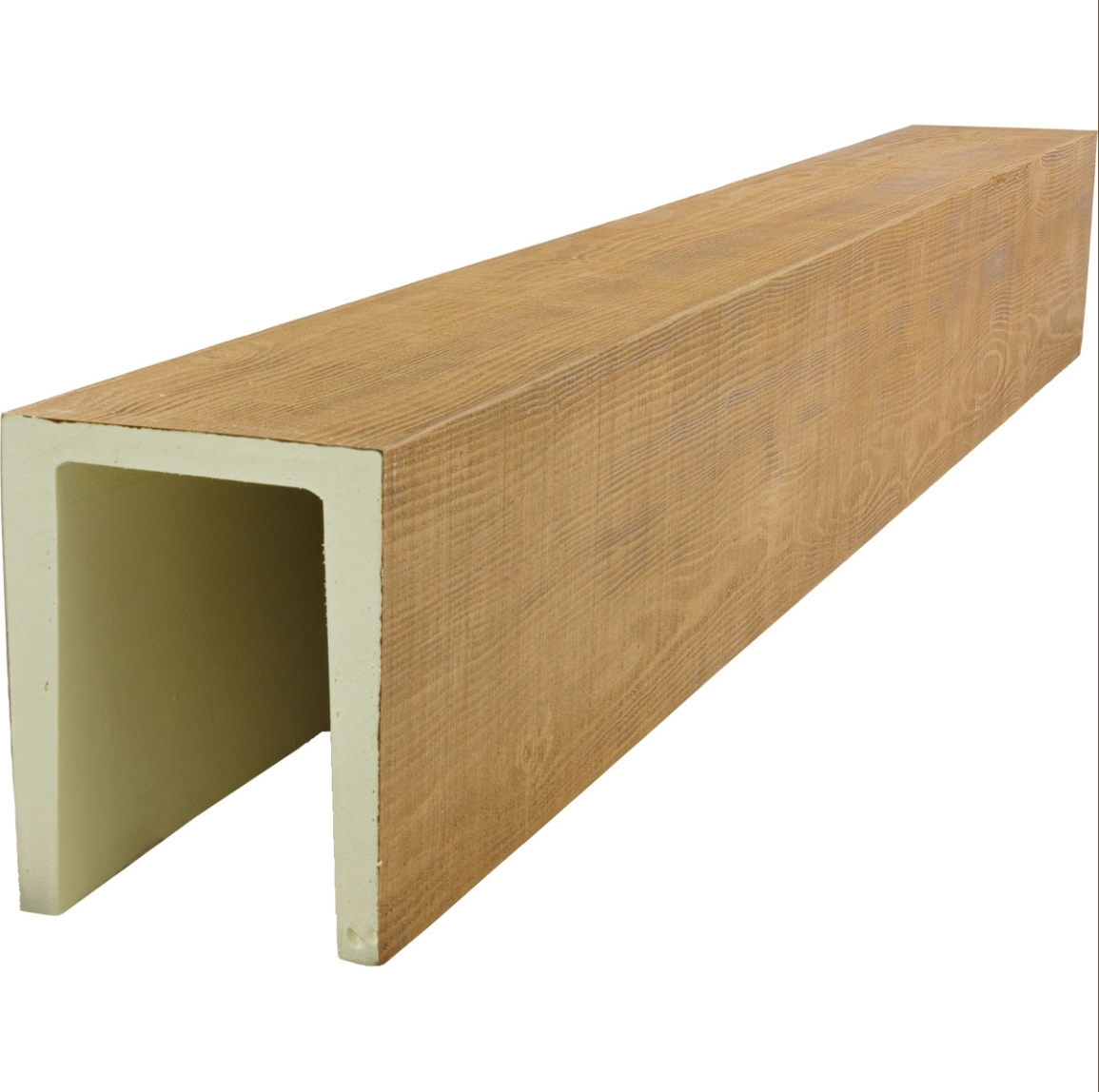
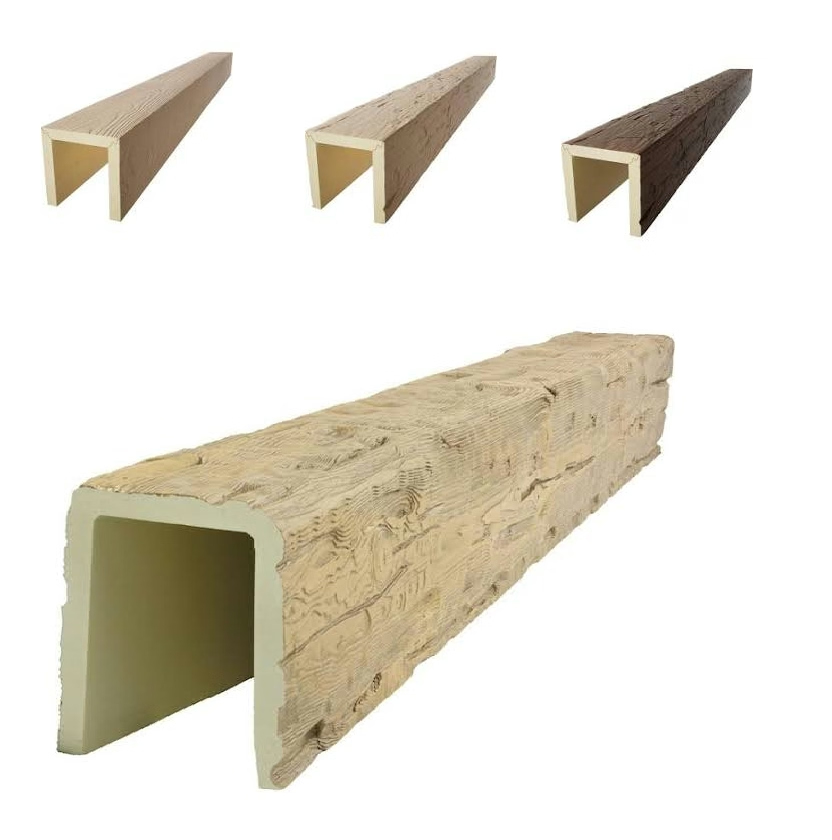
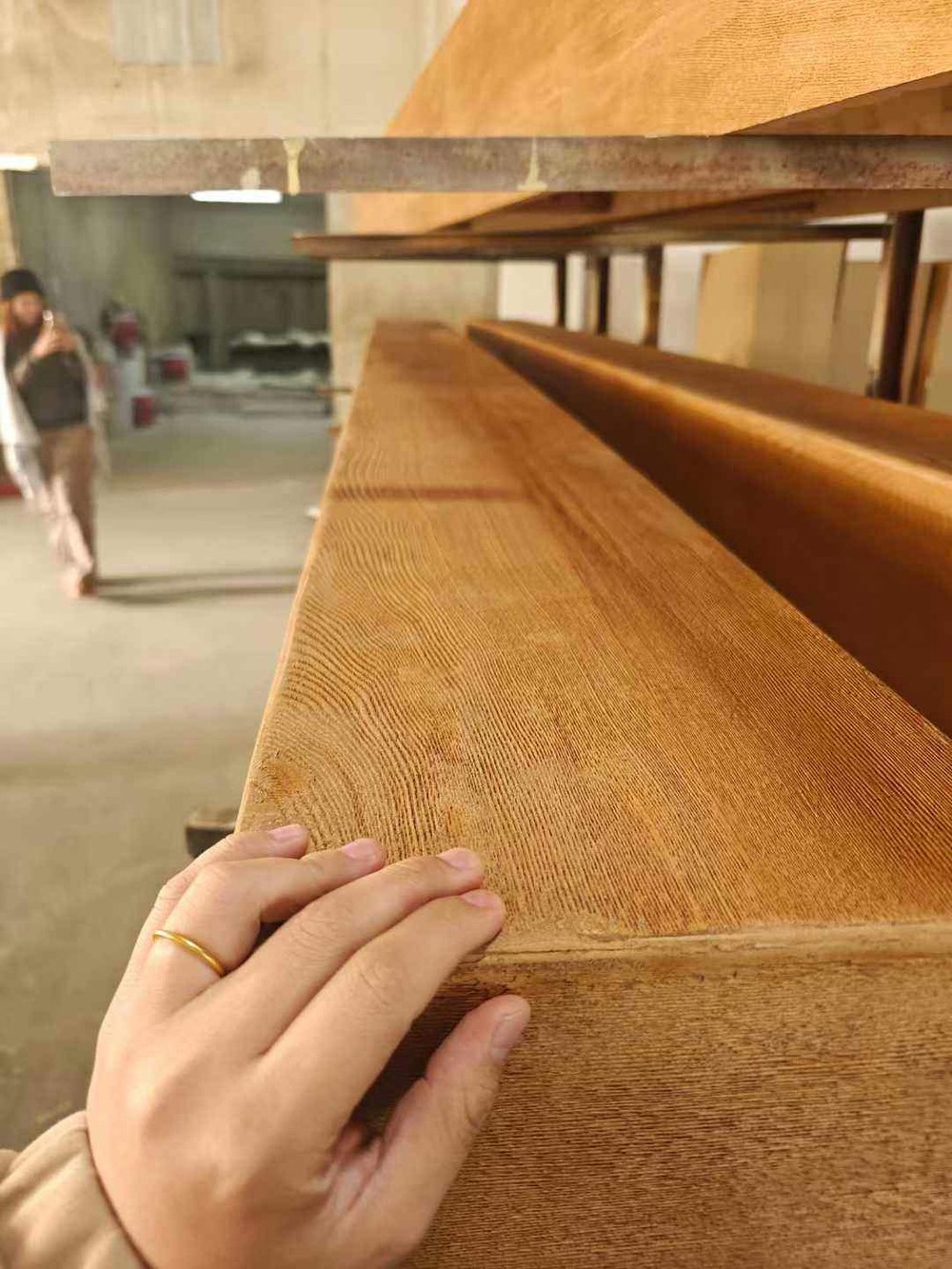
The concept of long-lasting value in construction materials encompasses both the duration of useful service and the consistency of appearance throughout that service period. PU resin faux timber beams excel in both dimensions, providing rot-proof performance that enables extended service life while maintaining aesthetic quality that justifies the initial investment. Understanding the material properties that enable this performance illuminates why polyurethane represents such a compelling alternative to natural wood for demanding applications.
Rot resistance in polyurethane derives from fundamental chemical characteristics that distinguish synthetic materials from organic alternatives. Natural wood consists of organic compounds that fungi, bacteria, and insects can metabolize for nutrition. Polyurethane, by contrast, contains no such compounds—the chemical structure that provides physical performance also provides biological inertness that biological organisms cannot exploit. This resistance is intrinsic to the material rather than applied as surface treatment, meaning it persists throughout the beam's service life without degradation or reduction.
Moisture interaction differs fundamentally between polyurethane and natural wood. Wood absorbs water readily, with dimensional changes that stress joints and finishes while creating conditions favorable to fungal growth. Polyurethane repels water through surface tension effects that prevent liquid absorption. This moisture resistance prevents both the physical degradation that water absorption causes and the biological degradation that moist wood enables.
The thermal stability of quality polyurethane formulations contributes to long-lasting performance by preventing the expansion, contraction, and eventual degradation that temperature cycling causes in natural materials. While extreme temperature changes might affect polyurethane properties, the range of temperatures buildings typically experience produces no meaningful impact. This stability enables reliable long-term performance regardless of climate conditions or seasonal temperature variation.

UV radiation represents the primary long-term degradation threat for polyurethane exposed to sunlight. Quality products incorporate UV stabilizers that absorb or block harmful radiation, preventing the surface chalking and color change that unstabilized materials exhibit. These stabilizers remain effective for extended periods, providing protection that enables decades of outdoor or sun-exposed service. Understanding UV stabilization capabilities helps specifiers select products appropriate for their specific exposure conditions.
Surface finish durability affects how long beams maintain their intended appearance. Quality polyurethane beams feature factory-applied finishes designed for long-term performance, with scratch resistance, color retention, and surface integrity that exceeds what field-applied finishes achieve. These finishes typically carry warranties that reflect manufacturer confidence in their durability, providing written assurance of long-term performance.
The comparison between polyurethane and natural wood longevity favors polyurethane for most practical applications. Natural wood, even with excellent maintenance and favorable conditions, eventually develops problems—rot in moist environments, insect damage in vulnerable regions, surface degradation from weathering and use. Polyurethane beams, by contrast, maintain their initial quality indefinitely under normal conditions, providing the kind of permanent installation that natural wood cannot reliably achieve.
Service life projections for quality polyurethane beams typically exceed fifty years under interior conditions, with outdoor applications achieving twenty to thirty years depending on specific exposure and product quality. These projections rest on documented material properties and accelerated aging tests that predict long-term behavior. Natural wood service life varies so significantly based on species, treatment, conditions, and maintenance that direct comparison is difficult, but typical expectations fall well below polyurethane projections.
Maintenance requirements for long-lasting polyurethane beams are minimal compared to natural wood alternatives. No periodic refinishing, no joint tightening, no insect treatment, no moisture management—the maintenance that natural wood requires to achieve reasonable service life is simply absent. This maintenance simplicity provides ongoing value that extends beyond initial appearance benefits, reducing the total cost of ownership that beam installations require.
Warranty coverage reflects manufacturer confidence in long-lasting performance. Quality polyurethane beams typically carry warranties of fifteen years or more, with premium products offering extended coverage that approaches the expected service life. These warranties transfer to subsequent property owners, providing protection that enhances property value and enables confident disclosure of beam installation history.
The aesthetic retention that polyurethane provides throughout extended service represents a significant practical advantage. Natural wood changes appearance over time—sometimes attractively through patina development, sometimes unattractively through uneven weathering or staining. Polyurethane maintains consistent appearance indefinitely, looking as good after decades of service as it did upon installation. This consistency appeals to owners who value predictable outcomes.
Environmental considerations for long-term performance include the reduced replacement frequency that polyurethane's durability enables. Each avoided replacement avoids the environmental costs of manufacturing, transportation, and installation for replacement materials. While polyurethane production carries environmental impact, the extended service life significantly reduces annual environmental burden compared to materials requiring more frequent replacement.
The lifecycle analysis of polyurethane beams increasingly favors synthetic options as manufacturing processes improve and sustainability credentials strengthen. Extended service life, reduced maintenance, and improved production efficiency all contribute to more favorable environmental comparisons. For projects where sustainability matters, understanding these lifecycle dynamics enables informed material selection.
Professional specification and installation contribute to achieving the long-lasting potential that quality polyurethane provides. Products selected for appropriate applications, installed according to manufacturer guidelines, and maintained with reasonable care deliver performance that justifies the investment. This attention to specification and installation represents a small additional effort that produces significant returns through extended service life and maintained appearance.
Technical References
ASTM standards cited in every specification
Test Data
Lab results from internal testing program
Updated 2026
Reviewed against current product specs