Large-scale projects involving extensive faux beam installations require careful attention to logistics and shipping considerations. The volume and fragility of these products create packaging requirements that differ significantly from typical cargo, and understanding these requirements helps buyers plan effectively for receiving, storage, and installation.
Trade buyers and wholesale purchasers particularly benefit from understanding packaging options, as their purchasing volumes and project scales amplify the impact of logistics decisions. The difference between appropriate and inadequate packaging determines whether products arrive ready for installation or damaged and requiring replacement.
Packaging Design Principles for Faux Beams
Faux beams present unique packaging challenges stemming from their dimensions, fragility, and value. Effective packaging must address all three factors while remaining practical for handling throughout the distribution chain.
Length creates the primary packaging challenge. Beams extending eight, ten, twelve feet or longer require packaging that protects the entire length while remaining manageable for loading and unloading operations. Standard pallets sized for smaller items don't accommodate these lengths without overhang that creates damage vulnerability.
Surface finish protection prevents scratching, denting, and finish damage during handling and transit. The relatively soft polyurethane surface accepts damage readily if protective materials aren't properly specified. Multiple layers of protective material ensure that inner products remain pristine even if outer packaging sustains handling damage.
Structural integrity of packaging assemblies ensures that beams support each other rather than creating point loads that could cause breakage. Cross-members, corner protection, and distributed support prevent the concentrated forces that damage fragile materials.
Pallet Configuration Options
Standard pallet sizes accommodate different beam lengths and quantities based on specific product dimensions. Understanding these configurations helps buyers plan receiving and storage operations.
GMA pallets measuring forty-eight by forty inches provide common foundation sizes. Beam bundles arranged side by side must fit within these dimensions or extend beyond with appropriate overhang protection. Most residential-scale beam lengths fit standard pallet configurations.
Extended length pallets accommodate beams exceeding standard lengths. Custom pallet configurations may be necessary for very long beams, with associated cost implications. Buyers should confirm that receiving facilities can accommodate non-standard pallet sizes.
Pallet height affects stacking stability during storage and transit. Heavily loaded pallets that exceed safe stacking heights create instability hazards. Package design should balance quantity per pallet against total height to enable safe stacking.
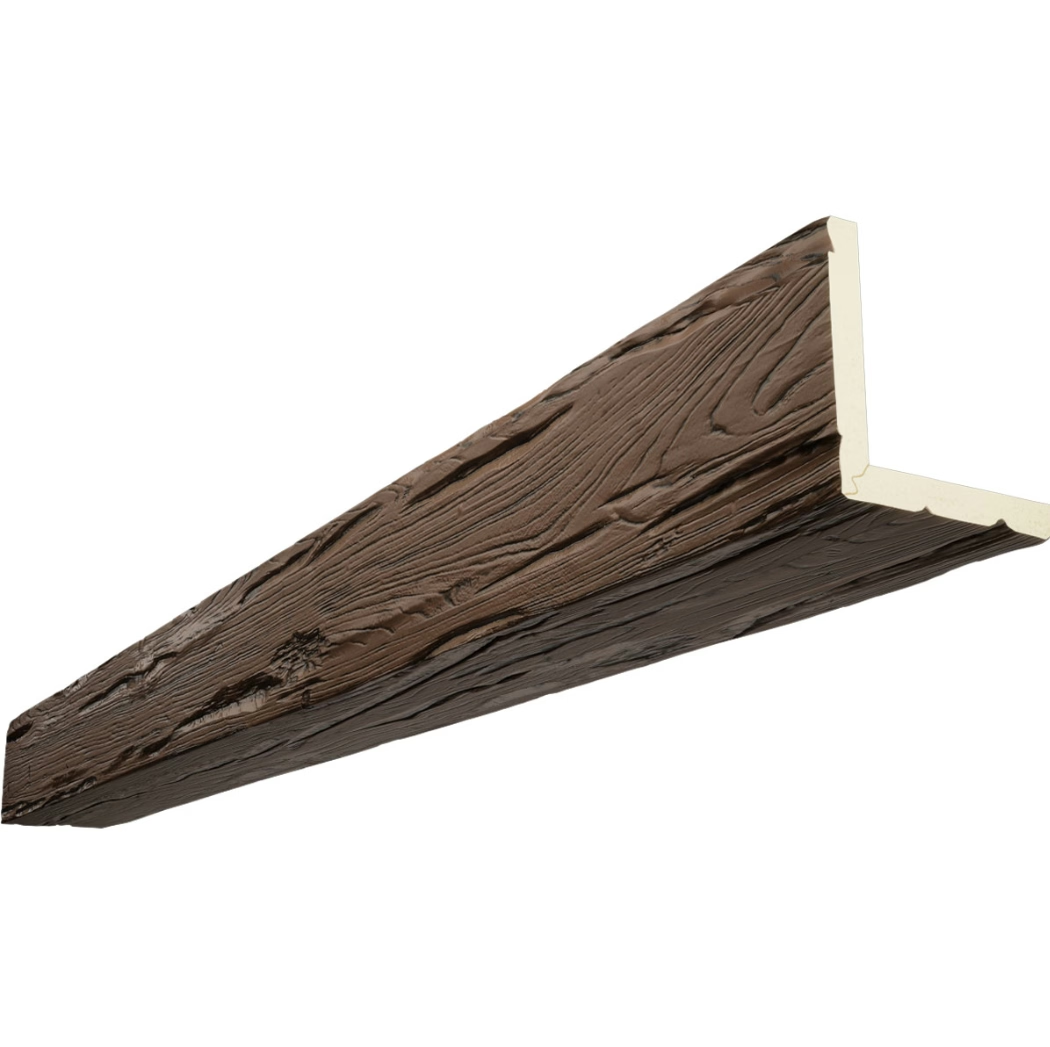
Protective Materials and Wrapping
Multiple layers of protective material create the cushioning and barrier properties that preserve product quality through distribution.
Foam wrapping provides cushioning against impact and vibration during transit. Closed-cell polyethylene foam or similar materials absorb shock loads without compressing permanently. Multiple wraps ensure that handling damage doesn't penetrate to products.
Bubble wrap offers similar cushioning while providing visual confirmation that wrapping remains intact. Any puncture or damage becomes immediately visible, signaling potential product exposure.
Stretch wrap secures products to pallets and prevents lateral shifting during handling. Multiple wrap layers create sufficient tension to hold bundles securely while remaining manageable for removal.
Corner protectors prevent the edge impacts that most commonly damage beam products. Cardboard or foam corner pieces distributed throughout bundles provide consistent edge protection.
Crating for International and Long-Haul Shipping
International shipping or extended domestic transit requires enhanced packaging that withstands the additional handling and longer transit times involved.
Wooden crating provides rigid outer protection that prevents crushing loads and contains products securely during ocean container loading and unloading. Custom crating sized to product dimensions eliminates wasted space while ensuring adequate protection.
Internal bracing prevents product shifting within crates during ocean voyage rolling. Cargo in containers experiences significant motion that creates impact forces between products and crate walls. Proper bracing absorbs these forces before they damage products.
Moisture barriers protect against the condensation that develops in ocean containers as temperatures fluctuate. Poly sheeting or similar barriers prevent moisture contact with products that could cause damage or surface issues.
Documentation requirements for international shipments often include phytosanitary certificates or other certifications. Packaging materials and methods must comply with destination country requirements to avoid delays or rejection at ports.


Freight Class and Cost Optimization
Understanding freight classification helps buyers optimize shipping costs while ensuring appropriate carrier selection and service levels.
Furniture or fixture classifications may apply to finished faux beam products. These classifications typically offer favorable rates compared to general cargo but require proper packaging that prevents damage claims.
Density-based classifications reward compact, heavy shipments. While faux beams are relatively lightweight, careful packaging that eliminates wasted space improves effective density and can reduce per-unit shipping costs.
Carrier relationships and volume commitments affect rates significantly. Buyers with consistent shipping needs should develop relationships with carriers who understand product characteristics and can provide reliable service at competitive rates.
LTL versus FTL shipping economics depend on shipment sizes. Less-than-truckload shipping works well for smaller orders, while full truckload rates become advantageous as order quantities increase. Break points vary by carrier and lane, so buyers should evaluate specific shipping scenarios.
Receiving and Inspection Protocols
Proper receiving procedures protect buyer interests and ensure that any shipping damage gets identified promptly.
Thorough inspection upon delivery identifies any damage before drivers depart. Documenting damage on delivery receipts and capturing photographic evidence supports damage claims with carriers. Any damage noted after driver departure becomes much more difficult to recover.
Opening packaging carefully prevents accidental damage during inspection. Sharp tools can easily penetrate to products if care isn't exercised during unpacking. Proper technique ensures that inspection doesn't create the very damage being inspected for.
Damage documentation should capture overall context as well as detail shots. Wide-angle photos showing package condition combined with close-up detail of damage provide comprehensive evidence for claims processing.
Storage Considerations Before Installation
Proper storage preserves product quality from delivery until installation. Inappropriate storage can compromise even the best packaging.
Climate-controlled storage prevents temperature and humidity extremes that could affect polyurethane products. While polyurethane tolerates a wide range of conditions, extreme variations create expansion and contraction that might affect tight-fitting joints or connections.
Horizontal storage on level surfaces prevents warping or deformation that could complicate installation. Beams stored vertically may develop subtle bends that complicate achieving straight installations.
Protection from direct sunlight prevents UV exposure that could affect surface appearance before installation. Covered storage or UV-blocking covers preserve original appearance.
Organized storage by product type and size facilitates efficient installation. Grouping related products together and clearly labeling bundles reduces installation-site confusion and speeds completion.
Safe palletized bulk packaging ensures that faux beam shipments arrive in installation-ready condition, protecting buyer investments through the distribution chain.
Technical References
ASTM standards cited in every specification
Test Data
Lab results from internal testing program
Updated 2026
Reviewed against current product specs

