Certification programs provide third-party verification that products meet established safety and performance standards. For polyurethane faux ceiling beams, relevant certifications address fire performance, indoor air quality, and structural safety—concerns that matter for both residential and commercial applications. Understanding which certifications exist and what they verify helps buyers select products that meet their specific requirements.
Certification differs from simple compliance claims. Products claiming compliance may never have been tested, while certified products have been evaluated by independent testing organizations against recognized standards. The certification mark provides assurance that goes beyond marketing claims.
Fire Safety Certifications
Fire performance represents the most critical safety concern for interior finish materials. Certification in this area affects where products can legally be used.
ASTM E84 testing produces the flame spread and smoke developed indexes that building codes reference. Products tested to this standard receive classifications that determine their acceptability for different occupancies. Documentation of actual test results rather than generic claims provides the verification that building officials require.
UL 723 provides equivalent testing through Underwriters Laboratories, another widely recognized testing organization. Products bearing the UL mark have been evaluated for fire performance characteristics that code officials trust.
Class A, B, and C ratings classify products based on performance. Class A materials with flame spread indexes below 25 and smoke developed below 450 meet the most stringent requirements for interior finishes. Many commercial applications require Class A materials, while Class B or C may suffice for residential use.
Indoor Air Quality Certifications
VOC emissions affect the air that building occupants breathe, making air quality certification increasingly important for interior products.
GREENGUARD certification by UL Environment verifies that products meet VOC emission limits established for indoor environments. Products bearing GREENGUARD marks have been tested to demonstrate emissions within established safety thresholds.
GREENGUARD Gold certification includes additional requirements for sensitive environments such as schools and healthcare facilities. Products intended for these applications should carry Gold rather than basic GREENGUARD certification.
California Section 01350 establishes particularly stringent emission limits that have become reference standards nationally. Products meeting these requirements provide broad compliance assurance for projects anywhere.
Formaldehyde emission limits receive specific attention due to health concerns at any exposure level. Products should document formaldehyde content and emissions characteristics.
Third-Party Testing Organizations
Accredited testing organizations provide the independent verification that certification requires. Understanding which organizations provide meaningful certification helps interpret certification marks.
Intertek provides testing and certification services through the ETL mark. Products bearing this mark have been evaluated for compliance with applicable standards.
SGS provides testing and inspection services internationally, with certifications recognized across multiple markets. This global recognition benefits products used in international projects.
TÜV SÜD provides testing and certification services with particular strength in European markets. Products for international distribution may benefit from TÜV certification alongside North American certifications.
Bureau Veritas offers testing and certification services that some specifiers and code officials prefer. Multiple certification options provide flexibility while verifying compliance.
Structural Safety Verification
While decorative faux beams don't carry structural loads, attachment systems and mounting hardware must perform safely. Certification in this area addresses installation safety.
Load testing verifies that mounting systems can handle anticipated loads with appropriate safety factors. Products with documented load testing provide confidence that installations will remain secure.
Attachment hardware should carry appropriate certifications for the loads involved. Bolts, anchors, and other fasteners have specific rated capacities that installation must not exceed.
Professional installation by certified contractors may be required for certain applications or occupancies. Contractor certification ensures that installers understand proper techniques.
Warranty documentation clarifies manufacturer support for installation requirements. Products with strong warranties typically come from manufacturers confident in their products.

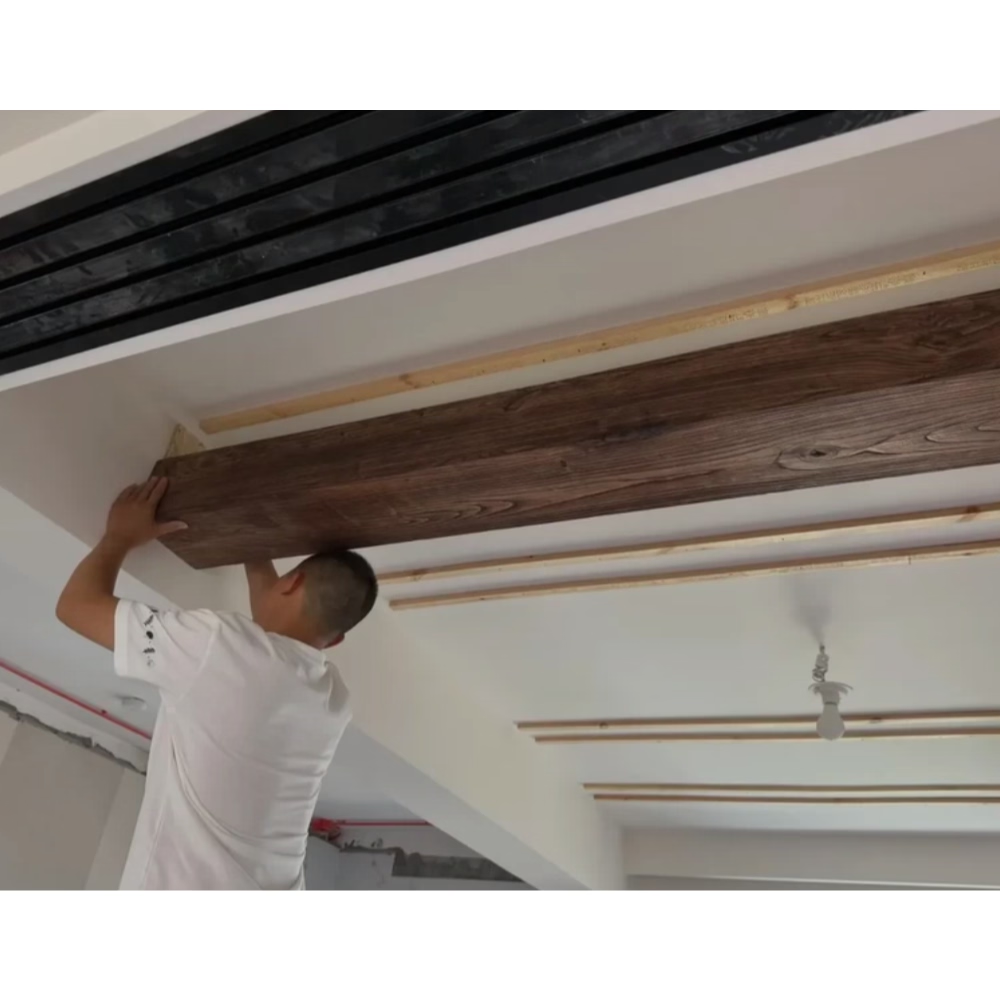
Code Compliance Documentation
Building officials reviewing permit applications need documentation that specified products meet applicable codes. Certification simplifies this verification process.
Product data sheets should reference applicable test standards and provide results demonstrating compliance. Generic claims without test references don't provide the verification code officials require.
Installation instructions guide proper techniques that ensure code compliance. Products without clear installation guidance may be used incorrectly, compromising even well-tested products.
Code compliance reports from evaluation services address innovative products that standard tests may not fully cover. ICC-ES reports provide building officials with verification for products using new technologies.
Material safety data sheets document chemical composition and any hazards that workers should understand during installation. MSDS availability supports safe handling throughout the installation process.
Green Building Program Requirements
LEED and other green building rating systems may recognize specific certifications, creating additional incentives for certified products.
LEED credit requirements reference specific standards that certified products help projects achieve. Indoor air quality credits, materials credits, and innovation credits may all relate to product certification.
Living Building Challenge requirements for Declare labels and Red List compliance affect specification for the most demanding green building projects. Products with Declare labels provide transparency that projects require.
Well Building Standard focuses on occupant wellbeing, with certification helping demonstrate compliance with requirements affecting material selection.
Regional and Jurisdictional Variations
Different regions may recognize different certification programs or have additional requirements beyond national standards.
California's Title 24 and related regulations establish requirements that affect specification for projects in that state. Products meeting California requirements provide compliance assurance for many jurisdictions.
Local amendments to national codes may establish additional requirements. Researching specific jurisdiction requirements before specification prevents the complications of non-compliant products.
International projects may require certifications recognized in destination countries. Products with international certifications simplify specification for global projects.
Verification and Due Diligence
Not all certification claims are equally reliable. Verification steps ensure that claimed certifications actually exist and apply to products being purchased.
Certification marks should appear on products and packaging. Checking for marks before purchase provides immediate verification that documentation review supports.
Certificate validity can be verified through certification body databases. Taking minutes to verify certificates through issuing organizations confirms that claims are current and valid.
Scope of certification matters—certifications may apply to specific products or product lines rather than all products from a manufacturer. Confirming that specific products are covered by certification prevents problems.
Expiration dates and renewal requirements affect ongoing compliance. Products with current certifications demonstrate manufacturer commitment to maintaining standards.
Safety-certified indoor polyurethane faux ceiling beams provide documented performance that building codes and responsible specification require.
Technical References
ASTM standards cited in every specification
Test Data
Lab results from internal testing program
Updated 2026
Reviewed against current product specs