
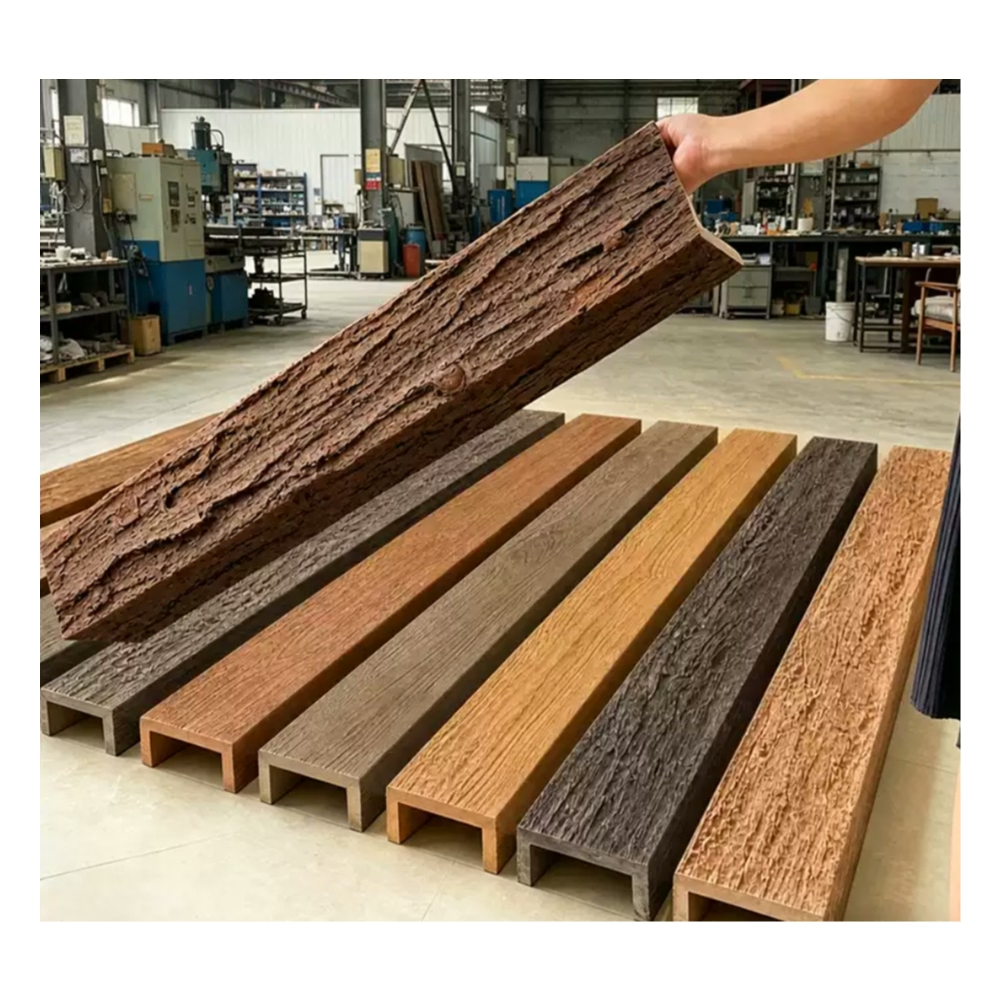
Every element in a room receives visual scrutiny, and beam terminations prove this principle repeatedly. When beams end at walls, ceilings, or other boundaries, the treatment of those terminations affects perception of the entire installation. Open hollow ends immediately signal manufactured materials, breaking the illusion of authentic timber that the beam bodies work so hard to create. Closed-end designs address this problem directly, providing terminations that read as natural beam ends rather than manufactured cutoffs.
The evolution from open to closed terminations reflects how the faux beam industry has matured. Early products offered limited attention to ends, assuming that terminations would be concealed by adjacent construction or ignored by observers. As applications expanded to include exposed terminations at room corners, window openings, and freestanding installations, the demand for better end treatments grew. Manufacturers responded with designs that address both appearance and practical considerations.
The Aesthetic Impact of End Treatment
Human perception automatically follows forms to their conclusions. When a beam appears to extend through a wall or into a corner, observers expect the termination to read as an actual beam end. Open hollows interrupt this natural reading, creating visual dissonance that registers even when viewers can't consciously articulate what's wrong. Closed ends restore the continuity that authentic timber possesses, allowing beams to conclude naturally.
The visual weight of beam ends affects room proportions and design balance. Natural timber ends present solid grain that catches light and provides visual termination. Hollow ends lack this presence, appearing as holes rather than conclusions. Closed-end faux beams restore the visual weight that authentic timber provides, maintaining the proportional relationships that designers intend.
Detail quality signals overall construction quality in ways that affect how spaces are perceived. Finishing details like end treatment receive disproportionate attention precisely because they reveal care levels. Installations with well-finished ends suggest attention throughout, while terminations that reveal manufacturing create impressions of compromise that undermine confidence in other aspects of the work.
Closed-End Design Options
Factory-closed beams arrive with terminations already finished, requiring no additional treatment during installation. These beams feature integral end caps molded or formed as part of the beam body, providing seamless appearance that matches surrounding surfaces exactly. The consistency between body and end eliminates the visible seams that added caps create.
Profile-matched caps duplicate beam profiles precisely, creating terminations that appear as natural beam ends when installed. These caps may be separate pieces that engage beam cavities, or they may represent the beam's natural conclusion created during molding. Either approach produces closed appearances that satisfy design requirements when properly installed.
Custom closing options address situations where standard products don't fit. Fabricated closures using matching materials and finishes provide closed appearances even for non-standard configurations. While requiring more effort than standard options, custom closures ensure quality results when unique situations demand unique solutions.


Practical Advantages Beyond Appearance
Closed-end designs provide practical benefits that extend beyond visual quality. Sealed terminations prevent pest infiltration that hollow ends might allow. Insects and spiders occasionally colonize hollow spaces, creating infestations that closed designs prevent. This protection proves valuable in residential applications where pest concerns influence material selection.
Moisture resistance improves with closed-end designs for exterior applications. Water infiltration through beam ends—a significant vulnerability for hollow profiles—cannot occur when ends are properly sealed. The closed design eliminates this moisture pathway entirely, contributing to long-term durability in exterior installations.
Structural considerations also favor closed terminations in some applications. While faux beams typically serve decorative rather than structural purposes, the closed profile provides additional rigidity at termination points. This increased stiffness can matter when beams span significant distances or when finishing techniques require secure surfaces.
Installation Approaches for Closed Ends
Proper installation of closed-end beams requires techniques adapted to the specific closure design. Factory-closed beams install like any standard beam, with attention to alignment and mounting that positions the closed end correctly. The pre-finished closure requires no additional treatment beyond normal mounting procedures.
Cap-style closures install before beam mounting in most cases. The cap engages the beam end, providing a finished termination that appears original once installation completes. Some cap designs require adhesive for secure attachment, while others use mechanical features that interlock with beam geometry.
Sealing closed ends against moisture infiltration requires attention to the joint between closure and beam body. Even factory-closed designs benefit from additional sealing at this joint, as any gap creates potential for water entry. Quality exterior sealant applied around perimeter joints provides insurance against infiltration that might not become apparent until significant damage occurs.
Matching Finishes at Terminations
Color matching between beam bodies and closed ends ensures uniform appearance throughout. Factory-finished closed ends typically match beam bodies exactly because they undergo the same finishing processes. Added caps may require touch-up finishing to achieve perfect matching, especially when different manufacturing batches or products are involved.
Texture matching proves as important as color matching for convincing appearances. The surface texture of closures must match surrounding beam texture exactly. Molded closures achieve natural texture matching, while fabricated closures may require texturing to match original surfaces. This finishing step determines whether terminations appear original or added.
Clear coating over completed terminations unifies appearance and provides protection. Even perfectly matched surfaces may show slight differences in how they accept and reflect light. Continuous clear coating across body and termination eliminates these differences, creating unified appearance that satisfies visual inspection.
Applications Requiring Closed Ends
Room corners represent the most common application requiring quality closed terminations. Beams meeting at interior corners create visual focal points where end quality receives intense scrutiny. Open ends at these locations immediately reveal manufactured origins, while closed ends suggest original architectural elements.
Window and door openings often require beams that terminate over openings. The beam end visible from normal viewing angles must appear finished rather than hollow. Closed-end designs address this requirement without requiring extensive trim or detailing that might complicate installation or clash with design aesthetics.
Freestanding beam installations—where beams don't connect to walls or ceilings at both ends—absolutely require closed terminations. The exposed ends receive direct viewing that would make hollow openings obvious. Any installation without adjacent construction to conceal terminations demands closed-end designs that provide natural conclusions.
Closed-end design represents one of the most significant advances in faux beam aesthetics. By providing terminations that match the quality of beam bodies, these designs enable installations that achieve the authentic appearance that makes faux beams attractive in the first place. Understanding and specifying appropriate end treatments ensures that projects realize their full design potential.
Technical References
ASTM standards cited in every specification
Test Data
Lab results from internal testing program
Updated 2026
Reviewed against current product specs


