
The popularity of hollow faux timber beams stems from their practical advantages: reduced weight, easier handling, lower material costs, and simpler installation requirements. These benefits come with a corresponding challenge that hollow designs must address—exposed ends reveal interior cavities that immediately betray manufactured origins. What appears as authentic timber from the sides becomes obviously fake when terminations show hollow interiors. End closure accessories solve this problem, providing sealed terminations that complete the authentic appearance hollow beams require.
The market for end closure accessories has expanded alongside the faux beam industry itself. What began as simple plugs have evolved into sophisticated components that integrate with beam aesthetics while providing reliable, long-lasting seals. Understanding the options available helps purchasers select closures that match their beam products and installation requirements.
Understanding Hollow Beam Construction
Hollow faux beams are manufactured using various techniques that create interior cavities while maintaining realistic exterior appearances. Extrusion processes produce beams with consistent wall thicknesses throughout. Molding techniques can create complex interior geometries optimized for specific mounting or reinforcement requirements. Rotational molding produces seamless interiors without the seam lines that some extrusion processes create.
Wall thickness affects both structural capability and the mounting options available for end closures. Thicker walls provide more material for fasteners to engage and more substantial feel during handling. Thinner walls reduce weight and cost but may limit fastening options. Understanding a beam's wall construction helps select closures that will mount securely.
Interior geometry matters for closure compatibility. Some beams feature simple rectangular or square cavities ideal for flat closure plates. Others include ribs, flanges, or mounting features that require specialized closure designs. Matching closure geometry to beam interior ensures secure, stable installations that won't shift or fail over time.
Closure Design Variations
Flat closure plates provide simple solutions for applications where terminations will be concealed or where minimal visibility is acceptable. These plates seal beam ends against moisture and pest infiltration while covering interior cavities. When installed behind trim or within concealed spaces, flat closures provide adequate appearance at minimal cost.
Profile-matched closures duplicate beam exterior profiles, creating terminations that appear as natural beam ends. These closures may be separate pieces that engage beam cavities or may represent the beam's molded conclusion. The seamless appearance they provide justifies higher costs for visible termination applications.
Decorative closures incorporate design elements that complement beam aesthetics while providing sealed terminations. Rosette patterns, end caps with wood grain continuation, and profiled closures with architectural details all serve the dual purposes of sealing and decorating. These accessories transform utilitarian requirements into opportunities for design enhancement.
Adjustable closures accommodate dimensional variations that occur in manufacturing and installation. Spring-loaded or flexible designs engage beam interiors with consistent pressure regardless of minor size differences. This adjustability simplifies installation while ensuring complete coverage across various dimensional tolerances.

Material Considerations for Closures
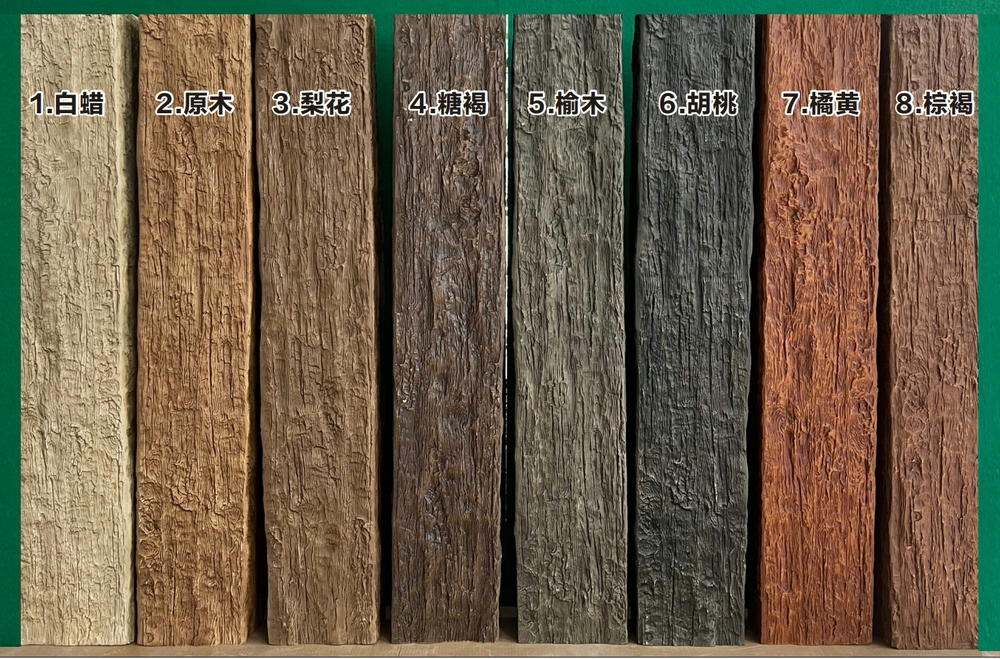
Polyurethane closures match beam material exactly, providing identical appearance and performance characteristics. When manufactured as part of the same production process, closures and beams share consistent color, texture, and durability. This material matching ensures that terminations appear original rather than added.
Metal closures—aluminum and stainless steel—provide superior weather resistance for exterior applications. These materials resist corrosion that might affect polyurethane in aggressive environments. However, matching metal finishes to polyurethane colors requires careful selection or custom finishing.
Composite and polymer closures offer intermediate characteristics between pure polyurethane and metal options. These materials may provide better durability than polyurethane alone while accepting finishes more readily than metal requires. The specific formulation determines performance characteristics.
Installation Techniques for Reliable Seals
Proper installation begins with verifying closure fit before committing to permanent attachment. Trial fitting identifies any dimensional mismatches or interference that would complicate final installation. Adjustments made during trial fitting cost far less time than corrections after adhesive application.
Surface preparation ensures that closures bond securely to beam ends. Cleaning mating surfaces removes contamination that might prevent proper adhesion. Some installation situations benefit from light sanding that improves adhesive bonding, while others may require priming for optimal results.
Adhesive selection depends on closure material and mounting conditions. Polyurethane-to-polyurethane bonding works well with construction adhesives formulated for synthetic materials. Metal closures may require specialized adhesives that bond both dissimilar materials effectively. Following manufacturer recommendations ensures connections that perform reliably.
Mechanical fastening supplements adhesive bonding for applications requiring maximum security. Screws through closures into beam interior provide immediate holding power that adhesive alone cannot match. The combination of adhesive and mechanical fastening ensures connections that resist both separation and moisture infiltration.
Weather Protection for Exterior Applications
Exterior hollow beam installations face moisture challenges that interior applications avoid. Water infiltration through beam ends leads to interior moisture accumulation, freeze-thaw damage in cold climates, and potential biological growth. Proper end closure provides the primary defense against these deterioration mechanisms.
Gasket features in quality exterior closures create seals that prevent water penetration. These seals compress when closures are installed, filling gaps and voids that might otherwise allow infiltration. The gasket material must remain flexible across temperature ranges to maintain sealing throughout seasonal cycles.
Secondary sealing around closure perimeters provides additional protection against moisture intrusion. Quality exterior sealant applied where closure meets beam surface creates redundant barriers that ensure weather resistance even if primary seals fail. This belt-and-suspenders approach costs little extra but provides substantial insurance against water damage.
Maintenance and Replacement
Periodic inspection identifies closure issues before they cause significant problems. Checking for gaps, sealant deterioration, or closure displacement reveals maintenance needs while remediation remains straightforward. Annual inspection following winter weather identifies freeze-thaw damage that may have occurred.
Replacement procedures for damaged closures follow similar processes to initial installation. Removing old closures, preparing surfaces, and installing new components restores protection and appearance. Having matching replacement closures available simplifies this process when damage occurs.
Upgrading closures during routine maintenance allows incorporating newer designs or materials that may not have been available originally. Technology advances produce closures with better sealing, easier installation, or improved appearance. Taking advantage of these improvements during scheduled maintenance keeps installations current without major renovation.
Hollow beam end closures represent small investments that provide substantial returns in appearance and durability. The authentic appearances they enable justify their cost and installation effort for any application where beam terminations will be visible. Properly selected and installed closures complete the illusion that hollow faux beams exist to create.
Technical References
ASTM standards cited in every specification
Test Data
Lab results from internal testing program
Updated 2026
Reviewed against current product specs


