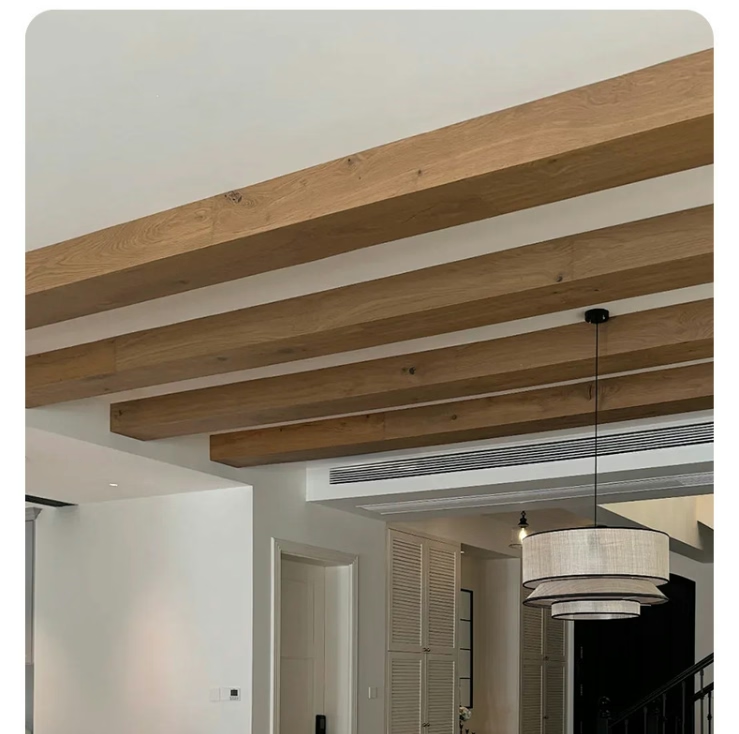
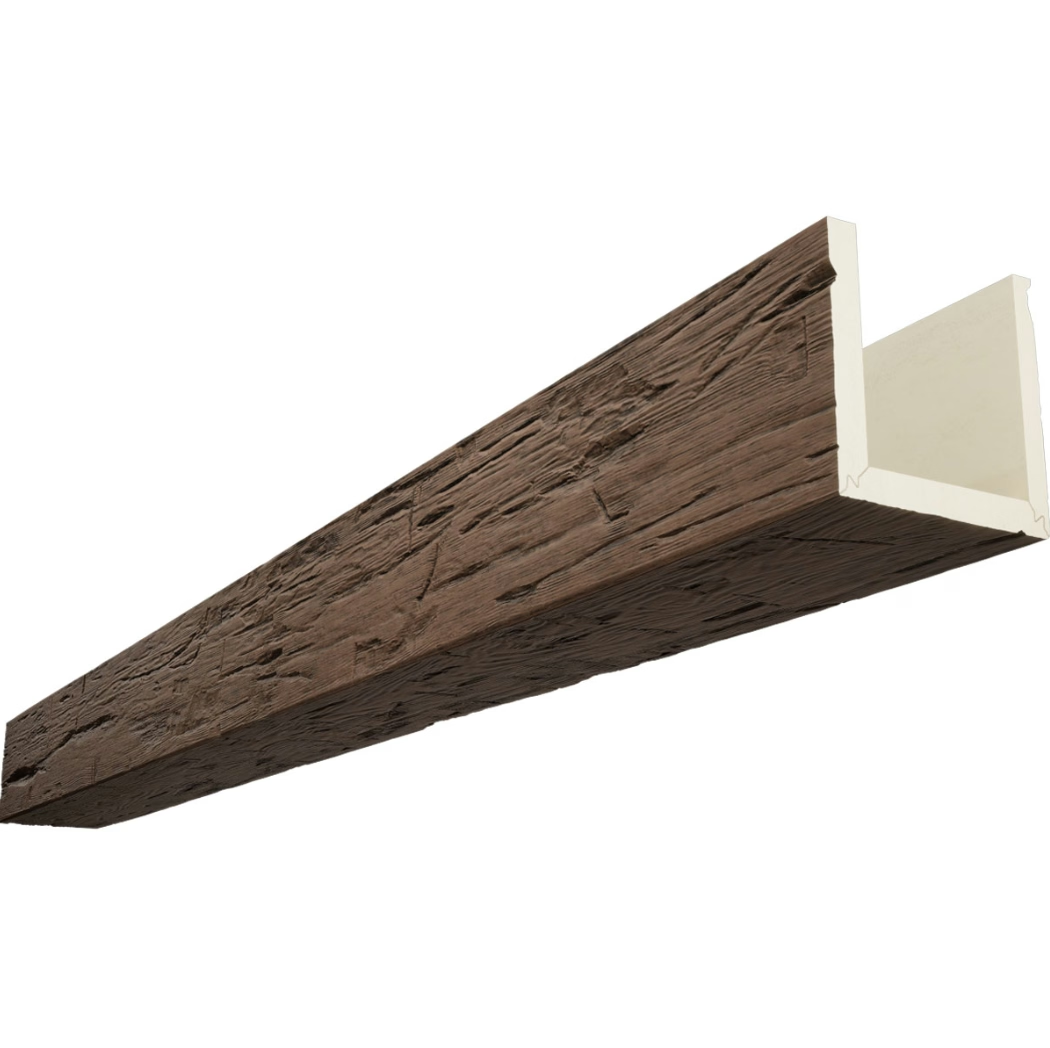
The timing of a purchase can mean the difference between a comfortable margin and a strained budget. This truth applies as much to building materials as it does to consumer goods. Professional contractors who understand the promotional calendar for polyurethane faux wood beams can reduce project costs by 10 to 30 percent without compromising quality, simply by aligning their purchasing with the industry's natural discount cycles.
Most building material suppliers operate on a predictable promotional rhythm tied to construction industry slowdowns. These slow periods create inventory pressure that suppliers relieve through targeted discounting. Knowing when to wait and when to commit is a skill that separates cost-conscious buyers from those who pay full price by default.

The Industry Calendar and Its Implications
The construction industry experiences predictable seasonal fluctuations that directly affect pricing for finishing materials like faux wood beams. The peak construction season runs from late spring through early autumn in most temperate regions. During these months, demand for finishing materials stays high, and suppliers have little incentive to offer discounts. Full pricing prevails, and lead times may lengthen as factories work to meet demand.
The winter months, particularly December through February in the Northern Hemisphere, represent the slack season for most interior finishing work. Renovation projects slow during holiday periods and through the cold months when heating costs make unconditioned renovation spaces uncomfortable. This slowdown creates inventory accumulation that suppliers need to move.
Major promotional periods cluster around these slower periods. January clearance sales typically clear inventory purchased for the autumn project season that did not sell through. February and March often feature trade-only promotions aimed at contractors planning spring projects. Late summer sees back-to-school and pre-autumn renovation promotions that clear warehouse space for fall product lines.
Quantities, Lead Times, and Discount Thresholds
Volume purchasing unlocks tiered pricing across most polyurethane beam suppliers. The discount thresholds vary by manufacturer and profile type, but common breakpoints occur at 10, 25, and 50 units per SKU. A project requiring 8 beams might pay standard pricing, while ordering 25 units of the same profile drops the per-unit cost by 8 to 12 percent.
Projects requiring more than 50 units of a single profile typically qualify for custom quotation pricing. At this volume, suppliers often negotiate directly rather than applying standard tier tables. The negotiation flexibility depends on current factory utilization, existing inventory, and the buyer's relationship with the supplier. Trade accounts with established payment histories access better terms than first-time buyers.
Lead time expectations shift during promotional periods. Discounted inventory typically ships from existing stock rather than requiring new production runs. This means promotional pricing often comes with faster fulfillment—standard 4 to 6 week lead times can shrink to 1 to 2 weeks when warehouse stock covers the order. However, popular promotional items can sell out quickly, eliminating both the discount and the inventory availability simultaneously.
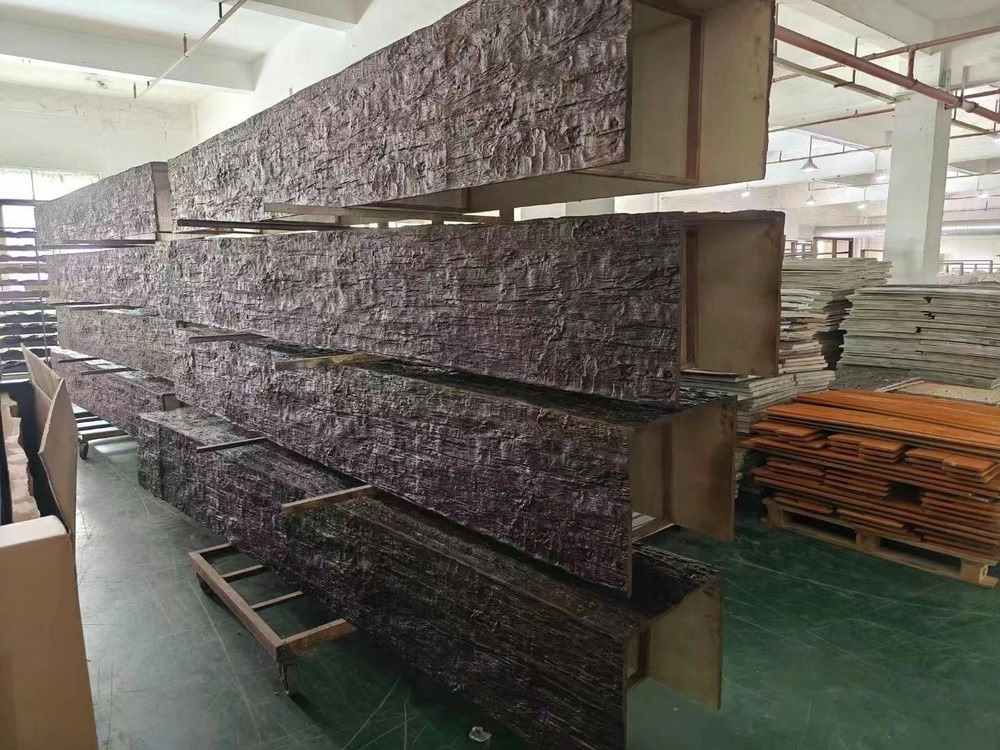
Trade Account Programs and Their Benefits
Professional buyers—contractors, designers, builders, and distributors—benefit from establishing trade accounts with polyurethane beam manufacturers or their authorized distributors. Trade accounts typically provide access to dedicated inventory pools, extended payment terms, volume pricing not available to retail customers, and technical support for specification and installation questions.
The application process for trade accounts usually requires business documentation: contractor licenses, business registrations, resale certificates, or interior design firm credentials. Processing takes anywhere from one business day to two weeks depending on the supplier. Establishing accounts before projects begin ensures access to trade pricing when purchasing becomes necessary.
Extended payment terms represent a significant trade account benefit. Net-30 or Net-60 terms allow contractors to receive materials on site, complete installation, invoice the client, and then pay the supplier from received funds. This cash flow advantage can support larger projects without requiring the contractor to maintain large floating capital positions.
Clearance Events and Overstock Sales
Clearance events differ from seasonal promotions in important ways. Promotional pricing reduces prices on current inventory while maintaining supplier profitability and supporting future ordering relationships. Clearance pricing moves discontinued, damaged, or excess inventory at prices that may fall below production cost in exchange for inventory liquidation.
Clearance beams are fully functional products sold at steep discounts because of specification changes, overstock situations, or minor cosmetic blemishes. A beam with a slight color variation from the standard batch, or a discontinued profile being replaced by a new design, might enter clearance channels. These products work perfectly but carry discounts of 30 to 50 percent.
Purchasing clearance beams requires accepting some constraints. The exact quantity available is limited to existing stock, and reorders are impossible once inventory depletes. For projects requiring consistent appearance across all beams, clearance purchasing carries risk if the project needs more beams than the clearance stock provides. For accent projects where beam-to-beam variation would be acceptable, clearance beams offer exceptional value.
Container Loading and FOB Discounts
International buyers purchasing full shipping containers of polyurethane beams access a different discount structure based on container loading rather than unit quantity. A standard 20-foot container holds approximately 300 to 500 individual beams depending on profile size and packaging configuration. A 40-foot container roughly doubles this capacity.
FOB (Free on Board) pricing removes shipping costs from the product price, leaving buyers to arrange and pay for freight independently. This approach benefits buyers with established international shipping relationships who can secure better freight rates than suppliers' standard shipping charges. The product discount available through FOB purchasing can reach 15 to 25 percent compared to delivered pricing on large orders.
Buyers unfamiliar with international logistics may prefer CIF (Cost, Insurance, and Freight) pricing where the supplier arranges shipping and includes it in the quoted price. While this approach costs more, it eliminates the complexity of coordinating freight forwarding, customs clearance, and inland delivery independently.
Building a Purchase Calendar
Strategic buyers develop annual purchasing calendars that align procurement with promotional opportunities. The process begins by reviewing project pipelines 6 to 12 months ahead and identifying beam requirements by profile, quantity, and delivery timeline. With this information, buyers can identify which purchases can flex timing and which are fixed by project schedules.
For flexible purchases, building the order around a known promotional period reduces cost. For fixed purchases, establishing trade accounts and understanding normal pricing ensures buyers do not overpay relative to market rates. The combination of strategic timing for flexible purchases and reliable accounts for fixed purchases maximizes savings across a full year of projects.
Monitoring supplier communications—email newsletters, trade publications, and direct sales contacts—keeps buyers informed about upcoming promotions. Many suppliers announce seasonal sales 4 to 6 weeks in advance, giving prepared buyers time to coordinate with their own project schedules. Last-minute purchases at full price become unnecessary when a promotional calendar guides purchasing decisions.
Sample and Display Pricing
Suppliers often offer reduced pricing on sample quantities for design specification purposes. A sample beam at $30 to $60 allows designers and architects to evaluate the actual product appearance, texture, and weight before committing to full project orders. Samples ship quickly from existing stock and carry no commitment toward larger purchases.
Display quantities—enough beams to create a showroom installation or project mock-up—sometimes qualify for additional discounts. A display order of 5 to 10 beams at reduced pricing serves both functional evaluation and marketing purposes. Designers with showrooms or sample libraries benefit from building these collections over time as new profiles and finishes become available.
The distinction between sample pricing and full order pricing should be clear before purchasing. Some suppliers require minimum order quantities before applying volume discounts. Understanding these thresholds prevents confusion about what price applies to which portion of an order.
Currency and Regional Pricing Variations
For international buyers, currency exchange rates significantly affect effective purchasing costs. Suppliers pricing in US dollars cost more for buyers in regions with weakening currencies and less for those with strengthening currencies. Timing purchases when exchange rates favor the buyer can reduce costs by 5 to 15 percent without any change in the supplier's pricing.
Regional pricing variations also exist due to distribution costs, local demand patterns, and competitive market conditions. A product priced at $45 per linear foot from a European manufacturer might carry a different effective price for buyers in Southeast Asia versus buyers in South America due to shipping routes and regional distribution agreements. Comparing total landed costs across potential suppliers provides a more accurate picture than unit price comparisons alone.
International trade agreements and import tariffs also influence effective pricing. Products subject to lower tariff rates carry advantages over those facing higher duties. Understanding the applicable tariff classifications for polyurethane building products in the destination country ensures accurate total cost calculations.
Technical References
ASTM standards cited in every specification
Test Data
Lab results from internal testing program
Updated 2026
Reviewed against current product specs