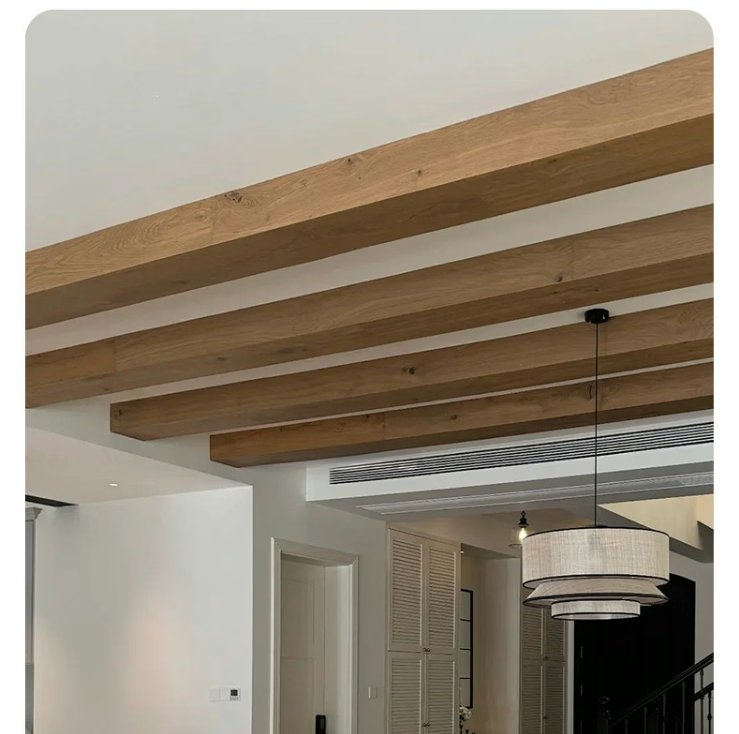
Transit damage is an unfortunate reality of long-distance logistics. Whether caused by handling impacts, compression from stacked cargo, moisture ingress, or the unpredictable conditions inside ocean containers, damage to shipped goods represents a risk that every international buyer accepts when placing orders. The question is not whether damage will ever occur but how prepared both buyers and sellers are to address it when it does. A well-defined replacement policy transforms a potential disaster into a manageable resolution, preserving business relationships and project timelines.
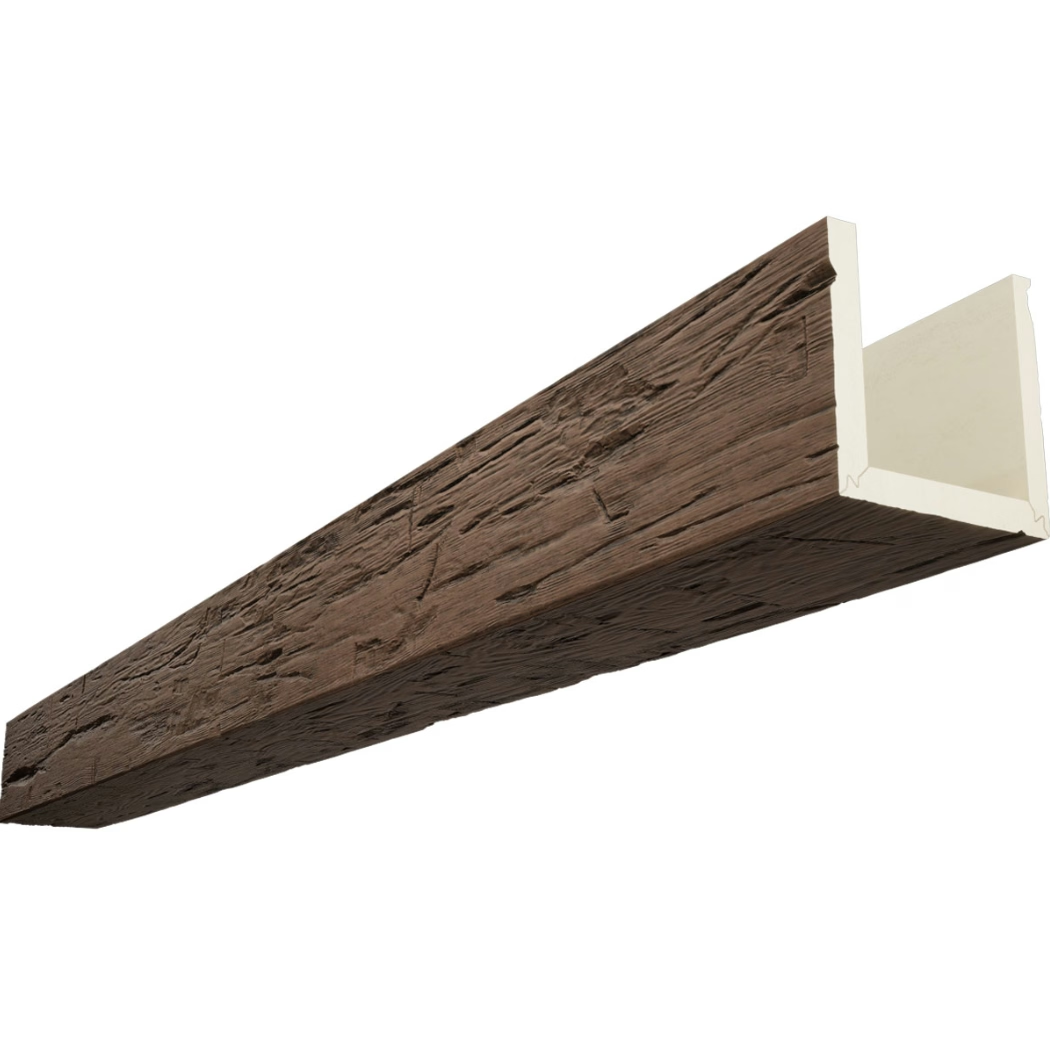
For polyurethane faux wood beams specifically, damage manifests in several forms: surface scratches or dents from impact, end damage from compression or improper handling, moisture staining that affects appearance, and structural deformation that prevents proper installation. Each damage type has different remediation options, and a thoughtful replacement policy addresses each scenario appropriately.

Damage Categories and Assessment Criteria
Understanding damage severity helps buyers communicate effectively with suppliers and set realistic expectations for resolution. Minor damage includes surface scratches, small dents that do not penetrate the structural core, and cosmetic blemishes that are invisible from normal viewing distance. Minor damage is typically addressed through price adjustments or touch-up materials rather than full replacements.
Moderate damage encompasses larger dents, surface cracks that do not affect structural integrity, end compression damage, and moisture staining that affects appearance but not product function. These cases often warrant partial replacement—new beams to substitute for the damaged items—with damaged beams sometimes retained as field-cut material if only ends are affected.
Severe damage includes structural cracking, deformation that prevents proper installation, extensive moisture damage affecting large surface areas, and complete breakage. These cases clearly warrant full replacement with new beams at no additional cost to the buyer. Disputes about severe damage are uncommon because the damage is typically obvious and agreed upon by both parties.
Documenting damage with photographs from multiple angles establishes a clear record before any communication with the supplier. Photographs should show the overall package, the damaged beam within the package, close-up detail of the damage, and any visible packaging failures that may have caused the damage. This documentation supports claims regardless of the resolution path.
Immediate Steps After Delivery
The actions taken immediately upon delivery significantly affect replacement claim outcomes. Claim deadlines specified in purchase contracts often begin from the delivery date, not the discovery date. Missing these deadlines can result in forfeited claims regardless of damage legitimacy.
External inspection before signing delivery receipts protects buyer interests. Delivery receipts signed without notation of visible damage remove the carrier's liability and shift the burden to the buyer. Writing "received damaged—subject to inspection" or similar notation on the delivery receipt preserves claim rights while acknowledging the delivery occurrence.
Internal inspection within 48 to 72 hours of delivery, depending on contract terms, identifies concealed damage not visible through packaging. Opening all packages and examining all beams for damage allows complete damage assessment while claim windows are still open. This inspection should be documented photographically regardless of whether damage is found—a clean delivery record protects both parties.
Notifying the supplier within the specified timeframe, typically 3 to 7 days after delivery for concealed damage, formally initiates the replacement process. The notification should include photographs, a description of damage, the affected SKU and quantity, and the original order and tracking information. Suppliers who receive complete damage reports can process claims faster than those who must request missing information.
The Replacement Claim Process
Filing a formal replacement claim typically requires completing a claim form provided by the supplier or platform. The form requests information about the original order, the nature and extent of damage, and the resolution requested. Supporting documentation including photographs, delivery receipts, and inspection notes attaches to the form.
Review time for damage claims varies by supplier and claim complexity. Simple claims involving clearly damaged items may resolve within a few business days. Complex claims involving disputes about damage severity or cause may require additional documentation, third-party inspection, or carrier involvement. Buyers should inquire about expected timelines and follow up if resolution does not occur within the stated period.
Replacement options after claim approval typically include shipping replacement beams at no additional cost, issuing credit memos for the damaged items, or offering partial refunds for minor damage. The specific resolution depends on the damage severity, the buyer's preference, and the supplier's policy. Reputable suppliers prefer replacement shipments because they maintain the order value while satisfying the buyer.
For time-sensitive projects, expedited replacement processing may be available for an additional fee. Standard replacement processing follows normal production and shipping timelines; expedited processing prioritizes the replacement order but may incur premium freight costs. Buyers facing project deadlines should discuss timeline requirements with suppliers to identify the fastest path to replacement.
Working with Carriers and Freight Forwarders
Transit damage claims often involve multiple parties: the buyer, the seller, the carrier, and possibly the freight forwarder. Understanding each party's role helps buyers navigate the claims process effectively.
Carriers are responsible for damage occurring during their transport segment. Most carriers have established claims procedures with specific documentation requirements and filing deadlines. Carriers typically require claims within 30 to 60 days of delivery, though this varies significantly by carrier and shipment type. Buyers who receive damaged goods should file carrier claims promptly to preserve recovery rights.
Freight forwarders who arranged the shipment may have insurance coverage that supplements carrier liability. Forwarders typically carry cargo insurance that covers losses exceeding carrier liability limits or situations where carrier liability is disputed. Providing the forwarder with damage documentation allows them to assess coverage and initiate insurance claims on behalf of the buyer.
Coordination between seller claims, carrier claims, and freight forwarder insurance claims can be complex. In some cases, the seller's insurance covers transit damage; in others, the carrier is liable; in others, the freight forwarder's coverage applies. Buyers should provide documentation to all relevant parties rather than assuming only one party is responsible. The responsible party's insurance ultimately pays, but the buyer is protected by having multiple parties aware of the damage.

Prevention Through Documentation
Preventing replacement claim disputes requires documentation practices that create clear evidence chains. Photographs at every stage—packaging at origin, loading, arrival, and delivery—establish where damage occurred and who bears responsibility.
Packing lists that accurately describe shipment contents and condition help all parties assess whether delivered goods match expectations. Discrepancies between packing lists and actual delivery trigger investigation before damage claims are filed.
Customs documentation that accurately declares the value and nature of goods supports insurance claim processing. Under-declaring values to reduce duties creates complications when insurance claims require accurate value documentation. The small duty savings rarely justify the claim processing complications.
Repair Options as an Alternative to Replacement
In some cases, damage to polyurethane beams is repairable without requiring replacement. Surface scratches can be filled with wood filler, sanded smooth, and touched up with matching finish. Small dents can be steamed or heated to restore shape. End damage on long-span beams can be cut away if sufficient length remains for the installation.
Repair may be faster than replacement for minor damage on time-sensitive projects. A contractor facing an imminent installation can repair minor damage in the field, document the repair, and file a claim for the repair cost rather than waiting for replacement beams. This approach requires advance agreement with the supplier about repair cost reimbursement.
Field repair capability depends on having appropriate finishing materials on hand. Maintaining a supply of touch-up finish, wood filler, and finishing supplies allows field repairs to be completed without specialized equipment. Suppliers who provide repair kits or finishing materials with their beams support this approach.
Building a Damage Prevention Relationship
Buyers who consistently receive damaged shipments should work with suppliers to identify and address root causes. Recurring damage patterns may indicate inadequate packaging for the shipping route, carrier handling issues, or quality problems in the production process. Addressing root causes prevents future damage and the associated costs of replacement claims.
Packaging specification reviews following damage incidents often reveal opportunities to increase protection. Increasing cardboard thickness, adding corner protection, using more strapping, or switching to wooden crates for vulnerable shipments may cost more per package but reduce damage rates enough to save money overall.
Supplier feedback about damage incidents helps manufacturers improve products and packaging. Manufacturers who receive detailed damage reports with photographs can analyze failure modes and engineering improvements. Buyers who share this information contribute to quality improvements that benefit their future orders.
Legal Considerations and Contract Terms
Purchase contracts should specify damage claim procedures, timelines, and resolution options before orders are placed. Terms negotiated in advance eliminate disputes about expectations when damage occurs. Standard terms used by reputable suppliers are typically reasonable, but custom arrangements may be appropriate for large or complex orders.
Force majeure clauses may excuse either party from performance obligations when extraordinary events prevent compliance. A container ship that sinks with its cargo represents a force majeure event that may affect replacement timelines. Understanding these clauses helps buyers set realistic expectations during catastrophic logistics disruptions.
Jurisdiction and governing law provisions determine which country's legal system governs disputes. International purchases may specify neutral jurisdictions like Singapore, Hong Kong, or Switzerland to avoid bias toward either party's home legal system. Buyers should understand the implications of governing law provisions before committing to large orders.
Limitation of liability clauses cap the seller's exposure for damages. While these clauses protect sellers from unlimited liability, they also limit buyer recovery. Understanding liability limitations prevents surprises when claims resolve for less than the buyer's actual losses. For large purchases, buyers may want to purchase separate cargo insurance that supplements supplier liability limitations.
Technical References
ASTM standards cited in every specification
Test Data
Lab results from internal testing program
Updated 2026
Reviewed against current product specs