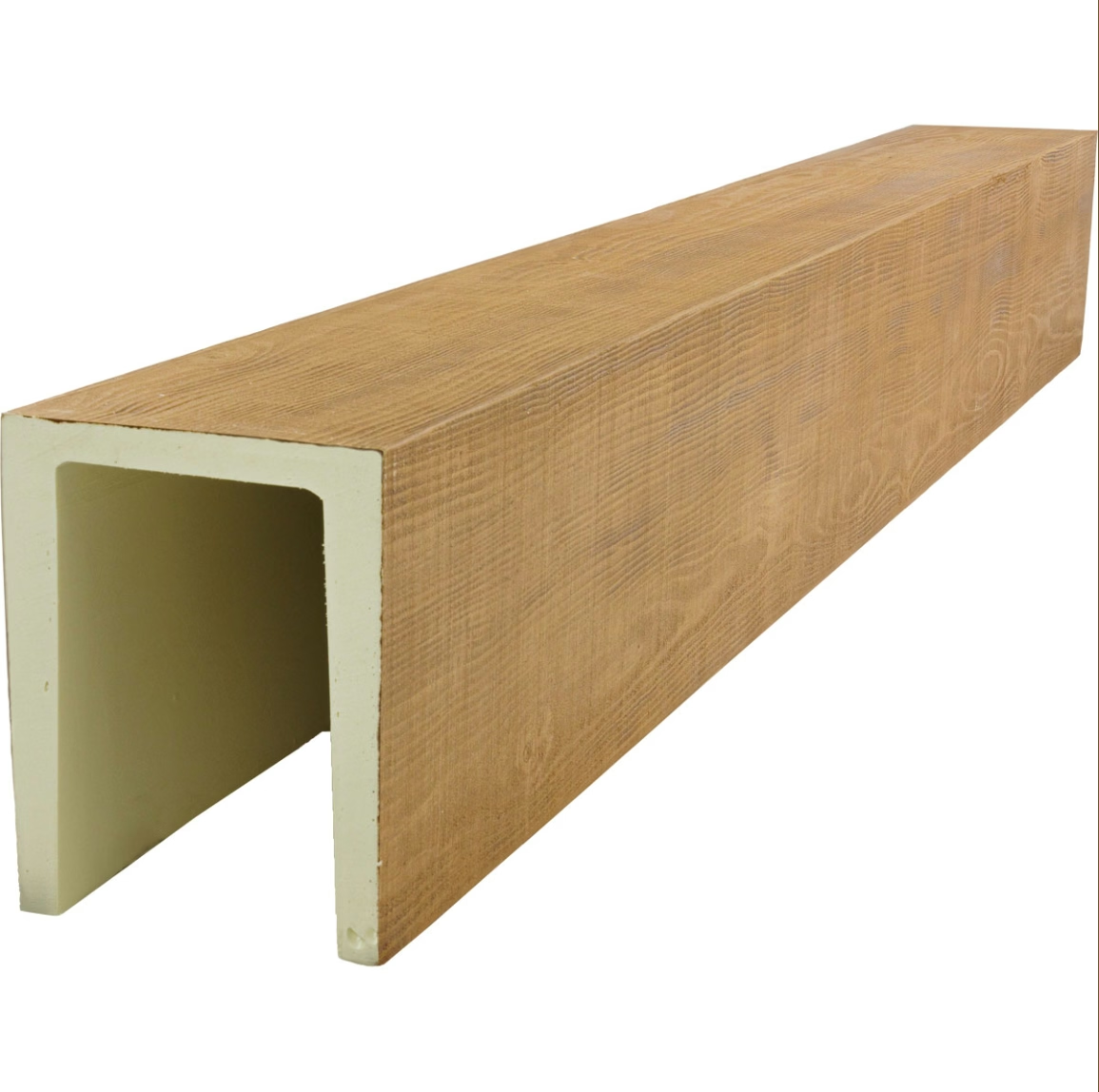
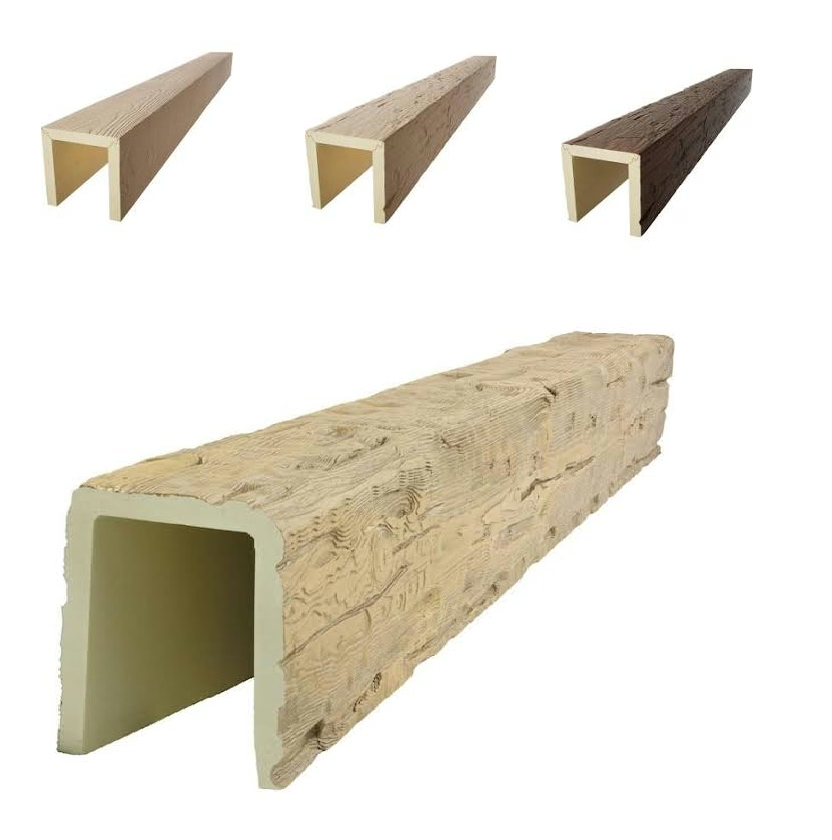
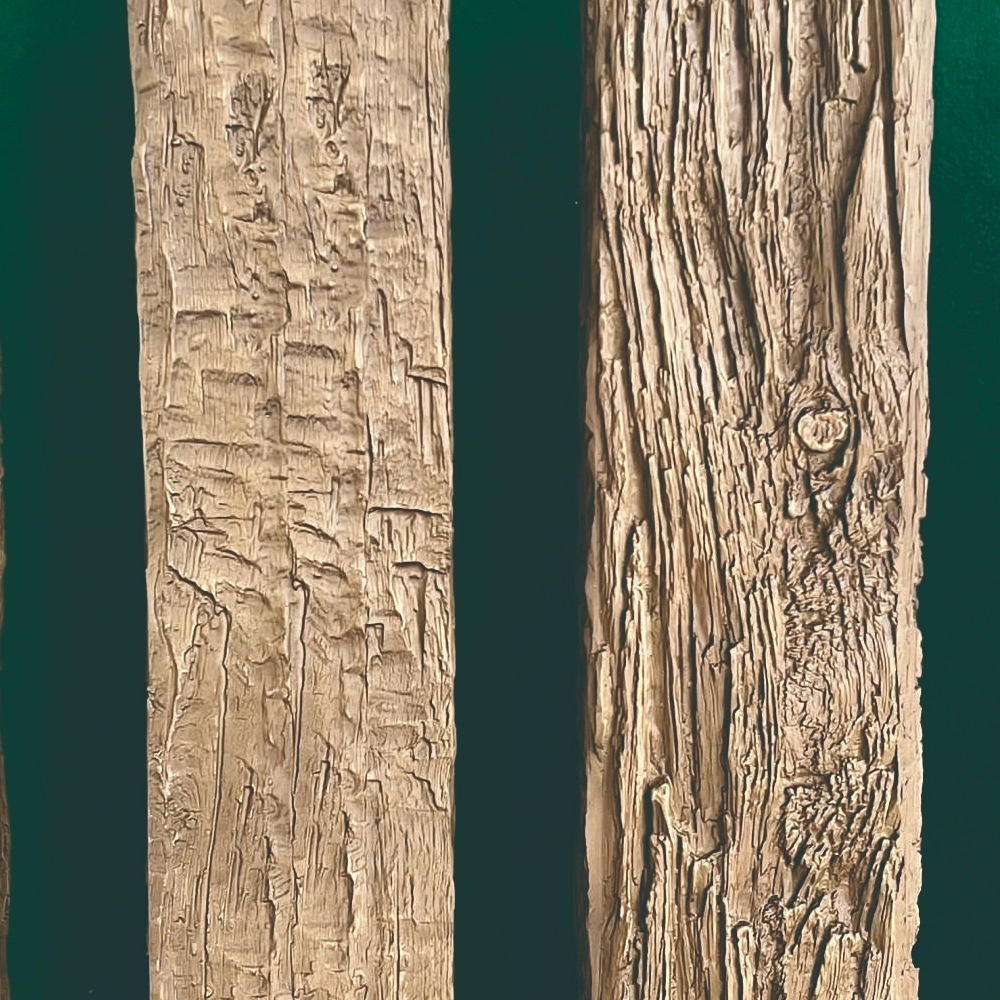
One of the most significant advantages that polyurethane faux beams offer over natural wood alternatives concerns dimensional stability—their ability to maintain consistent dimensions regardless of environmental conditions. Natural wood breathes with humidity changes, expanding when moisture levels rise and contracting when conditions dry out. This movement, while natural for wood, creates ongoing challenges for ceiling installations that are difficult to address permanently. Polyurethane faux beams sidestep these concerns entirely, providing the warm appearance of wood without the dimensional headaches that plague real timber.
Understanding why wood moves and how polyurethane avoids these problems helps explain the practical benefits of this material choice. The explanation involves wood's cellular structure, its natural moisture content, and the fundamental chemistry of polyurethane manufacturing. Each factor contributes to the dramatic difference in behavior that distinguishes synthetic beams from their natural counterparts.
The Science of Wood Movement
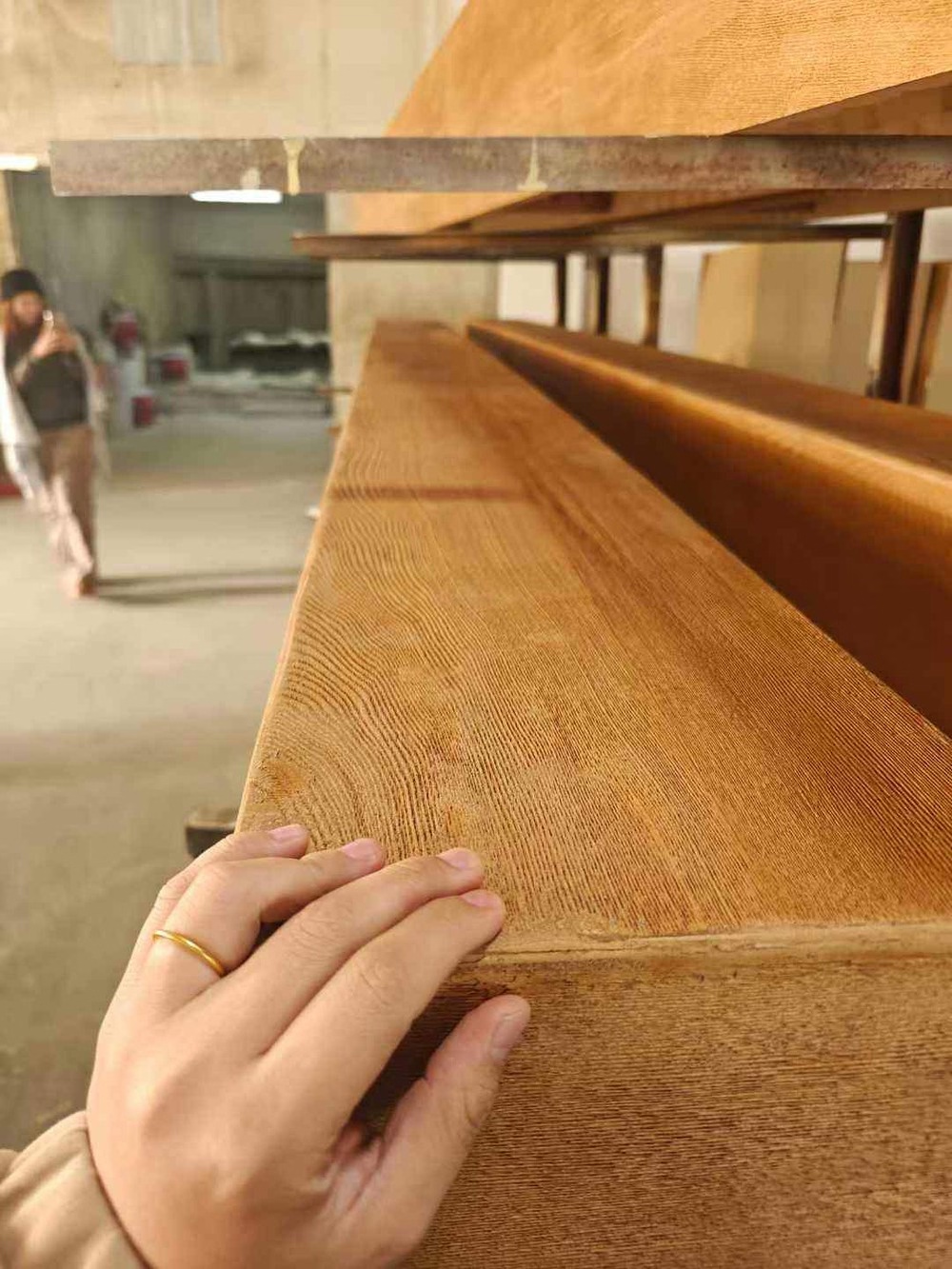
Wood's cellular structure includes microscopic channels that transport water throughout living trees. Even after milling into lumber and installation in buildings, wood retains some of this moisture-responsive behavior. When surrounding air humidity rises, wood absorbs moisture through its cell walls, causing them expand slightly. When humidity drops, wood releases moisture and contracts. This cycle continues throughout the wood's life, though the magnitude of movement decreases as wood ages and equilibrates with typical indoor conditions.
The direction of wood movement depends on grain orientation. Tangential grain—the growth rings running parallel to a board's face—expands and contracts most dramatically with humidity changes. Radial grain, perpendicular to growth rings, moves less significantly. Longitudinal grain, running the length of the board, changes hardly at all. This differential movement means that flat-sawn boards behave differently than quarter-sawn boards, creating complexity for builders trying to predict and accommodate wood movement.
For ceiling beams, this movement creates several potential problems. Joints between beam segments may open or close with seasonal changes. Fasteners may loosen as beams shift around them. Paint and finish films may crack where they bridge areas that move differentially. In severe cases, movement stress can cause checking, splitting, or other forms of wood degradation that affect both appearance and structural integrity.
How Polyurethane Achieves Stability
Polyurethane foam manufacturing creates a closed-cell structure fundamentally different from wood's open cellular network. The chemical reaction during foam expansion creates gas-filled cells enclosed by polyurethane walls, with essentially no pathways for moisture to enter or exit the material. Without moisture exchange capability, the dimensional changes that affect wood simply cannot occur.
The manufacturing process allows precise control over final product density and characteristics. Formulations can be adjusted to achieve specific performance properties, including dimensional stability under various temperature and humidity conditions. Quality manufacturers select formulations optimized for building applications, ensuring that installed beams will maintain their dimensions throughout their service life regardless of environmental fluctuations.
Temperature stability complements humidity resistance in polyurethane's favor. While extreme temperature changes can affect many materials, quality polyurethane beams tolerate the range of temperatures typically encountered in residential and commercial buildings without dimensional consequences. This thermal stability proves particularly valuable in spaces with temperature variations, such as sunrooms, conservatories, or buildings with limited climate control.
Practical Installation Benefits
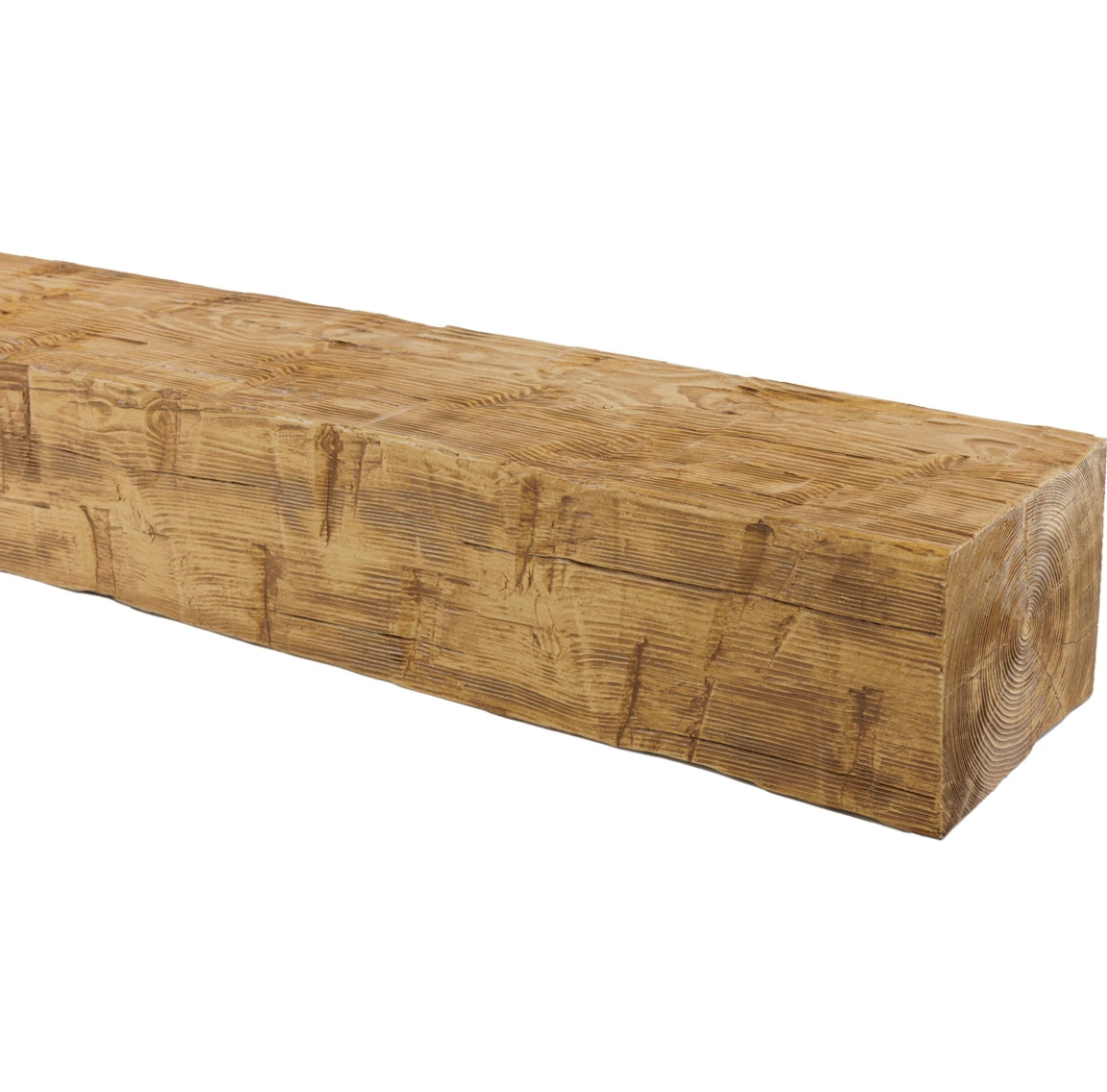
The stability of polyurethane beams simplifies installation compared to real wood. Builders don't need to account for expected movement when positioning beams, calculating fastener spacing, or planning joint locations. The installation proceeds as designed without accommodations for seasonal dimensional changes that real wood would require.
Fastener selection and spacing become straightforward when beams won't move after installation. Standard mounting brackets and hardware work reliably without the periodic checking and tightening that wood installations sometimes require. The consistent grip between fasteners and polyurethane holds indefinitely rather than loosening as wood fibers compress or shift around penetration points.
Joint construction between beam segments achieves cleaner results with stable materials. Gaps that are properly filled at installation remain filled indefinitely. Paint and finish applications remain intact without the cracking that often develops where dissimilar movements stress finish films. The visual continuity of properly installed polyurethane beams remains consistent year after year.
Long-Term Performance Advantages
Buildings benefit from polyurethane beams throughout their service life through consistent appearance and reliable performance. The finish applied at installation maintains its integrity without the touch-up painting that wood beams often require as movement causes localized finish failures. This reliability reduces maintenance requirements and costs that would otherwise accumulate over the beam's lifespan.
The consistent dimensions of polyurethane beams also benefit surrounding building materials. Wood beams that expand and contract push against adjacent materials, potentially causing cracks in drywall, plaster, or paint at beam perimeters. The stable behavior of polyurethane eliminates these stress sources, preserving the appearance of finishes throughout the building.
Moisture resistance adds another dimension to polyurethane beam stability. Unlike wood, which can absorb moisture leading to rot, mold, or structural degradation, polyurethane resists water damage entirely. This resistance proves particularly valuable in kitchens, bathrooms, and other areas where humidity levels fluctuate significantly or occasional water exposure might occur.
Comparing Costs Over Time
While polyurethane beams may carry higher initial costs than some wood alternatives, the total cost of ownership often favors the synthetic option. The maintenance required to keep wood beams looking their best—including refinishing, repair of movement damage, and periodic inspection—adds ongoing expense that polyurethane avoids. When these costs are factored into long-term project economics, the comparison often shifts in polyurethane's favor.
The extended service life of polyurethane beams without degradation provides additional value. Real wood beams may eventually require replacement due to rot, insect damage, or excessive deterioration from movement stress. Polyurethane beams face no such degradation mechanisms, potentially lasting the building's lifetime without replacement. This permanence adds value that initial cost comparisons don't capture.
Insurance and liability considerations may also favor polyurethane in some applications. Wood beams present fire concerns that polyurethane, depending on formulation, may reduce. Some polyurethane beams are available with fire-retardant additives that provide additional protection. Discuss specific fire performance requirements with manufacturers when relevant to your application.
Technical References
ASTM standards cited in every specification
Test Data
Lab results from internal testing program
Updated 2026
Reviewed against current product specs