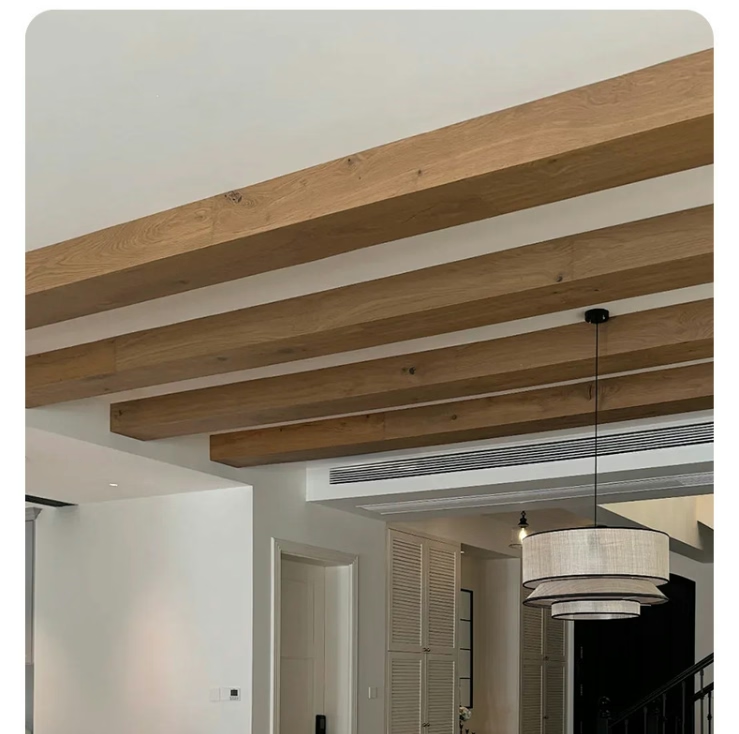
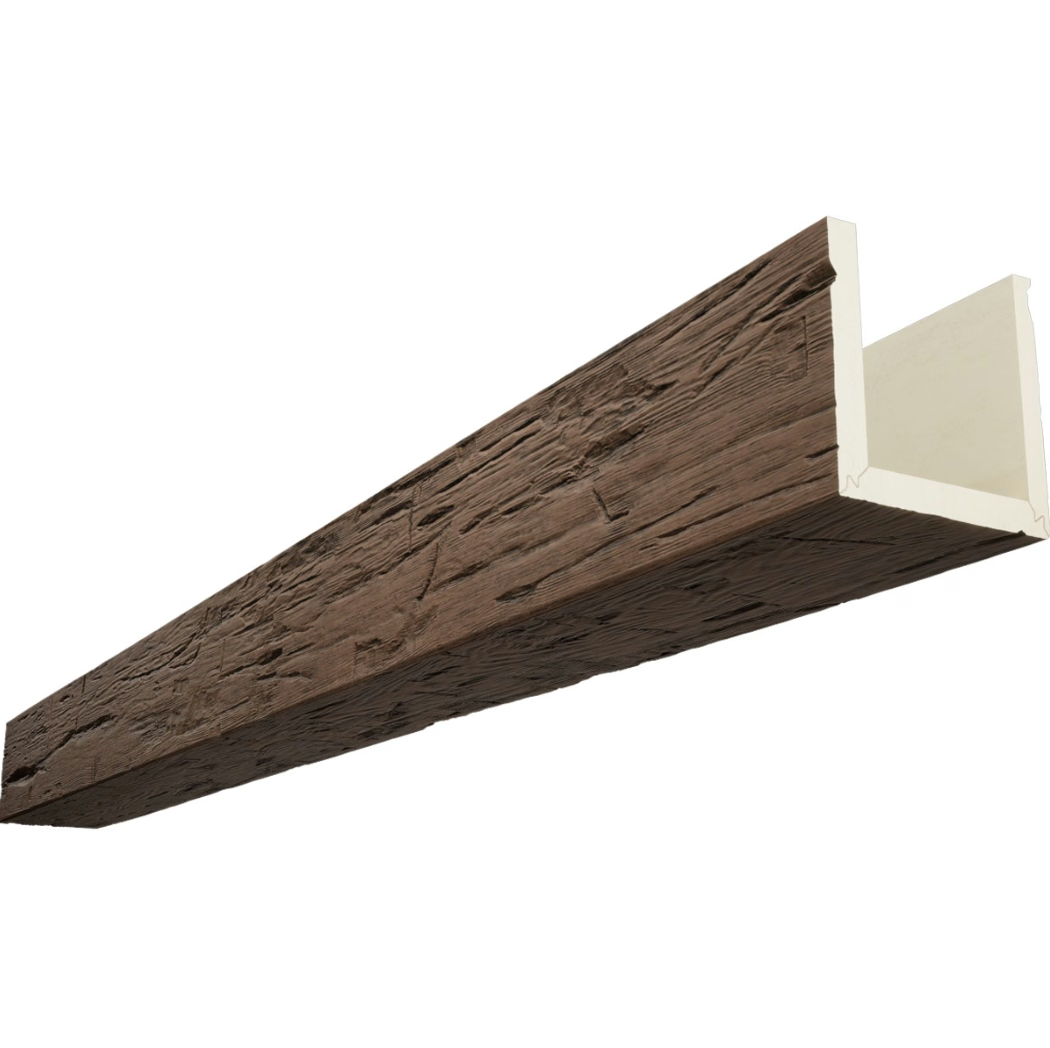
China dominates global polyurethane faux wood beam production, supplying products to markets worldwide through manufacturing scale, supply chain integration, and competitive pricing. Importing directly from Chinese manufacturers offers substantial cost advantages but introduces complexity that requires careful navigation. Understanding this process helps buyers make informed sourcing decisions whether pursuing direct import or working through intermediaries.
Why China Dominates Beam Production
Chinese manufacturing facilities benefit from economies of scale that no other production region approaches. Individual factories operate production lines dedicated to specific product categories, optimizing processes and equipment for maximum efficiency. This specialization produces quality at price points impossible in lower-volume production environments.
Supply chain integration provides additional competitive advantages. Raw material suppliers, component manufacturers, and finishing specialists cluster around major production centers, minimizing logistics costs and production delays. This ecosystem enables rapid scaling and competitive pricing that isolated production facilities cannot match.
Labor cost differentials contribute to pricing advantages, though this factor has diminished as Chinese wages have increased. Remaining cost advantages derive primarily from productivity, scale, and supply chain efficiency rather than labor arbitrage. Quality expectations have grown correspondingly as manufacturers invest in capability and process improvement.
Identifying Quality Manufacturers
Gold supplier status on platforms like Alibaba indicates suppliers investing in platform presence and buyer satisfaction. However, this status alone does not guarantee manufacturing capability or product quality. Verification through additional means remains essential for confident sourcing.
Factory establishment date and registration information reveal operational history. Long-established manufacturers have demonstrated survival through market cycles and process refinement. Newer entities require more careful verification of their capabilities and stability.
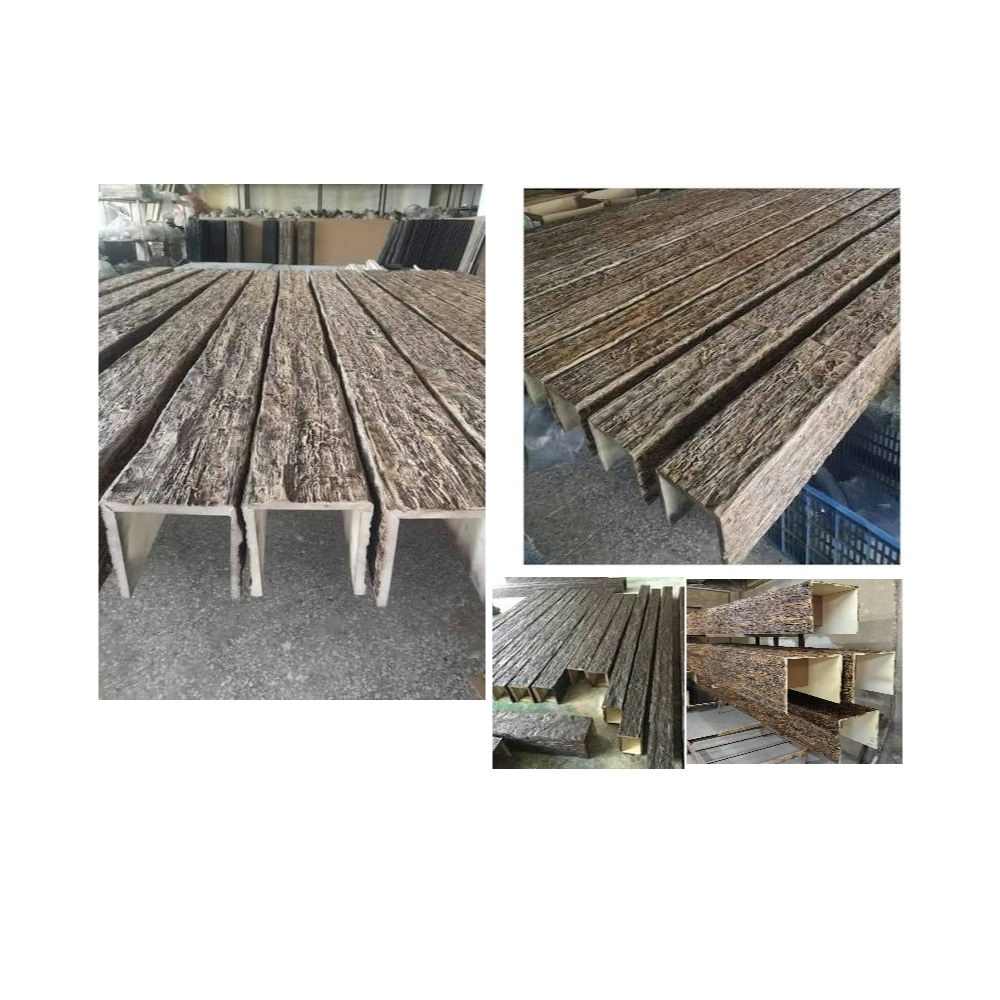
Production photographs, while easily faked or misleading, provide initial supplier assessment information. Videos showing actual production facilities offer better verification, particularly when showing current operations rather than archived footage. Live video calls during business hours provide real-time facility verification.

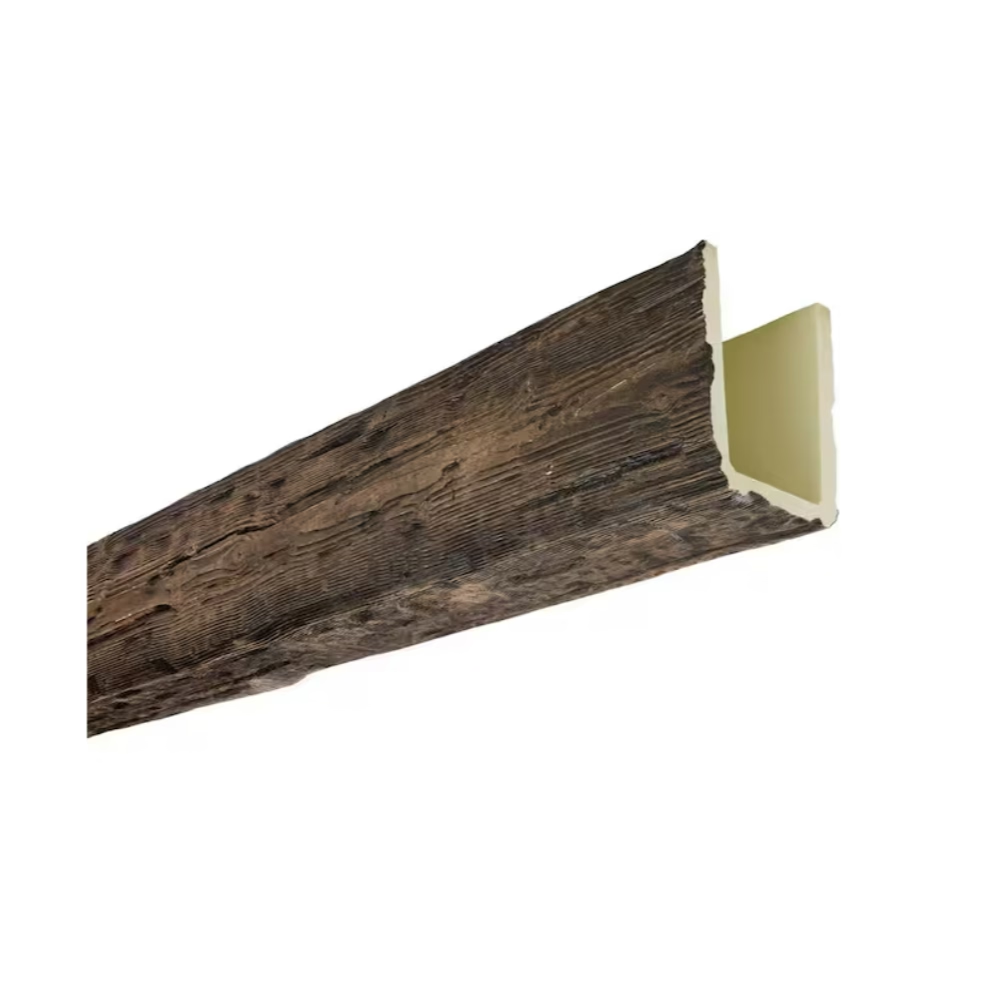
Sample Evaluation Process
Sample ordering provides essential quality verification before bulk commitments. Requesting samples from multiple potential suppliers enables comparison that identifies superior products and reliable partners. Sample costs represent minor investments against bulk order risk.
Physical examination of samples reveals density, surface quality, and construction details that specifications cannot fully describe. Weight comparison between samples indicates density consistency. Surface texture inspection identifies manufacturing quality and finish consistency.
Destructive testing provides ultimate quality verification. Cutting samples reveals internal density distribution and material consistency. Weight submersion tests demonstrate moisture resistance. Temperature exposure testing indicates thermal stability for specific application requirements.
Quality Control Implementation
Third-party inspection services provide independent verification at manufacturing or shipping points. Companies like Bureau Veritas, SGS, and Asia Quality Control offer inspection services throughout China. Inspection criteria should be specified precisely in advance to ensure relevant verification.
Inspection checklists should address critical quality characteristics including dimensions, surface finish, color consistency, weight, packaging integrity, and quantity verification. Statistical sampling plans provide reasonable assurance without 100% inspection costs for large orders.
Pre-shipment inspection offers final verification before products leave China. This inspection catches problems while products remain accessible for replacement or rework. Post-shipment discovery of quality issues creates leverage problems that compromise issue resolution.

Shipping and Logistics Options
Sea freight represents the dominant shipping mode for bulk beam orders due to cost advantages. Full container load (FCL) shipments provide lowest per-unit shipping costs for sufficiently large orders. Less than container load (LCL) shipments combine buyer cargo with other shippers for smaller volumes.
Shipping time from major Chinese ports typically ranges from 15-35 days depending on destination and service level. Express shipping via air freight suits urgent requirements but multiplies shipping costs substantially. Shipping method selection balances time sensitivity against cost considerations.
Incoterms define responsibility and risk allocation between buyers and suppliers. EXW (Ex Works) places buyers responsible for all shipping from factory gates. FOB (Free on Board) includes delivery to departure vessel. CIF (Cost, Insurance, Freight) adds shipping and insurance to named destination ports. Understanding incoterms prevents costly misunderstandings.
Import Compliance Requirements
Customs duties apply to imported polyurethane beams based on product classification and origin. HTS codes determine duty rates that vary significantly between product categories. Professional customs brokers identify appropriate classifications and ensure compliance.
Product compliance requirements affect where imported beams may be sold or installed. Fire safety certifications from recognized testing laboratories satisfy building code requirements in most jurisdictions. Importing products without required certifications creates legal liability and installation restrictions.
Documentation requirements include commercial invoices, packing lists, bills of lading, certificates of origin, and compliance certifications. Missing or incorrect documentation causes customs delays that incur storage charges and disrupt project schedules. Professional freight forwarders manage documentation requirements efficiently.
Currency and Payment Considerations
Payment terms for Chinese suppliers typically require significant upfront payment for new relationships. 30-50% deposit with balance before shipment represents common terms. Established relationships may qualify for improved terms including letters of credit or open account arrangements.
Currency exchange rates affect total landed costs substantially. Payment timing decisions should consider exchange rate volatility for large orders. Forward contracts or currency hedging provide rate certainty for budget-sensitive projects.
Payment methods range from wire transfers to letters of credit. Wire transfers offer simplicity but limited recourse for non-delivery. Letters of credit provide payment protection that benefits new relationships, though with added costs and administrative requirements.
Importing high-quality faux wood beams from China rewards buyers who invest in proper supplier verification, quality control, and logistics management. The cost advantages make this effort worthwhile for serious volume buyers, while smaller purchasers may prefer established intermediaries who have already navigated these complexities.
Technical References
ASTM standards cited in every specification
Test Data
Lab results from internal testing program
Updated 2026
Reviewed against current product specs