
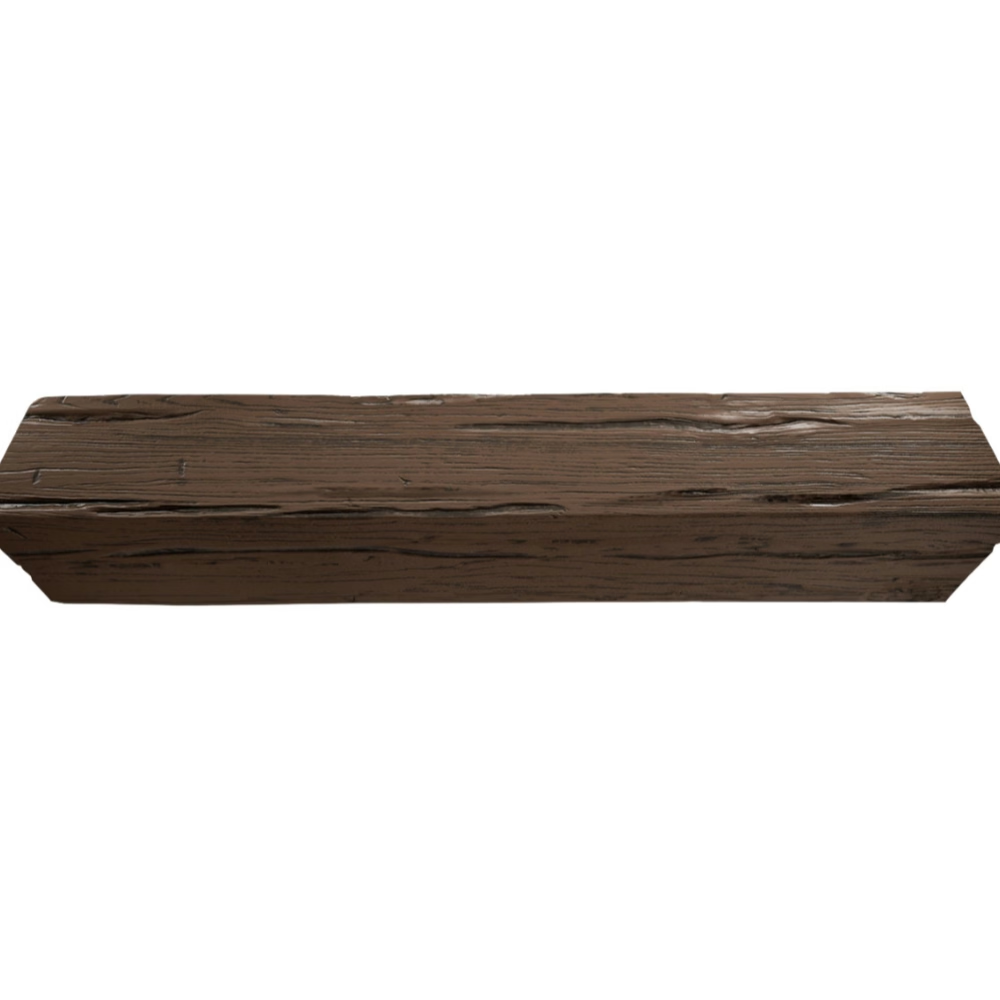
Few things undermine the beauty of a carefully designed ceiling more than a crack running along the length of what was supposed to be a pristine faux timber beam. Splitting — the separation of the beam's surface along a linear plane — is one of the most common quality concerns reported by homeowners and installers. Understanding why splitting occurs, and what modern manufacturing does to prevent it, is essential knowledge for anyone specifying or working with PU faux wood beams.
Why Splitting Happens
To understand split resistance, it helps to understand the mechanics of splitting itself. Traditional timber splits because it has grain — long, aligned cellulose fibers that create planes of weakness running lengthwise through the wood. When wood dries unevenly, is exposed to impact, or is fastened improperly, cracks propagate along these grain planes, producing the characteristic split.
Polyurethane does not have grain, which in theory should make it immune to splitting along the same planes as wood. However, polyurethane beams can and do split under certain conditions. The most common causes include impact damage that creates stress concentrations, thermal stress from extreme or uneven temperature changes, improper fastening that creates localized stress points, and internal voids or inconsistencies in the beam's core structure that create planes of weakness.
Perhaps the most insidious cause is differential expansion within the beam itself. If one part of a beam is exposed to heat or sunlight while another part remains shaded — a common scenario in ceiling installations with recessed lighting or directional spotlights — the warm side expands slightly while the cool side does not. This differential movement creates internal stress that can manifest as surface cracking over time.
Material Formulation for Split Resistance
Modern split-resistant beam formulations address these vulnerabilities through carefully balanced material chemistry. Impact modifiers are additives that increase the material's toughness and ability to absorb energy without cracking. These compounds work by creating a more flexible polymer network that can deform slightly under stress rather than propagating a crack.
Thermal stabilizers help the beam maintain consistent dimensions across a range of temperatures. By reducing the coefficient of thermal expansion, these additives minimize the differential movement that leads to thermal stress cracking. High-quality split-resistant formulations specify thermal expansion rates that are closely matched to typical ceiling installation environments, including the heat generated by adjacent light fixtures.
Fiber reinforcement is used in some premium formulations to create an internal structure that distributes stress more evenly. Short glass fibers or mineral fillers embedded in the polyurethane matrix act like rebar in concrete, providing tensile strength and preventing crack propagation. The result is a beam that can withstand impacts and thermal stress that would crack a formulation without reinforcement.
Manufacturing Quality and Consistency
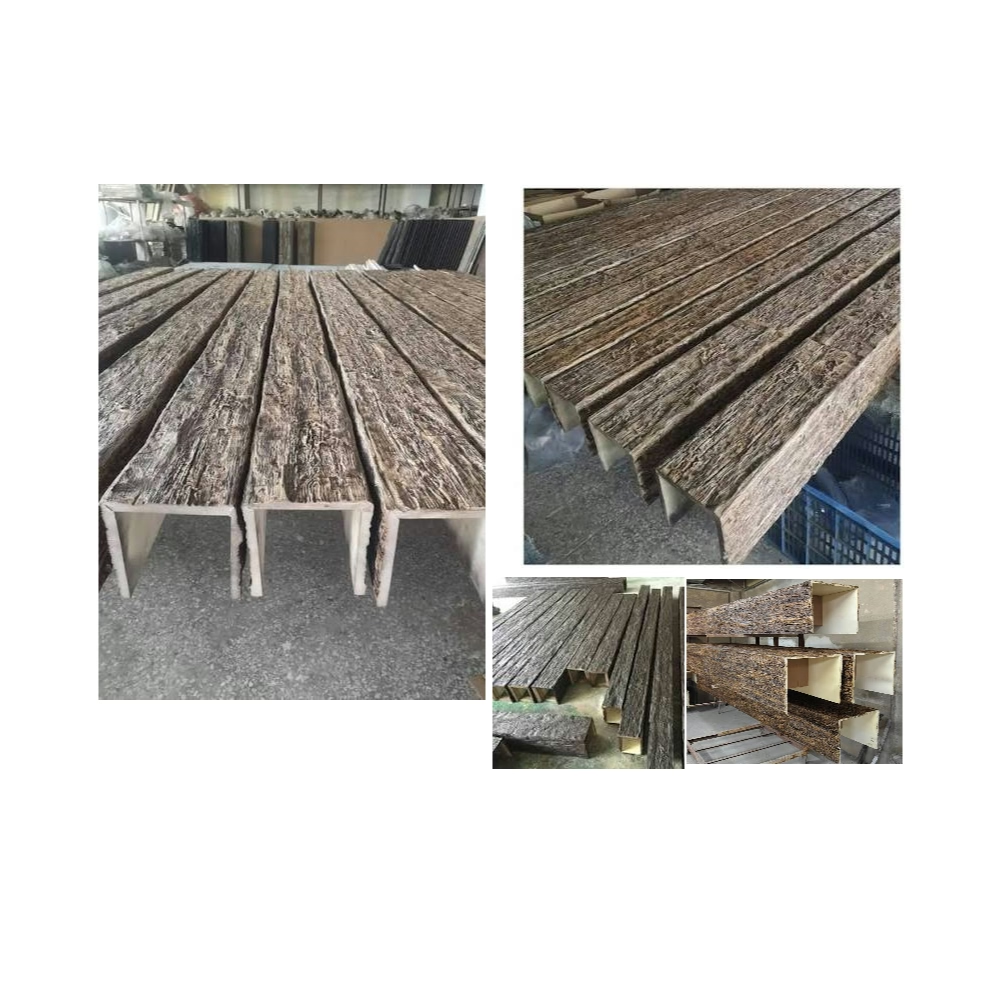
Even the best material formulation cannot compensate for manufacturing defects. Voids — small air pockets trapped within the beam's core during the molding or casting process — are among the most common sources of splitting. When a void exists near the surface, it creates a stress concentration that makes that area vulnerable to cracking under load or thermal stress.
Quality manufacturers address this through controlled manufacturing processes that minimize air entrapment. This may involve vacuum-assisted casting, careful control of pour rates and mold filling patterns, and post-casting inspection using ultrasound or similar non-destructive testing methods. While these processes add cost, they dramatically reduce the incidence of splitting in the field.
Surface finish quality also plays a role. Beams with a thick, well-bonded surface coating are more resistant to splitting than those with thin or poorly adhered finishes. The coating acts as a protective skin that distributes stress and prevents surface imperfections from developing into full cracks. When specifying beams, ask about coating thickness and adhesion specifications as indicators of quality.
Installation Practices That Prevent Splitting
Proper installation is as important as manufacturing quality in preventing splitting. Fastener selection and placement are critical factors. Nails or screws driven too close to the beam's edge create stress concentrations that can lead to splitting along the fastener line. Following the manufacturer's specified fastener spacing and edge distance requirements prevents this type of failure.
Using the right fastener type matters as well. Smooth-shank nails are more likely to split polyurethane than ring-shank or screw-thread fasteners, which grip the material more securely with less localized stress. For beams that will be subject to movement or vibration, structural screws with a threaded shaft provide the most secure hold.
Allowing clearance for thermal movement is another important consideration. Beams that are fitted too tightly between fixed structural elements have no room to expand when heated, and the resulting compressive stress can cause surface cracking. Specifying adequate expansion gaps at the ends of beam runs — typically a minimum of one-quarter inch — allows the beam to move freely without transmitting stress to the surface.
Evaluating Split Resistance in Product Selection
When comparing beam products for a project, look for manufacturer certifications or test data related to impact resistance and thermal cycling. ASTM standards for plastic materials include test methods for impact resistance (Izod or Charpy tests) and thermal aging that can indicate a product's likely performance in service. Products that meet or exceed recognized standards for construction materials are generally more reliable than those without documented testing.
Warranty terms also provide useful information. Manufacturers who are confident in their split resistance typically offer warranties that explicitly cover cracking and splitting, not just manufacturing defects. A warranty that excludes splitting or that only covers manufacturing defects suggests the manufacturer may be aware of split-related vulnerabilities in their product.
For trade professionals working with international clients, it is worth noting that split resistance performance can vary by product line within a single manufacturer's catalog. Entry-level products may use less refined formulations that are more prone to splitting, while premium lines benefit from the latest material science developments. Explaining these differences to clients helps set appropriate expectations and ensures the right product is selected for each application.
Technical References
ASTM standards cited in every specification
Test Data
Lab results from internal testing program
Updated 2026
Reviewed against current product specs


