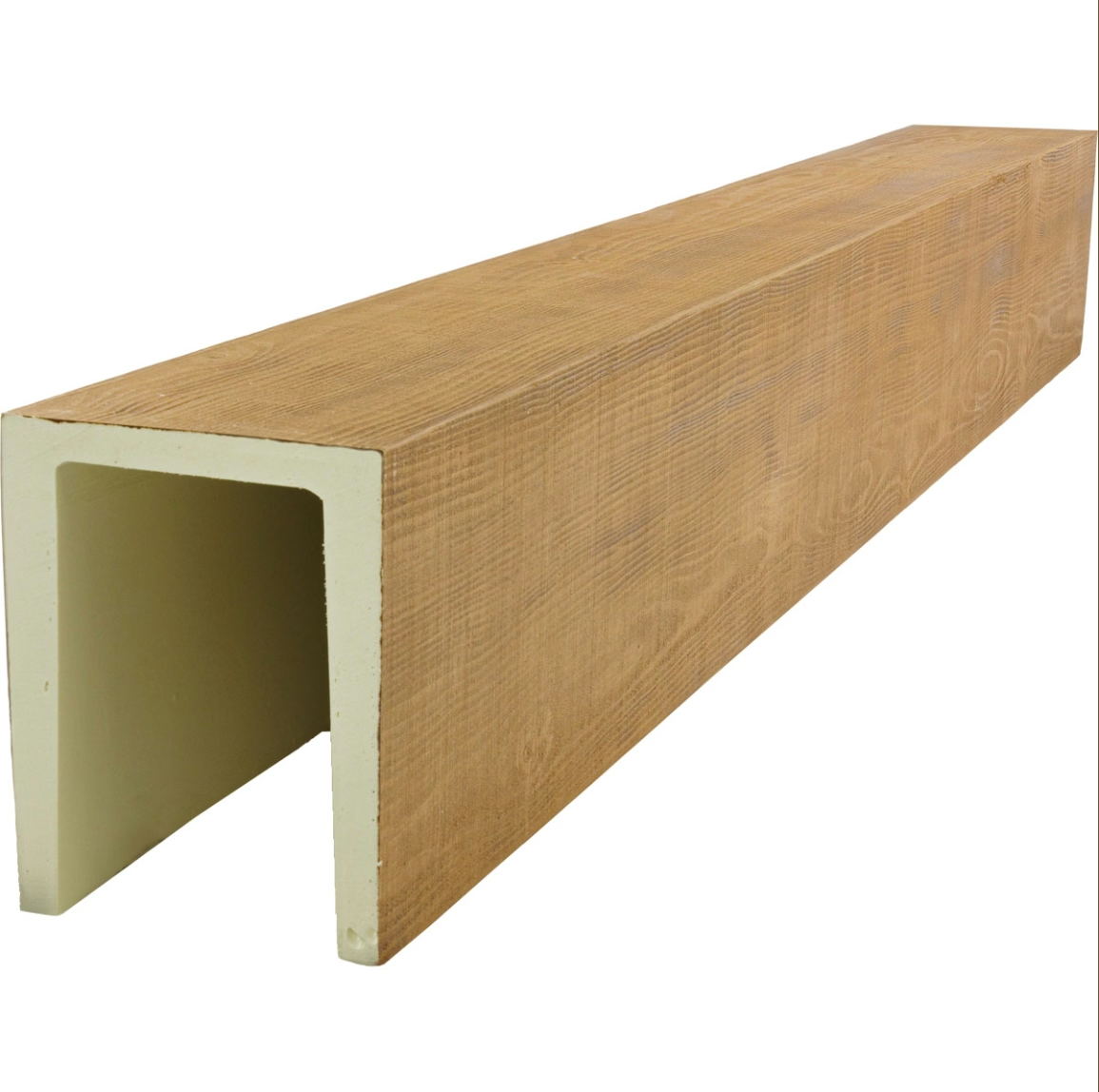
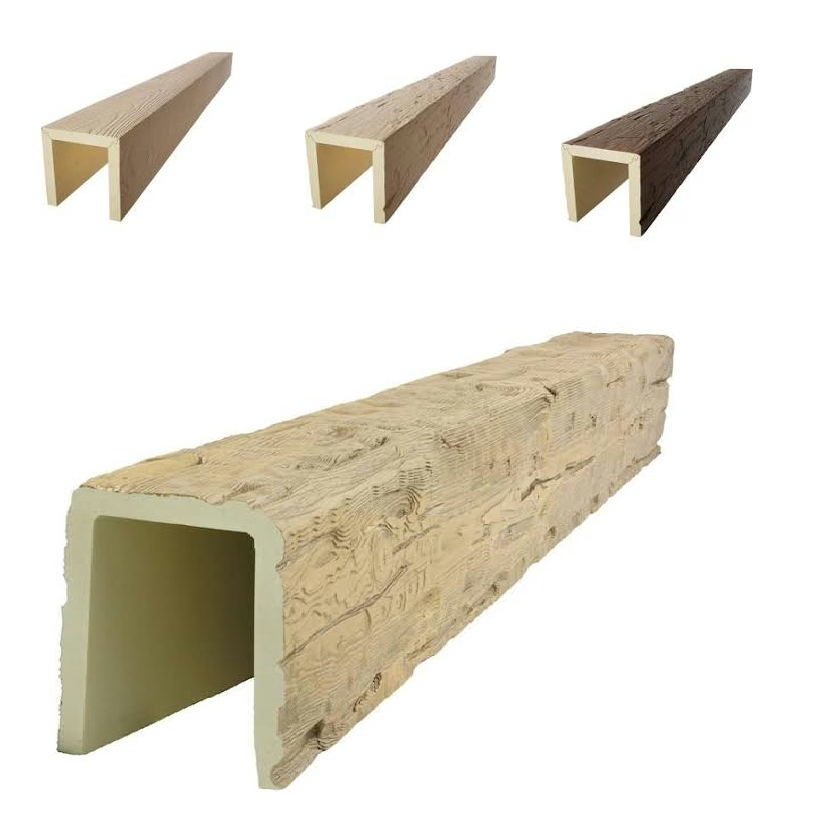
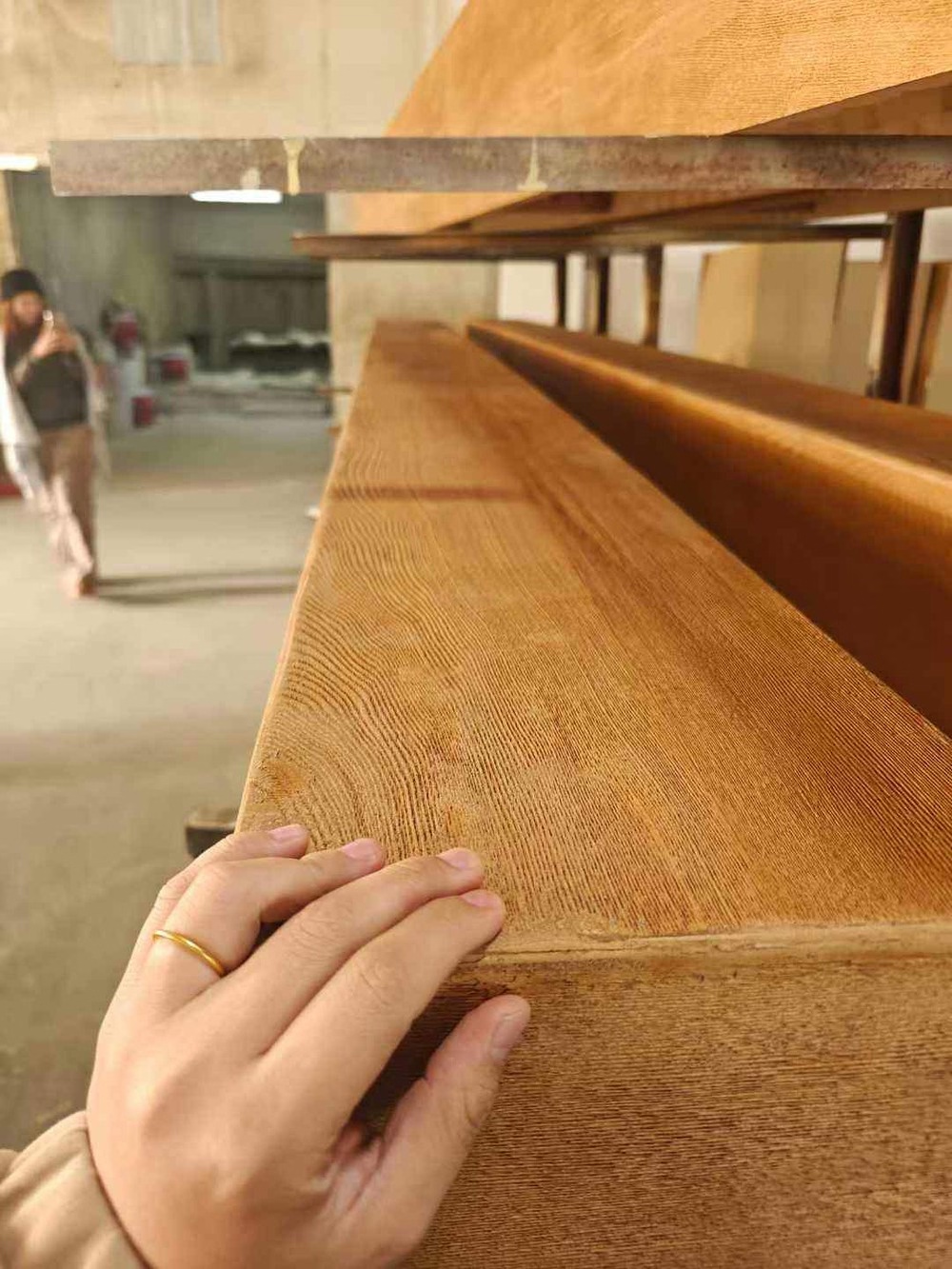
The visual beauty of a faux timber beam means very little if the beam itself does not hold up over years of ceiling installation. Fortunately, the polyurethane beam industry has developed sophisticated engineering approaches that address the structural demands of ceiling installations while maintaining the aesthetic qualities that make these products desirable. Understanding what goes into an engineered PU beam — from core formulation to reinforcement design — helps buyers and specifiers make informed decisions about the products they choose.
The Foundation: Core Material Engineering
The core material of a PU faux beam is not simply poured polyurethane. It is a carefully engineered formulation designed to provide specific performance characteristics including dimensional stability, impact resistance, thermal performance, and compatibility with mounting systems. The base polyurethane chemistry is modified with additives that enhance each of these properties.
Density is one of the most fundamental characteristics of the core material. Higher-density formulations provide greater impact resistance and better fastener-holding capacity but are heavier and more expensive. Lower-density cores are lightweight and cost-effective but may be more susceptible to damage from impact or heavy loading. The best engineered beams use a density that is optimized for the specific application — typically in the range of eight to fifteen pounds per cubic foot for most ceiling beam applications.
The polymer chain structure of the polyurethane affects the beam's long-term stability. Closed-cell formulations resist moisture absorption and maintain consistent dimensions across humidity variations. Open-cell structures may absorb more moisture but offer different performance characteristics in terms of flexibility and thermal insulation. Understanding the specific formulation's cellular structure helps predict its performance in different environments.
Internal Reinforcement Systems
Many engineered PU beams incorporate internal reinforcement to enhance their structural performance beyond what the polyurethane core alone can provide. These reinforcement systems work invisibly within the beam's hollow interior, providing additional strength and stability without affecting the external appearance.
Wood stave cores — strips of finger-jointed or laminated wood embedded within the polyurethane shell — are among the most common reinforcement approaches. The wood provides excellent fastener-holding capacity and structural rigidity, while the surrounding polyurethane shell provides the decorative wood-grain surface. The wood core is typically concealed entirely within the beam, visible only if the beam is cut during installation.
Aluminum channel inserts provide a different type of reinforcement. Lightweight aluminum extrusions shaped to fit within the beam's interior create a rigid spine that resists bending and twisting. These inserts are particularly effective in long-span applications where beam deflection between supports is a concern. The aluminum is concealed within the hollow beam and does not affect the external appearance.
Composite reinforcement using fiberglass or carbon fiber materials offers high strength with minimal weight addition. These materials are more commonly found in premium or specialized beam products but represent the current frontier of PU beam engineering. They provide exceptional rigidity and dimensional stability while keeping the beam's weight very low.
Surface Engineering and Finish Durability
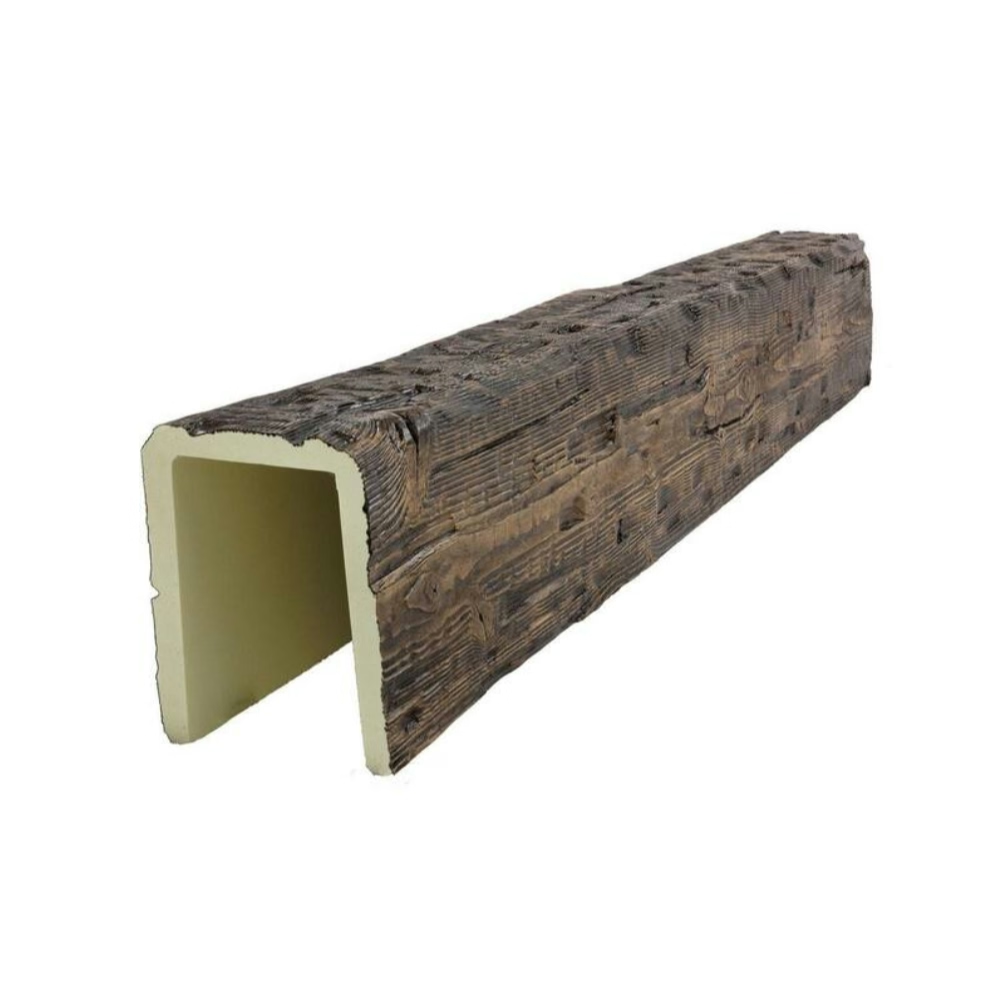
The external surface of an engineered PU beam receives its own engineering attention. The surface is where the beam's aesthetic character is determined, and it must also provide the durability needed to withstand handling, installation, and years of exposure to the interior environment.
High-quality surface formulations use a topcoat layer that is chemically distinct from the core material, optimized for scratch resistance, UV stability, and color retention. This topcoat is typically an acrylic urethane or similar coating that bonds aggressively to the polyurethane substrate while providing a tough, durable finish. The thickness and quality of this topcoat are key indicators of overall product quality.
Texture engineering ensures that the beam's surface replicates the look of natural wood convincingly and consistently. Modern texturing techniques use carefully designed molds and surface treatments to create grain patterns, knot patterns, and weathering effects that look natural without the variability and defects of real timber. The texture must be deep enough to read convincingly at normal viewing distances but smooth enough to clean and maintain easily.
Environmental Performance Engineering
Engineered PU beams are designed to perform consistently across the range of environmental conditions they may encounter in service. This includes temperature extremes, humidity variations, and exposure to airborne contaminants. Understanding these environmental factors helps specifiers choose the right product for each application.
Thermal cycling performance is particularly important in buildings where ceiling temperatures may fluctuate significantly. Beams installed directly beneath poorly insulated roof assemblies, or in rooms with significant solar heat gain, can experience temperatures that vary by thirty degrees or more between day and night. An engineered beam formulation accounts for this thermal movement without developing cracks, delaminations, or surface distortions.
Moisture resistance is inherent in polyurethane but can be enhanced through formulation additives and surface coatings. In environments with high humidity — kitchens, bathrooms, swimming pool areas — specifying beams with enhanced moisture resistance ensures that the product maintains its appearance and structural integrity over time. This is one area where the difference between an entry-level and a premium product is often most apparent.

Quality Standards and Testing
Reputable manufacturers subject their engineered beam products to systematic testing that verifies their performance characteristics. Load testing confirms the beam's ability to support its own weight plus any additional loads across the specified span. Impact testing verifies resistance to damage from accidental contact. Thermal cycling testing simulates years of temperature variations in an accelerated timeframe.
Look for manufacturers who can provide test data and load charts based on recognized standards. ASTM International, the International Code Council, and other standards organizations publish test methods and acceptance criteria that provide a reliable basis for comparing different products. A manufacturer who can confidently share this data demonstrates transparency and product confidence that is worth valuing.
For international trade applications, verify that the product meets the relevant standards for the target market. European, North American, Australian, and other regional markets have different requirements for construction materials, fire performance, and chemical emissions. Confirming compliance with the applicable standards before ordering prevents costly surprises at customs inspection or during project final inspection.
Technical References
ASTM standards cited in every specification
Test Data
Lab results from internal testing program
Updated 2026
Reviewed against current product specs