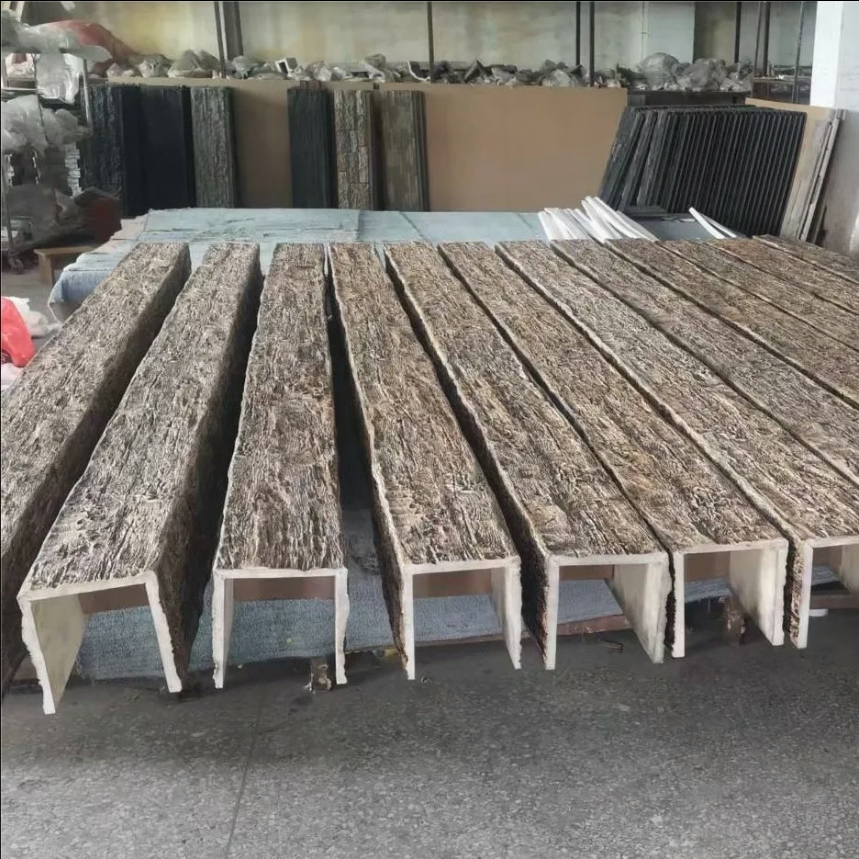
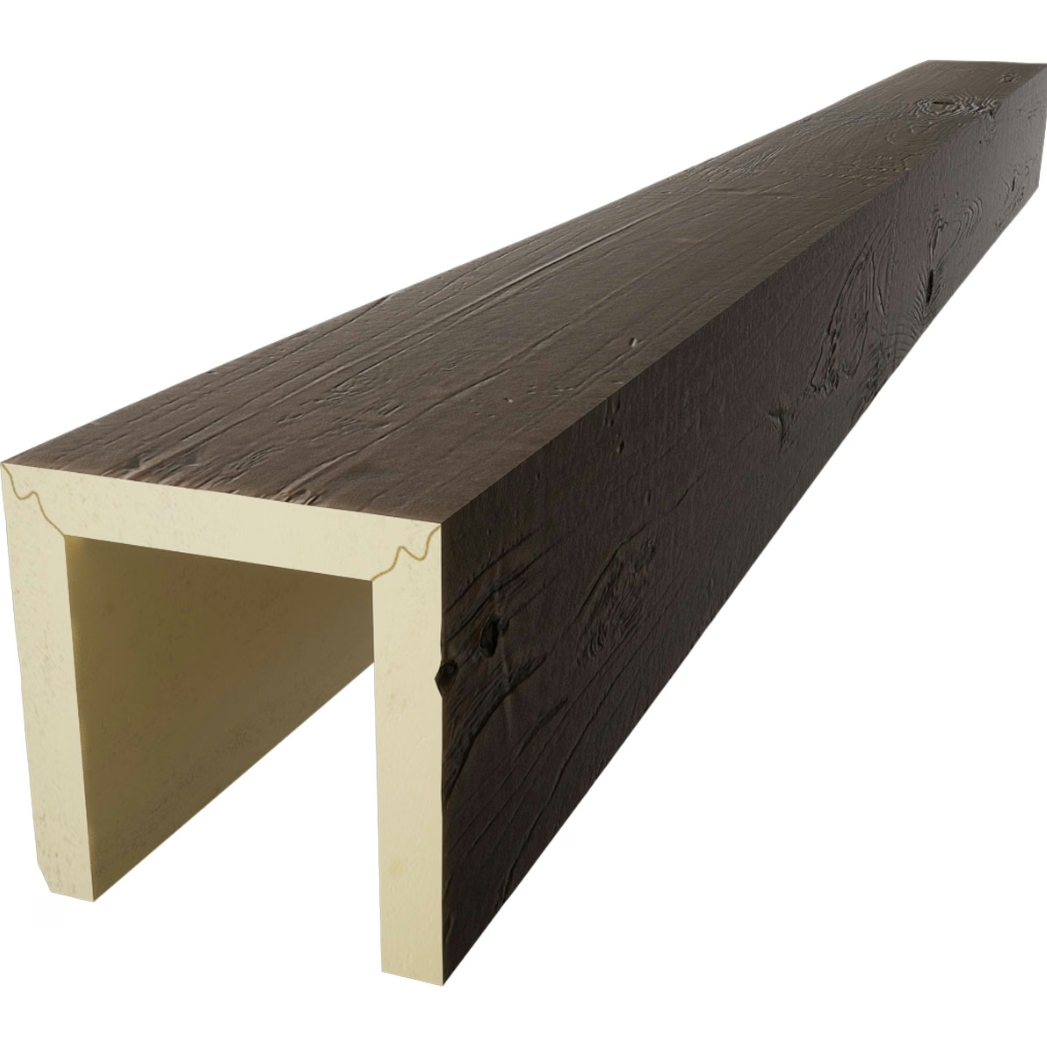
Custom staining projects demand materials that give finishers maximum control over the final result. Unfinished polyurethane faux wood beams serve this purpose exceptionally, arriving with surfaces optimized for stain acceptance while lacking the pre-applied finishes that limit modification options. This blank canvas approach appeals to designers and contractors who need precise color matching or unique aesthetic outcomes that standard product offerings cannot provide.
The term "unfinished" in this context refers specifically to the absence of factory-applied coatings, not any deficiency in manufacturing quality. These beams still undergo the same precision molding and texturing processes as their pre-finished counterparts. The surface remains clean, consistent, and entirely ready for stain or paint application upon arrival. No additional preparation beyond light sanding and dust removal typically proves necessary.
Selecting unfinished beams shifts certain decisions from the manufacturer to the installer, which many professionals view as an advantage rather than a burden. Controlling the finishing process means controlling the project timeline, managing inventory without forecasting finish color needs, and maintaining flexibility for last-minute design changes. These practical considerations make unfinished products particularly attractive for larger installations where color coordination complexity increases.
Advantages of the Blank Canvas Approach
Inventory simplification represents one of the most compelling reasons to choose unfinished beams. A warehouse stocking five stain options might need fifty SKU combinations to cover common beam sizes in each finish. Switching to unfinished beams reduces inventory requirements dramatically while simultaneously expanding color possibilities. Customers specify their exact color requirement, and finishing happens after order confirmation.
Projects with aggressive timelines particularly benefit from this approach. Pre-finished beams must be ordered in specific colors, potentially requiring extended lead times for less common finishes. Unfinished beams ship immediately from existing stock, with staining completing on-site or through local finishing specialists within days. This acceleration can mean the difference between meeting and missing project deadlines.
Quality control also improves when finishing happens in controlled environments rather than manufacturing facilities. Site conditions, including temperature, humidity, and dust levels, can be managed more precisely in dedicated finishing areas. The beam spends its entire finishing period in a consistent environment, eliminating variables that might cause batch-to-batch color variation in factory-finished products.
Understanding Surface Properties for Stain Selection
Polyurethane surfaces behave differently from natural wood when accepting stains, requiring adjusted expectations and techniques. Natural wood contains actual cellular structure that absorbs stain into the material itself. Polyurethane, being non-porous at the molecular level, requires stain to adhere mechanically to the surface rather than penetrating deeply. This distinction affects both application technique and long-term durability.
The best results come from stains specifically formulated for synthetic surfaces, though standard wood stains also perform adequately with proper surface preparation. Gel stains work particularly well on polyurethane, providing thick color application that stays where applied without running or pooling. These products build color through layering rather than penetration, making them forgiving of application inconsistencies.
Water-based stains present unique considerations for polyurethane applications. These products dry quickly, which benefits production efficiency but leaves minimal working time for blending and feathering. Oil-based stains provide longer open time, allowing more deliberate application, though ventilation requirements increase accordingly. The choice between these options depends on project scale, environment, and applicator experience level.
Preparation Steps Before Staining
Proper preparation determines finishing success more than any other factor. Even the finest stain applied to inadequately prepared surfaces produces disappointing results. The preparation sequence begins with a thorough inspection of each beam surface, identifying any manufacturing defects, shipping damage, or contamination that might affect finish quality.
Light sanding with fine-grit sandpaper, typically 220 to 320 grit, creates the ideal surface for stain adhesion. This sanding step must be uniform across the entire surface, avoiding heavy pressure in any area that might create visible scratches. The goal is creating micro-abrasions that mechanically anchor the stain film without altering the beam's dimensional accuracy or surface contour.
Cleaning follows sanding immediately, removing all dust particles generated by the sanding process. Compressed air blows dust from corners and texture grooves, followed by vacuuming and finally wiping with a tack cloth or slightly damp lint-free cloth. Any remaining particles become embedded in the finish, creating visible imperfections that require correction.
Handling Complex Color Requirements
Projects requiring precise color matching to existing elements benefit from systematic color development processes. Beginning with the lightest stain in the anticipated color family, successive coats of darker stains build complexity while allowing assessment after each application. This incremental approach prevents over-application and provides multiple opportunities to adjust direction.
Custom color matching services offered by stain manufacturers can accelerate the development process for complex requirements. Providing physical samples of the target color enables laboratory formulation of matched products. While these services require additional lead time and potentially higher per-unit costs, they ensure color accuracy that mixing trials might not achieve.
Documentation of successful formulas protects against future reproduction difficulties. Recording exact products, application techniques, and drying times creates a reference library that proves invaluable when maintenance work requires matching finishes years later. This documentation habit separates professional operations from amateur efforts in the finishing trades.
Environmental Considerations in Beam Finishing
Modern finishing operations increasingly prioritize environmental responsibility without sacrificing quality outcomes. Low-VOC (volatile organic compound) stain formulations meet regulatory requirements while protecting worker health. These products have improved dramatically in recent years, with many matching or exceeding the performance of traditional solvent-based alternatives.
Water-based finishes offer the most environmentally responsible option for indoor applications. These products clean up with soap and water, eliminate hazardous solvent disposal concerns, and release minimal odors during application and curing. Performance limitations in color depth and durability have largely been addressed through advanced formulation chemistry, making water-based options viable for most residential and commercial applications.
Responsible finishing also includes proper waste management for contaminated materials, brushes, and application equipment. Local regulations typically govern disposal of stain-saturated rags and unused stain products. Professional finishers maintain relationships with hazardous waste disposal services, ensuring compliance while keeping work sites safe for occupants and workers alike.

Unfinished polyurethane faux wood beams empower designers and contractors with finishing flexibility that pre-finished products cannot match. From inventory efficiency to timeline acceleration to color control, the advantages span practical and aesthetic considerations. Understanding surface properties, preparation requirements, and color development techniques enables successful outcomes across diverse project types and design requirements.
Technical References
ASTM standards cited in every specification
Test Data
Lab results from internal testing program
Updated 2026
Reviewed against current product specs


