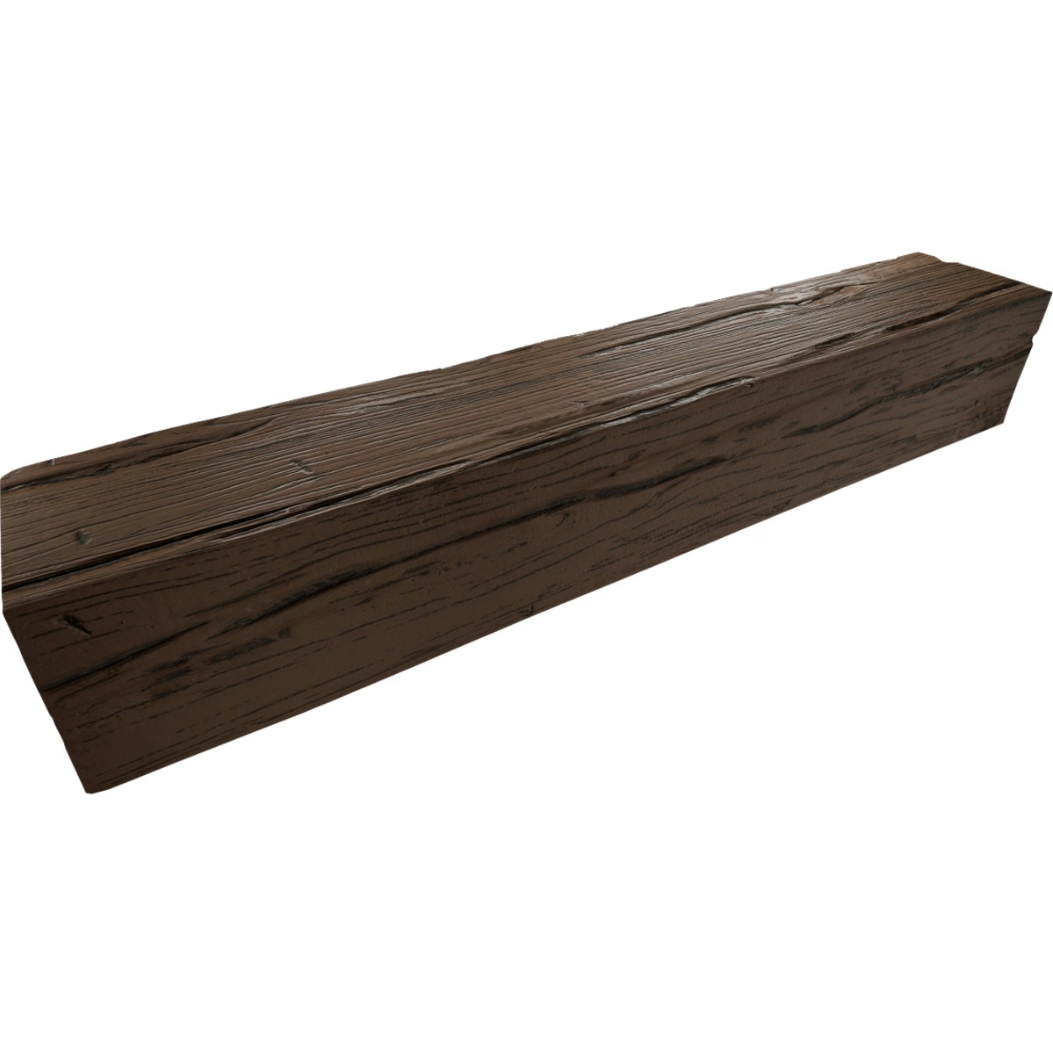
Durability represents a primary concern for any building material investment, and ceiling beams must withstand challenges that wall and floor surfaces rarely encounter. Hollow shell design faux wood ceiling beams address durability through thoughtful engineering that combines lightweight convenience with robust performance characteristics. Understanding how these beams achieve their durability helps inform specification decisions and set appropriate expectations for service life.
The hollow shell approach to beam construction emerged from recognition that most of a beam's structural function occurs at its surfaces while interior material contributes relatively little to overall performance. By concentrating material where it provides the greatest benefit and removing non-essential interior mass, manufacturers create products that perform better while weighing less. This efficiency translates directly to installation advantages and structural benefits that enhance long-term durability.
Material Science in Hollow Shell Construction
Modern polyurethane formulations provide the foundation for durable hollow shell beams. These polymers start as liquid components that react to create solid materials with precisely controlled characteristics. Density variations within the finished product create zones optimized for different functions: harder exterior surfaces resist impacts and wear while slightly softer interior materials provide resilience and impact absorption.
Additive technology enhances polyurethane performance beyond base material properties. UV stabilizers prevent degradation from sunlight exposure, a critical consideration for beams installed near windows or in spaces with significant daylight. Fire retardant additives inhibit combustion and reduce smoke production, meeting building code requirements while improving safety. Impact modifiers prevent shattering or cracking from accidental contact, maintaining appearance despite the rigors of daily use.
Surface adhesion properties ensure that finishes bond securely to hollow shell beams. Factory-applied primers prepare surfaces for paint or stain application, creating mechanical and chemical bonds that resist peeling or flaking. The uniform composition of polyurethane eliminates the grain-raising issues that complicate finishing natural wood, producing consistently smooth results across all beam surfaces.
Moisture resistance distinguishes hollow shell construction from natural wood alternatives. Polyurethane does not absorb water, preventing the swelling, warping, and rot that affect natural wood in humid conditions. This resistance extends beam service life dramatically in challenging environments such as kitchens, bathrooms, pool areas, and outdoor covered spaces. The material maintains its dimensions and appearance despite humidity fluctuations that would distort natural timber.

Impact Resistance and Surface Durability
Ceiling beams face impact risks that increase with installation height and proximity to traffic patterns. Furniture moving, overhead door operation, and accidental contact from ladders or scaffolding all threaten beam surfaces. Hollow shell construction absorbs impact energy effectively, distributing forces across broader areas rather than allowing localized damage that would compromise appearance.
Surface hardness in hollow shell beams balances scratch resistance against impact resilience. Excessively hard surfaces may chip or crack under sharp impacts, while overly soft surfaces scratch easily from routine contact. Quality manufacturers optimize surface hardness for ceiling applications where impacts typically involve larger contact areas and lower force concentrations than floor or countertop use would experience.
Finish durability affects long-term appearance retention. Factory-applied finishes typically outperform field-applied alternatives due to controlled application conditions and optimized coating formulations. Premium beams receive multiple finish coats with intermediate curing, building thickness and durability that single coat field applications cannot match. This initial investment in finish quality pays dividends throughout the beam's service life.
Scratch resistance proves particularly valuable in commercial applications where cleaning and maintenance activities may contact beam surfaces. Mop handles, cleaning tools, and maintenance equipment can scratch softer materials during routine operations. Hollow shell beams with scratch-resistant finishes maintain appearance despite these contacts, reducing maintenance requirements and preserving aesthetic quality over time.
Environmental Performance Characteristics
Thermal cycling tests verify beam performance through temperature ranges that buildings experience throughout seasons. Hollow shell construction accommodates differential expansion between interior and exterior surfaces without cracking or delaminating. This flexibility prevents the structural failures that rigid materials experience when thermal stresses exceed their tolerance. Quality beams carry specifications documenting their thermal performance range.
Humidity resistance extends beyond basic water contact to sustained high-humidity environments. Indoor pools, spas, saunas, and steam rooms present challenges that natural wood cannot meet without extensive treatment. Hollow shell beams handle these conditions without special accommodation, opening design possibilities that conventional materials would foreclose. This versatility makes them valuable in hospitality and recreational facilities where moisture concerns limit material selection.
Insect resistance provides peace of mind in regions where termite activity threatens wooden construction. Hollow shell beams offer no nutritional value to insects, eliminating concerns about hidden structural damage that plague natural wood installations. This characteristic proves valuable in subtropical and tropical climates where insect pressure limits material choices for exposed installations.
Chemical resistance accommodates cleaning and maintenance requirements in commercial food service, healthcare, and industrial applications. Hollow shell beams tolerate common cleaning agents without surface degradation, maintaining appearance despite exposure to sanitizers, solvents, and industrial cleaners. Specification verification ensures selected products meet requirements for specific chemical exposure scenarios.
Lifecycle and Maintenance Considerations
Expected service life for quality hollow shell beams typically exceeds decades under normal conditions. The combination of durable materials, UV-stable finishes, and moisture resistance creates installations that maintain appearance and structural integrity without intervention. This longevity compares favorably with natural wood alternatives that may require refinishing, repair, or replacement within similar timeframes.
Cleaning requirements for hollow shell beams remain minimal throughout their service life. Dust accumulation and surface soiling can be addressed with routine dusting or occasional damp wiping. The absence of wood grain crevices simplifies cleaning compared to natural wood, where dirt accumulates in grain patterns and proves difficult to remove completely. This ease of maintenance reduces ownership costs and preserves appearance between cleaning intervals.
Repair capabilities exist for hollow shell beams despite their durable construction. Damage from severe impacts or construction accidents can often be repaired using patching compounds compatible with polyurethane surfaces. Color-matched repair materials restore appearance without requiring beam replacement, reducing lifecycle costs when damage occurs. Professional repair services can address issues that exceed owner repair capabilities.
End-of-life considerations increasingly influence material selection decisions. Hollow shell beams typically cannot be recycled through conventional recycling streams due to composite material composition. However, their extended service life reduces replacement frequency, effectively distributing environmental impact across longer periods. Some manufacturers have implemented take-back programs or explore recycling options as sustainability awareness increases.

Technical References
ASTM standards cited in every specification
Test Data
Lab results from internal testing program
Updated 2026
Reviewed against current product specs