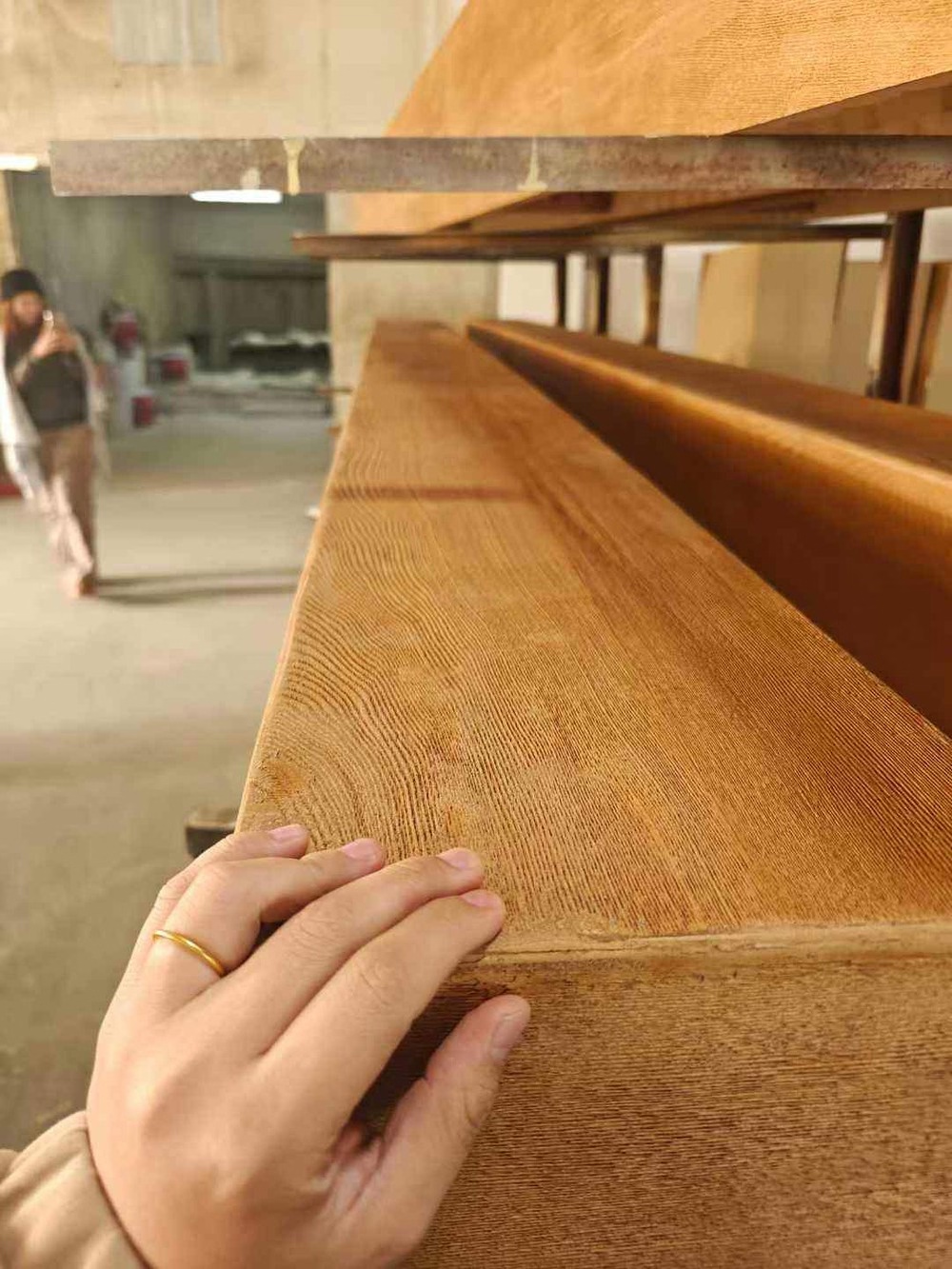
Natural wood has served as a construction material for millennia precisely because it performs adequately across diverse conditions. Yet wood's organic nature makes it vulnerable to moisture—the primary factor in wood degradation. Rot, mold, warp, and structural failure all connect to moisture exposure in various forms. Polyurethane faux beams sidestep these vulnerabilities entirely, offering moisture resistance that enables reliable performance in conditions where natural wood would struggle or fail.
Understanding moisture resistance in context requires acknowledging that different climates create different moisture challenges. Humid subtropical regions maintain high atmospheric moisture that condenses on cool surfaces and soaks into porous materials. Arid climates feature dramatic temperature swings that create interior condensation when warm, moist indoor air contacts cool surfaces at night. Coastal salt air introduces corrosive and hygroscopic factors that accelerate moisture-related damage in susceptible materials. Each scenario tests material performance differently.
How Polyurethane Resists Moisture Damage
The fundamental advantage of polyurethane lies in its closed-cell structure. Unlike wood, which is inherently porous at microscopic scales, properly formulated polyurethane prevents water penetration at the cellular level. This structure means moisture cannot enter the material regardless of surface exposure conditions—beams might get wet, but they will not absorb water.
Absence of organic material eliminates biological threats that affect wood. Mold, mildew, and wood-eating insects all require organic food sources that polyurethane does not provide. In humid environments where these threats proliferate, PU beams remain unaffected—staying clean, dry, and structurally sound without chemical treatments or defensive maintenance.
Chemical formulation affects moisture resistance quality. Premium PU formulations maintain their closed-cell structure and dimensional stability indefinitely under moisture exposure. Lower-quality alternatives might include fillers or additives that create pathways for moisture intrusion, or might degrade chemically when exposed to prolonged saturation. Specification from quality manufacturers ensures that the moisture resistance inherent in PU technology is fully realized.
Climate-Specific Performance Advantages
Tropical and subtropical climates, with their year-round warmth and humidity, create challenging conditions for wood materials. Ceiling beams in these regions experience constant moisture stress—high atmospheric humidity, potential condensation from air conditioning systems, occasional water intrusion from roof failures or weather events. PU beams in these conditions perform identically regardless of exposure duration; they might require cleaning but will not suffer structural or aesthetic damage from moisture exposure.
Desert and arid climates present different challenges centered on temperature fluctuation rather than absolute humidity. Interior spaces might cool significantly at night while daytime temperatures soar, creating conditions where indoor air—carrying moisture from occupants and activities—condenses on cool morning surfaces. Wood beams absorb this condensation repeatedly, eventually warping or developing finish failures. PU beams handle these cycles without similar degradation.

Coastal and marine environments combine humidity with salt exposure, creating conditions that stress most materials. Salt accelerates corrosion in metals, can degrade certain plastics, and contributes to hygroscopic residue that attracts moisture. Premium PU formulations resist these factors, maintaining appearance and performance despite salt air exposure that would corrode metal fasteners and degrade lesser materials.
Indoor Pool and Spa Applications
Indoor pools, spas, and aquatics facilities represent the most demanding moisture environment in residential and light commercial contexts. Constant high humidity, chemical exposure from water treatment, dramatic temperature gradients, and frequent condensation combine to challenge every material in the space. Natural wood, even pressure-treated wood, struggles in these conditions—maintenance costs escalate, appearance degrades, and eventual replacement becomes necessary.
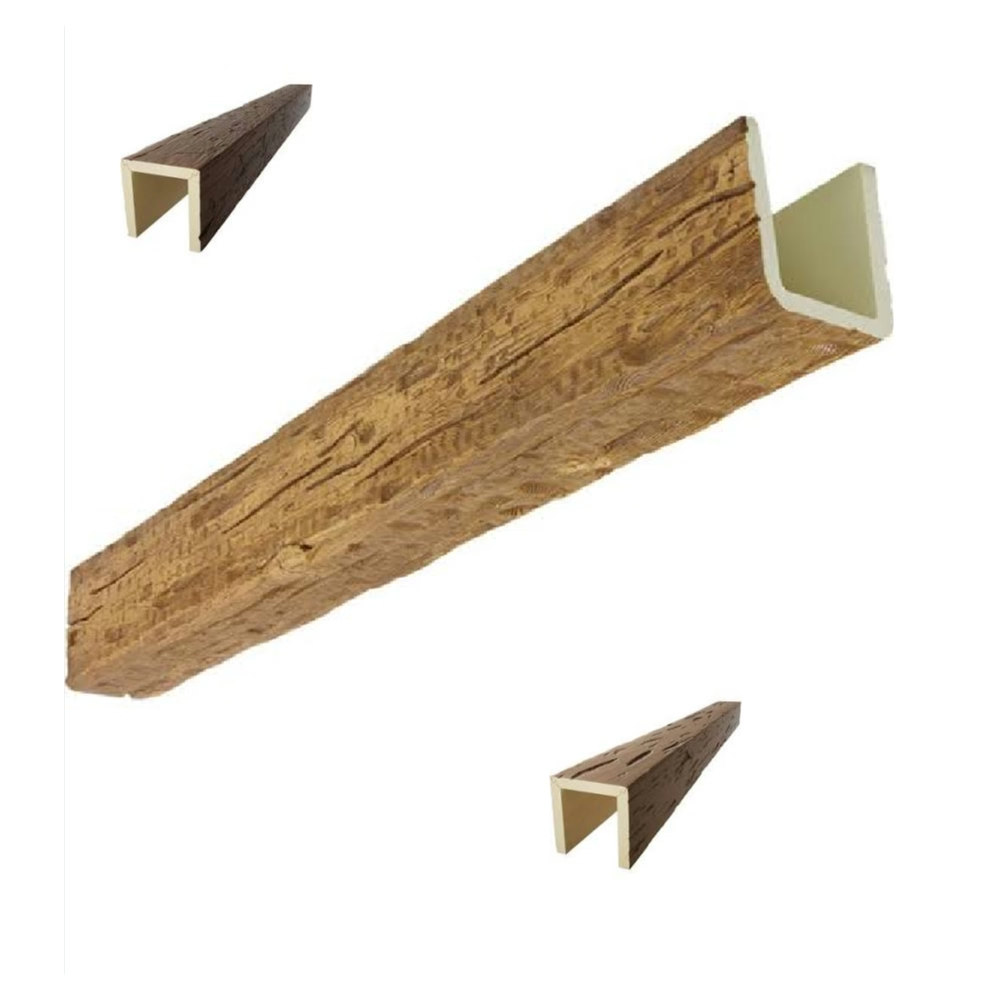
PU faux beams in pool environments provide the wood aesthetic these spaces often desire while eliminating moisture-related failure modes. The beams maintain their appearance despite constant humidity, do not absorb splashed or vaporized water, and resist the chemical exposure that affects other materials. Combined with appropriate mounting hardware (stainless steel or polymer-coated fasteners that resist corrosion), PU beams can provide decades of reliable service where wood alternatives require regular replacement.
Ventilation system design affects long-term performance in moisture-intensive spaces. Proper air circulation reduces surface condensation and accelerates drying when it occurs. While PU beams tolerate conditions that would destroy wood, optimizing the environment extends the appearance life of all surfaces in the space—including painted or stained finishes that might degrade faster than the underlying substrate.
Bathroom and Kitchen Environments
Residential bathrooms and kitchens present more moderate but still significant moisture challenges compared to dedicated pool facilities. Shower steam, cooking vapor, and routine water splashing create regular exposure that accumulates over time. Wood cabinetry and trim in these spaces often shows signs of moisture damage after years of exposure—swollen panels, distorted frames, lifting finishes.
Ceiling beams in these spaces benefit from the same moisture resistance that makes PU suitable for pool applications, albeit without the intensity of dedicated aquatics environments. Beams above showers, around skylights, or in poorly ventilated bathrooms maintain their appearance and structure despite conditions that would eventually affect natural wood alternatives.
Steam from hot tubs and saunas creates concentrated moisture exposure that localizes around the fixture. Beams in these zones experience humidity spikes during use that saturate the air temporarily. PU's response to this exposure—dimensional stability and moisture impermeability—ensures consistent appearance regardless of use patterns or ventilation conditions.
Exterior Applications and Weather Exposure
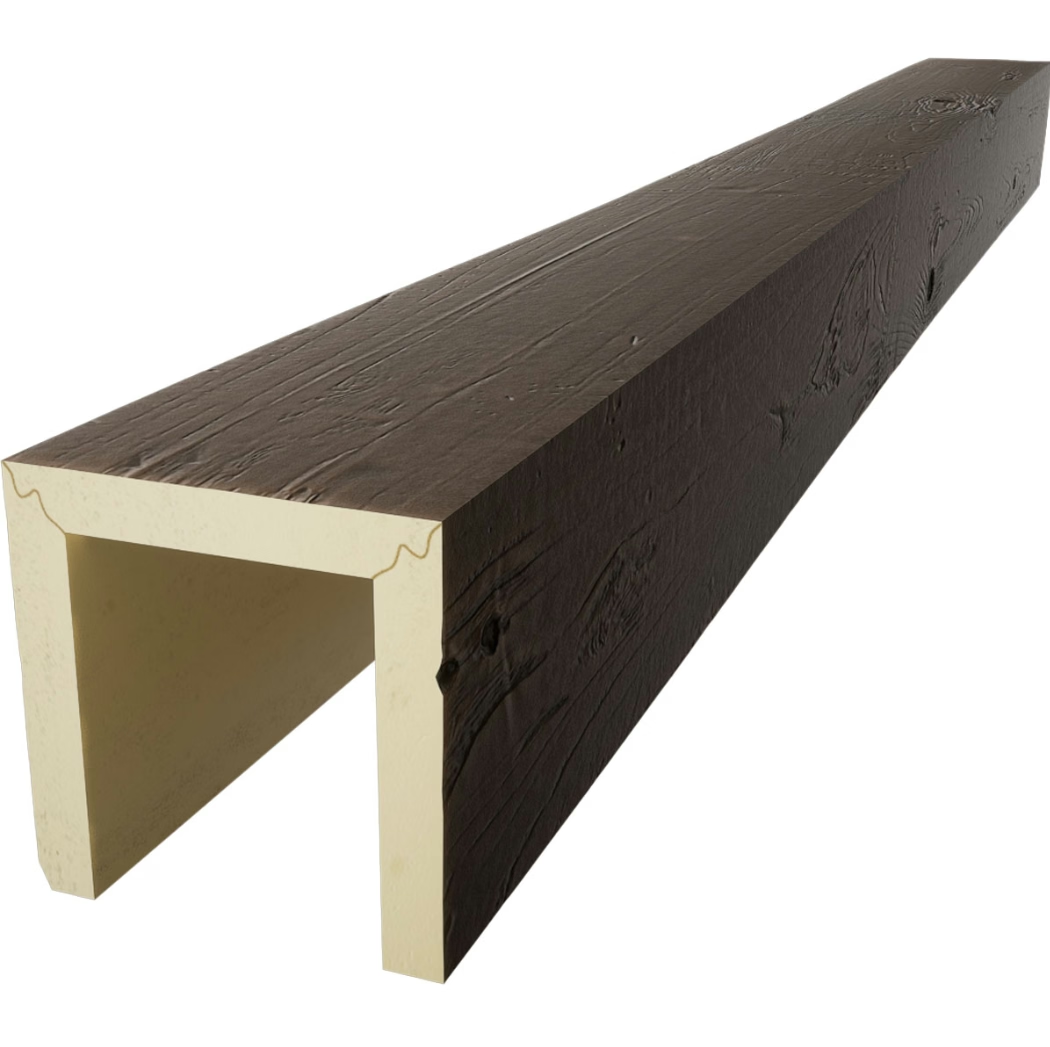
While most faux beam applications occur indoors, exterior use cases arise in covered patios, protected porches, and partially enclosed outdoor rooms. These spaces expose beams to weather—rain, humidity, temperature variation, UV exposure—that exceeds interior conditions significantly. Premium PU formulations handle exterior exposure when appropriately specified, maintaining closed-cell structure and surface integrity despite weather cycling.
Direct weather exposure—in completely exposed locations without overhead protection—tests materials more severely than covered exterior use. UV radiation, freeze-thaw cycling, and direct precipitation create conditions where many materials degrade regardless of their moisture resistance. PU beams designed for exterior use incorporate UV stabilizers and surface treatments that extend service life under these challenging conditions.
Installation details affect exterior performance significantly. Water drainage from beam surfaces, proper sealing at joints and connections, and adequate ventilation to prevent moisture accumulation all contribute to long-term durability. Even the most moisture-resistant material can fail prematurely if installation details allow water to pool or penetrate at weak points.
Technical References
ASTM standards cited in every specification
Test Data
Lab results from internal testing program
Updated 2026
Reviewed against current product specs