Environmental considerations increasingly influence material selection in construction and interior design. Clients ask about carbon footprints, specifiers request environmental product declarations, and building certifications require documentation of material sourcing and impacts. Faux wood beams warrant careful sustainability analysis that moves beyond assumptions—examining the full lifecycle of both manufactured and natural alternatives to determine which genuinely performs better across environmental dimensions.
Genuine wood often benefits from an assumed environmental advantage. It grows, it comes from trees, trees absorb carbon dioxide, therefore wood must be environmentally friendly. This reasoning, while containing elements of truth, oversimplifies a complex picture. The reality depends heavily on sourcing, species, forestry practices, transportation distances, and what happens at product end-of-life. Manufacturing faux beams involves petroleum derivatives and industrial processes, but the comparison requires examining complete lifecycles rather than initial impressions.
Resource Extraction and Raw Materials
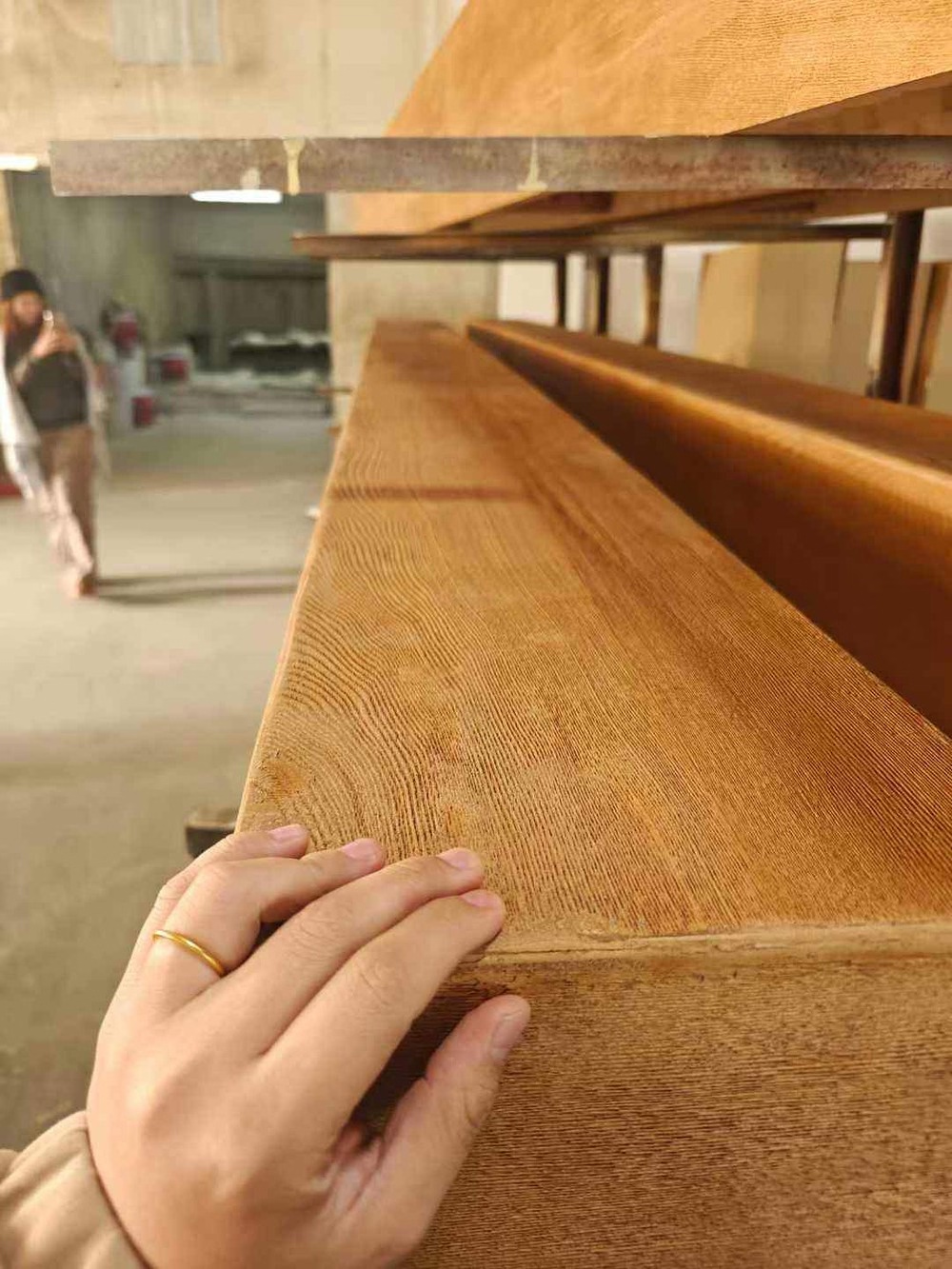
Timber harvesting, even from responsibly managed forests, removes living ecosystems and processes land for replanting or alternative uses. The scale of impact varies dramatically between selective harvesting that maintains forest structure and clear-cutting that removes everything. Certified sustainable forestry—FSC, PEFC, or similar standards—establishes practices that balance harvesting with forest health, but certification costs and limited availability mean much timber enters supply chains without verified sustainability credentials.
Transport distances for timber affect its environmental impact significantly. Old-growth or exotic species might travel thousands of miles from forest to fabrication to installation site. The carbon emissions from this transportation accumulate, partially offsetting any carbon sequestration benefit the wood provides during growth. Locally sourced timber reduces transportation impacts substantially, but availability of appropriate species, dimensions, and quality may not match project requirements.
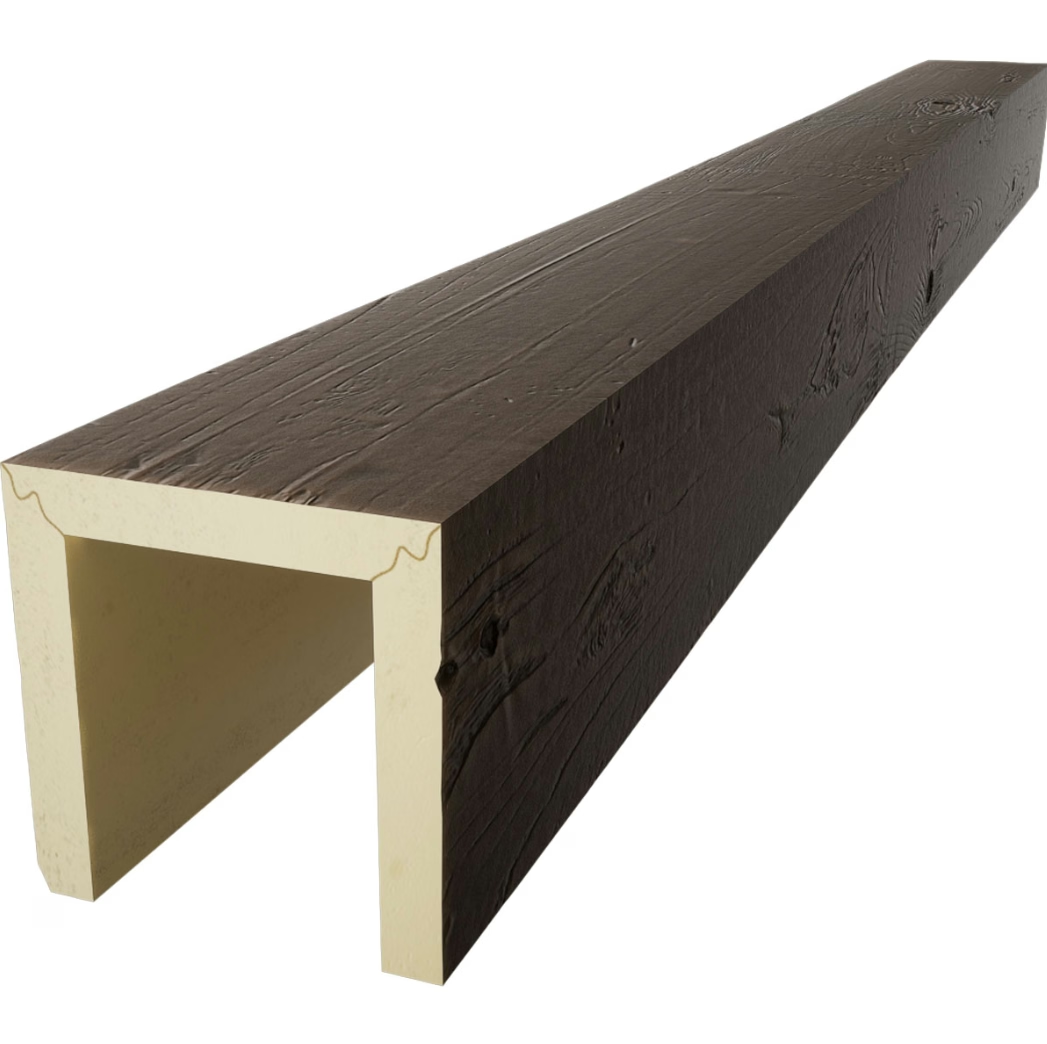
Polyurethane production begins with petroleum extraction and refining—industries with their own environmental footprints. The raw material chain involves extraction, processing, and chemical transformation before manufacturing even begins. However, polyurethane formulations often incorporate recycled content, and production processes have improved efficiency substantially over recent decades. The comparison requires acknowledging both the petroleum origin and the increasing use of recycled and bio-derived alternatives in quality formulations.
Manufacturing Energy and Emissions
Timber milling and kiln drying consume substantial energy, particularly for specialty species or dimensional requirements that cannot be met from standard inventory. The energy mix available at manufacturing locations affects carbon intensity—timber processed using hydroelectric power carries different impacts than timber processed using coal-generated electricity. Additionally, kiln drying releases moisture removed from wood, with some of that moisture potentially containing biological materials that contribute to emissions.
Polyurethane beam manufacturing involves chemical reactions that release byproducts, energy consumption for mixing and forming, and finishing processes that add surface treatments. Modern facilities implement emissions controls that capture or neutralize harmful byproducts, and energy efficiency improvements continue across the industry. The controlled manufacturing environment allows more consistent environmental performance than timber processing, which depends heavily on species, moisture content, and dimensional requirements.
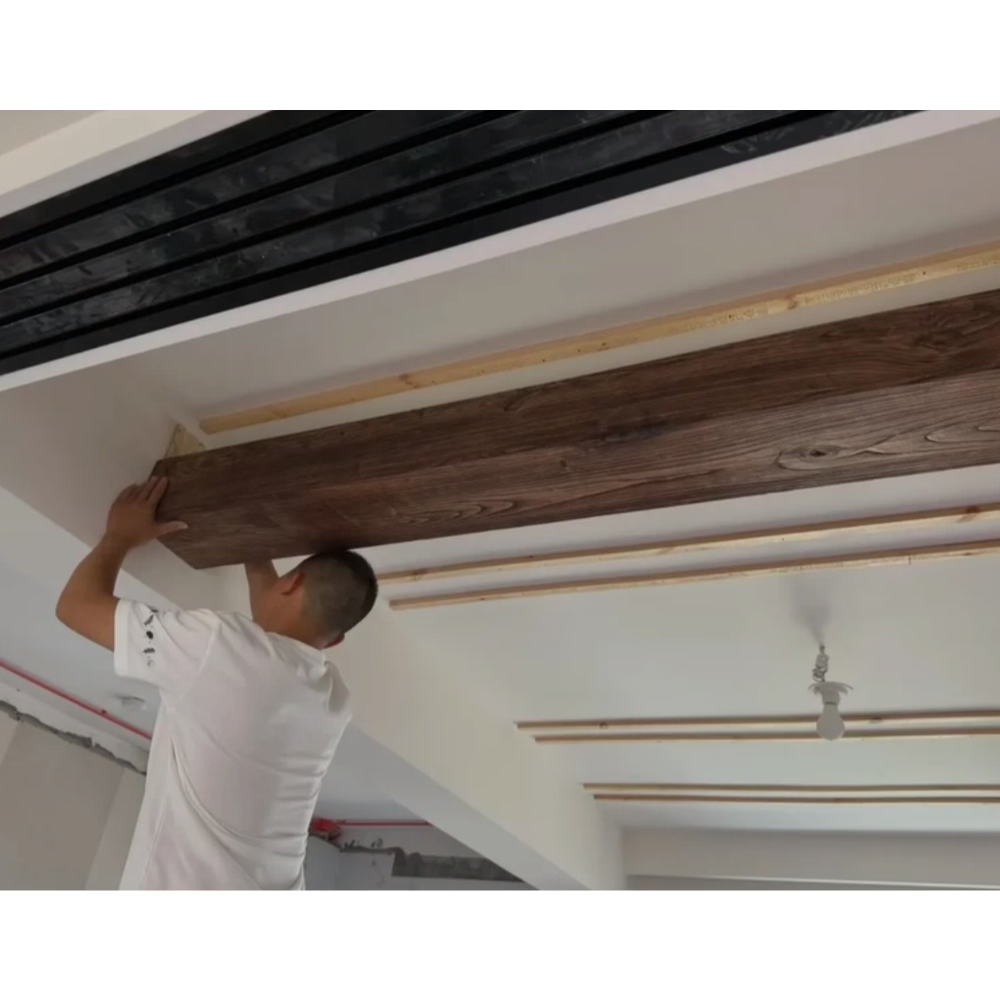
The precision of manufactured beams affects installation efficiency. Faux beams arrive ready to install with minimal job-site preparation; timber beams might require cutting, fitting, and finishing that generates waste material. This waste—sawdust, cutoffs, rejected pieces—represents embodied energy and resource extraction that contributes to effective lifecycle impact even though it never reaches final installation.
Longevity and Service Life Considerations
The expected service life of installed beams affects their lifetime environmental impact through the replacement cycle. A material that lasts fifty years with minimal maintenance carries different impact than a material requiring replacement every fifteen years, even if the shorter-lived option appears preferable in initial lifecycle calculations. Durability reduces environmental impact by spreading initial production impacts across longer service periods.
Natural wood, properly installed and maintained, can provide extremely long service life—century-old timber structures demonstrate this potential. However, practical residential and commercial applications often see earlier replacement due to style changes, damage, or moisture-related degradation. When wood fails prematurely due to conditions it was not designed to handle, the environmental investment in that material provides inadequate return.
PU beams demonstrate excellent longevity in conditions that challenge natural wood. Moisture, temperature variation, insects, and physical abuse that damage timber leave polyurethane essentially unaffected. This durability translates to environmental benefit through extended service life, reducing the replacement frequency and associated production impacts over building service periods.
End-of-Life Pathways and Disposal
Timber demolition waste typically enters several pathways: landfill, incineration with energy recovery, or recycling into other wood products. Each pathway carries different environmental implications. Landfill disposal preserves embodied energy but removes the material from productive use indefinitely. Incineration recovers some energy value while releasing sequestered carbon. Recycling extends useful life but involves processing energy and potential downgrading of material quality.
Disposal of polyurethane products involves similar options with different characteristics. Incineration releases chemically bound carbon and energy content; modern facilities with appropriate emissions controls can manage these releases within acceptable parameters. Landfill disposal preserves the material indefinitely, with modern formulations designed to resist degradation. Recycling options for polyurethane are developing but remain less established than timber recycling infrastructure.
The emerging circular economy focus increasingly emphasizes material design for recycling and reuse. Some PU manufacturers design products for eventual recycling into other polyurethane applications, creating closed-loop material flows that reduce virgin material demand. This design philosophy represents a significant evolution from traditional disposal-focused approaches.
Making Informed Sustainability Decisions
Genuine sustainability analysis requires moving beyond material stereotypes to examine specific products and applications. Not all timber is responsibly sourced; not all polyurethane is environmentally problematic. The certification systems, manufacturing practices, and end-of-life provisions of specific products matter more than categorical assumptions about material types.
Life cycle assessment (LCA) methodology provides frameworks for systematic environmental comparison. These approaches inventory resource inputs, emissions outputs, and waste streams across the complete lifecycle of products, enabling meaningful comparison rather than impressionistic judgment. Environmental product declarations (EPDs) document LCA results for specific products, allowing informed selection based on documented rather than assumed performance.
Professional judgment remains essential in applying lifecycle data to specific projects. Regional factors—transport distances, energy grids, disposal infrastructure—affect the relative performance of different materials. Project requirements—expected service life, maintenance capabilities, performance conditions—influence which environmental factors matter most. The most sustainable choice depends on context rather than absolute material ranking.
Technical References
ASTM standards cited in every specification
Test Data
Lab results from internal testing program
Updated 2026
Reviewed against current product specs