Green building practices have evolved from niche specialty to mainstream expectation in residential and commercial construction. Projects pursuing certification under LEED, WELL, or similar frameworks require careful material documentation that demonstrates compliance with environmental criteria. Faux wood beams, often viewed skeptically by those assuming they represent petroleum-based products of dubious sustainability, actually qualify for green building contributions when properly specified from manufacturers committed to environmental responsibility.
The key shift involves moving beyond simplistic "natural equals good" assumptions that favor timber regardless of sourcing. A more sophisticated approach evaluates materials based on documented lifecycle impacts, verified sourcing practices, and actual environmental performance in application. This approach reveals that manufactured products from responsible producers often outperform naturally-sourced alternatives across multiple environmental dimensions.
Understanding Green Building Material Criteria
Modern green building certification systems evaluate materials through multiple lenses. Raw material sourcing—where inputs come from and how they were extracted—establishes baseline environmental responsibility. Manufacturing practices—energy use, emissions, water consumption, waste management—determine production-phase impacts. Transportation distance affects supply chain carbon footprints. End-of-life pathways—recyclability, biodegradability, disposal impacts—complete the lifecycle picture.
Manufacturers pursuing green building market segments increasingly provide documentation addressing these criteria. Environmental Product Declarations (EPDs) provide standardized lifecycle assessment results. Sustainability reports detail manufacturing practices and environmental targets. Third-party certifications—Cradle to Cradle, Declare labels, or similar—verify specific environmental claims. This documentation enables specification professionals to verify green claims rather than accepting marketing assertions at face value.
Recycled content represents a significant sustainability attribute for manufactured products. Polyurethane formulations incorporating post-industrial or post-consumer recycled content reduce virgin material demand, diverting waste from disposal while decreasing extraction impacts. The percentage of recycled content varies by product line and manufacturer; premium faux beam producers often offer dedicated recycled-content options for environmentally-focused projects.
Manufacturing Environmental Performance
Contemporary polyurethane manufacturing has substantially reduced its environmental footprint compared to earlier production methods. Water-based formulations replace solvent-based alternatives that released volatile organic compounds during curing. Energy-efficient production equipment reduces electricity consumption per unit output. Emissions control systems capture and neutralize process byproducts that would otherwise enter the atmosphere.
These improvements reflect both regulatory pressure and market demand. Projects seeking certification increasingly specify materials with documented environmental performance, creating market incentives for manufacturers to invest in cleaner production. The manufacturers that have made these investments can differentiate themselves in a market where all products are assumed similar.
Facility location affects environmental performance through transportation and energy grid characteristics. Manufacturing located near end-use markets reduces transportation emissions. Facilities powered by renewable energy eliminate a major production-phase environmental impact. These factors vary between manufacturers and product lines, making location-specific evaluation more meaningful than material-type generalizations.
Application Performance and Sustainability
The service life performance of installed materials affects their total environmental impact significantly. Materials requiring frequent replacement impose repeated production impacts; durable materials spread initial impacts across longer service periods. This relationship means that sustainability calculations must extend beyond manufacturing to consider practical expected service life in actual applications.
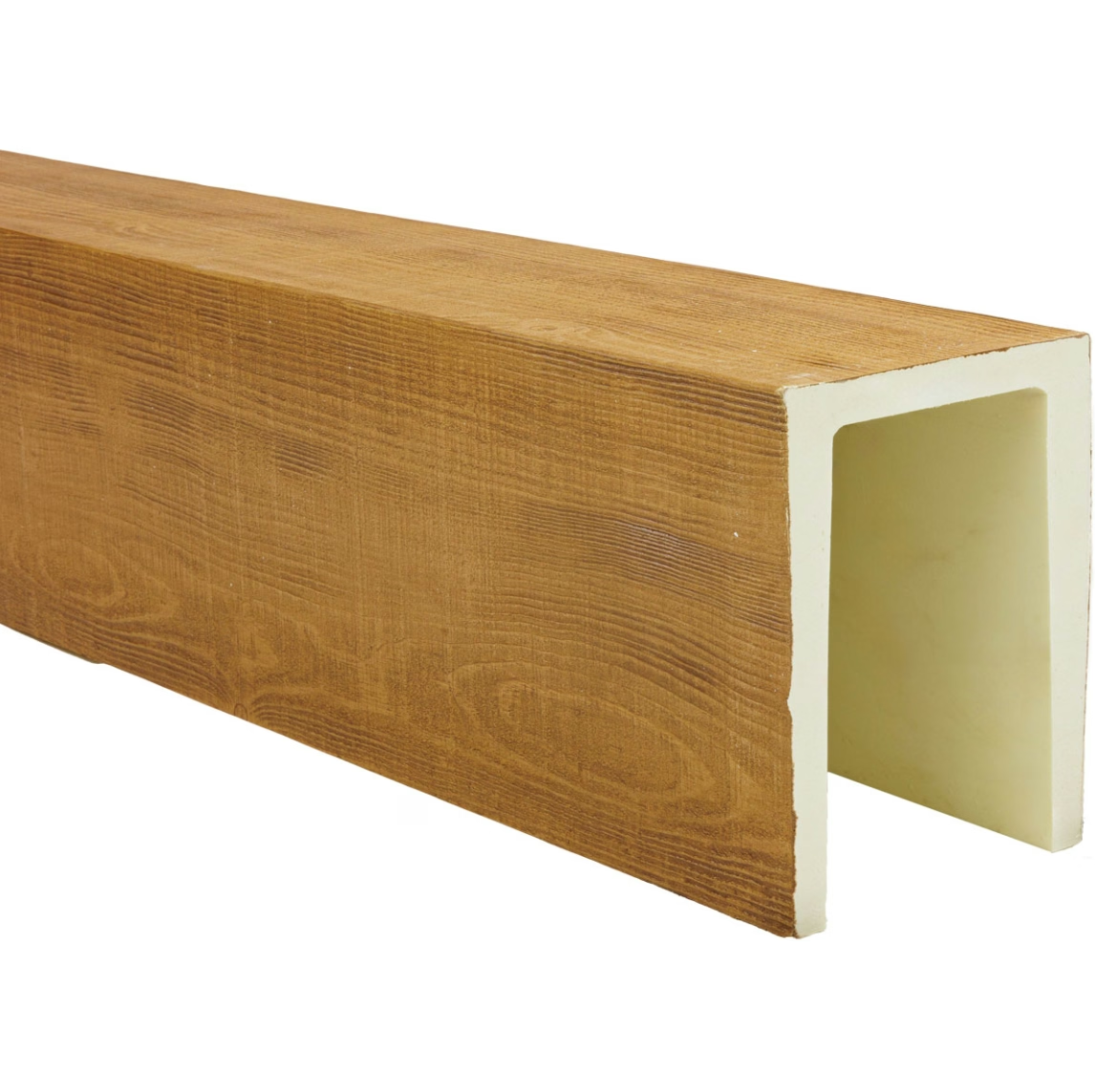
Faux wood beams demonstrate excellent durability across conditions that challenge natural alternatives. Moisture resistance eliminates the most common premature failure mode for wood ceiling treatments. Dimensional stability prevents the warping, cupping, and checking that degrades timber appearance and function. UV-stable formulations resist the surface degradation that affects painted or stained wood in sun-exposed locations.
The maintenance requirements of different materials also factor into environmental accounting. Natural wood often requires periodic refinishing, sealing, or treatment that involves additional material inputs and maintenance-related impacts. PU beams maintain their appearance with simple cleaning, avoiding the chemical treatments and refinishing that accumulate environmental impact over time.
Sourcing Verification and Certification
Green building projects increasingly require chain-of-custody documentation that traces materials from source to installation. For timber products, this documentation verifies sustainable forestry certification—FSC, PEFC, or equivalent—and chain of custody through processing and distribution. For manufactured products like faux beams, documentation addresses formulation contents, manufacturing location, and environmental certifications.
Third-party certification provides independent verification of environmental claims. Cradle to Cradle certification evaluates products across multiple sustainability dimensions including material health, material reutilization, renewable energy use, water stewardship, and social fairness. Products achieving certification carry designation that documents compliance with rigorous standards, simplifying specification for design professionals.
Manufacturer transparency supports verification by enabling detailed product scrutiny. Companies willing to share formulation information, manufacturing process details, and supply chain documentation demonstrate confidence in their environmental performance. This transparency contrasts with manufacturers that make vague sustainability claims without substantiation.
Integrating Faux Beams into Green Design Projects
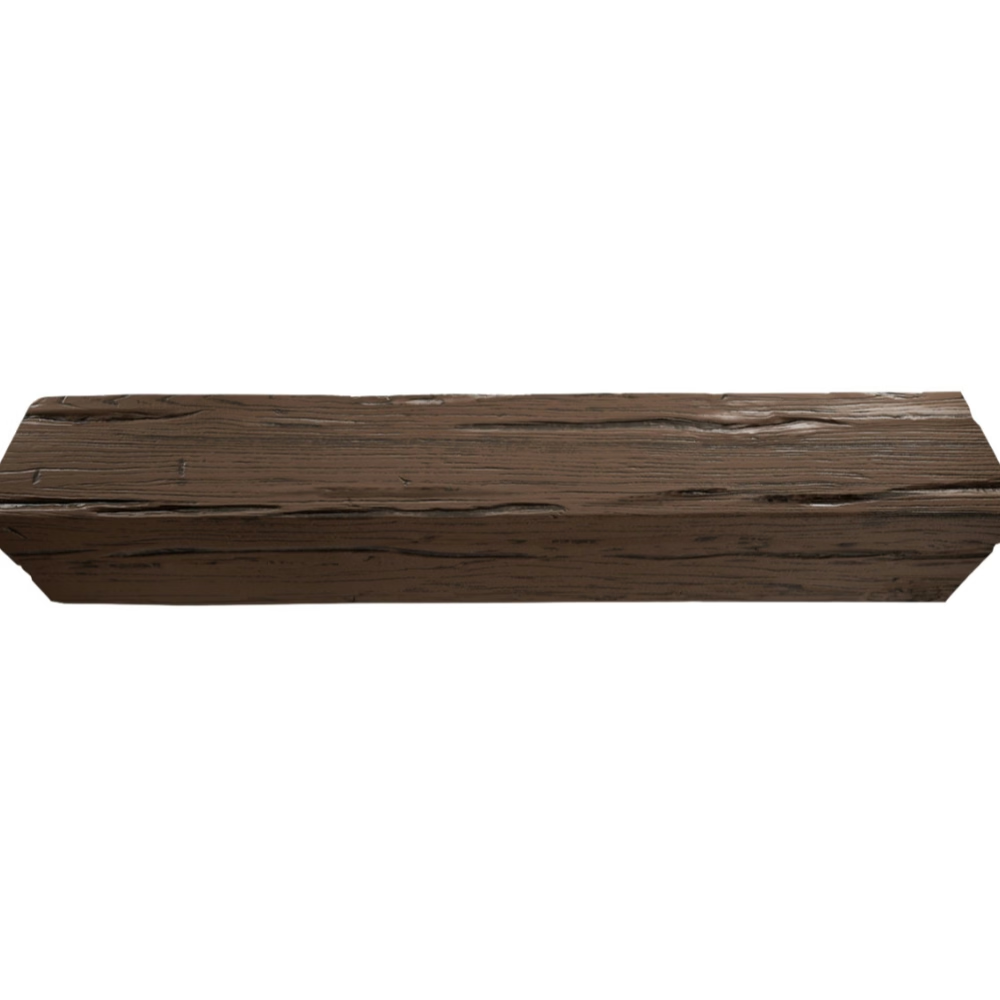
The architectural application of faux beams affects their environmental contribution to green building projects. Strategic specification—using beams only where they provide meaningful design contribution—avoids unnecessary material consumption. Appropriately scaled beams that serve design purposes justify their environmental impacts more readily than excess or purely decorative installations.
Coordination with other green building strategies enhances overall project performance. Beams specified with lighting integration might reduce fixture requirements by providing mounting locations or concealing service runs. Thermal properties of some beam formulations contribute marginally to insulation values. Acoustic benefits help reduce sound masking energy requirements. These co-benefits improve the effective environmental return on material investment.
Documentation preparation for certification submissions benefits from early material specification. Selecting products with pre-existing environmental documentation—EPDs, certifications, sustainability reports—simplifies the documentation compilation that certification processes require. Products requiring extensive research or testing to establish environmental credentials add effort and uncertainty to an already complex process.
Technical References
ASTM standards cited in every specification
Test Data
Lab results from internal testing program
Updated 2026
Reviewed against current product specs


