The Leadership in Energy and Environmental Design (LEED) certification system has become the dominant framework for recognizing sustainable building achievements. Projects pursuing certification must demonstrate compliance across multiple categories, accumulating points toward certification levels ranging from Certified through Platinum. Material selection significantly affects point accumulation in categories addressing Materials and Resources, with specific credit requirements that manufactured products like faux wood beams can satisfy when properly specified.
Understanding LEED's material credit structure helps design professionals leverage faux beam specifications effectively. Each credit addresses specific environmental objectives through requirements that materials must meet. Matching product capabilities to credit requirements enables strategic specification that supports certification goals while achieving design objectives. The key lies in understanding exactly what documentation and characteristics each credit demands.
Materials and Resources Category Overview
The Materials and Resources (MR) category addresses material selection impacts through multiple credits that tackle different environmental concerns. These credits acknowledge that "sustainable materials" means different things in different contexts—recycled content reduces virgin material demand, regional materials reduce transportation impacts, wood from certified forests ensures responsible forestry, and low-emitting materials improve indoor air quality.
Projects typically select a subset of MR credits to pursue based on project type, budget, and available documentation. Pursuing credits requires providing documentation that verifies compliance—product cut sheets, certifications, EPDs, or manufacturer declarations. Products that simplify this documentation process reduce the effort and risk involved in pursuing specific credits.
Faux wood beams address several MR credits directly through their material characteristics and manufacturing provenance. The specific credits depend on product formulation, manufacturer practices, and geographic sourcing. Design professionals should evaluate products against credit requirements during specification rather than making assumptions about eligibility.
MR Credit: Building Product Disclosure and Optimization
This credit recognizes manufacturers that provide environmental information about their products through recognized channels. The credit structure offers multiple pathways—environmental product declarations (EPDs), sourcing or raw material reports, and product transparency declarations all qualify for points. Products with third-party verified EPDs achieve the highest recognition under this credit.
Environmental Product Declarations document lifecycle assessment results in standardized formats that enable comparison between products. Type III EPDs, verified by independent third parties, provide the strongest documentation for credit compliance. Premium faux beam manufacturers increasingly offer EPDs for their product lines, enabling projects to claim the associated points.
The optimization option within this credit rewards products that demonstrate leadership in environmental performance beyond basic compliance. Products achieving Cradle to Cradle certification or similar recognition qualify for optimization points that contribute more substantially to certification goals. This pathway rewards comprehensive environmental commitment from manufacturers.

MR Credit: Recycled Content
This credit addresses virgin material demand reduction by recognizing products incorporating recycled content. The calculation method distinguishes between post-consumer recycled content—materials that have served their intended end use—and post-industrial recycled content—manufacturing byproducts diverted from disposal. Both count toward credit requirements, though post-consumer content receives preference in point allocation.
Polyurethane formulations that incorporate recycled content from industrial or post-consumer sources qualify for recycled content credit contribution. The percentage varies by product; some manufacturers offer dedicated recycled-content product lines that maximize credit contribution. Documentation from manufacturers verifying recycled content percentages enables project teams to calculate contribution values accurately.
Recycled content in faux beams typically derives from post-industrial sources rather than post-consumer streams. Manufacturing processes generate waste material that can be reprocessed into secondary applications. While this content might not qualify as post-consumer, it still diverts material from disposal and reduces virgin material demand, providing legitimate environmental benefit.
MR Credit: Regional Materials
This credit reduces transportation-related environmental impacts by favoring materials sourced within defined distances of construction sites. The calculation uses extraction, manufacturing, and fabrication locations, with points awarded based on weighted distance averages. Regional materials reduce both carbon emissions and transportation-related pollution.
Faux beam manufacturers have established facilities across geographic regions, enabling regional sourcing for many project locations. Shipping heavy materials long distances contributes significantly to effective environmental impact; purchasing from nearby production facilities reduces this burden. Documentation requirements for this credit verify manufacturing locations relative to project sites.
Supply chain complexity affects regional material calculations. Beams manufactured from regionally-sourced raw materials might still qualify even if components come from distant locations. Understanding exactly how regional sourcing is calculated helps design professionals maximize credit contribution through appropriate product selection.
MR Credit: Wood Products
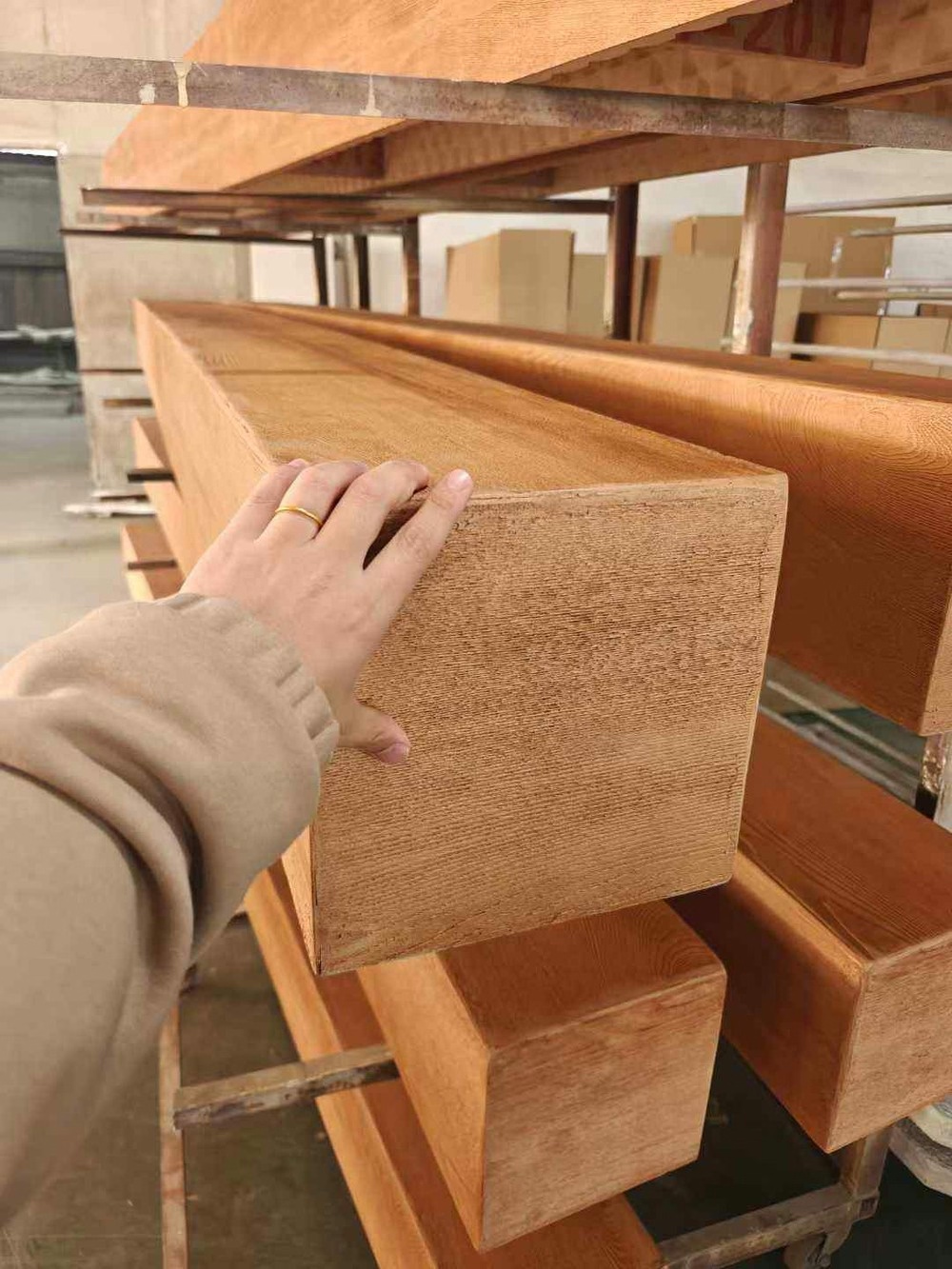
This credit addresses responsible forestry practices by rewarding wood products from certified sources. The credit recognizes FSC certification and equivalent standards that verify sustainable forestry practices. Faux wood beams that incorporate genuine wood components—structural cores, for instance—might qualify for this credit depending on certification status.
For products without genuine wood content, this credit is not directly applicable. However, faux beams provide an alternative to wood products that can reduce pressure on forest resources. Projects might document this substitution effect as evidence of reduced wood product demand, though this approach requires project-specific justification.
The relationship between faux and genuine wood products affects overall project wood documentation. Projects pursuing wood credits might use faux beams to achieve design objectives while reserving certified wood for applications where the credit applies. This strategy maximizes both design flexibility and certification contribution.
Credit Strategy and Documentation
Effective LEED credit pursuit requires strategic planning from project inception. Identifying target credits early enables material specification that supports compliance rather than forcing compromises between design intent and certification goals. Faux beam manufacturers that provide comprehensive documentation simplify this process considerably.
Documentation requirements vary by credit and certification level. Higher certification levels—Gold and Platinum—typically require more rigorous documentation and third-party verification. Planning for documentation requirements during specification prevents late-stage complications when discovering that available products cannot support targeted credits.
Coordination between design teams, specification professionals, and sustainability consultants ensures that material selections align with certification strategy. Communication about product capabilities, credit requirements, and documentation needs prevents misalignment that could compromise certification outcomes.
Technical References
ASTM standards cited in every specification
Test Data
Lab results from internal testing program
Updated 2026
Reviewed against current product specs